

There’s something absolutely magical about a lemon dump cake – it’s the kind of dessert that looks like you spent hours in the kitchen, when really you just dumped a few simple ingredients into a baking dish and let the oven do all the work. I’m obsessed with this recipe because it’s foolproof, elegant, and delivers that perfect balance of tart and sweet that makes people come back for seconds.
The beauty of a dump cake lies in its simplicity and the science behind it. As the cake bakes, the dry ingredients magically transform into a tender, moist cake while the lemon mixture creates this incredible syrupy sauce that pools underneath. It’s a dessert that proves you don’t need complicated techniques or fancy equipment to impress your family and friends.
I first encountered dump cakes at a church potluck, and I have to admit, I was skeptical. How could something so simple be so delicious? But one bite changed everything. Since then, I’ve made countless variations, and this lemon version has become my go-to for weeknight desserts, dinner parties, and everything in between. It’s perfect served warm with a scoop of vanilla ice cream or a dollop of whipped cream, and it’s just as lovely at room temperature.
What makes this lemon dump cake particularly special is how the flavors develop as it cools. The lemon becomes more pronounced, the cake develops a wonderful tender crumb, and the sauce thickens into this luxurious custard-like consistency. This is the kind of recipe that deserves a permanent spot in your rotation, right alongside your best heavy cream sauces and go-to easy weeknight dinners.
The ingredient list is refreshingly short, which is part of what makes this dessert so appealing. You’re probably already stocking most of these items in your pantry right now. The lemon juice and zest are absolutely essential – don’t skip them or substitute with lemon extract. Fresh lemon juice makes all the difference in achieving that bright, authentic citrus flavor that makes this cake so craveable.
I love how versatile this recipe is too. You can make it in a standard 9×13-inch baking dish, or divide it between smaller individual ramekins for an elegant presentation. It travels beautifully to potlucks, bakes evenly every single time, and actually tastes even better the next day as the flavors meld together. For more dessert inspiration, check out this comfort food collection or explore other bright flavor combinations.
This recipe has taught me that sometimes the best desserts are the ones that don’t require you to be a pastry chef. It’s a celebration of quality ingredients treated simply, and that’s really the heart of what makes food delicious. Whether you’re baking for a special occasion or just because Tuesday needs a little sweetness, this easy lemon dump cake is going to become your new favorite.
Ingredients
- 1 3/4 cups all-purpose flour
- 2 cups granulated sugar, divided
- 2 1/2 teaspoons baking powder
- 1/2 teaspoon salt
- 4 tablespoons unsalted butter, melted
- 3/4 cup whole milk
- 1/4 cup fresh lemon juice (about 2-3 lemons)
- 2 tablespoons lemon zest
- 3 cups boiling water
- Whipped cream or vanilla ice cream for serving (optional)
- Fresh lemon slices for garnish (optional)
Instructions
- Preheat your oven to 350°F (175°C). Have a 9×13-inch baking dish ready – you can lightly butter it if you’d like, though it’s not absolutely necessary.
- In a large mixing bowl, whisk together the flour, 1 cup of sugar, baking powder, salt, and lemon zest until everything is evenly combined and no lumps remain.
- Create a well in the center of your dry ingredients and pour in the melted butter and milk. Stir gently with a wooden spoon or spatula until you have a thick, biscuit-like batter. Don’t overmix – a few small lumps are totally fine and actually preferred.
- Spread this batter evenly across the bottom of your prepared baking dish using an offset spatula or the back of a spoon. The batter will be thick, so take your time and make sure it’s distributed in an even layer, though it doesn’t need to be perfect.
- In a small bowl or measuring cup, whisk together the remaining 1 cup of sugar and fresh lemon juice until the sugar begins to dissolve slightly. This becomes your magic sauce.
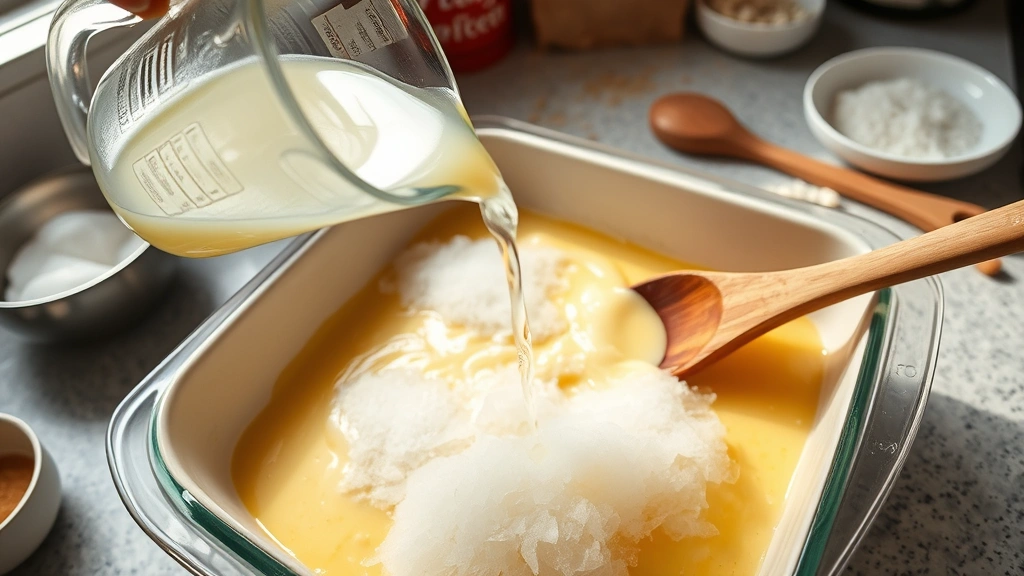
- Carefully pour the lemon juice mixture evenly over the batter layer. Don’t stir – this is crucial! Just let it settle on top. The mixture will look like it’s too much liquid, but trust the process.
- Slowly and carefully pour the boiling water over the entire surface, distributing it as evenly as possible. Again, resist the urge to stir. This hot water will create the incredible sauce as it mingles with the lemon mixture and batter during baking.
- Place the baking dish in your preheated oven and bake for 40-45 minutes, until the top is light golden brown and a toothpick inserted into the cake portion comes out clean or with just a few moist crumbs (not wet batter).
- Remove from the oven and let cool for 10-15 minutes before serving. This resting time allows the sauce to set slightly while still maintaining its lovely syrupy consistency.
- Serve warm with a generous dollop of whipped cream or a scoop of vanilla ice cream, and optionally garnish with fresh lemon slices or a sprinkle of lemon zest.

Pro Tips
Refrigeration: You can refrigerate the cake for up to 5 days in an airtight container. The sauce will thicken more as it cools, creating an almost pudding-like consistency that’s absolutely divine.
Freezing: This cake freezes beautifully for up to 3 months. Wrap the entire baking dish tightly in plastic wrap and then aluminum foil before freezing. Thaw at room temperature for about 2 hours before serving, or reheat gently in a 300°F oven for 20-25 minutes.
Make-ahead tip: You can prepare the batter in the baking dish several hours ahead of time. Cover it with plastic wrap and refrigerate. When ready to bake, pour the lemon juice mixture and boiling water over the cold batter. You may need to add 5-10 extra minutes to the baking time since you’re starting with a cold batter.
Lemon juice selection: Fresh lemon juice makes a significant difference in this recipe. If you must use bottled lemon juice, reduce it slightly to concentrate the flavor. Avoid lemon extract as a substitute – it will make the cake taste artificial.
Boiling water temperature: Using truly boiling water is essential for this recipe. If the water isn’t hot enough, the chemical reactions that create the sauce won’t work properly. Boil your water just before pouring it into the baking dish.
Baking dish alternatives: You can make this in individual ramekins – divide the batter among 8-10 ramekins, then divide the lemon juice mixture and boiling water accordingly. Reduce baking time to 20-25 minutes for individual portions.
Flavor variations: Add 1/2 teaspoon vanilla extract to the batter for extra depth. You can also add a pinch of cardamom or a subtle hint of almond extract if you’re feeling adventurous.
Serving suggestions: This cake is wonderful served warm, at room temperature, or even slightly chilled. Pair it with herbal tea, coffee, or a crisp white wine for a sophisticated dessert course.
Dietary adjustments: For a lighter version, you can substitute some of the sugar with a sugar substitute, though this will affect the texture slightly. Gluten-free flour blends work in this recipe with a 1:1 substitution.