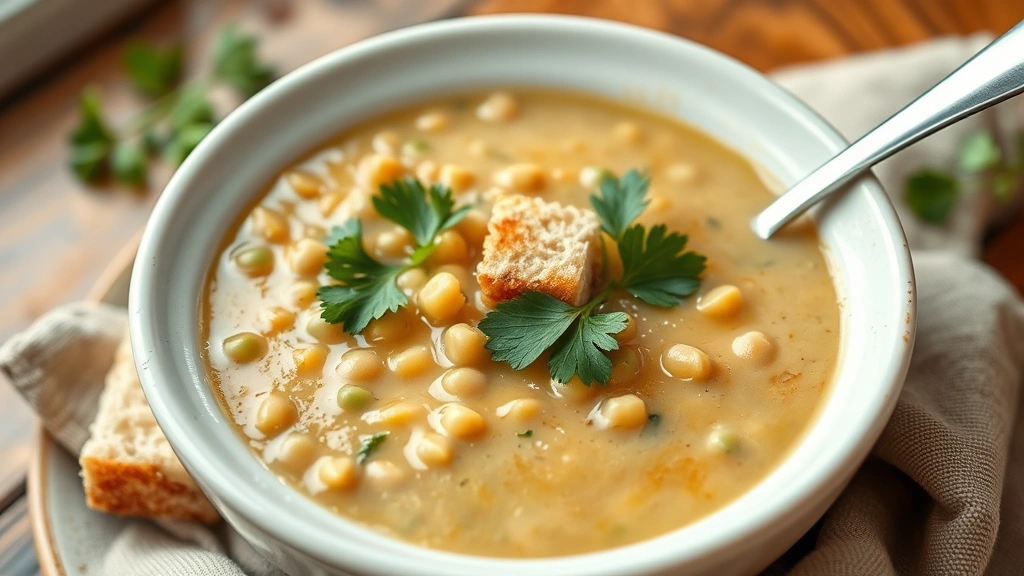
There’s nothing quite like a steaming bowl of split pea soup on a chilly day – it’s pure comfort in a bowl! This easy split pea soup recipe is one of those timeless classics that belongs in every home cook’s rotation. What I absolutely love about this dish is how simple it is to make, yet how deeply satisfying and nourishing it turns out to be. Whether you’re looking for a cozy lunch, a light dinner, or even meal prep for the week ahead, this split pea soup delivers on every front.
This recipe has been a staple in my kitchen for years, and I’m thrilled to share it with you today. The beauty of split pea soup lies in its simplicity – just a handful of wholesome ingredients coming together to create something magical. Unlike some soup recipes that require constant attention and fussy techniques, this one practically makes itself. You’ll start with dried split peas (no soaking required!), aromatic vegetables, and a flavorful broth, then let everything simmer together until it becomes thick, creamy, and absolutely delicious.
One of the reasons I adore this split pea soup so much is its incredible versatility. You can make it as is for a classic version, or customize it to your liking. Some days I add extra vegetables like diced carrots and celery for more texture and nutrition. Other times, I’ll stir in a splash of cream for a richer version, or add crispy bacon for a smoky depth. The possibilities are truly endless, and that’s what makes this recipe so special.
What’s particularly wonderful about split pea soup is how budget-friendly it is. Dried split peas are incredibly inexpensive, and a one-pound bag makes several servings. This means you can feed a family of four for just a few dollars. It’s the kind of recipe that nourishes both your body and your wallet – and isn’t that just lovely?
I also love that this soup is naturally vegetarian (unless you add ham or bacon), packed with plant-based protein and fiber, and absolutely freezer-friendly. Make a big batch on Sunday, freeze it in portions, and you’ll have ready-made meals for busy weeknights. Simply thaw and reheat, and dinner is done.
This recipe is perfect for beginners because there’s very little that can go wrong. As long as you add enough liquid and give it enough time to simmer, you’ll end up with a gorgeous, velvety soup. If you prefer it thicker, just simmer it longer. If you like it brothier, add more stock. It’s incredibly forgiving, which is exactly what makes it such a reliable favorite.
Serve this alongside a fresh coleslaw for a light, balanced meal, or pair it with crusty bread and a simple salad for something more substantial. You could even enjoy a bowl with some pesto cream sauce drizzled on top for an elegant twist.
I’ve also found that this soup is wonderful for meal planning. Pair it with a vegetable stir fry for a complete week of healthy dinners, or enjoy it as a starter course before a main dish.
For more detailed soup-making techniques and tips, check out Serious Eats’ comprehensive soup guide. You can also find helpful information about ingredient selection and cooking methods at The New York Times Cooking.
The key to perfect split pea soup is patience – let it simmer low and slow until the peas completely break down and the flavors meld beautifully together. There’s no rushing this process, and honestly, the aroma filling your kitchen as it cooks is one of life’s simple pleasures. I always find myself hovering over the pot, stirring occasionally and breathing in those wonderful, warming scents.
So grab your Dutch oven or large pot, gather these humble ingredients, and let’s make a soup that’ll have everyone asking for seconds. This is the kind of recipe that makes you feel like a confident, capable cook – because you absolutely are one when you make this beautiful, nourishing soup.
For additional recipe inspiration and cooking guidance, visit Bon Appétit’s recipe collection and explore Serious Eats’ vegetarian cooking section. You’ll find tons of inspiration to complement this classic soup in your meal planning.
Ingredients
- 2 tablespoons butter or olive oil
- 1 large yellow onion, diced
- 3 carrots, peeled and diced
- 3 celery stalks, diced
- 4 cloves garlic, minced
- 1 pound dried split peas, rinsed
- 8 cups vegetable or chicken broth
- 2 bay leaves
- 1 teaspoon dried thyme
- 1 teaspoon salt, plus more to taste
- 1/2 teaspoon black pepper, plus more to taste
- 1/4 teaspoon cayenne pepper (optional)
- 2 tablespoons fresh parsley, chopped (for garnish)
- Croutons or crusty bread (for serving)
Instructions
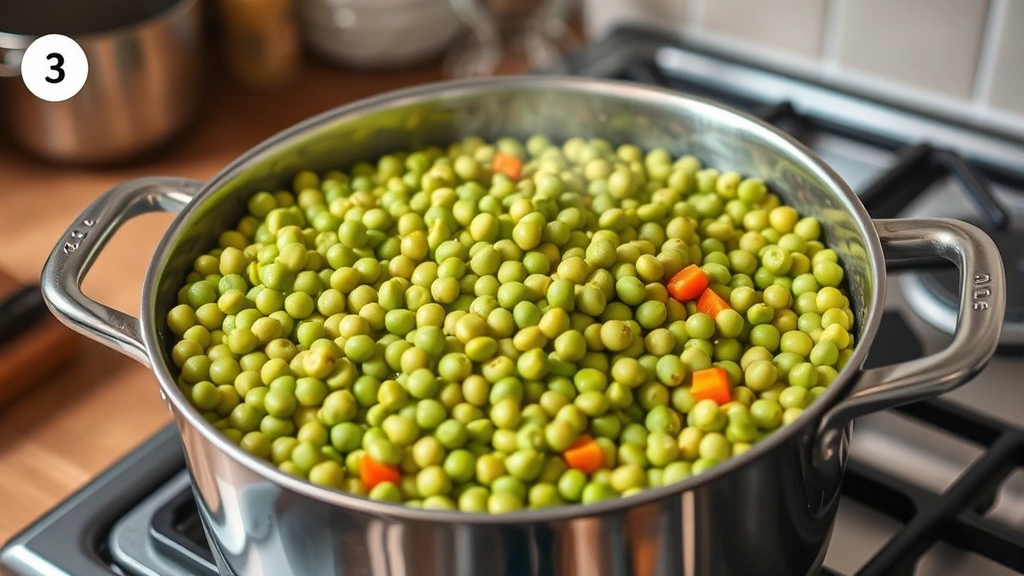
- Heat butter or olive oil in a large pot or Dutch oven over medium heat. Once melted and shimmering, add the diced onion, carrots, and celery. Cook for about 5-7 minutes, stirring occasionally, until the vegetables begin to soften and become fragrant. This aromatic base is crucial for building flavor.
- Add the minced garlic to the pot and stir constantly for about 1 minute until it becomes very fragrant. Be careful not to let the garlic burn, as this can create a bitter taste.
- Rinse the dried split peas under cold running water in a fine-mesh strainer, removing any debris or discolored peas. Add the rinsed split peas directly to the pot with the vegetables and garlic.
- Pour in the vegetable or chicken broth, making sure the liquid covers the split peas by about 2 inches. Stir everything together well, breaking up any clumps of peas.
- Add the bay leaves, dried thyme, salt, and black pepper to the pot. Stir to combine all ingredients evenly. If desired, add the cayenne pepper for a subtle spicy kick.
- Bring the mixture to a boil over medium-high heat, then immediately reduce the heat to low or medium-low. You want a gentle simmer, not a rolling boil.
- Partially cover the pot with a lid, leaving it slightly ajar to allow steam to escape. Simmer for 45 minutes to 1 hour, stirring occasionally to prevent sticking and to help break down the peas.
- Check the peas around the 45-minute mark – they should be completely soft and starting to break apart. If they’re still firm, continue simmering for another 10-15 minutes.
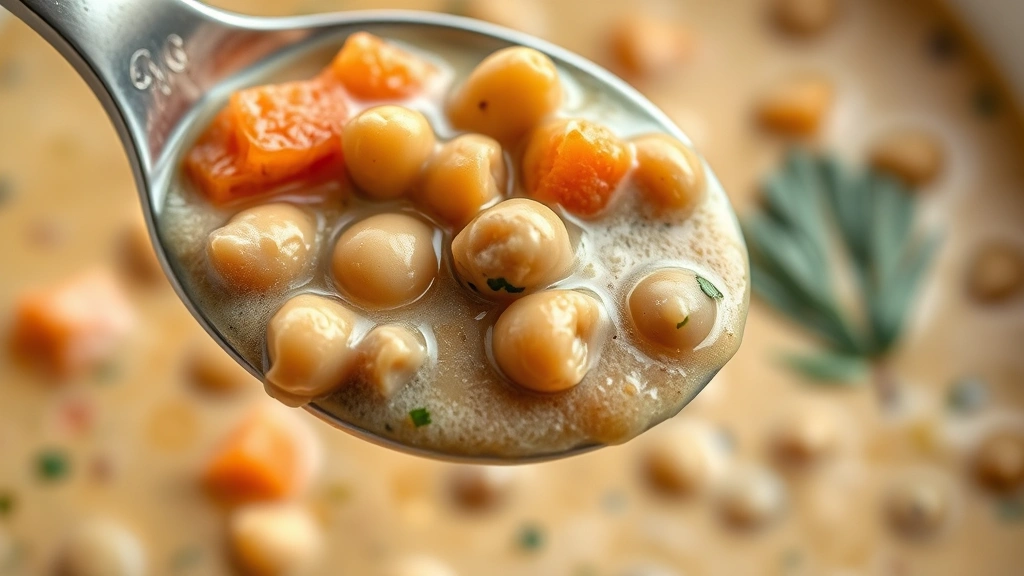
- Once the peas are very soft and have broken down significantly, use an immersion blender to blend the soup to your desired consistency. For a chunky soup, blend only halfway. For a smooth, creamy soup, blend until completely smooth.
- Alternatively, if you don’t have an immersion blender, carefully transfer half of the soup to a regular blender in batches, blend until smooth, and return it to the pot. This creates a nice texture with some whole peas remaining.
- Taste the soup and adjust the seasoning with additional salt and pepper as needed. Remember that flavors can intensify as the soup cools.
- If the soup is too thick, thin it with additional broth or water, one-quarter cup at a time, until you reach your desired consistency.
- Remove and discard the bay leaves before serving.
- Ladle the hot soup into bowls and garnish with fresh chopped parsley, crispy croutons, or a drizzle of cream if desired.
- Serve immediately while hot, with crusty bread on the side for dipping and additional comfort.
Pro Tips
Freezer Storage: Split pea soup freezes beautifully for up to 3 months. Cool completely before transferring to freezer-safe containers or bags. Leave about an inch of space at the top as the soup will expand slightly when frozen. Thaw overnight in the refrigerator and reheat gently.
Customization Options: Feel free to add diced ham, crispy bacon bits, or smoked sausage for a heartier version. Add them during the last 10 minutes of cooking. You can also stir in heavy cream or a splash of coconut milk at the end for extra richness and creaminess.
Vegetable Variations: While this recipe is delicious as written, you can add diced potatoes for extra heartiness, corn for sweetness, or spinach at the very end for added nutrition and color.
Spice Level: If you prefer a spicier soup, increase the cayenne pepper or add a pinch of red pepper flakes. Start with a small amount and adjust to your taste preference.
Technique Tips: Stirring occasionally while the soup simmers helps prevent the peas from sticking to the bottom of the pot and burning. If you notice any sticking, simply give it a gentle stir and adjust the heat slightly lower.
Blending Options: You can use an immersion blender, regular blender, or even a potato ricer for different textures. Some people prefer leaving the soup completely chunky for texture contrast.
Broth Selection: Vegetable broth creates a lighter, vegetarian-friendly soup, while chicken broth adds more depth and richness. Feel free to use either based on your preferences.
Leftover Soup: If your soup thickens too much after a day or two, simply add more broth or water when reheating to reach your desired consistency.
Serving Suggestions: Top with crispy bacon crumbles, a dollop of sour cream, fresh herbs, homemade croutons, or a sprinkle of grated cheese for extra flavor and texture.
Nutritional Benefits: Split peas are an excellent source of plant-based protein, dietary fiber, and essential minerals like iron and potassium. This soup is naturally filling and satisfying despite being relatively low in calories.
Cooking Time Flexibility: The beauty of this recipe is its flexibility. If you’re short on time, you can use an instant pot on high pressure for 20 minutes. If you prefer a slower simmer, cook it for up to 2 hours on low heat for even more developed flavors.