
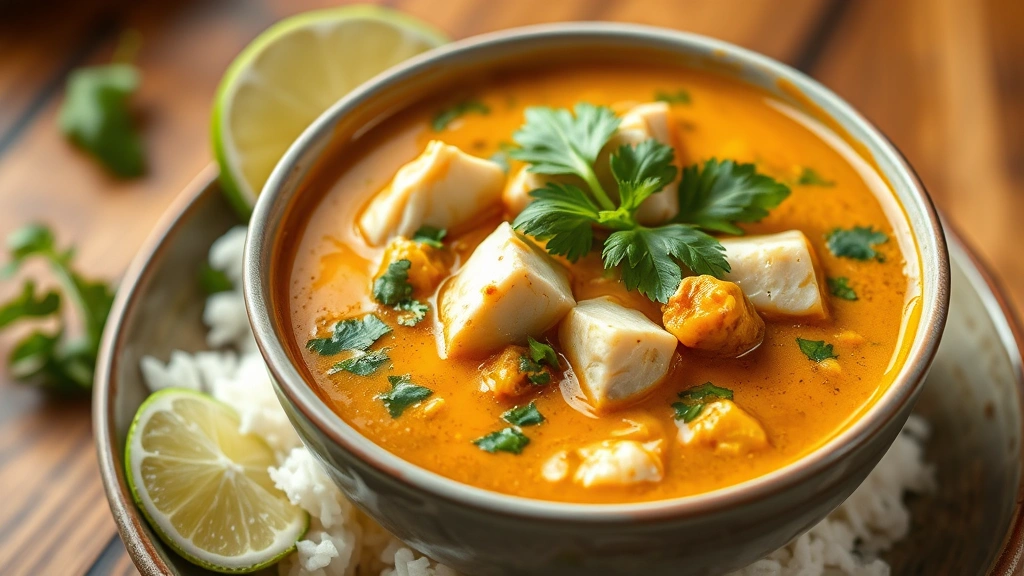
Amok curry is one of Cambodia’s most beloved dishes, a fragrant and creamy curry that showcases the perfect balance of coconut milk, aromatic spices, and fresh herbs. This traditional Khmer dish is typically made with fish, though chicken and shrimp are equally delicious variations. The beauty of amok lies in its delicate flavors—it’s not fiery hot like some Thai curries, but rather warming and comforting with subtle layers of complexity.
The name “amok” comes from the cooking method itself, as the dish is traditionally steamed in banana leaves, which impart a subtle earthiness to the finished curry. However, this recipe can easily be made in a regular pot or Dutch oven for convenience without sacrificing any of the authentic flavors. What makes amok truly special is the paste base made from fresh aromatics like lemongrass, galangal, and turmeric, combined with the richness of coconut milk and the umami depth of fish sauce and shrimp paste.
When you make amok curry at home, you’re creating a restaurant-quality dish that feels elegant enough for entertaining yet simple enough for a weeknight dinner. The preparation is straightforward—make a fragrant paste, sauté it until aromatic, add your protein and coconut milk, and let everything simmer together until perfection. Serve it over jasmine rice with fresh vegetables and a squeeze of lime, and you’ll transport your dinner table straight to Southeast Asia. This recipe serves 4-6 people and comes together in about 45 minutes from start to finish.
For more inspiration with coconut-based curries, check out our Best Heavy Cream Alfredo Sauce Recipe for creamy pasta inspiration, or explore our Delicious Heavy Cream Pasta Recipe. If you’re looking for other protein-forward dishes, our Easy Chicken Alfredo Recipe offers another creamy comfort option. For something lighter, try our Best Chickpea Salad Recipe as a fresh side dish accompaniment.
Ingredients
- 2 pounds white fish fillets (such as cod, halibut, or sea bass), cut into 2-inch chunks
- 3 stalks fresh lemongrass, white parts only, roughly chopped
- 3 slices fresh galangal (or 1 tablespoon galangal powder)
- 4 cloves garlic, minced
- 2 tablespoons fresh turmeric root, peeled and chopped (or 1 tablespoon turmeric powder)
- 3 Thai red chilies, seeded and chopped
- 1 tablespoon shrimp paste
- 2 tablespoons fish sauce
- 1 can (13.5 oz) coconut milk, divided
- 3 tablespoons vegetable oil
- 1 cup chicken or vegetable broth
- 3 egg yolks
- 2 tablespoons palm sugar (or brown sugar)
- 1 cup fresh basil leaves
- 1 cup fresh cilantro, chopped
- 4 kaffir lime leaves, thinly sliced
- 2 tablespoons lime juice
- Salt and white pepper to taste
- Jasmine rice for serving
- Fresh Thai basil and cilantro for garnish
Instructions
- Prepare your paste base by combining the chopped lemongrass, galangal, minced garlic, turmeric, red chilies, and shrimp paste in a food processor.
Blend until you achieve a smooth paste, adding a splash of water if needed to help the blades move smoothly. This aromatic paste is the foundation of your amok curry.
- Heat the vegetable oil in a large pot or Dutch oven over medium heat.
Once shimmering, add the prepared paste and cook for 3-4 minutes, stirring frequently, until the paste becomes fragrant and the oil begins to separate around the edges. This step is crucial for developing the depth of flavor.
- Pour in the chicken or vegetable broth and bring to a gentle simmer.
Cook for 2 minutes to allow the flavors to meld together and the broth to infuse with the aromatics.
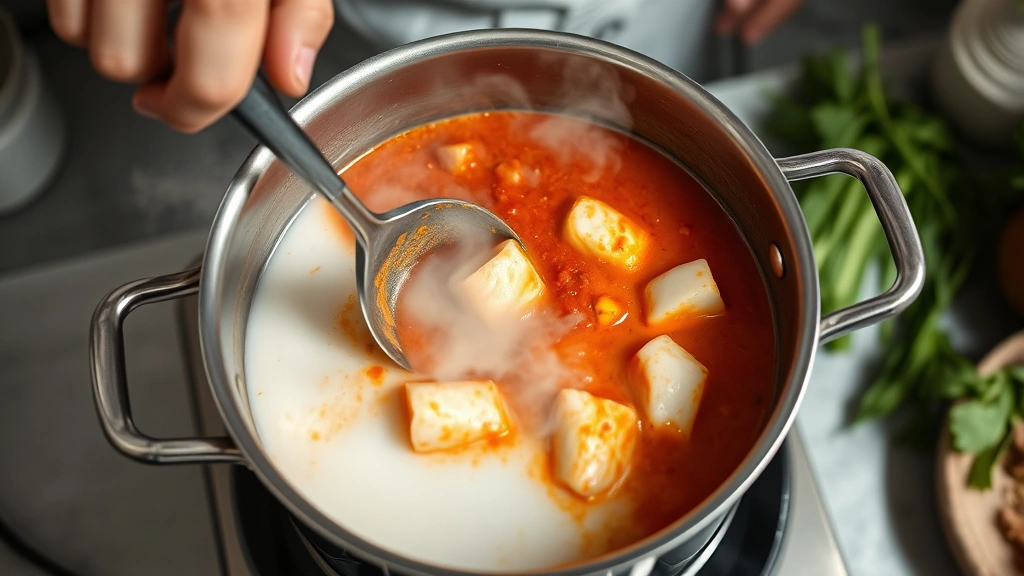
- Add the thick coconut milk from the top of the can (reserve the thin liquid for later) to the pot.
Stir well to combine, creating a rich and creamy base for your curry. The thick coconut milk adds richness and body to the sauce.
- In a small bowl, whisk together the egg yolks with the reserved thin coconut milk and fish sauce.
This mixture will create a silky, luxurious texture in your curry when added properly. Set aside.
- Carefully add the fish chunks to the simmering curry base.
Gently stir to coat each piece with the aromatic paste and coconut mixture. Reduce heat to medium-low to ensure the fish cooks gently without breaking apart.
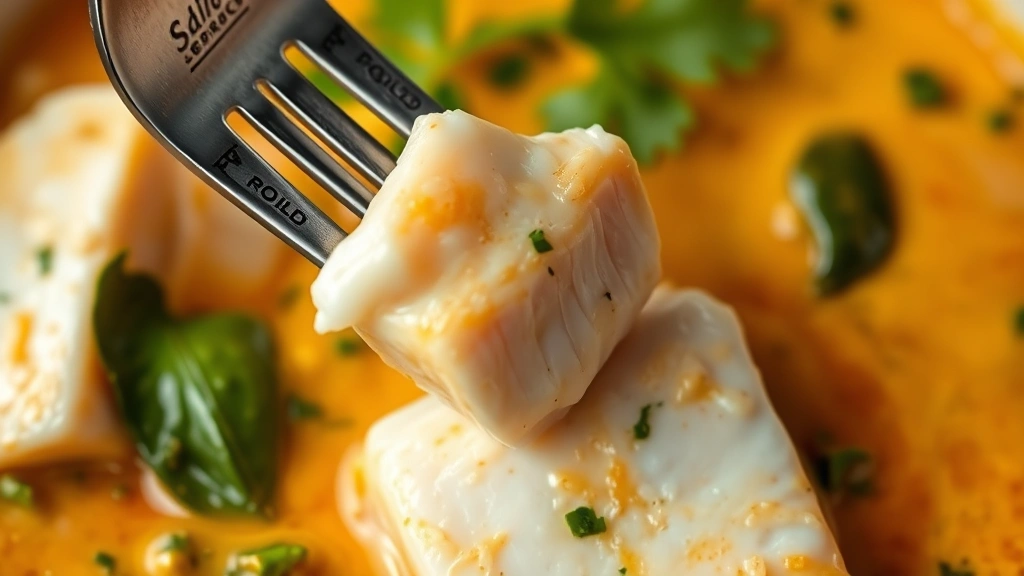
- Simmer the fish in the curry for 8-10 minutes, until the fish is cooked through and flakes easily with a fork.
Avoid stirring too vigorously to prevent the fish from breaking into smaller pieces.
- While the fish cooks, prepare the aromatic finishing ingredients by combining the fresh basil leaves, chopped cilantro, and sliced kaffir lime leaves in a small bowl.
Keep this mixture separate until the final step to preserve the fresh, vibrant flavors.
- Slowly pour the egg yolk and coconut milk mixture into the simmering curry while stirring gently and constantly.
This tempers the eggs and creates a creamy, custard-like consistency without scrambling them. Move your pot away from direct heat while adding this mixture for better control.
- Add the palm sugar and lime juice to the curry, stirring gently to combine.
Taste and adjust seasonings with additional fish sauce, salt, or white pepper as needed. The curry should be balanced between creamy, savory, aromatic, and slightly sweet.
- Fold in most of the fresh basil, cilantro, and kaffir lime leaves, reserving some for garnish.
Stir very gently to incorporate without breaking up the fish pieces further.
- Transfer the amok curry to a serving bowl or individual bowls, garnishing with the reserved fresh herbs.
Serve immediately over steaming jasmine rice with lime wedges on the side for extra brightness.
Pro Tips
Making the paste from scratch: If you cannot find fresh galangal or turmeric, powdered versions work well as substitutes—use about one-third the amount of powder compared to fresh. Lemongrass is essential to the dish’s character, so try to source it fresh if possible, though frozen works in a pinch. A food processor makes quick work of the paste, but you can also use a mortar and pestle for a more traditional approach and finer texture.
Coconut milk quality matters: Use full-fat coconut milk for the richest, most authentic flavor. Shake the can before opening if you want to mix the thick and thin parts together, or carefully separate them if you prefer the traditional method. Light coconut milk can be substituted if watching calories, though the dish will be less creamy and rich.
Tempering the eggs: This step requires attention but is not difficult. The key is adding the egg mixture slowly while stirring constantly and keeping the curry below a boil. If the curry is too hot, the eggs will scramble into small pieces rather than creating a silky sauce. If you’re nervous about this step, remove the pot from heat while adding the egg mixture.
Make-ahead and storage: Amok curry can be made up to 2 days ahead without the egg yolk mixture added. Store it in an airtight container in the refrigerator. Reheat gently over low heat, then add the tempered egg mixture just before serving. The dish doesn’t freeze well due to the egg yolk component.
Serving suggestions: Serve amok curry over jasmine rice, jasmine rice, or sticky rice depending on your preference. Fresh vegetable accompaniments like sliced cucumber, fresh mint, and extra lime wedges allow guests to customize their bowls. A cold Thai iced tea or a crisp white wine like Sauvignon Blanc pairs beautifully with the rich, aromatic curry.
Authentic banana leaf preparation: For a traditional presentation, you can serve the curry in banana leaf cups. Soften banana leaves briefly over a flame or in boiling water, then mold them into cup shapes. Ladle the curry into the leaves just before serving for an impressive presentation that honors the dish’s traditional cooking method.
Spice level adjustment: This recipe is mild to medium in heat. For a spicier version, add more Thai chilies or include the seeds. For those sensitive to heat, reduce or omit the chilies entirely—the curry will still be delicious and aromatic without them.