
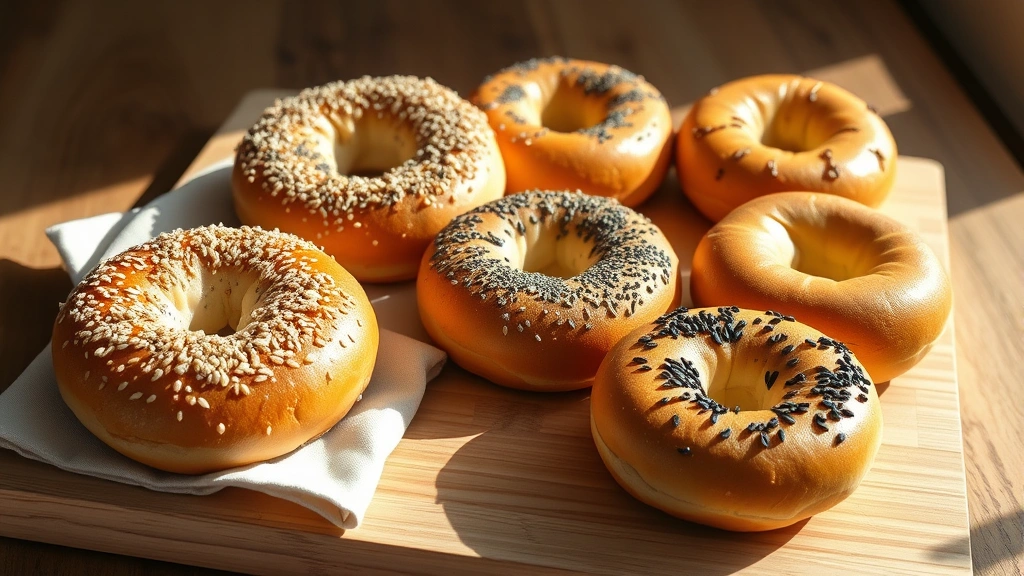
There’s nothing quite like a homemade bagel fresh from the oven—chewy on the inside, crispy on the outside, and absolutely perfect for breakfast or lunch. This best bagel recipe will teach you how to make authentic, delicious bagels right in your own kitchen, and trust me, once you taste these, you’ll never look at store-bought bagels the same way again.
Making bagels at home might seem intimidating, but I promise it’s easier than you think! The secret to achieving that perfect bagel texture lies in a few key techniques: proper kneading, a long cold fermentation, boiling before baking, and using the right ingredients. I’ve been perfecting this recipe for years, and I’m so excited to share all my tips and tricks with you today.
What makes a bagel different from regular bread is its unique preparation method. The dough is boiled before baking, which creates that signature chewy texture and gives bagels their distinctive shine and crust. This boiling step is absolutely crucial and really makes all the difference in the final result. Plus, the long fermentation period develops incredible flavor and gives you that authentic bagel taste.
This recipe makes six beautiful bagels that are perfect for toasting and topping with your favorite spreads. Whether you love classic cream cheese and lox, or you prefer something like Easy Pickled Red Onion Recipe for a fresh twist, these bagels are the perfect canvas. You can also customize them with everything bagel seasoning, sesame seeds, poppy seeds, or keep them plain.
The beauty of homemade bagels is that you can make a big batch and freeze them for later. They freeze beautifully for up to three months, so you’ll always have fresh bagels on hand. Just pop them in the toaster to refresh them, and they’ll taste just as good as the day you made them.
I love making these bagels for Sunday morning breakfast or for special weekend brunches with family and friends. There’s something so satisfying about serving homemade bagels, and everyone always asks for the recipe. Now you’ll have it, and you can impress your loved ones too!
For more pasta-based breakfast ideas, check out my Quick Tasty Bacon Carbonara Recipe which pairs wonderfully with bagels and coffee. If you’re looking for other bread recipes to master, you might also enjoy exploring different dough techniques that will elevate all your baking projects.
Ingredients
- 3½ cups (420g) all-purpose flour
- 1½ teaspoons (9g) kosher salt
- ½ teaspoon (3g) instant yeast
- 1 tablespoon (12g) granulated sugar
- 1¼ cups (295ml) cool water, plus more for boiling
- 2 tablespoons (25g) honey or barley malt syrup
- 1 tablespoon (12g) baking soda
- Toppings of choice: sesame seeds, poppy seeds, everything bagel seasoning, or sea salt
Instructions
- In a large mixing bowl, combine flour, salt, instant yeast, and granulated sugar. Stir these dry ingredients together until evenly distributed.
- Add the cool water to the flour mixture and stir with a wooden spoon or your hands until a shaggy dough forms. The dough should be quite stiff and slightly dry.
- Turn the dough out onto a clean, unfloured work surface and knead for about 10 minutes. Use the heel of your hand to push the dough away from you, then fold it back over itself. Rotate and repeat until the dough becomes smooth and elastic.
- Shape the kneaded dough into a ball and place it in a lightly oiled bowl. Cover the bowl with plastic wrap or a damp kitchen towel.
- Let the dough rest at room temperature for about 1 hour, or until it has increased in volume by about 25 to 30 percent.
- Turn the dough out onto your work surface and divide it into 6 equal pieces, each weighing about 110 grams. You can use a kitchen scale for precision.
- Working with one piece at a time, gently shape each piece into a tight ball. Let these balls rest uncovered for 10 minutes to relax the gluten.
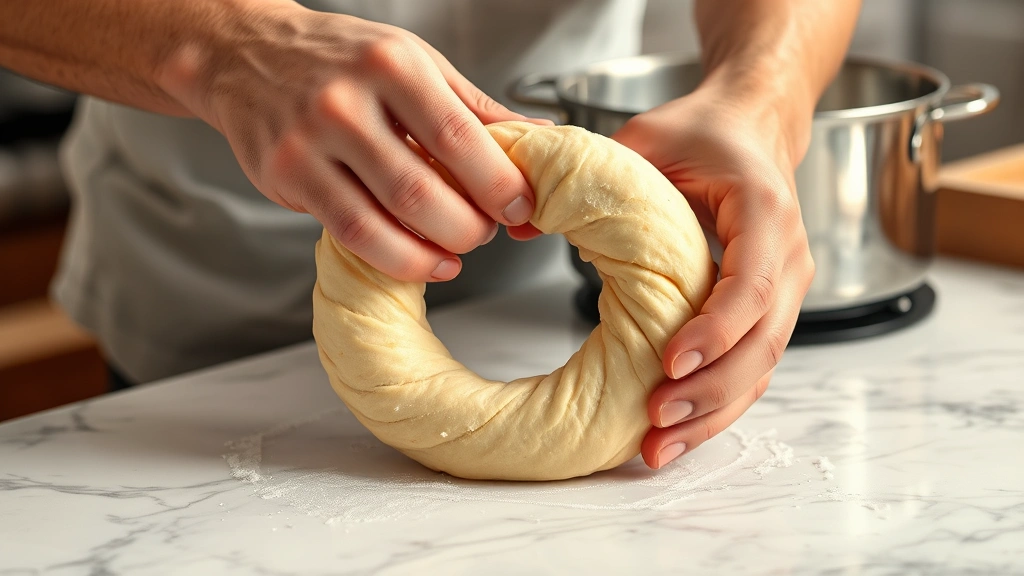
- To shape each bagel, poke a hole in the center of a dough ball with your thumb, then gently stretch the dough into a ring shape about 3 inches in diameter. The hole should be roughly 1½ inches wide. Place the shaped bagel on a parchment paper-lined baking sheet.
- Once all bagels are shaped, cover the baking sheet loosely with plastic wrap and refrigerate for at least 16 hours, or up to 24 hours. This long cold fermentation is essential for developing flavor and achieving the perfect bagel texture.
- The next day, remove the bagels from the refrigerator about 30 minutes before boiling to let them come closer to room temperature.
- Preheat your oven to 425°F (220°C). Line a baking sheet with parchment paper for the boiled bagels.
- Fill a large pot with about 3 quarts of water and bring it to a rolling boil. Add the honey or barley malt syrup and baking soda to the boiling water, stirring gently until dissolved.
- Carefully drop one bagel into the boiling water. It should sink initially, then float to the surface within about 15 seconds. If it doesn’t float, your dough might need more fermentation time next batch.
- Boil each bagel for exactly 1 minute on each side, for a total of 2 minutes per bagel. Use a slotted spoon to flip and remove the bagels.
- Transfer the boiled bagels to the prepared baking sheet, placing them at least 1 inch apart.
- If using toppings, brush the tops of the bagels lightly with water and sprinkle your desired toppings over each one, pressing gently so they adhere.
- Bake the bagels in the preheated oven for 20 to 25 minutes, until the tops are golden brown and the bagels sound hollow when tapped on the bottom.
- Remove the bagels from the oven and let them cool on a wire rack for at least 15 minutes before slicing and serving. They’re best enjoyed while still slightly warm!

Pro Tips
o Make sure your water is cool, not warm, when mixing the dough. Warm water will activate the yeast too quickly and prevent proper fermentation.
o The boiling step is absolutely essential and cannot be skipped. This is what gives bagels their distinctive chewy texture and shiny crust. Don’t boil them too long or the bagels will become dense.
o If you don’t have barley malt syrup, honey works perfectly fine as a substitute. Some bakers prefer the depth of flavor from malt syrup, but both work beautifully.
o You can make these bagels dairy-free by simply serving them with your favorite dairy-free cream cheese or other spreads. The bagel dough itself contains no dairy.
o Leftover bagels can be frozen in an airtight container or freezer bag for up to 3 months. Simply pop them in the toaster to refresh them—no need to thaw first.
o For an everything bagel topping, combine sesame seeds, poppy seeds, dried garlic, dried onion, and sea salt for the classic New York-style bagel.
o The dough should be quite stiff and dense. If it seems too wet, add a bit more flour, one tablespoon at a time.
o For a creamy spread option, try making a flavored cream cheese by mixing cream cheese with fresh herbs, smoked salmon, or sun-dried tomatoes.
o Room temperature matters when shaping. If your dough is too cold, it will be difficult to work with and may tear. Let it sit out for a few minutes if needed.
o This recipe is naturally vegan when served with plant-based spreads and toppings, making it a great option for inclusive breakfast gatherings.
o For more detailed information on bread fermentation and techniques, check out resources on Serious Eats for scientific baking insights.
o If your bagels spread too much during boiling, your fermentation might be too long. Reduce the refrigeration time to 14 hours next time.
o The cream cheese and spreads you choose can really elevate your bagel experience, so don’t skimp on quality ingredients.
o For best results, use a kitchen scale to measure your flour and water. Volume measurements can vary based on how you scoop flour.