
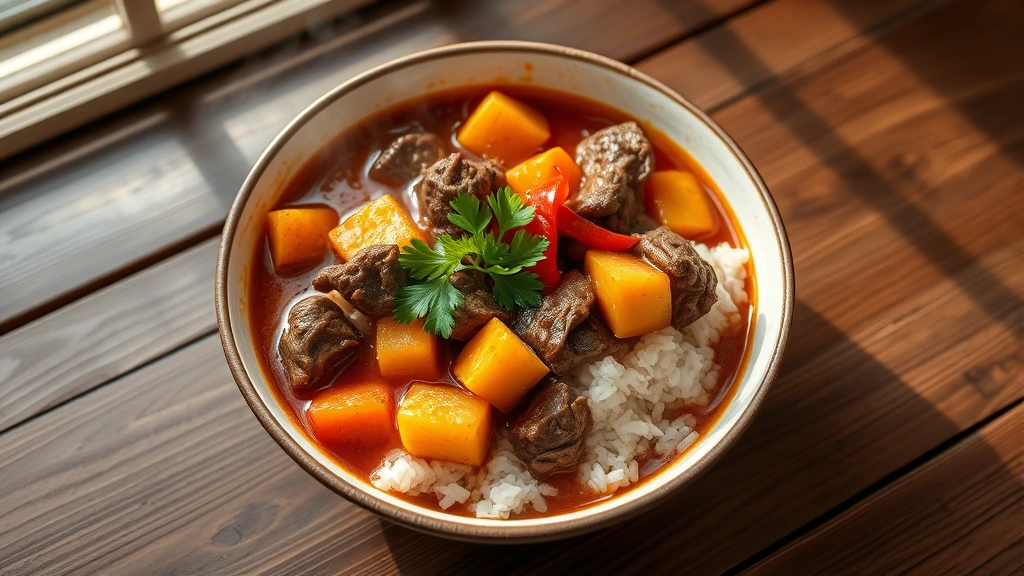
Beef Caldereta is a beloved Filipino stew that brings together tender beef, vibrant vegetables, and a rich, savory sauce that’s absolutely irresistible. This classic comfort food has been passed down through generations and represents the heart of Filipino home cooking. The dish gets its distinctive flavor from a combination of tomato sauce, liver paste, and aromatic spices that create a deeply satisfying meal perfect for family gatherings and special occasions.
What makes this beef caldereta recipe so special is the careful balance of flavors and textures. The beef becomes incredibly tender as it simmers in the flavorful sauce, while the potatoes and other vegetables absorb all the delicious seasoning. Unlike some stews that can be one-dimensional, caldereta layers multiple flavor profiles—the slight sweetness from the sauce, the earthiness of the liver paste, and the brightness of fresh vegetables all working together harmoniously.
This recipe is more approachable than you might think. While it requires some patience for the beef to become tender, the actual hands-on time is minimal. You’ll brown the meat, sauté your aromatics, and then let the oven do most of the work. It’s the perfect dish to make when you want something that tastes like it took hours but didn’t require constant attention. Serve it over steamed white rice with a cold beverage, and you’ll understand why this dish is so cherished in Filipino households.
For the best results, use beef chuck or brisket—these cuts have enough marbling to become wonderfully tender during the long simmer. Don’t skip the liver paste step, as it’s what gives caldereta its signature depth of flavor. You can find it at Asian markets, or substitute with finely minced liver if needed. This recipe feeds a crowd and actually tastes even better the next day, making it perfect for meal prep or entertaining. Check out this Quick Tasty Bacon Carbonara Recipe for another comforting dish, or try this Delicious Heavy Cream Pasta Recipe for a different style of comfort food.
For those looking to explore more Filipino flavors, understanding the basics of building a good stew is essential. The technique of browning the meat first develops complex flavors through the Maillard reaction, which is crucial for depth. Then, the long simmer allows all the flavors to meld together beautifully. This same principle applies to many cuisines—check out this Best Heavy Cream Alfredo Sauce Recipe to see how cream-based sauces work, or balance your meal with this Best Chickpea Salad Recipe as a fresh side.
When serving caldereta, consider pairing it with contrasting flavors like this Easy Pickled Red Onion Recipe for a bright, acidic element that cuts through the richness. For more inspiration on this classic dish, visit Serious Eats for detailed cooking techniques, Bon Appétit for ingredient sourcing tips, and New York Times Cooking for variations on this beloved stew.
Ingredients
- 3 pounds beef chuck or brisket, cut into 1.5-inch cubes
- 4 tablespoons vegetable oil, divided
- 1 medium onion, diced
- 6 cloves garlic, minced
- 3 tablespoons liver paste (pâté or finely minced liver)
- 2 cans (8 oz each) tomato sauce
- 1 cup beef broth
- 3 medium potatoes, peeled and cubed
- 2 medium carrots, peeled and sliced
- 1 red bell pepper, diced
- 1 green bell pepper, diced
- 1 cup fresh or frozen peas
- 3 tablespoons soy sauce
- 2 tablespoons oyster sauce
- 2 bay leaves
- 1 teaspoon black pepper
- 1 teaspoon salt, plus more to taste
- 1/2 teaspoon paprika
- 1/4 teaspoon ground cloves
- 2 tablespoons cornstarch mixed with 3 tablespoons water
- Fresh parsley for garnish (optional)
Instructions
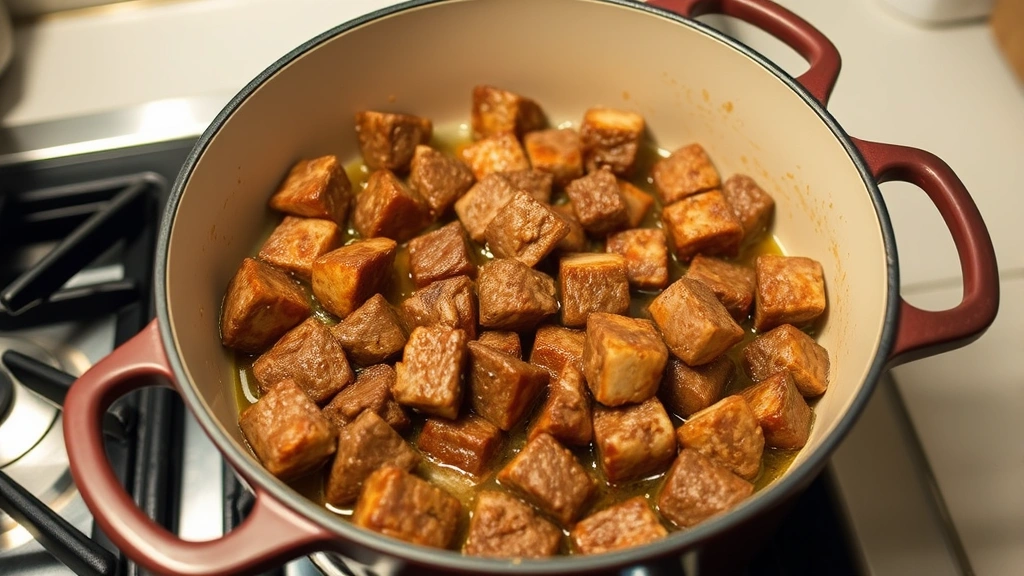
- Pat the beef cubes dry with paper towels and season generously with salt and black pepper on all sides.
- Heat 2 tablespoons of vegetable oil in a large Dutch oven or heavy-bottomed pot over medium-high heat until shimmering.
- Working in batches to avoid overcrowding, brown the beef on all sides until deeply golden, about 3-4 minutes per side. Transfer browned beef to a plate and set aside.
- Add the remaining 2 tablespoons of oil to the pot and reduce heat to medium.
- Add the diced onion and cook, stirring occasionally, until softened and translucent, about 4-5 minutes.
- Stir in the minced garlic and cook for another 1-2 minutes until fragrant.
- Add the liver paste and stir constantly for 2-3 minutes, breaking it up and incorporating it into the oil and aromatics to create a flavorful base.
- Pour in the tomato sauce and beef broth, stirring well to combine and scrape up any browned bits from the bottom of the pot.
- Return the browned beef to the pot along with any accumulated juices.
- Add the bay leaves, paprika, ground cloves, soy sauce, and oyster sauce, stirring to combine thoroughly.
- Bring the mixture to a simmer, then reduce heat to low, cover partially, and simmer for 1 hour and 15 minutes, stirring occasionally.
- Add the cubed potatoes and sliced carrots to the pot, stirring to distribute them evenly throughout the stew.
- Continue simmering for another 25-30 minutes until the potatoes are fork-tender and the beef is very tender.
- Add the diced red and green bell peppers and frozen peas, stirring gently to combine.
- Simmer for an additional 8-10 minutes until the peppers are softened but still have some texture.
- In a small bowl, whisk together the cornstarch and water until smooth with no lumps.
- Slowly pour the cornstarch slurry into the simmering stew while stirring constantly to avoid clumping.
- Continue stirring and simmer for 2-3 minutes until the sauce thickens and becomes glossy.
- Taste and adjust seasoning with additional salt, pepper, soy sauce, or oyster sauce as needed.
- Remove from heat, remove bay leaves, and let rest for 5 minutes before serving.
- Ladle into serving bowls, top with fresh parsley if desired, and serve hot over steamed white rice.
Pro Tips
Liver paste is the secret ingredient that gives caldereta its signature depth—it’s available at Asian grocery stores in small cans or jars and is worth seeking out for authentic flavor.
If you can’t find liver paste, you can substitute with finely minced chicken liver cooked briefly in the oil before adding other ingredients, though the flavor will be slightly different.
For a thicker sauce, use the full amount of cornstarch slurry; for a brothier stew, reduce it to 1 tablespoon cornstarch with 2 tablespoons water.
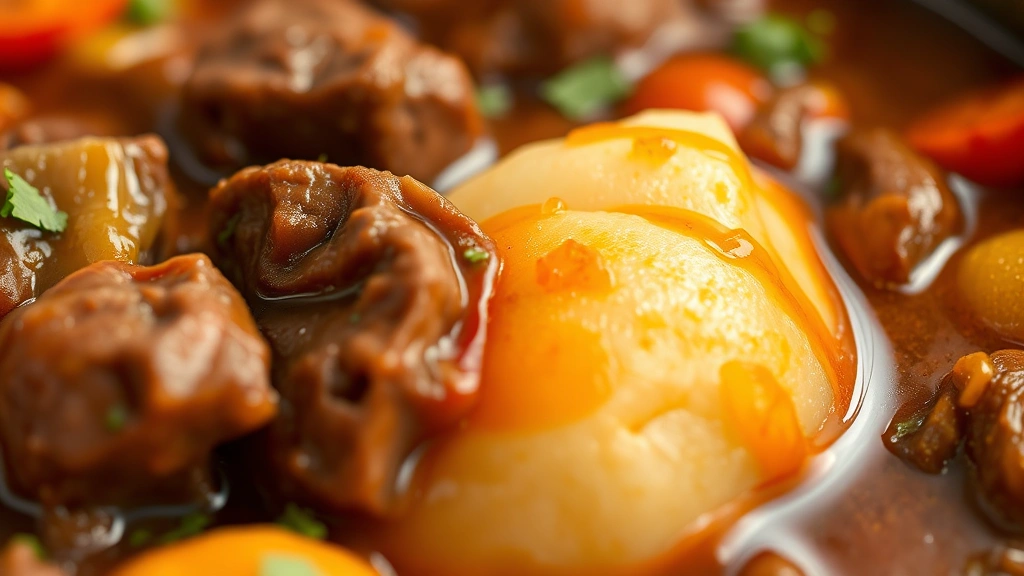
Potatoes should be cut into similar-sized pieces so they cook evenly—avoid making them too small or they’ll fall apart during the long simmer.
Do not add the bell peppers and peas until the last 10 minutes of cooking to preserve their color, texture, and fresh flavor rather than having them become mushy.
This dish actually tastes better the next day after the flavors have melded overnight in the refrigerator—perfect for making ahead.
Store leftovers in an airtight container in the refrigerator for up to 4 days, or freeze for up to 3 months.
When reheating, add a splash of broth or water if the stew has become too thick, then warm gently over medium-low heat.
For a spicier version, add 1-2 fresh Thai chilies or 1/4 teaspoon cayenne pepper to the sauce.
Bring all ingredients to room temperature before serving if you’ve made this ahead and refrigerated it—this helps with even reheating.
Serve alongside steamed white rice, crusty bread, or Filipino rice cakes for a complete meal.
Garnish with fresh parsley, scallions, or cilantro for added freshness and color contrast.