
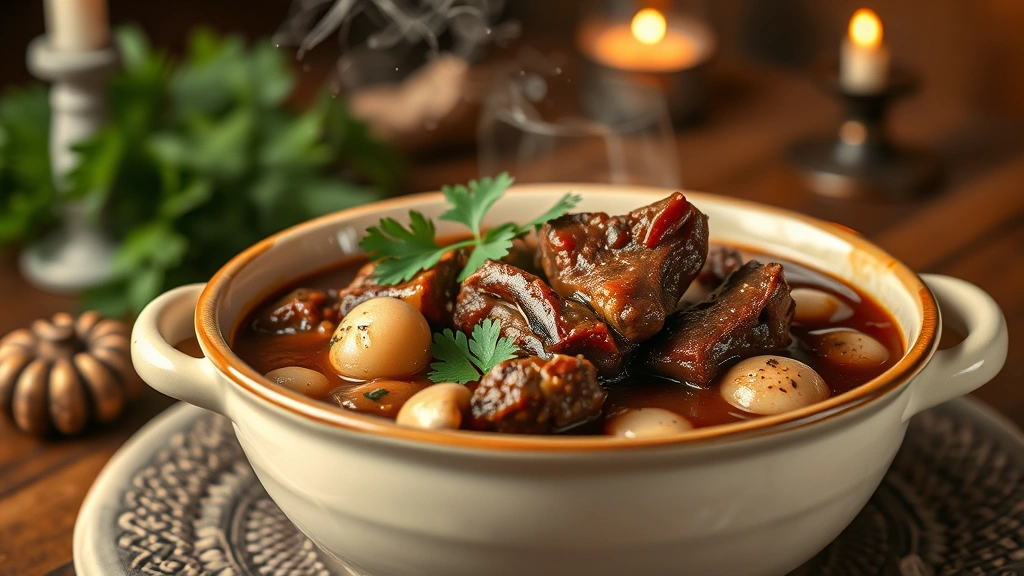
There’s something absolutely magical about beef cheek stew – it’s the kind of dish that transforms humble, affordable cuts of meat into something utterly luxurious and deeply satisfying. I’m talking fall-apart-tender beef that practically melts on your tongue, swimming in a rich, velvety sauce that’s been building flavor for hours. This is comfort food at its finest, and honestly, it’s easier to make than you might think.
Beef cheeks are one of my favorite cuts to work with because they’re so forgiving. They’re packed with connective tissue and fat, which means when you braise them low and slow, they become incredibly tender and flavorful. The key is patience – you can’t rush this process – but the actual hands-on time is minimal. Most of the work is just letting your oven do the heavy lifting.
I’ve been making this beef cheek stew for years, and it’s become a dinner party staple. There’s something about serving this dish that feels both elegant and unpretentious. Your guests will be absolutely blown away, and you’ll barely break a sweat in the kitchen. The aroma alone will have everyone gathering in the kitchen asking when dinner will be ready.
What I love most about this recipe is how versatile it is. Serve it over creamy mashed potatoes, egg noodles, polenta, or even crusty bread. I often pair it with pickled red onions for a bright contrast, or alongside a simple green salad. For a more substantial meal, try it with chickpea salad on the side.
The magic happens when you sear the beef cheeks first – this creates a beautiful crust and develops deep, savory flavors through the Maillard reaction. Then you build your base with aromatics, add your liquid, and let everything braise together until the meat is fork-tender. I typically use beef broth, red wine, and a touch of tomato paste for depth. Some people add a splash of balsamic vinegar or a square of dark chocolate – I’ve tried both, and they’re wonderful additions if you want to experiment.
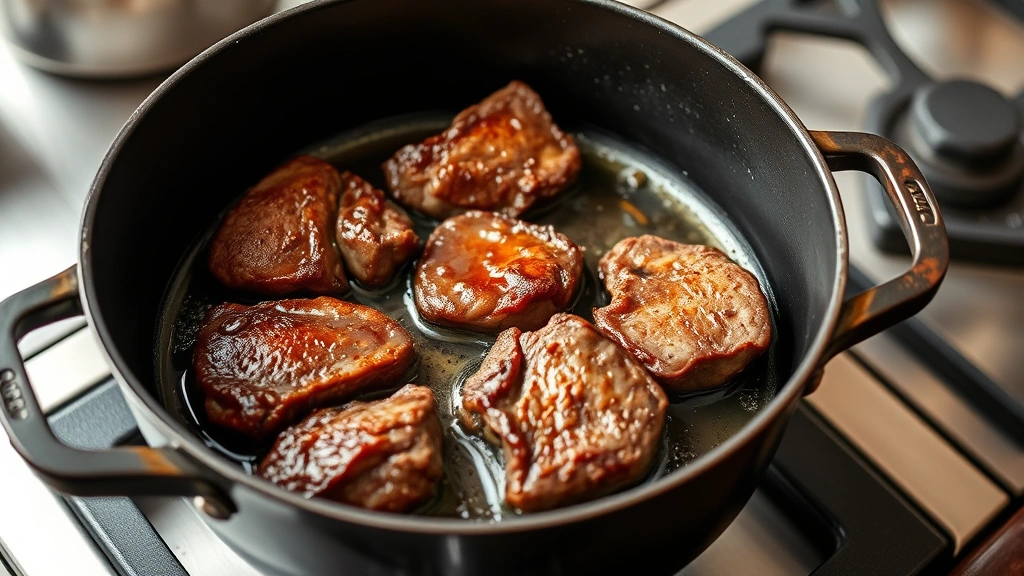
One thing I always emphasize: don’t skip the searing step. I know it takes a few extra minutes, but it’s absolutely worth it. You want a deep golden-brown crust on those cheeks before they hit the braising liquid. This is what separates a good beef cheek stew from an absolutely spectacular one.
The vegetables in this stew are just as important as the beef. I go traditional with pearl onions, carrots, and mushrooms – they absorb all those incredible flavors and become tender little flavor bombs. Some recipes call for adding them at different times, and I do the same. The pearl onions and mushrooms go in toward the end so they maintain some texture, while the carrots cook longer and get nice and tender.
For wine selection, I usually reach for a medium-bodied red – something like a Burgundy, Pinot Noir, or even a Côtes du Rhône works beautifully. You could also use a beef broth-only version if you prefer to skip the wine, though the wine really does add a lovely complexity. Check out Bon Appétit’s take on beef cheek stew for another excellent approach.
Make this stew a day ahead if you can – the flavors actually improve overnight as everything melds together. It also makes for an easier dinner service since you just need to reheat it gently before serving. Plus, any leftover stew is absolutely divine the next day.
This is the kind of recipe that makes you feel like a accomplished home cook, even though it’s really just a matter of following steps and letting time do the work. It’s restaurant-quality food that you can make in your own kitchen, and that’s something truly special.
Here’s to cozy dinners, impressive dinner parties, and the kind of food that lingers in your memory long after the last bite.
Ingredients
- 3 pounds beef cheeks, trimmed and cut into 2-inch chunks
- 2 tablespoons kosher salt, plus more to taste
- 1 tablespoon freshly ground black pepper
- 3 tablespoons all-purpose flour
- 3 tablespoons olive oil or butter, divided
- 1 large yellow onion, diced
- 3 carrots, cut into 1-inch pieces
- 4 cloves garlic, minced
- 2 tablespoons tomato paste
- 1 cup dry red wine
- 3 cups beef broth
- 2 bay leaves
- 3-4 fresh thyme sprigs
- 1 pound cremini mushrooms, halved
- 12 ounces pearl onions, peeled
- 1 tablespoon red wine vinegar
- 2 teaspoons Dijon mustard
- Fresh parsley for garnish
Instructions
- Preheat your oven to 325°F. Pat the beef cheeks dry with paper towels – this is crucial for getting a good sear.
- In a shallow bowl, mix together the flour, salt, and black pepper. Toss the beef cheek pieces in this mixture until well coated, shaking off any excess.
- Heat 2 tablespoons of the olive oil in a large Dutch oven over medium-high heat. Once the oil is shimmering, working in batches to avoid crowding the pan, sear the beef cheeks for 3-4 minutes per side until deeply browned. Transfer to a plate and set aside.
- Reduce heat to medium. Add the remaining tablespoon of oil to the pot, then add the diced onion and carrot pieces. Sauté for 5-7 minutes, stirring occasionally, until the vegetables begin to soften and the onion becomes translucent.
- Add the minced garlic and cook for another minute until fragrant, stirring constantly to prevent burning.
- Stir in the tomato paste and cook for 2 minutes, letting it caramelize slightly and deepen in color.
- Pour in the red wine, using a wooden spoon to scrape up any browned bits stuck to the bottom of the pot – this is liquid gold for flavor.
- Add the beef broth, bay leaves, and thyme sprigs. Stir well to combine.
- Return the seared beef cheeks to the pot, along with any accumulated juices. The liquid should come about halfway up the meat – if it doesn’t, add a bit more broth.
- Bring the mixture to a simmer, then cover the Dutch oven with its lid and transfer to the preheated 325°F oven.
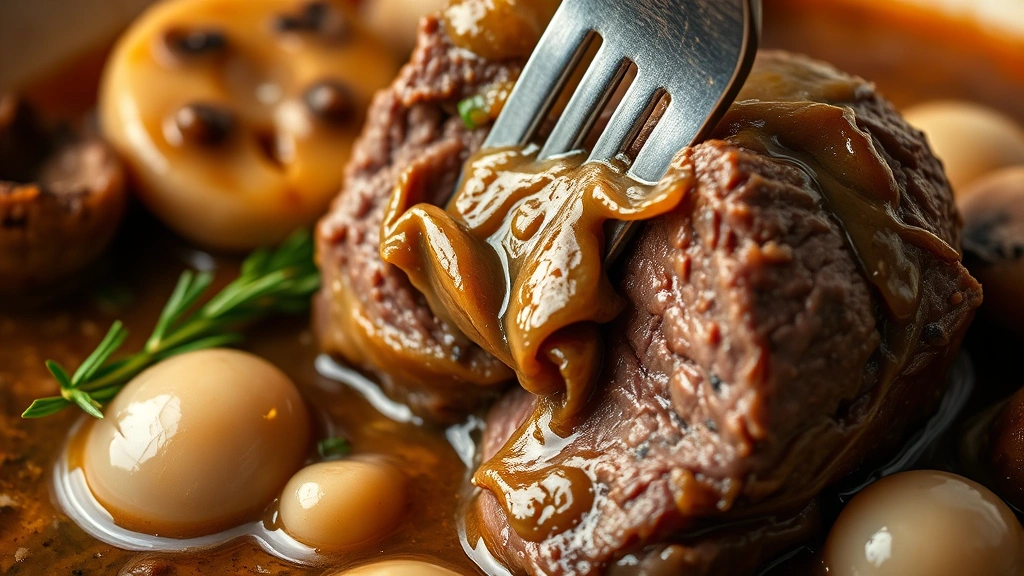
- Braise for 2 to 2.5 hours, stirring occasionally, until the beef is very tender and easily pierced with a fork. The meat should practically shred when prodded.
- Remove the pot from the oven. Discard the bay leaves and thyme sprigs using tongs or a slotted spoon.
- In a separate skillet, heat 1 tablespoon of oil over medium heat. Add the mushrooms and cook for 5-7 minutes, stirring occasionally, until golden and any liquid has evaporated. Season with salt and pepper.
- In the same skillet, add the pearl onions and cook for 8-10 minutes over medium heat, stirring frequently, until they’re golden and just tender.
- Add the cooked mushrooms and pearl onions to the beef stew, stirring gently to combine.
- Stir in the red wine vinegar and Dijon mustard, which will add brightness and depth to the sauce.
- Taste and adjust seasoning with additional salt and pepper as needed. The sauce should be rich, savory, and well-balanced.
- Return the pot to the oven, uncovered, for an additional 15-20 minutes to allow the new vegetables to warm through and the flavors to meld.
- Remove from the oven and let rest for 5 minutes before serving. Garnish generously with fresh chopped parsley and serve hot over your choice of accompaniment.
Pro Tips
If you can’t find beef cheeks, this recipe works beautifully with beef chuck or beef short ribs – adjust cooking time as needed, as these cuts may require slightly less time than cheeks.
The stew actually tastes better the next day once the flavors have had time to meld and deepen. Make it up to two days ahead and store it in an airtight container in the refrigerator. Reheat gently on the stovetop over low heat.
For a deeper, richer sauce, you can reduce it by simmering uncovered for 10-15 minutes after the beef is tender. This will concentrate the flavors and thicken the sauce slightly.
Serving suggestions are endless – mashed potatoes are traditional and wonderful, but also consider egg noodles, polenta, crusty bread, or even over a bed of creamy cauliflower puree.
Wine pairing: Serve with the same wine used in the recipe, or choose a full-bodied red like Bordeaux, Burgundy, or a hearty Côtes du Rhône.
Leftovers freeze exceptionally well for up to three months. Thaw overnight in the refrigerator and reheat gently before serving.
For a lighter version, you can make this with less wine and more broth, though the wine really does add a special complexity that’s hard to replicate.
If pearl onions are hard to find, regular pearl onions from the frozen section work great, or substitute with cipollini onions or even small shallots.
The mustard and vinegar at the end are optional but highly recommended – they brighten the rich, heavy sauce and add a nice complexity that keeps people guessing about what makes it taste so good.