
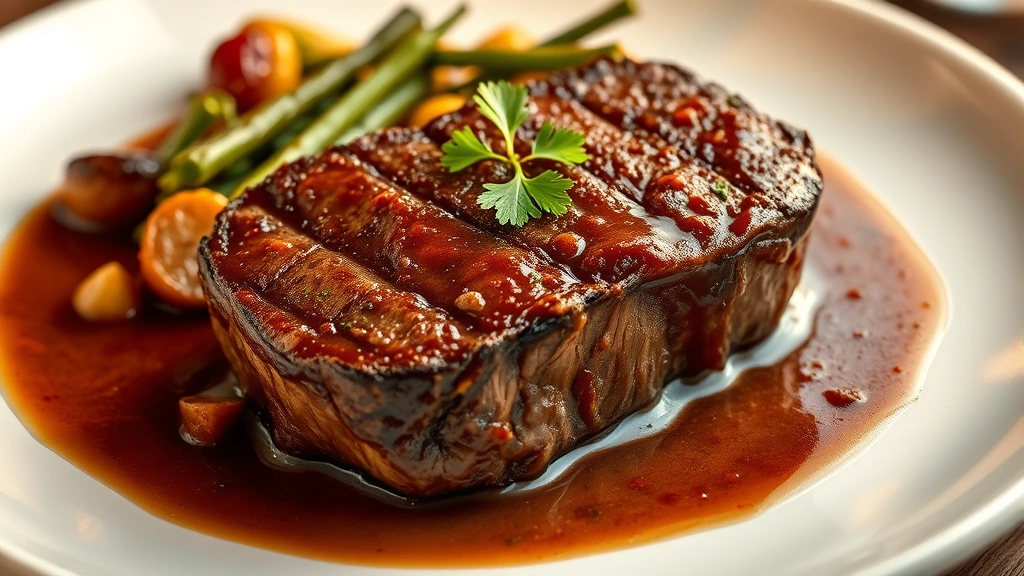
Beef chuck steak is one of those wonderful cuts that transforms into pure magic when given the proper time and technique. This beautiful piece of meat, marbled with fat and connective tissue, becomes incredibly tender and flavorful when braised low and slow. I absolutely adore making this for family dinners because it’s elegant enough for guests yet simple enough for a weeknight meal.
The secret to the best beef chuck steak lies in proper searing, patient braising, and allowing the meat to rest so the juices redistribute throughout. When you slice into a perfectly cooked chuck steak, you want that beautiful crust on the outside and a tender, juicy interior that practically melts in your mouth. This recipe teaches you exactly how to achieve that restaurant-quality result at home.
I love serving this with creamy mashed potatoes or crusty bread to soak up that incredible braising liquid. For a lighter option, try pairing it with a fresh pickled red onion recipe or a vibrant chickpea salad to balance the richness. This recipe has become a staple in my kitchen, and I’m thrilled to share it with you.
Whether you’re cooking for a special occasion or just want to elevate your dinner, this beef chuck steak recipe delivers impressive results every single time. The technique is straightforward, the ingredients are accessible, and the payoff is absolutely delicious. Your family will be asking for this again and again!
Ingredients
- 2 beef chuck steaks, each about 1.5 inches thick (approximately 8-10 ounces each)
- 2 teaspoons kosher salt, plus more to taste
- 1 teaspoon freshly ground black pepper
- 3 tablespoons olive oil, divided
- 4 cloves garlic, minced
- 1 medium yellow onion, diced
- 2 medium carrots, cut into 2-inch pieces
- 2 celery stalks, cut into 2-inch pieces
- 2 cups beef broth
- 1 cup red wine (optional but recommended)
- 2 tablespoons tomato paste
- 3 sprigs fresh thyme
- 2 bay leaves
- 1 tablespoon Worcestershire sauce
- 1 teaspoon Dijon mustard
- 2 tablespoons butter
- 2 tablespoons all-purpose flour
- Fresh parsley for garnish
Instructions
- Remove the beef chuck steaks from the refrigerator and allow them to sit at room temperature for 15-20 minutes. This ensures even cooking throughout the meat.
- Pat the chuck steaks completely dry with paper towels. Moisture on the surface will prevent proper browning and crust formation.
- Season both sides of each steak generously with kosher salt and freshly ground black pepper, making sure to season the edges as well.
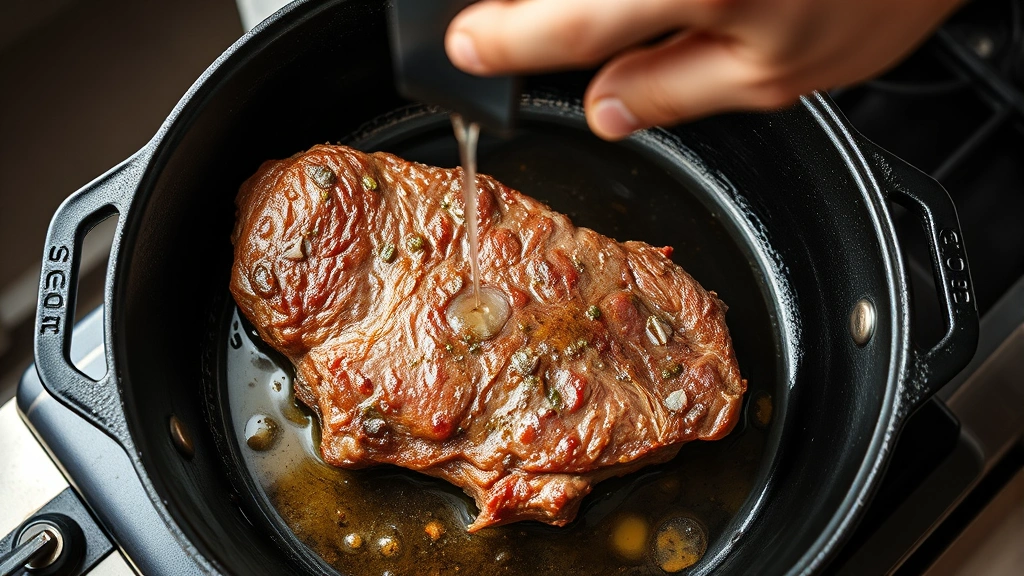
- Heat 1.5 tablespoons of olive oil in a large Dutch oven or heavy-bottomed pot over medium-high heat until shimmering.
- Carefully place the first chuck steak in the hot oil and sear for 3-4 minutes without moving it, allowing a golden crust to form.
- Flip the steak and sear the other side for another 3-4 minutes until deeply browned. Transfer to a plate and repeat with the remaining oil and second steak.
- Reduce heat to medium and add the diced onion, carrots, and celery to the pot. Sauté for about 5 minutes, stirring occasionally, until the vegetables begin to soften and release their aromatics.
- Add the minced garlic and cook for 1 minute, stirring constantly, until fragrant.
- Stir in the tomato paste and cook for 1-2 minutes, allowing it to caramelize slightly and deepen in color.
- Pour in the red wine (if using) and scrape the bottom of the pot with a wooden spoon to release all the flavorful browned bits. Let it simmer for 2-3 minutes to reduce slightly.
- Add the beef broth, Worcestershire sauce, Dijon mustard, thyme sprigs, and bay leaves. Stir well to combine all ingredients.
- Return the seared chuck steaks to the pot, nestling them among the vegetables and ensuring they’re mostly submerged in the braising liquid.
- Bring the liquid to a gentle simmer, then cover the pot with a lid and transfer to a preheated 325°F oven.
- Braise for 2 hours to 2 hours 30 minutes, checking halfway through. The meat should be fork-tender and easily pierced without resistance.
- Remove the pot from the oven and carefully transfer the chuck steaks to a warm plate using tongs. Tent loosely with foil to keep warm.
- Strain the braising liquid through a fine-mesh sieve into a bowl, discarding the vegetables and herbs (or save the vegetables if desired).
- Return the strained liquid to the pot over medium heat. In a small bowl, whisk together the butter and flour to create a beurre manié, or smooth paste.
- Whisk the butter-flour mixture into the simmering braising liquid a little at a time, stirring constantly until the sauce thickens to your desired consistency, about 5-7 minutes.
- Taste the sauce and adjust seasoning with additional salt and pepper as needed.
- Return the chuck steaks to the pot, spooning the thickened sauce over them.
- Let the steaks rest in the sauce for 5 minutes, then transfer to serving plates and spoon additional sauce over the top.
- Garnish with fresh parsley and serve immediately with your choice of sides.

Pro Tips
- Chuck steak selection is crucial to the success of this recipe. Look for steaks that are well-marbled with fat throughout, as this renders during cooking and keeps the meat moist and tender. Avoid steaks that appear too lean.
- The initial searing step cannot be skipped or rushed. This creates the flavorful crust through the Maillard reaction, which adds depth and complexity to the entire dish. Make sure your oil is hot enough and don’t move the steaks while searing.
- If you prefer not to use red wine, you can substitute with additional beef broth or even a splash of balsamic vinegar for richness. The wine adds acidity and complexity that balances the richness of the beef.
- This recipe is perfect for batch cooking. You can easily double or triple the recipe to feed a larger crowd, and the braising time remains the same as long as the steaks are arranged in a single layer.
- The braising liquid can be made ahead of time and stored in the refrigerator for up to 3 days before cooking the chuck steaks. Simply reheat gently before proceeding.
- Leftover chuck steak and sauce keep beautifully in an airtight container in the refrigerator for up to 4 days. You can reheat gently in a 325°F oven until warmed through, or simply reheat on the stovetop over medium-low heat.
- For a vegetable-forward presentation, save some of the braised carrots, onions, and celery from the cooking liquid rather than straining them out. They’ll be incredibly tender and flavorful.
- Chuck steak pairs beautifully with creamy sides. Consider serving alongside buttered egg noodles, mashed potatoes, polenta, or even crusty bread for soaking up every drop of sauce.
- Fresh herbs like thyme, rosemary, and bay leaf are essential to the flavor profile of this dish. Don’t skip them or substitute with dried herbs as the fresh varieties provide a more refined flavor.
- The thickness of your chuck steaks matters. Aim for steaks that are at least 1.5 inches thick so they don’t dry out during the braising process. Thinner steaks will cook faster but may become tough.
- If your braising liquid seems too thin after cooking, you can reduce it further on the stovetop over medium-high heat before thickening with the beurre manié. This concentrates the flavors beautifully.
- This recipe showcases how understanding proper cooking techniques elevates simple ingredients into something truly special. The combination of high-heat searing and low-temperature braising is what transforms this humble cut into restaurant-quality dining.