
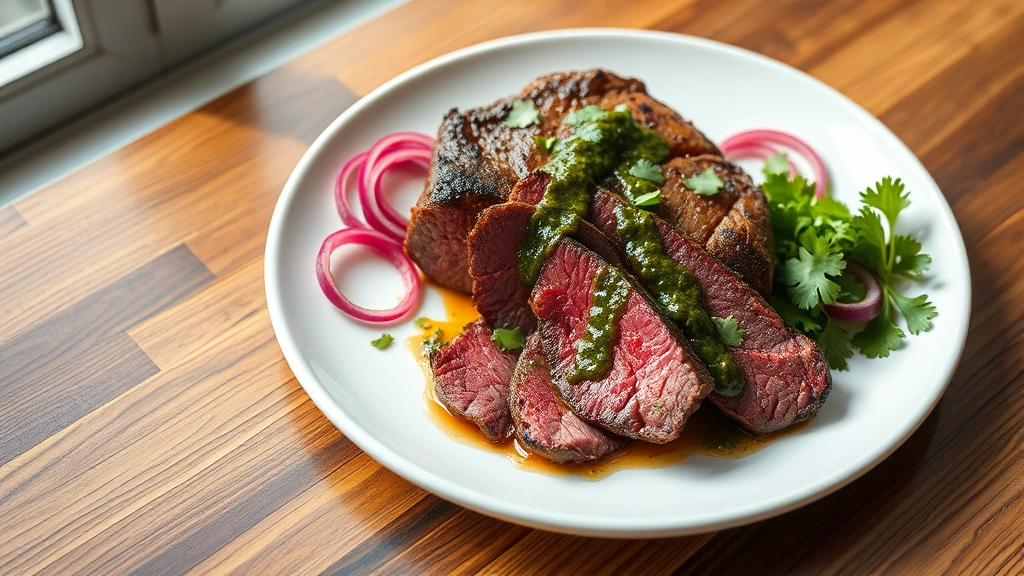
Beef heart is one of those beautiful cuts that deserves way more love in the kitchen. I know it sounds intimidating, but trust me, once you try this recipe, you’ll be making it all the time. It’s incredibly tender when prepared correctly, has this gorgeous deep flavor that’s more refined than regular ground beef, and it’s also wonderfully budget-friendly. This recipe transforms beef heart into something truly special that your family will absolutely devour.
What makes beef heart so magical is its unique texture and rich taste. When you slice it thin and cook it quickly over high heat, it becomes impossibly tender with a slightly gamey depth that pairs beautifully with bright, fresh flavors. I like to think of it as the most underrated cut of beef – it’s leaner than most steaks, more flavorful than you’d expect, and it cooks faster than you’d imagine. The key is understanding that you want to either cook it very quickly at high temperatures or braise it low and slow. There’s really no in-between.
This particular preparation is inspired by traditional Argentine and Peruvian cooking, where beef heart (or “corazón”) is absolutely celebrated. We’re going to slice it thin, marinate it in citrus and spices, then sear it until it’s caramelized on the outside but still tender within. Serve it with pickled red onions for brightness, some chimichurri sauce for that authentic flavor, and fresh greens for balance. It’s restaurant-quality at home, and honestly, it’s easier than you might think.
I absolutely love serving this with creamy pasta or with alfredo sauce for a more indulgent take. You could also do a lighter version with a fresh chickpea salad for a completely different vibe. The beauty of beef heart is its versatility – it plays well with so many flavor profiles. For more inspiration on preparing offal, check out Serious Eats, which has incredible resources on nose-to-tail cooking.
The most important thing when working with beef heart is purchasing quality meat from a trusted butcher. Ask them to trim away any excess fat and connective tissue, or you can absolutely do this yourself at home with a sharp knife. Once it’s trimmed, the meat should be deep red and smell fresh – there shouldn’t be any off odors. Store it in the coldest part of your refrigerator and use it within a couple of days for best results. If you’re planning ahead, it freezes beautifully for up to three months.
I’ve been making this recipe for years now, and it never fails to impress dinner guests who think they don’t like offal. The combination of the quick sear, the bright citrus marinade, and the gorgeous charred crust creates something that’s simply irresistible. Plus, knowing you’re serving something so nutritious – beef heart is packed with iron, zinc, and B vitamins – makes it feel like you’re doing something really good for your family. This is the kind of recipe that makes you feel like a real cook, even though it’s genuinely simple.
Ingredients
- 1 beef heart (about 1.5 pounds), trimmed and cleaned
- 3 tablespoons olive oil, divided
- 3 tablespoons fresh lime juice
- 2 tablespoons fresh lemon juice
- 4 cloves garlic, minced
- 1 teaspoon ground cumin
- 1/2 teaspoon smoked paprika
- 1/4 teaspoon cayenne pepper
- 1 teaspoon kosher salt, plus more to taste
- 1/2 teaspoon freshly ground black pepper, plus more to taste
- 1/4 cup fresh cilantro, chopped
- 1/4 cup fresh parsley, chopped
- 2 tablespoons red wine vinegar
- 1 jalapeño, thinly sliced (optional)
- Fleur de sel for finishing
Instructions
- Start by preparing your beef heart. Place it on a clean cutting board and examine it carefully. You’ll see chambers and connective tissue inside – this is completely normal. Using a sharp knife, carefully trim away any excess fat, connective tissue, and the silverskin. The goal is to end up with clean, deep red meat. Don’t worry about being perfect; just remove the obvious stuff. Pat the trimmed heart dry with paper towels.
- Once your heart is trimmed and dried, place it on the cutting board and examine the grain of the meat. You’ll notice it has a very specific grain pattern. Using a sharp knife held at a slight angle, slice the heart against the grain into pieces about 1/4 inch thick. This is crucial for tenderness – cutting against the grain breaks up the muscle fibers. You should end up with roughly 12-16 slices depending on the size of your heart.
- In a small bowl, whisk together 2 tablespoons of the olive oil, the lime juice, lemon juice, minced garlic, cumin, smoked paprika, cayenne pepper, salt, and black pepper. This creates your marinade, and it’s where all the magic happens. The citrus will gently begin to denature the proteins while the spices add incredible depth.
- Arrange the beef heart slices in a shallow dish or on a large plate. Pour the marinade over the meat, making sure each slice is well coated. Sprinkle half of the fresh cilantro and parsley over the top. Cover loosely with plastic wrap and let it sit at room temperature for 30 minutes. Don’t skip this step – the marinade really does make a difference in tenderness and flavor.
- While the meat is marinating, make a quick chimichurri-style sauce by combining the remaining cilantro and parsley with the red wine vinegar, 1 tablespoon of olive oil, a pinch of salt and pepper, and the sliced jalapeño if using. Let this sit so the flavors can meld. This adds brightness and authenticity to the final dish.
- After the marinade time, remove the beef heart slices from the marinade and pat them lightly with paper towels. Don’t rinse them – you want that seasoning to stay on. The meat should feel tacky but not wet. If there’s excess liquid, just pat it away gently. Season both sides lightly with a tiny bit more salt and pepper.
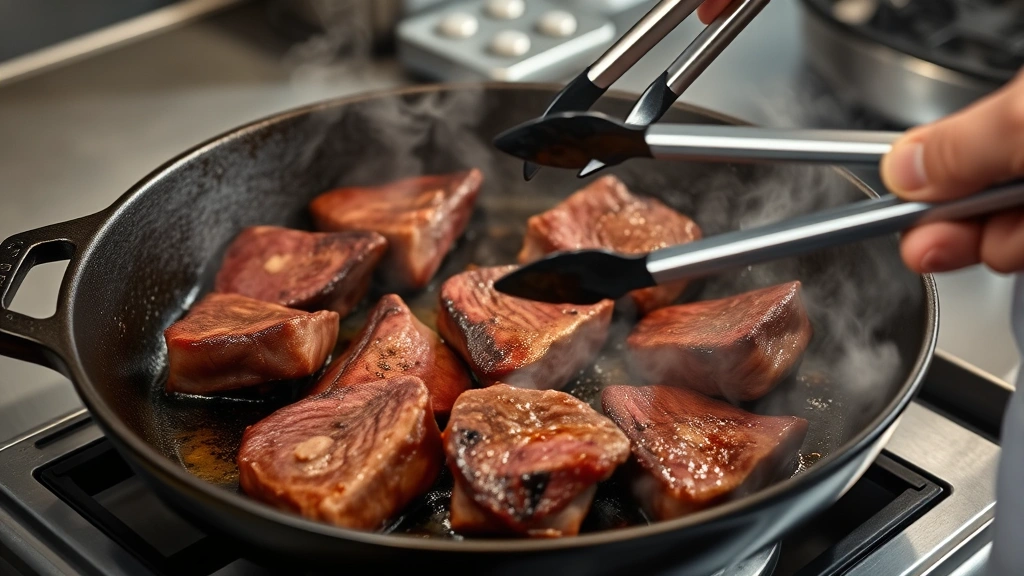
- Heat a large cast iron skillet or stainless steel skillet over medium-high heat until it’s absolutely smoking hot. This is important – you want high heat for a proper sear. Add the remaining 1 tablespoon of olive oil and swirl to coat the pan evenly. The oil should shimmer and almost immediately start to smoke slightly.
- Working in batches so you don’t overcrowd the pan, carefully lay the beef heart slices in the hot skillet. Don’t move them around – let them sit undisturbed for about 2-3 minutes. You’re building a gorgeous brown crust through the Maillard reaction, and that’s where all the flavor comes from. Resist the urge to fidget with them.
- After 2-3 minutes, flip each slice and cook for another 2-3 minutes on the second side. The meat should be beautifully browned on both sides with a slightly charred crust, but still tender and slightly pink in the center – this is exactly what you want. Overcooked beef heart becomes tough, so we’re aiming for a perfect medium-rare to medium.
- Transfer the cooked beef heart slices to a warm serving platter as they finish cooking. If you’ve cooked them in batches, let them rest together for about 5 minutes before serving. This allows the juices to redistribute throughout the meat.
- Drizzle the warm chimichurri sauce over the top of the cooked beef heart slices. Finish with a sprinkle of fleur de sel and a crack of fresh black pepper. Serve immediately while everything is still warm and the flavors are bright and vibrant.
Pro Tips
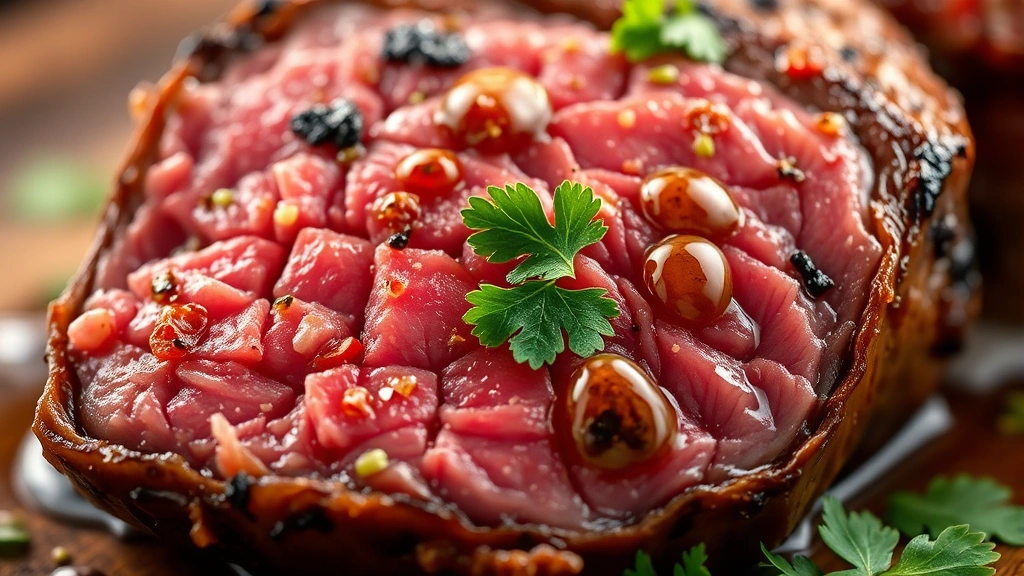
Triming technique: Don’t be intimidated by the chambers and connective tissue. Take your time with a sharp knife. The more cleanly you trim it, the better the final texture. All that interior stuff is completely normal and not dangerous – it’s just part of the anatomy.
Slicing against the grain: This is absolutely crucial for tenderness. Take a moment to identify the grain direction before you start slicing. If you slice with the grain, the meat will be tough no matter what. Against the grain makes all the difference.
Marinating time: 30 minutes is perfect – enough time for the citrus to work its magic without making the meat mushy. Don’t go longer than an hour with the marinade.
Cooking temperature: High heat is your friend here. A screaming hot pan creates that beautiful crust while keeping the interior tender. If your pan isn’t hot enough, the meat will steam instead of sear.
Doneness: Beef heart is best served medium-rare to medium. It’s very lean, so it doesn’t have the fat content of regular steaks to keep it moist if overcooked. Use a meat thermometer if you’re worried – aim for 130-135°F internal temperature.
Make-ahead options: You can prep and marinate the beef heart up to 4 hours ahead. Keep it covered in the refrigerator and bring it to room temperature for 10 minutes before cooking. The chimichurri sauce keeps for up to 3 days in an airtight container.
Serving suggestions: Serve with white rice, roasted potatoes, fresh salad, or warm flatbread. The pickled red onions add brightness and cut through the richness beautifully. A crisp white wine or light red wine pairs wonderfully.
Storage: Leftover beef heart is delicious sliced cold on salads the next day or reheated gently in a low oven. It doesn’t keep well if reheated at high temperatures, so treat it gently.
Nutrition facts: Beef heart is incredibly nutritious – it’s high in protein, iron, zinc, and B vitamins, while being lower in fat than most other cuts of beef. It’s also incredibly economical, making this an affordable way to eat nose-to-tail.