
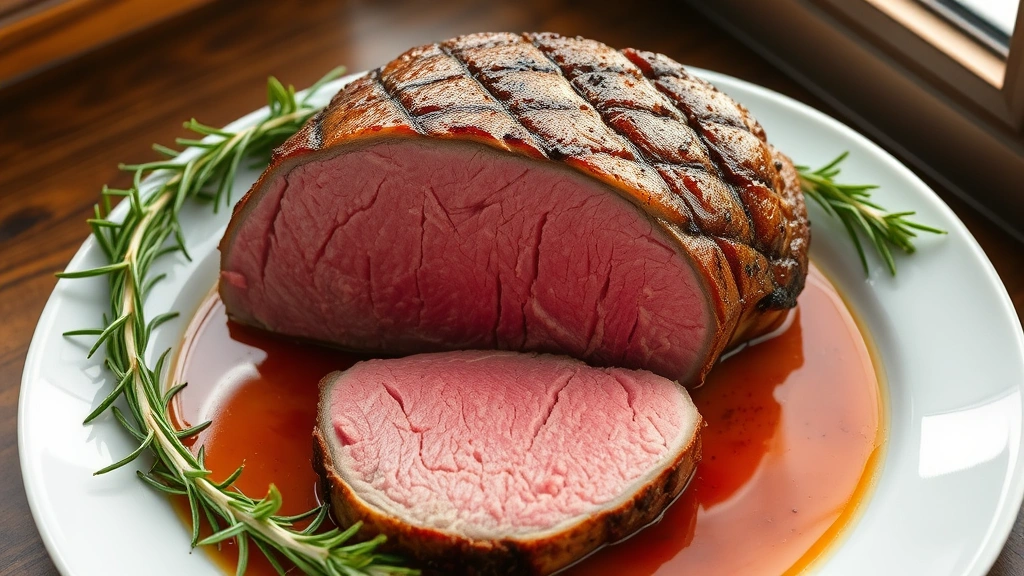
There’s something absolutely magical about a perfectly roasted beef sirloin tip roast—it’s elegant enough for Sunday dinner yet approachable enough for any home cook to master. This cut, often overlooked in favor of pricier options, offers incredible flavor and tenderness when treated with care and respect. The key to the best beef sirloin tip roast lies in understanding the meat itself, seasoning generously, and using a combination of high-heat searing and low-temperature roasting to develop a gorgeous crust while keeping the interior perfectly pink and juicy.
I’ve been making roasts for years, and I can confidently say that a sirloin tip roast has become one of my go-to cuts for feeding a crowd. It’s more forgiving than you might think, and when you follow these steps, you’ll end up with a showstopping centerpiece that tastes like it came from a five-star restaurant. The beauty of this recipe is that it comes together with pantry staples—fresh garlic, rosemary, thyme, and quality butter—nothing fancy required, just technique and timing.
This roast pairs beautifully with creamy side dishes. Consider serving it alongside a rich Alfredo sauce or creamy pasta for a luxurious meal. If you’re looking for something lighter, a crisp chickpea salad or pickled red onions add wonderful brightness. For more detailed guidance on roasting techniques, check out Serious Eats’ roasting guide, and for temperature precision, Bon Appétit’s roast beef recipe is invaluable. The New York Times cooking guide also offers excellent foundational knowledge.
The transformation that happens in your oven is truly remarkable. What starts as a humble cut of beef becomes something extraordinary through the Maillard reaction—that beautiful browning that creates depth of flavor. Combined with aromatic herbs and quality ingredients, you’ll create a roast that becomes the star of any table.
Ingredients
- One 4-5 pound beef sirloin tip roast, brought to room temperature
- 2 tablespoons kosher salt
- 1 tablespoon freshly ground black pepper
- 2 tablespoons high smoke point oil (avocado or vegetable)
- 6 cloves fresh garlic, minced
- 3 tablespoons fresh rosemary leaves, finely chopped
- 2 tablespoons fresh thyme leaves
- 4 tablespoons unsalted butter, softened
- 1 tablespoon Dijon mustard
- 1 teaspoon smoked paprika
- ½ cup beef broth
- ½ cup dry red wine (optional but recommended)
- 2 tablespoons balsamic vinegar
- 4 sprigs fresh rosemary for garnish
- 3 sprigs fresh thyme for garnish
Instructions
- Remove your beef sirloin tip roast from the refrigerator 1-2 hours before cooking. This is crucial—a room temperature roast cooks more evenly. Pat the surface completely dry with paper towels, as moisture prevents proper browning.
- Preheat your oven to 325°F (160°C). Position a rack in the center of the oven.
- In a small bowl, combine the kosher salt, freshly ground black pepper, smoked paprika, and half of the minced garlic. Mix thoroughly until well combined. This will be your primary seasoning blend.
- Generously coat all sides of the roast with this seasoning mixture, pressing gently so it adheres to the meat. Don’t be shy—this is where flavor begins.
- Create a compound butter by mixing softened butter, remaining minced garlic, finely chopped rosemary, fresh thyme, and Dijon mustard in a small bowl. Set aside.
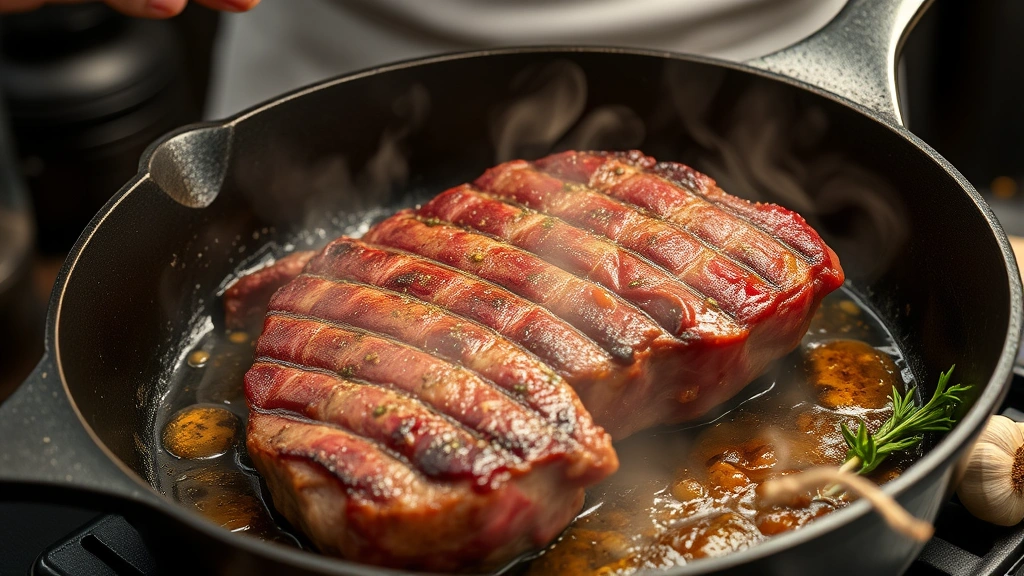
- Heat your oil in a large oven-safe skillet over medium-high heat until just beginning to smoke. This should take about 3-4 minutes.
- Carefully place the seasoned roast in the hot skillet. Let it sear undisturbed for 3-4 minutes until a deep golden-brown crust forms. This creates the flavorful exterior.
- Turn the roast and sear the opposite side for another 3-4 minutes until equally browned.
- Sear the remaining sides (the ends) for about 2 minutes each, working quickly to maintain the crust development.
- Remove the skillet from heat. Spread the compound butter generously over the top and sides of the hot roast, allowing it to melt and coat the meat.
- Pour the beef broth and red wine (if using) around the roast, being careful not to pour directly on the meat as this will remove the crust.
- Nestle the fresh rosemary and thyme sprigs around the roast in the liquid.
- Place the skillet in your preheated 325°F oven. Roast for approximately 1 hour to 1 hour 15 minutes, depending on your oven and desired doneness.
- After 45 minutes, use a meat thermometer to begin checking internal temperature. Insert it into the thickest part of the roast without touching bone.
- For medium-rare (which I recommend), aim for 130-135°F; for medium, 135-145°F. The roast will continue cooking during resting, so remove it 5 degrees before target temperature.
- Once your target temperature is reached, carefully remove the skillet from the oven. Transfer the roast to a warm cutting board.
- Tent loosely with aluminum foil and let rest for 15-20 minutes. This is absolutely essential—it allows juices to redistribute throughout the meat, ensuring moistness in every slice.
- While the roast rests, place the skillet on the stovetop over medium heat. Add the balsamic vinegar to the pan drippings and let simmer for 2-3 minutes, scraping up any browned bits from the bottom.
- Strain the pan sauce through a fine-mesh sieve into a serving bowl, pressing on solids to extract maximum flavor.
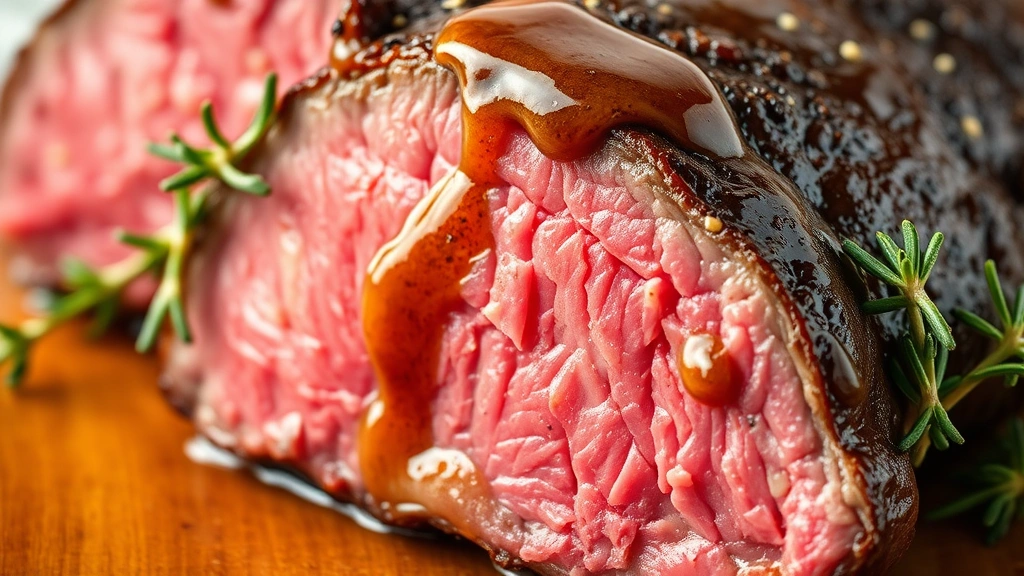
- Slice the roast against the grain into ½-inch thick slices. Present on a warm platter, drizzle with pan sauce, and serve immediately with remaining sauce on the side.
Pro Tips
Invest in a quality instant-read meat thermometer. This single tool eliminates guesswork and ensures perfect results every time. Digital thermometers are affordable and incredibly reliable.
Dry surfaces are essential for achieving that beautiful golden-brown crust. Moisture is the enemy of browning, so pat your roast thoroughly with paper towels before seasoning.
Don’t skip the searing step. While it adds 10 minutes to your cooking time, it creates the Maillard reaction that develops deep, complex flavors you simply cannot achieve by roasting alone.
The resting period is not optional—it’s absolutely critical. During this time, carryover cooking brings the internal temperature up slightly while the muscle fibers relax and reabsorb juices. Cutting immediately results in a dry roast.
Compound butter adds incredible flavor and helps keep the roast moist during cooking. The herbs and garlic infuse the meat from the outside, creating an aromatic, flavorful crust.
Pan sauce is liquid gold. Those browned bits stuck to the bottom of the skillet contain concentrated beef flavor. Scrape them up and incorporate them into your sauce—they’re too valuable to waste.
Leftovers are fantastic. Slice thinly and use for sandwiches, or dice and incorporate into beef stew. Store in an airtight container for up to 4 days.
Cut against the grain for maximum tenderness. Look at the direction the muscle fibers run and slice perpendicular to them. This shortens the fibers and makes each bite more tender.
Oven temperature varies between appliances. If your oven runs hot, you may need to reduce temperature by 15-25°F. Conversely, if it runs cool, increase slightly. Use your thermometer as your guide, not the clock.