
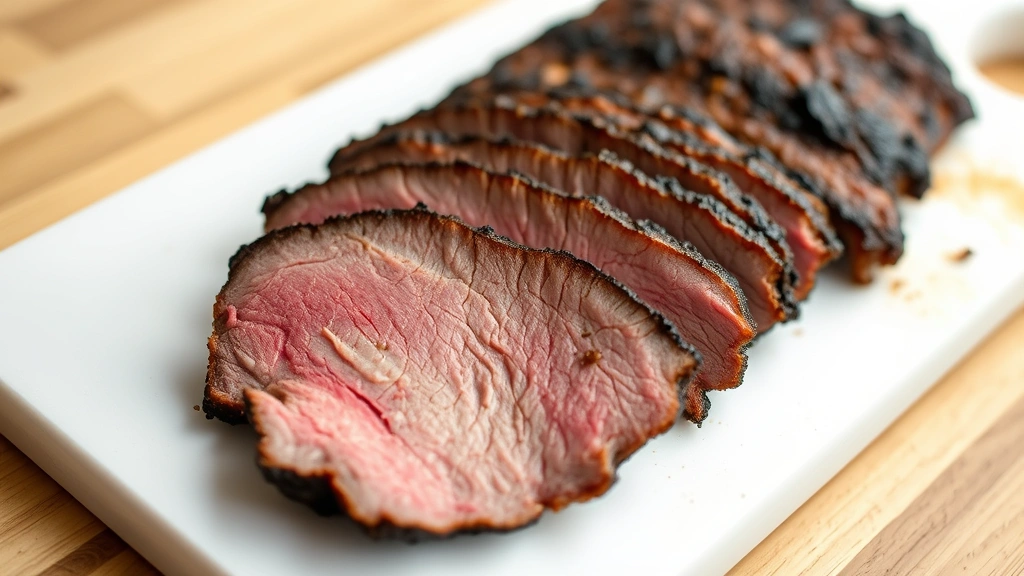
There’s nothing quite like smoking a brisket on a Big Green Egg – the ceramic kamado-style cooker creates the perfect environment for low-and-slow cooking that yields impossibly tender, smoky meat with a beautiful bark. This recipe will walk you through everything you need to know to create restaurant-quality brisket right in your own backyard.
I’ve been smoking briskets for years, and I have to tell you, the Big Green Egg has completely transformed my outdoor cooking game. The first time I attempted brisket on mine, I was nervous – brisket is such a commitment, and I wanted to make sure I got it right. But the Big Green Egg’s superior heat retention and temperature control made the whole process remarkably foolproof. The key to success is selecting a quality brisket with good marbling, keeping your temperature steady around 225-250°F, and having patience. This isn’t a rushed process, but the results are absolutely worth the time investment.
What I love most about cooking brisket on a Big Green Egg is how forgiving it is. The thick ceramic walls maintain consistent temperature throughout the cook, which means you’re not constantly adjusting vents and worrying about temperature swings. Plus, there’s something magical about that smoky flavor that you simply can’t achieve in an oven. Whether you’re feeding a crowd or meal prepping for the week, this brisket recipe delivers every single time.
The beauty of this recipe lies in its simplicity. A quality dry rub, low temperature, and time – that’s really all you need. I’ve experimented with countless rubs and techniques, but I keep coming back to this straightforward approach because it lets the quality of the meat shine through. If you love smoking meats on the Big Green Egg, you’ll also want to try our smoked ribs recipe, which uses similar techniques and temperature control.
Before we dive into the recipe, let me share a few pro tips that will set you up for success. First, always trim your brisket the day before – this gives the rub time to penetrate the meat. Second, invest in a quality meat thermometer; it’s the difference between undercooked and perfectly done brisket. Third, resist the urge to wrap your brisket too early; let that bark develop. And finally, remember that every brisket is different, so don’t stress if your cook time varies by an hour or two from what the recipe suggests.
For the smoke, I prefer a combination of oak and hickory wood – it provides a balanced smoke flavor that’s not overpowering. You can adjust the wood type based on your preferences; mesquite will give you a stronger smoke flavor, while cherry will be milder and slightly sweet. Check out our detailed guide on how to smoke a brisket for additional techniques, and our homemade BBQ dry rub recipe for other rub variations you might enjoy.
The spritz – that mixture of apple juice, butter, and Worcestershire sauce that you spray on the brisket every 45 minutes – is absolutely essential. It keeps the meat moist, helps develop the bark, and adds incredible flavor. Don’t skip this step! Our complete guide to smoking meat on a Big Green Egg goes into even more depth about the spritz technique and other essential smoking methods.
One question I get asked constantly is whether you should wrap your brisket. The answer is: it depends on your preference. Wrapping (often called the “Texas Crutch”) speeds up the cooking process and results in a slightly softer bark but more tender meat overall. I typically wrap my brisket after about 6-7 hours when it hits 165°F internal temperature. This is when the bark has developed nicely but the brisket still needs time to break down those tough muscle fibers.
For more smoking inspiration and techniques, Serious Eats has an excellent smoked brisket guide that covers different smoking methods and temperatures. You might also find Bon Appétit’s smoked brisket recipe helpful for additional inspiration. The New York Times brisket recipe offers some interesting variations if you want to experiment with different approaches.
The resting period at the end is just as important as the cooking itself. When you remove that brisket from the Big Green Egg, let it rest for at least 15-20 minutes wrapped in foil and towels. This allows the juices to redistribute throughout the meat, resulting in incredibly moist, tender slices. If you skip this step, all those beautiful juices will run right out onto your cutting board instead of staying in the meat where they belong.
This recipe feeds a crowd beautifully – we’re talking 12-15 people depending on appetites and side dishes. The leftovers (if you have any!) are perfect for sandwiches, tacos, or even chopped up in salads. I like to store the sliced brisket in a container with the drippings, which keeps it moist and delicious for up to four days in the refrigerator.
Ingredients
- 1 whole packer brisket (12-16 pounds), untrimmed
- 3 tablespoons kosher salt
- 2 tablespoons coarsely ground black pepper
- 2 tablespoons smoked paprika
- 1 tablespoon garlic powder
- 1 tablespoon onion powder
- 1 tablespoon brown sugar
- 1 teaspoon cayenne pepper
- 1 teaspoon dry mustard
- Oak and hickory wood chunks for smoking
- 1 cup apple juice
- 4 tablespoons unsalted butter
- 2 tablespoons Worcestershire sauce
- 1 tablespoon apple cider vinegar
- Butcher paper for wrapping (optional but recommended)
Instructions
- The day before smoking, trim the fat cap on your brisket to about 1/4 inch thickness, leaving enough fat to protect the meat but removing excess. Trim any hard fat or silver skin from the bottom. Pat the brisket completely dry with paper towels.
- In a small bowl, combine the kosher salt, black pepper, smoked paprika, garlic powder, onion powder, brown sugar, cayenne pepper, and dry mustard. Mix thoroughly to create an even dry rub.
- Generously apply the dry rub to all sides of the brisket, working it into the meat with your fingers. Make sure to get into all the crevices and cover the entire surface evenly. Wrap the brisket in plastic wrap and refrigerate overnight, or at least 4 hours.
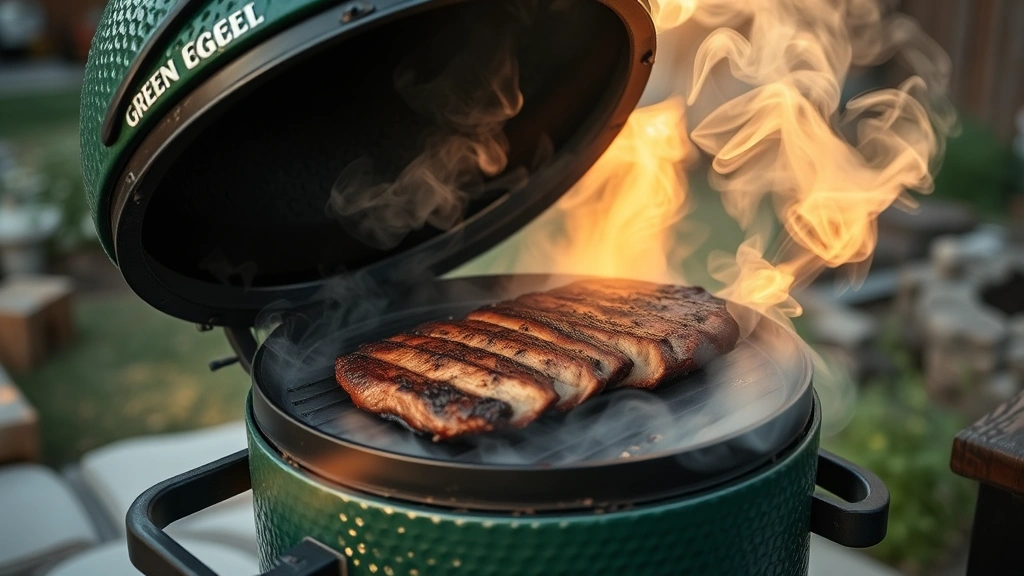
- About 1 hour before smoking, remove the brisket from the refrigerator to allow it to come closer to room temperature. Meanwhile, prepare your Big Green Egg by setting up the two-zone cooking system – place the convEGGtor (ceramic plate) and drip pan filled with water.
- Light the Big Green Egg and bring it to 225-250°F using natural hardwood charcoal. Add the oak and hickory wood chunks to create smoke. Use the top and bottom vents to maintain steady temperature. The goal is consistent, not fluctuating, heat.
- Once the grill is at temperature and producing clean blue smoke, place the brisket on the grate fat-side up, directly over the drip pan. Insert a meat thermometer into the thickest part of the brisket, making sure it’s not touching bone.
- Let the brisket smoke undisturbed for the first 3-4 hours while the bark develops. During this time, maintain your temperature between 225-250°F and resist the urge to open the egg frequently.
- In a spray bottle, combine the apple juice, melted butter, Worcestershire sauce, and apple cider vinegar. This is your spritz mixture.
- After 4 hours, begin spritzing the brisket every 45 minutes with the apple juice mixture. The brisket should have a nice dark color developing.
- Continue smoking and spritzing until the brisket reaches an internal temperature of 165°F, which typically takes 6-7 hours total. At this point, the bark should be well-developed and the meat should have a beautiful dark color.
- Once the brisket reaches 165°F, wrap it tightly in butcher paper (this step is optional – some pitmasters skip it for a thicker bark, but I recommend it for more tender results). Return it to the Big Green Egg.
- Continue cooking the wrapped brisket until it reaches an internal temperature of 203°F in the thickest part of the flat and 210°F in the thickest part of the point. This typically takes another 5-7 hours.
- During this wrapped phase, you can stop spritzing and just let it cook. Check the temperature every couple of hours to monitor progress.
- When the brisket reaches the target temperature, it should probe tender – meaning when you insert a probe into the meat, it should slide through with no resistance, like butter.
- Remove the brisket from the Big Green Egg and place it on a cutting board. Wrap it tightly in foil and then wrap with a clean towel. Place it in a cooler with no ice for at least 15-20 minutes to rest.
- After resting, carefully unwrap the brisket and place it on a clean cutting board. Using a sharp knife, slice the brisket against the grain, starting with the flat and then moving to the point. The slices should be about 1/4 inch thick.
- Arrange the sliced brisket on a serving platter and drizzle with any drippings from the foil. Serve with your favorite BBQ sides and enjoy!

Pro Tips
- **Brisket Selection**: Look for a brisket with good marbling throughout – this fat is essential for flavor and keeping the meat moist during the long cook. USDA Prime grade is ideal, but Choice works well too. Avoid very lean briskets as they tend to dry out.
- **Temperature Control is Key**: The Big Green Egg excels at maintaining steady temperature, but you still need to monitor it. Use an external thermometer (not just the built-in one) to verify your cooking temperature. Aim for 225-250°F, with 235°F being the sweet spot.
- **The Stall**: Expect a period, usually around 150-165°F, where the internal temperature seems to plateau. This is called “the stall” and is completely normal. Some pitmasters power through it, while others wrap their brisket at this point. Wrapping speeds up the process but slightly softens the bark.
- **Wood Selection Matters**: Different woods produce different smoke flavors. Oak and hickory are classic choices for beef. Mesquite is stronger and more peppery. Cherry adds a subtle sweetness. Avoid softwoods and treated wood – stick to hardwoods meant for smoking.
- **Don’t Skip the Rest**: This is when carryover cooking happens and juices redistribute. Skipping this step will result in a dry brisket no matter how perfectly you cooked it. Twenty minutes minimum, but 30 minutes is even better.
- **Leftover Brisket**: Store sliced brisket in a container with the drippings and keep refrigerated up to 4 days. Reheat gently in a low oven (250°F) with the drippings to prevent drying out. Frozen brisket keeps for up to 3 months.
- **Slice Grain Direction**: Always slice against the grain for maximum tenderness. The grain runs in different directions in the flat and point sections, so adjust your knife accordingly.
- **Water Pan Purpose**: The water in the drip pan serves multiple purposes – it stabilizes temperature, adds moisture to the cooking chamber, and collects drippings for making gravy or sauce.
- **Bark Development**: The bark is that dark, crusty exterior layer full of smoke flavor. It develops best during the first 4-6 hours of cooking. Don’t wrap too early if you want a thick, crunchy bark.
- **Thermometer Placement**: Insert your thermometer into the thickest part of the flat, being careful not to hit fat or bone. For a truly accurate reading, use two thermometers – one in the flat and one in the point.
- **Serving Suggestions**: Brisket is perfect with classic BBQ sides like coleslaw, baked beans, cornbread, and pickles. It’s also amazing sliced for sandwiches, diced for tacos, or chopped for brisket hash.