
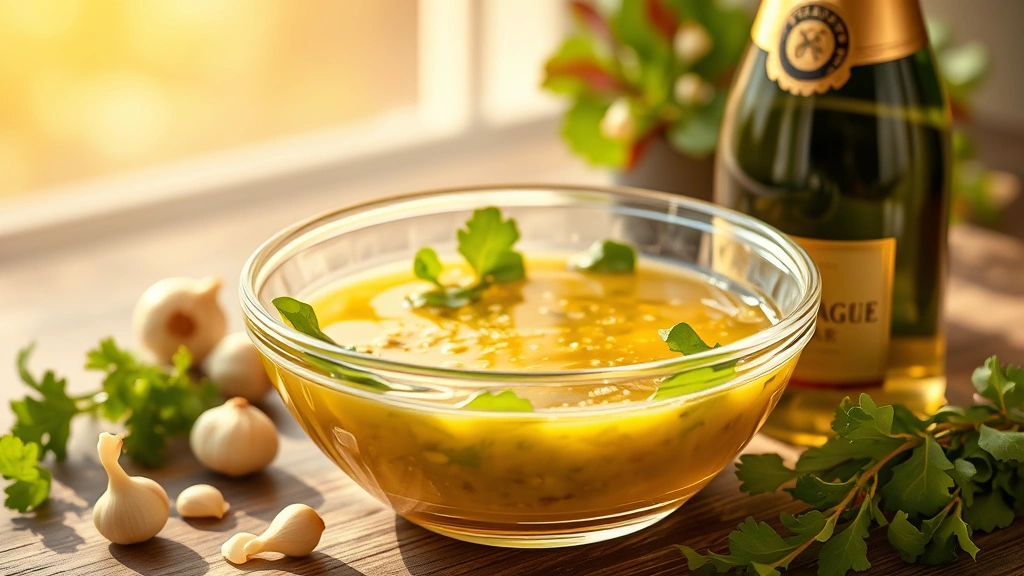
There’s something absolutely magical about a homemade champagne vinaigrette that transforms even the simplest salad into something truly restaurant-worthy. This elegant dressing strikes the perfect balance between tangy and slightly sweet, with those delicate bubbles of champagne vinegar adding a sophisticated touch that regular vinegars simply can’t match. I’ve been making this recipe for years, and it’s become my go-to for everything from crisp green salads to delicate composed salads with fresh vegetables.
What I love most about champagne vinaigrette is its versatility. Unlike heavier dressings, it doesn’t overpower delicate greens or fresh ingredients. Instead, it enhances them, bringing out their natural flavors while adding a subtle complexity. The key to the best champagne vinaigrette lies in understanding the proper ratio of acid to oil, using quality ingredients, and mastering the emulsification technique that keeps everything beautifully combined.
I’m thrilled to share my tried-and-true method with you today. This isn’t just another vinaigrette recipe—it’s a technique you can master and adapt based on your preferences and what you’re serving it with. Whether you’re drizzling it over a chickpea salad or using it to dress fresh spring greens, this champagne vinaigrette will become your secret weapon in the kitchen.
The beauty of this recipe is that it comes together in just a few minutes, but it tastes like you spent hours perfecting it. Once you understand the basic formula, you’ll find yourself making variations with different mustards, herbs, and oils. I often prepare a batch at the beginning of the week to have on hand for quick salad dinners or to drizzle over roasted vegetables.
Let me walk you through exactly how to create this culinary gem. The process is straightforward, but attention to detail makes all the difference. You’ll need quality champagne vinegar—this is not the place to skimp—along with a good Dijon mustard, shallots, and a neutral oil. The mustard serves as an emulsifier, helping to bind the oil and vinegar together into a silky, cohesive dressing.
One of the most important lessons I’ve learned is that temperature matters. When your ingredients are at room temperature, they emulsify more easily and create a more stable dressing. I also recommend whisking by hand rather than using a blender, as this gives you better control over the final texture and consistency. You want a dressing that’s smooth and slightly glossy, not separated or too thick.
This champagne vinaigrette pairs beautifully with so many dishes. Try it on a lemon orzo salad for a fresh summer side dish, or use it to dress a simple green salad with goat cheese and candied walnuts. It’s also wonderful on roasted beets, fresh mozzarella and tomato salads, or even as a light dressing for chicken dishes.
For more inspiration on vinaigrettes and salad dressings, check out Bon Appétit’s extensive dressing guide, which offers creative variations you can try. You might also explore Serious Eats’ comprehensive vinaigrette tutorials for deeper dressing science. And for classic French technique, New York Times Cooking has wonderful resources on traditional vinaigrette preparation.
The best part? Once you’ve made this champagne vinaigrette a few times, you’ll develop an intuition for adjusting the flavors to your taste. Prefer it tangier? Add a bit more vinegar. Like it richer? Increase the oil slightly. This flexibility means you’ll never get bored, and you can customize it for whatever you’re serving.
I encourage you to make a double batch and store it in a mason jar in your refrigerator. It keeps beautifully for up to a week, and having it on hand means you can put together a beautiful, restaurant-quality salad in minutes. Just give it a good shake before using, as the ingredients will naturally separate slightly over time—that’s completely normal and actually a sign that you haven’t added any weird stabilizers or additives.
Now, let’s get into the specifics of making the best champagne vinaigrette you’ve ever tasted. Pay attention to each step, and don’t rush the whisking process. The small amount of time you invest in proper emulsification will reward you with a dressing that’s silky, cohesive, and absolutely delicious.
Ingredients
- 3 tablespoons champagne vinegar
- 1 teaspoon Dijon mustard
- 1 small shallot, minced very finely
- 1/2 teaspoon kosher salt
- 1/4 teaspoon freshly ground black pepper
- 1/4 teaspoon granulated sugar
- 1/2 cup neutral oil (vegetable, canola, or light olive oil)
- 1/2 teaspoon fresh tarragon, finely minced (optional but recommended)
- Pinch of cayenne pepper (optional)

Instructions
- In a small bowl or measuring cup, combine the champagne vinegar, Dijon mustard, minced shallot, kosher salt, black pepper, and granulated sugar. Whisk these ingredients together until the salt and sugar are completely dissolved and the mixture is well combined.
- Let the vinegar mixture sit for about 1 minute to allow the flavors to meld together and the shallot to soften slightly.
- While whisking constantly, add the neutral oil very slowly to the vinegar mixture, starting with just a few drops at a time. This slow addition is crucial for proper emulsification.
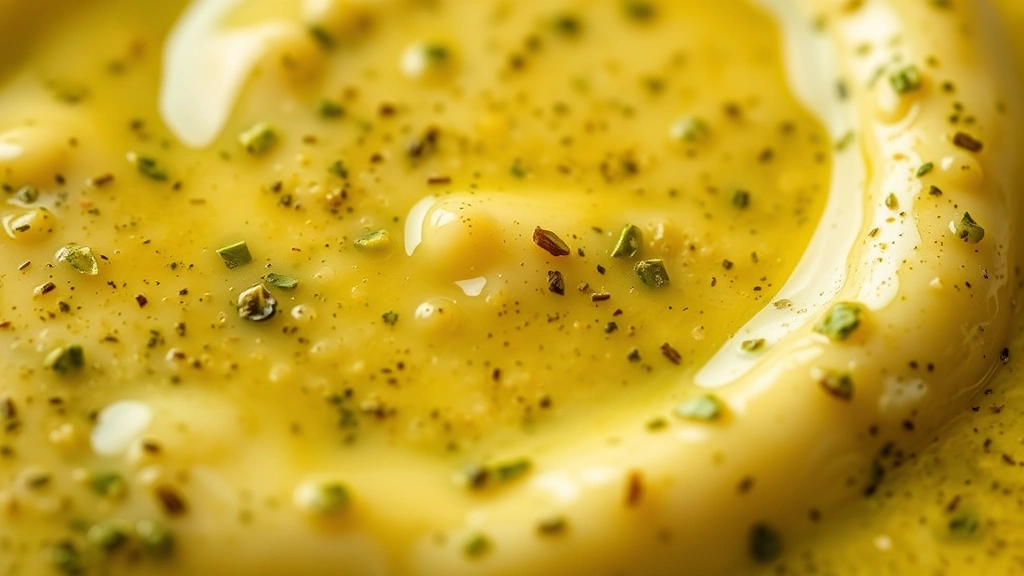
- Continue whisking and gradually increase the oil stream as the mixture begins to thicken and emulsify. The dressing should begin to look slightly creamy and pale as it emulsifies.
- Once all the oil has been incorporated and the vinaigrette is smooth and silky, taste it and adjust the seasonings as needed. You may want to add a tiny bit more salt, vinegar, or a pinch of sugar depending on your preference.
- If using fresh tarragon, fold it in gently with a spatula. If desired, add a small pinch of cayenne pepper for a subtle hint of heat.
- Transfer the champagne vinaigrette to a glass jar or storage container. If not using immediately, cover and refrigerate.
- Before serving, give the vinaigrette a good shake or whisk if it has separated slightly, which is completely normal. Drizzle over your favorite salad greens or vegetables and enjoy.
Pro Tips
The key to a silky emulsification is patience and whisking. Never add the oil too quickly, or your dressing will break and separate. If this happens, start over with a fresh egg yolk or mustard in a clean bowl and slowly whisk in the broken vinaigrette until it comes together again.
Quality champagne vinegar makes a significant difference in the final flavor. Avoid distilled vinegar as a substitute—the delicate, slightly fruity notes of champagne vinegar are essential to this recipe’s sophisticated taste.
This vinaigrette stores well in an airtight glass jar in the refrigerator for up to one week. It’s normal for the oil and vinegar to separate slightly during storage. Simply shake well before each use.
Tarragon is the classic herb for champagne vinaigrette, but you can also experiment with fresh chervil, parsley, or a combination of herbs depending on what you’re serving it with.
For a slightly richer vinaigrette, substitute half of the neutral oil with extra virgin olive oil, though this will make the dressing more assertive in flavor.
If you prefer a thicker, more emulsified dressing that stays combined longer, whisk in a single egg yolk after the mustard and vinegar, then proceed with adding the oil as directed.
This vinaigrette is perfect for dressing delicate salad greens, grilled vegetables, fresh mozzarella and tomato salads, roasted beets, or even as a light finishing sauce for fish or chicken.
For best results, dress your salad just before serving to prevent the greens from becoming wilted or soggy.
Pingback: How to make Tasty Salad in a Jar Recipe – Quick & Easy! – Simple Recipe Finder