
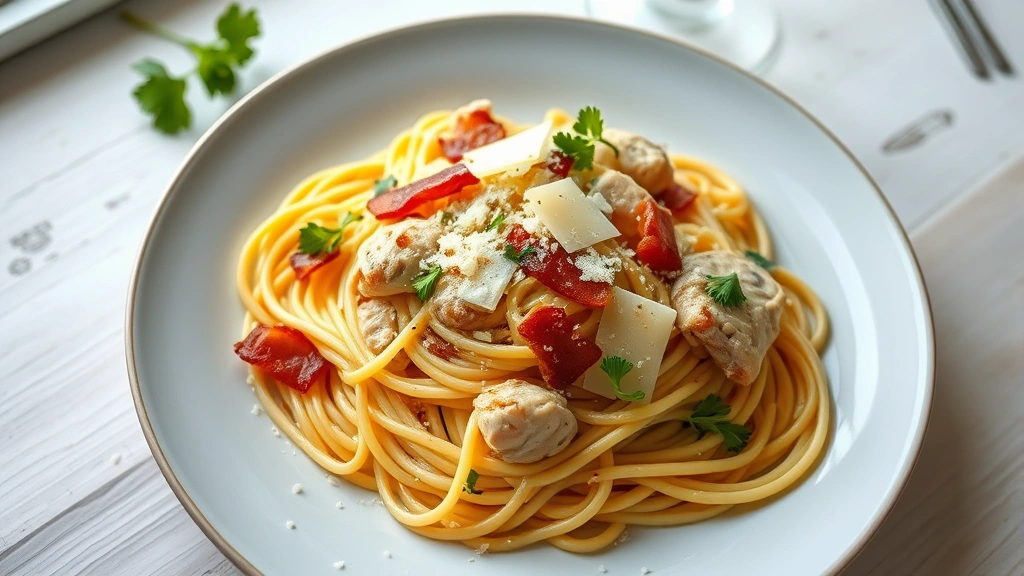
There’s something absolutely magical about a perfectly executed Chicken Carbonara – it’s the kind of dish that seems intimidating at first, but once you understand the technique, you’ll be making it on repeat. This Italian classic gets a delicious protein boost with tender chicken, creating a restaurant-quality meal that comes together faster than you’d think. The creamy, luxurious sauce clings beautifully to each strand of pasta, and when you add that crispy bacon and fresh Pecorino Romano, you’ve got pure comfort food heaven.
I absolutely love how versatile this dish is. You can make it for a casual weeknight dinner, impress guests at a dinner party, or even meal prep portions for the week ahead. The key to nailing this recipe is understanding that carbonara isn’t about heavy cream – it’s about the magic that happens when you temper eggs with hot pasta water and combine them with cheese and pasta cooking water to create that silky, luxurious sauce that coats every single noodle.
What makes this version special is the addition of chicken, which adds protein and substance while keeping the dish lighter than traditional cream-based pasta sauces. You can use chicken breasts, thighs, or even rotisserie chicken if you’re short on time. The technique remains the same, and the results are consistently delicious. Pair this with a crisp white wine and a simple green salad, and you’ve got yourself an elegant meal that tastes like you spent hours in the kitchen.
If you love this recipe, you absolutely need to try my Quick Tasty Bacon Carbonara Recipe for a vegetarian twist, or elevate your pasta game with my Best Heavy Cream Alfredo Sauce Recipe. For more creamy pasta inspiration, check out my Delicious Heavy Cream Pasta Recipe. And don’t forget to round out your meal with sides like my Best Pickled Red Onion Recipe or a fresh Best Chickpea Salad Recipe.
For more detailed carbonara techniques and variations, check out Serious Eats’ comprehensive carbonara guide, or learn the traditional Roman method at Bon Appétit’s classic carbonara. The New York Times also has an excellent article on perfecting your carbonara technique.
Ingredients
- 1 pound spaghetti or linguine
- 3 tablespoons olive oil
- 1 pound boneless, skinless chicken breasts, cut into bite-sized pieces
- Salt and black pepper to taste
- 6 slices bacon, chopped
- 4 large egg yolks
- 1 cup grated Pecorino Romano cheese
- ½ cup grated Parmesan cheese
- 4 cloves garlic, minced
- Fresh parsley for garnish
- Red pepper flakes for garnish (optional)
Instructions
- Bring a large pot of salted water to a rolling boil. Add the spaghetti and cook according to package directions until al dente, about 9-12 minutes. Reserve 1½ cups of pasta cooking water before draining.
- While the pasta cooks, heat the olive oil in a large skillet over medium-high heat. Season the chicken pieces generously with salt and pepper on all sides.
- Add the chicken to the hot skillet and cook for 6-8 minutes, stirring occasionally, until the chicken is golden brown and cooked through (internal temperature should reach 165°F). Transfer the cooked chicken to a plate and set aside.
- In the same skillet, add the chopped bacon and cook over medium heat, stirring frequently, until crispy and golden brown, about 5-7 minutes. Remove the bacon with a slotted spoon and drain on a paper towel-lined plate.
- Add the minced garlic to the bacon fat remaining in the skillet and cook for about 30 seconds, stirring constantly, until fragrant. Don’t let it brown. Remove from heat and let cool slightly.
- In a medium bowl, whisk together the egg yolks, Pecorino Romano cheese, and Parmesan cheese until well combined. Season with a pinch of black pepper.
- Return the skillet with the garlic to low heat. Add the cooked chicken and bacon back to the skillet and stir gently to combine.
- Add the drained pasta to the skillet with the chicken and bacon mixture. Toss gently to combine all ingredients.
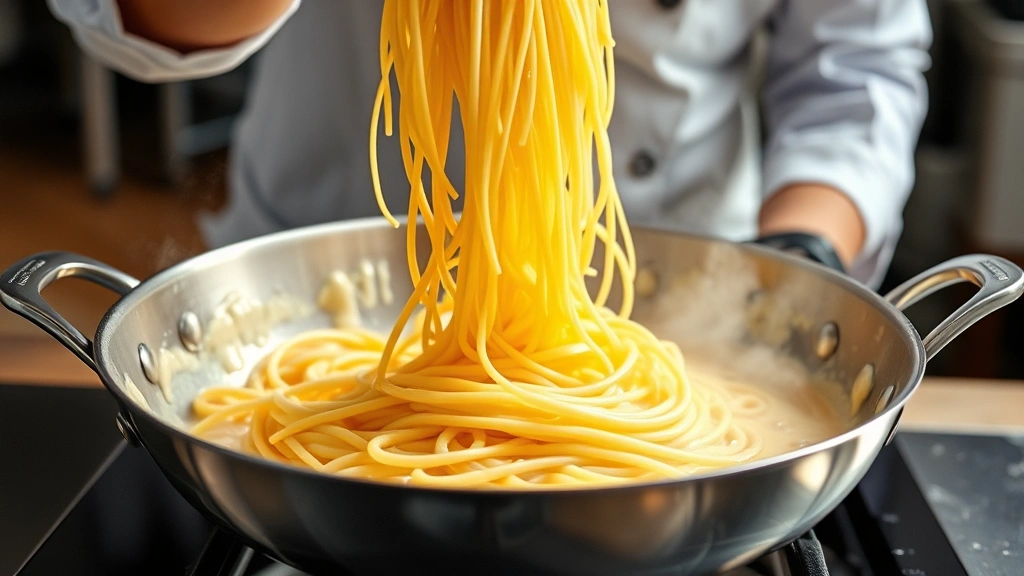
- Remove the skillet from heat and immediately pour the egg yolk mixture over the hot pasta while stirring constantly and vigorously. The residual heat will cook the eggs and create a creamy sauce.
- Continue tossing and stirring for 2-3 minutes, gradually adding pasta water (¼ cup at a time) to reach your desired sauce consistency. The sauce should be silky and coat every strand of pasta.
- Taste and adjust seasoning with salt and freshly cracked black pepper as needed. Add more pasta water if the sauce seems too thick.
- Divide the pasta among serving bowls and garnish with additional Pecorino Romano cheese, fresh parsley, and red pepper flakes if desired. Serve immediately while hot.
Pro Tips
If you’re nervous about the egg situation, here’s a pro tip: you can temper the egg yolks by slowly whisking a small amount of the hot pasta water into them before adding them to the pasta. This gradually raises their temperature and reduces the risk of scrambling. Some cooks prefer this method, and honestly, it’s not cheating – it’s just being smart about your technique.
Chicken breast is the leanest option, but if you prefer a more tender result, use boneless, skinless chicken thighs instead. They have more fat and flavor, and they’re harder to overcook. Just make sure to cut them into similar-sized pieces so they cook evenly. You can also use rotisserie chicken if you’re short on time – just shred it and add it during the final tossing stage.
The ratio of egg yolks to cheese is crucial in this recipe. Too much egg and your sauce will be too loose; too little cheese and it will be bland. I always use a combination of Pecorino Romano (which has a more intense, salty flavor) and Parmesan (which is creamier and slightly milder) for the best balance. Both cheeses are essential to the authentic flavor profile.
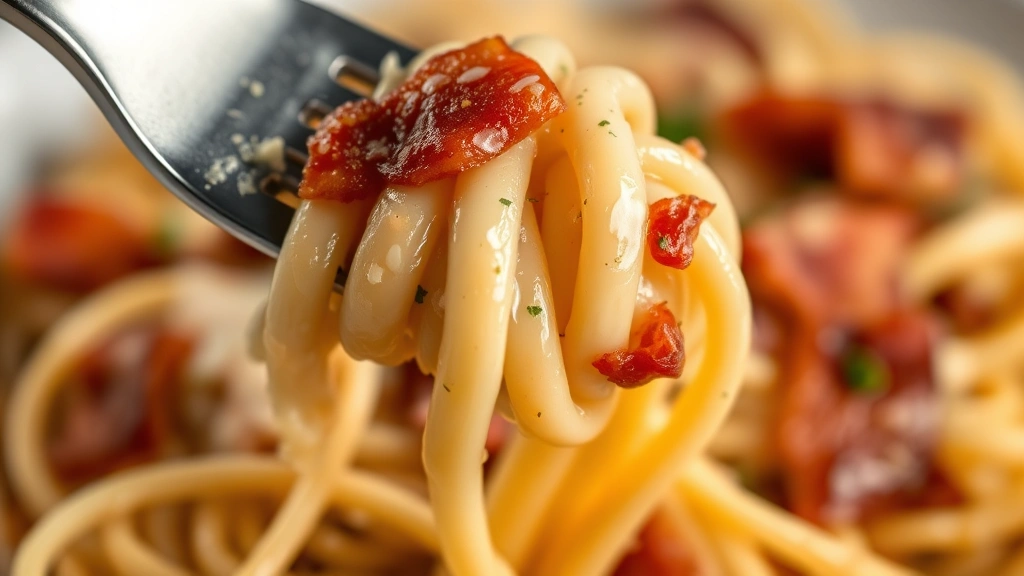
Pasta water is your secret weapon here. The starch in the pasta water helps emulsify the sauce and gives it body. This is why you should never skip this step – it’s the difference between a thin, watery sauce and a luxurious, coating sauce. Start conservatively and add more as needed, as you can always add more but you can’t take it back.
Don’t walk away from the stove once you add the eggs to the pasta. This is a quick operation that requires constant attention and movement. The residual heat from the pasta will continue cooking everything, so you want to move quickly to avoid overdoing it.
This dish is best served immediately, as the sauce will continue to set as it cools. If you need to make it ahead, you can prepare all your components separately and assemble it just before serving.
Leftovers can be refrigerated in an airtight container for up to 3 days. To reheat, warm gently in a skillet over low heat, adding a splash of pasta water or chicken broth to loosen the sauce. Don’t use high heat, as this can cause the sauce to break.