
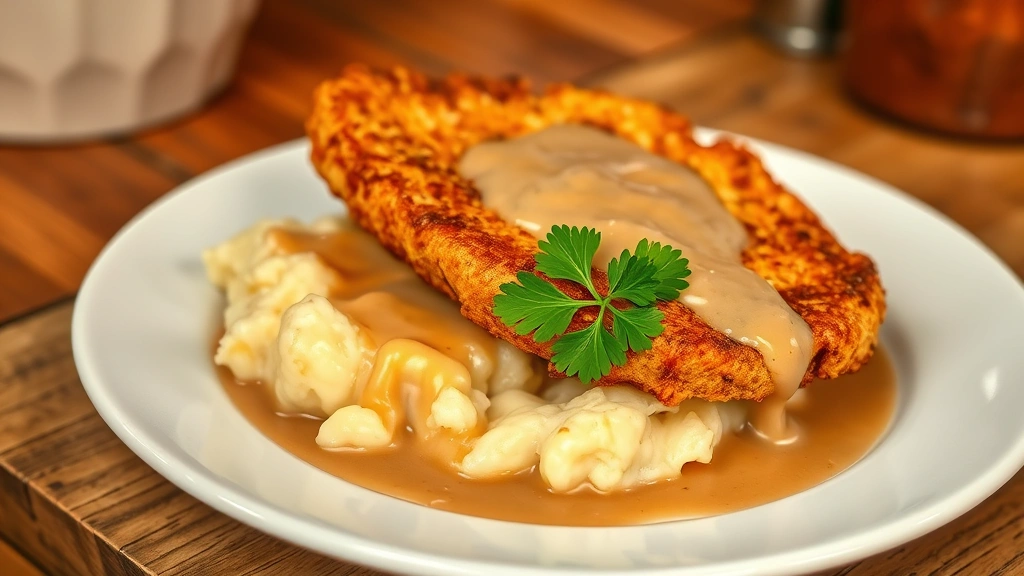
There’s something absolutely magical about chicken fried steak – that crispy, golden-brown exterior giving way to tender, juicy beef underneath. This Southern classic deserves a place at your dinner table, and I’m going to show you exactly how to make it perfectly every single time.
Chicken fried steak, despite its name, is actually beef – typically cube steak or round steak – that’s been tenderized, breaded, and fried until it’s absolutely irresistible. The beauty of this dish lies in its simplicity and the contrast of textures. The key to achieving that restaurant-quality result at home is understanding the importance of proper tenderizing, the right breading technique, and maintaining the correct oil temperature throughout the frying process.
I’ve been making this dish for years, and I’ve learned that the secret truly is in the details. From selecting the right cut of beef to seasoning your flour mixture generously, every step contributes to that wow factor. When you serve this alongside creamy mashed potatoes and a rich gravy, you’ll have a meal that rivals any Texas roadhouse or Southern diner.
What I love most about this recipe is how forgiving it can be once you understand the fundamentals. Whether you’re cooking for your family on a weeknight or impressing guests at a dinner party, chicken fried steak delivers every single time. The preparation is straightforward, the cooking is quick, and the results are absolutely stunning.
If you’re looking to elevate your comfort food game, you might also enjoy exploring Easy Pickled Red Onion Recipe as a tangy side, or perhaps a fresh Best Chickpea Salad Recipe for balance. For sauce inspiration, check out this Best Heavy Cream Alfredo Sauce Recipe for creamy variations, or explore Quick Tasty Bacon Carbonara Recipe for other crispy, savory inspiration. Learn more techniques at Serious Eats, Bon Appétit, and New York Times Cooking for additional Southern cooking wisdom.
Ingredients
- 4 cube steaks (about 4-5 ounces each) or round steaks, about ¼-inch thick
- 1 cup all-purpose flour
- 1 teaspoon garlic powder
- 1 teaspoon onion powder
- 1 teaspoon paprika
- ½ teaspoon cayenne pepper
- 1½ teaspoons kosher salt
- ¾ teaspoon freshly ground black pepper
- 2 large eggs
- ¼ cup whole milk or buttermilk
- 2 tablespoons water
- Vegetable oil for frying (about 3-4 cups)
- Fresh parsley for garnish (optional)
- Lemon wedges (optional)
Instructions
- Pat your cube steaks completely dry with paper towels – this is crucial for achieving a crispy crust. Any moisture on the surface will create steam during frying and prevent proper browning.
- Season both sides of each steak generously with salt and pepper, allowing the seasonings to penetrate the meat for a few minutes.
- In a shallow bowl, whisk together the flour, garlic powder, onion powder, paprika, cayenne pepper, salt, and black pepper. Mix thoroughly to ensure all seasonings are evenly distributed throughout the flour.
- In another shallow bowl, whisk together the eggs, milk, and water until well combined. This egg wash is what helps the flour coating adhere beautifully to the meat.
- Heat your vegetable oil in a large, heavy-bottomed skillet or Dutch oven to 350°F. Use a reliable kitchen thermometer to ensure accuracy – this temperature is essential for achieving that golden crust without burning the exterior while the interior remains undercooked.
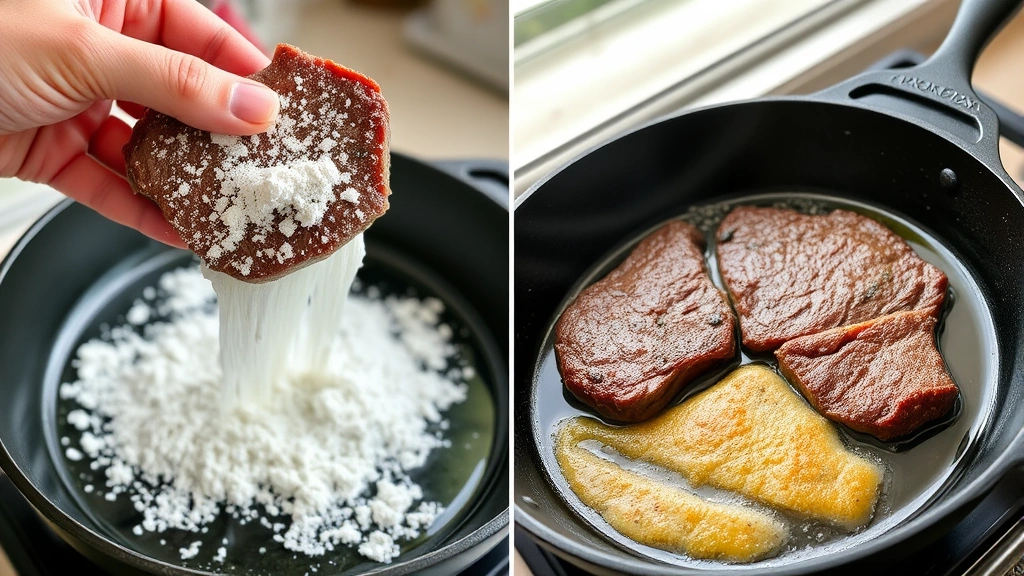
- Working with one steak at a time, dredge it thoroughly in the seasoned flour mixture, making sure to coat both sides and all edges completely. Tap off any excess flour gently.
- Immediately dip the floured steak into the egg wash, ensuring it’s completely covered, then dredge it once more in the flour mixture. This double-dredging technique creates that extra-crispy, crunchy exterior that makes this dish so irresistible.
- Carefully place the breaded steak into the hot oil, being mindful of any splattering. Fry for 3-4 minutes on the first side without moving it – resist the urge to flip too early, as this allows the crust to set properly.
- Using tongs or a slotted spatula, carefully flip the steak and fry for another 3-4 minutes on the second side until the coating is deep golden brown and crispy.
- Remove the cooked steak from the oil and place it on a wire rack set over paper towels, allowing the excess oil to drip away. A wire rack is preferable to paper towels alone because it allows air circulation underneath, keeping the bottom crust crispy.
- Repeat the frying process with the remaining steaks, maintaining the oil temperature at 350°F throughout cooking. If the temperature drops, allow it to recover before frying the next batch.
- Serve the chicken fried steak immediately while still hot and crispy, garnished with fresh parsley if desired, alongside creamy mashed potatoes and rich gravy.
Pro Tips
- Cube steak is the traditional choice for this recipe because it comes pre-tenderized with those characteristic dimples from the butcher’s tenderizing machine. However, if you can’t find cube steak, round steak works beautifully and provides an equally delicious result.
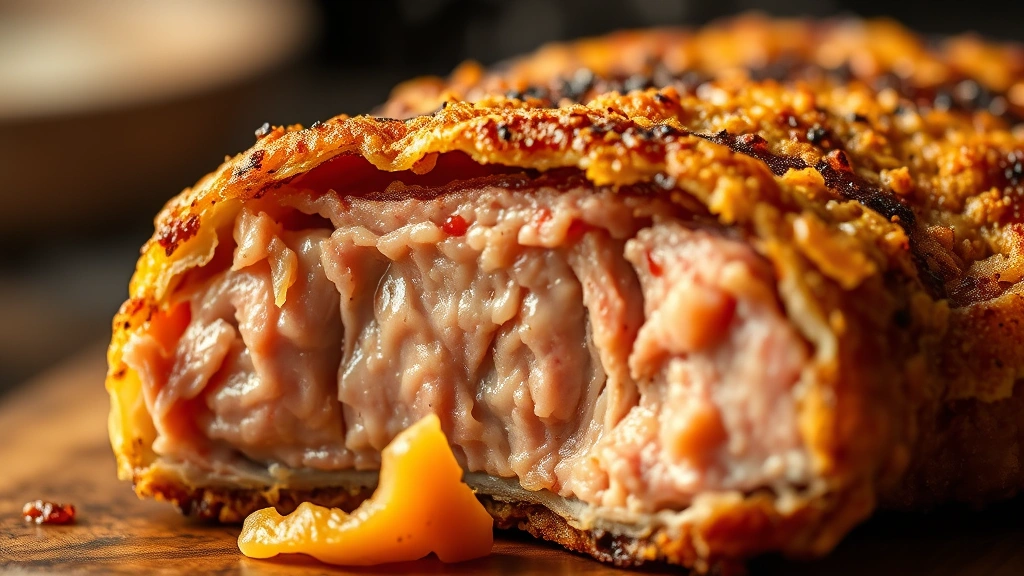
- The double-dredging technique is absolutely worth the extra step. The first coat of flour creates a base, and the egg wash seals it, then the second flour coating provides that extra-thick, extra-crispy crust that makes this dish so special.
- Temperature control is non-negotiable for perfect results. Oil that’s too cool will result in a greasy, soggy coating. Oil that’s too hot will burn the exterior before the interior cooks through. Invest in a good kitchen thermometer and use it religiously.
- Don’t skip letting the oil recover between batches. If you add cold meat to hot oil repeatedly, the temperature will drop too much, and you’ll end up with greasy results instead of crispy perfection.
- For the egg wash, buttermilk adds a subtle tangy flavor, but regular milk works just fine. Some cooks prefer to use just milk and water, while others add a splash of hot sauce or Worcestershire sauce for extra flavor.
- Make your breading station ahead of time with everything you need within arm’s reach. Having three shallow bowls lined up – one with flour, one with egg wash, and one with flour again – makes the process smooth and efficient.
- Fresh cube steak is ideal, but frozen cube steak works too. Simply thaw it completely and pat dry before seasoning. Thawing in the refrigerator overnight ensures the best texture and moisture retention.
- The oil can be reused for another fry session if you strain out the breading bits and let it cool. Store it in an airtight container in a cool, dark place. However, discard it after the second use for best results.
- Serve immediately with classic accompaniments like creamy mashed potatoes, white pepper gravy, fresh green beans, or a crisp salad. The contrast of textures and temperatures makes for an absolutely perfect meal.
- Leftovers can be reheated in a 350°F oven for about 10 minutes to restore some of the crispiness, though they’re best enjoyed fresh from the skillet.