
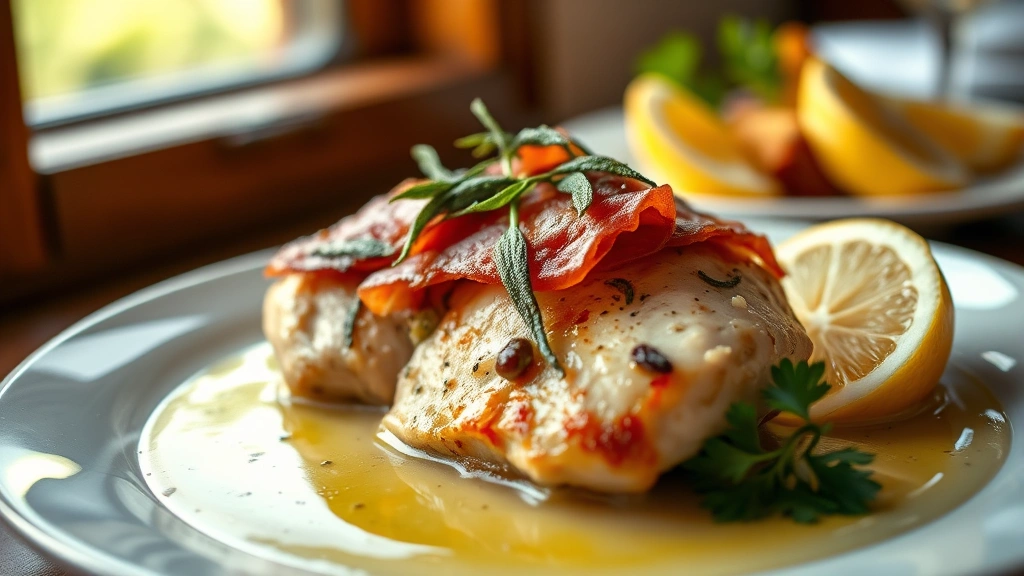
Chicken Saltimbocca is an elegant Italian classic that’s surprisingly simple to master at home. This dish features tender chicken breasts topped with prosciutto and fresh sage, then pan-seared to golden perfection and finished with a silky white wine sauce. It’s restaurant-quality elegance that comes together in under 30 minutes, making it perfect for weeknight dinners or impressive entertaining.
The beauty of saltimbocca lies in its simplicity and the quality of its few ingredients. Each component plays an important role: the prosciutto adds salty depth, the sage brings herbaceous notes that elevate the entire dish, and the white wine creates a luxurious pan sauce that ties everything together. When you understand the technique, you’ll find yourself making this dish again and again.
I love serving chicken saltimbocca with creamy pasta or fresh vegetables. Try pairing it with our Delicious Heavy Cream Pasta Recipe for a complete Italian-inspired meal, or create a lighter version alongside our Best Chickpea Salad Recipe. The key to perfect saltimbocca is using thin chicken cutlets, quality prosciutto, and fresh sage—no substitutions needed.
This recipe serves four and comes together beautifully for date night or entertaining guests. The technique of pounding the chicken thin ensures even cooking and allows the flavors to meld perfectly. Once you master this classic preparation, you’ll understand why it’s been a favorite in Italian kitchens for generations.
For more elevated cream-based sauces, check out our Best Heavy Cream Alfredo Sauce Recipe. If you’re looking to expand your Italian repertoire, our Quick Tasty Bacon Carbonara Recipe offers another classic that’s equally impressive. Learn more about authentic Italian techniques from Serious Eats Italian Cooking Guide and explore professional preparations at Bon Appétit’s Saltimbocca Collection. For detailed sauce-making techniques, visit NY Times Pan Sauce Guide.
Ingredients
- 4 boneless, skinless chicken breasts (about 6-8 ounces each)
- 8 slices high-quality prosciutto
- 16-20 fresh sage leaves
- 1/2 cup all-purpose flour
- 1 teaspoon kosher salt
- 1/2 teaspoon freshly ground black pepper
- 3 tablespoons unsalted butter, divided
- 2 tablespoons olive oil
- 1/2 cup dry white wine (such as Pinot Grigio or Sauvignon Blanc)
- 1/2 cup chicken broth
- 2 tablespoons freshly squeezed lemon juice
- 1 tablespoon capers (optional)
- Fresh parsley for garnish
- Lemon wedges for serving
Instructions
- Place each chicken breast on a cutting board and carefully slice horizontally through the thickest part, creating two thin cutlets from each breast. You should have 8 cutlets total.
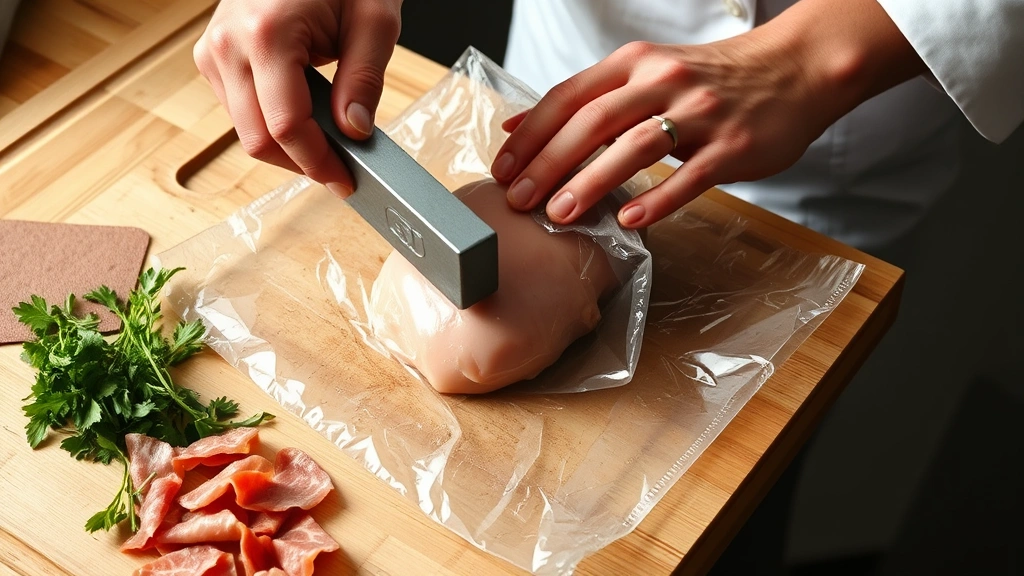
- Lay each cutlet between two pieces of plastic wrap or parchment paper and gently pound with a meat mallet until about 1/4-inch thick, being careful not to tear the delicate meat.
- Remove the plastic wrap and place each pounded cutlet on a clean work surface. Layer 2 slices of prosciutto on each cutlet, slightly overlapping them.
- Place 2-3 fresh sage leaves on top of the prosciutto on each cutlet, distributing them evenly across the surface.
- Secure the prosciutto and sage to each cutlet by inserting 2-3 toothpicks strategically through the layers, ensuring everything stays in place during cooking.
- In a shallow bowl, combine the flour, kosher salt, and freshly ground black pepper, mixing well to incorporate the seasonings evenly.
- Dredge the non-prosciutto side of each saltimbocca in the seasoned flour, tapping off any excess flour so you have just a light coating.
- Heat a large skillet over medium-high heat and add 1 tablespoon of butter and 1 tablespoon of olive oil, allowing the butter to foam slightly.
- Once the butter is foaming and the oil is hot, carefully place 4 saltimbocca pieces in the skillet, prosciutto-side up, being gentle to avoid displacing the sage or prosciutto.
- Cook for 3-4 minutes without moving them, allowing the flour-coated side to develop a beautiful golden crust.
- Using a thin spatula, carefully flip each piece and cook for another 2-3 minutes on the prosciutto side until the chicken is cooked through and the prosciutto edges are slightly crispy.
- Transfer the cooked saltimbocca to a warm plate and repeat the cooking process with the remaining 1 tablespoon butter, 1 tablespoon olive oil, and the other 4 saltimbocca pieces.
- Once all saltimbocca are cooked and resting on the plate, carefully pour out most of the fat from the skillet, leaving about 1 tablespoon.
- Add the dry white wine to the skillet, scraping up any browned bits from the bottom with a wooden spoon, and let it simmer for 1-2 minutes to reduce slightly.
- Pour in the chicken broth and lemon juice, stirring to combine with the wine reduction and scraping any remaining flavorful bits from the pan.
- Add the capers if using, and let the sauce simmer for 2-3 minutes until it’s slightly reduced and flavorful, tasting and adjusting seasoning as needed.
- Remove the toothpicks from each saltimbocca piece and arrange them on serving plates or a platter.
- Pour the warm wine and caper sauce over each piece of saltimbocca, allowing it to pool around the chicken on the plate.
- Garnish with fresh chopped parsley and serve immediately with lemon wedges on the side for additional brightness and acidity if desired.
Pro Tips
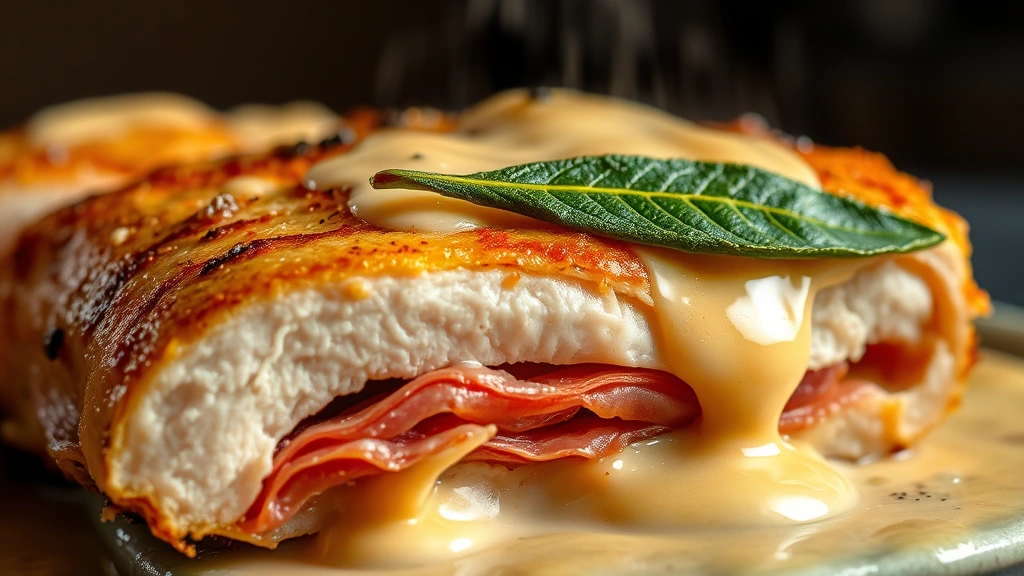
Quality prosciutto makes a noticeable difference in this dish. Look for prosciutto di Parma from the deli counter rather than pre-packaged varieties for superior flavor and texture.
Fresh sage is essential and cannot be substituted with dried sage, which would overpower the delicate dish. If fresh sage is unavailable, this recipe is best postponed until you can source it.
The toothpicks keep everything secured during cooking and should be inserted strategically through the middle and edges. Remember to remove them before serving to avoid any accidents.
You can prepare the saltimbocca up to 4 hours ahead by assembling everything and refrigerating until ready to cook. Allow them to come to room temperature for 15 minutes before cooking for even results.
The sauce comes together quickly in the same pan, so have all ingredients measured and ready before you start cooking the chicken to ensure proper timing.
Dry white wine is preferable to sweet varieties for this sauce. Pinot Grigio, Sauvignon Blanc, or Vermentino work beautifully. Avoid cooking wines with added salt.
For a richer sauce, whisk in 2-3 tablespoons of heavy cream at the end and let it simmer for 1 minute before plating.
This dish is best served immediately while the sauce is warm and the chicken is at its juiciest. It doesn’t reheat well, so plan to serve right from the skillet.
Lemon juice brightens the dish considerably, so don’t skip it. Fresh-squeezed juice makes a noticeable difference in the final flavor profile.
Serve alongside simple sides like buttered pasta, roasted vegetables, or a fresh green salad to let the saltimbocca shine as the star of the plate.
Leftovers can be refrigerated for up to 2 days and gently reheated in a low oven, though the texture is best when served fresh.