

There’s something absolutely magical about Chinese steamed egg—it’s silky, delicate, and so incredibly comforting. This traditional dish, known as 蒸蛋 (zhēng dàn) in Mandarin, has been a beloved staple in Chinese households for generations, and once you master this technique, you’ll understand why. The beauty of this recipe lies in its simplicity: just eggs, broth, and a few aromatics transform into a custard-like masterpiece that’s perfect as a side dish or light main course.
I first fell in love with this dish at my grandmother’s table during family dinners in Hong Kong. She would steam it to absolute perfection every single time—never rubbery, always with that silky texture that melts on your tongue. The secret, as she taught me, is understanding the science behind egg proteins and using the right ratio of liquid to eggs. Too much heat and you’ll end up with an overcooked, rubbery mess. Too little attention and you’ll have watery disappointment. But get it just right, and you’ll have a dish that’s restaurant-quality in your own home.
This Chinese steamed egg recipe is incredibly versatile. You can serve it as a standalone dish, pair it with steamed rice, or use it as part of a larger Chinese meal. It’s also wonderfully adaptable—add shrimp, scallops, or Chinese sausage for protein, or keep it vegetarian with mushrooms and bok choy. The beauty is that the technique remains the same, so once you learn the fundamentals, you can customize it to your heart’s content.
What makes this recipe special is that it’s not just delicious—it’s also nutritious and budget-friendly. Eggs are packed with protein, and this cooking method preserves all their nutritional value while creating something that tastes far more elegant than the humble ingredients suggest. Whether you’re cooking for yourself on a busy weeknight or impressing guests at a dinner party, this steamed egg will deliver every single time.
The key to success is patience and attention to detail. We’ll walk through every step together, from preparing your ingredients to achieving that perfect, silky texture. I’ll share all my grandmother’s tricks and the techniques I’ve refined over years of cooking. You’ll learn about water temperature, steaming time, and how to troubleshoot common issues. By the end, you’ll be making Chinese steamed egg that rivals anything you’ve had at your favorite restaurant.
This dish pairs beautifully with other Asian-inspired recipes. If you’re planning a full Chinese meal, consider serving this alongside crispy shishito peppers or a fresh chickpea salad for contrast and variety. The steamed egg’s delicate nature makes it a perfect complement to lighter sides.
For more detailed steaming techniques, I recommend checking out Serious Eats, which has excellent guides on steaming methods. You might also enjoy exploring Bon Appétit’s Asian cuisine section for more inspiration. The New York Times Cooking section also features wonderful takes on traditional Asian recipes.
Remember, cooking is all about practice and intuition. Your first attempt might not be perfect, and that’s completely okay. Each time you make this, you’ll get a better feel for the process, and soon enough, you’ll be making it without even thinking about it. This is comfort food at its finest—simple, elegant, and absolutely delicious. Let’s get started!
Ingredients
- 6 large eggs, room temperature
- 1 cup chicken or vegetable broth, room temperature
- 2 tablespoons soy sauce
- 1 tablespoon sesame oil
- 1 teaspoon sugar
- 3-4 green onions (scallions), thinly sliced, divided
- 1 tablespoon fresh ginger, minced
- 2 cloves garlic, minced
- 1/2 teaspoon white pepper
- Optional: 1/2 cup shrimp, 1/3 cup diced Chinese sausage, or 1/2 cup mushrooms
- Optional: cilantro for garnish
- Water for steaming
Instructions
- Bring your steaming water to a boil in a large pot or wok with a steamer rack. You want enough water to create steam for 15-18 minutes without drying out—about 2-3 inches of water is ideal.
- While the water heats, crack your eggs into a large mixing bowl. Make sure your eggs are at room temperature, as this helps them blend smoothly and cook evenly.
- Whisk the eggs gently but thoroughly until the whites and yolks are completely combined and the mixture is uniform in color. Don’t overbeat—you’re not making an omelet—just ensure everything is well incorporated.
- In a separate small bowl, whisk together the room temperature broth, soy sauce, sesame oil, sugar, white pepper, minced ginger, and minced garlic until the sugar dissolves completely.
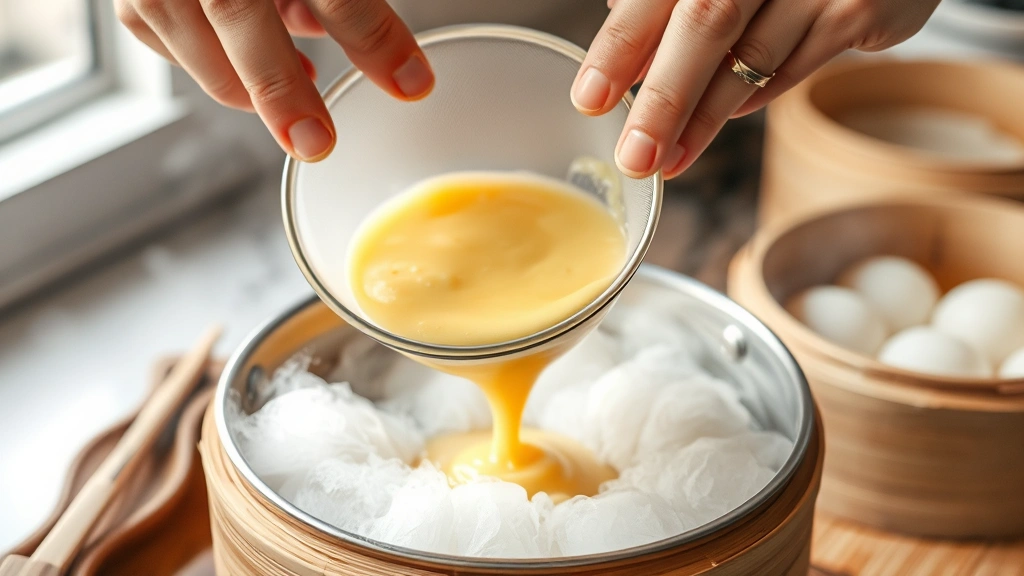
- Pour the broth mixture into the eggs and whisk gently to combine. The ratio should be approximately 1 part egg to 1.5 parts liquid for the perfect custard-like texture. Strain this mixture through a fine-mesh sieve to remove any air bubbles and ensure a silky result.
- If using protein like shrimp or Chinese sausage, divide it evenly among your steaming vessels (small bowls or ramekins). Reserve a small amount of the green onions for garnish.
- Pour the egg mixture carefully into your steaming bowls, filling them about three-quarters full. Sprinkle the remaining green onions (except garnish) into each bowl and stir gently to distribute.
- Cover each bowl loosely with a piece of aluminum foil or a small lid—this prevents water droplets from dripping onto the custard while still allowing steam to circulate. Don’t cover it too tightly, as you need some steam to escape.
- Carefully place the bowls on the steamer rack over boiling water. The water should be at a rolling boil to create consistent steam, but not so violent that it splashes water into the eggs.
- Set a timer for 12 minutes and resist the urge to open the steamer for at least 10 minutes. Checking too early will disrupt the cooking process and can result in uneven texture.
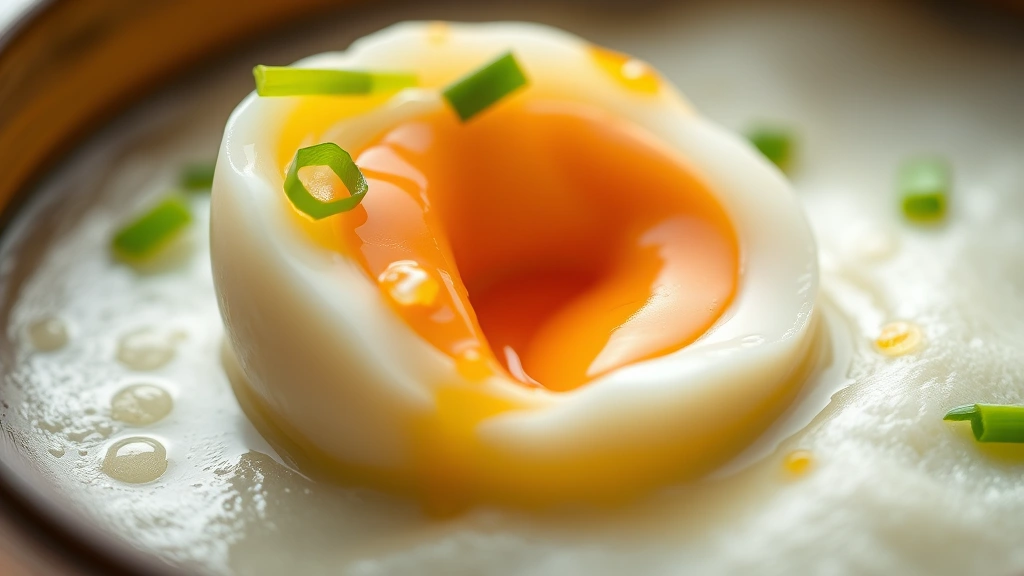
- After 12 minutes, carefully open the steamer and check for doneness. The edges should be set but the center should still jiggle slightly when you gently shake the bowl—similar to the jiggle of panna cotta.
- If the center is still too jiggly, steam for another 1-2 minutes. If it looks mostly set, remove from heat immediately. Remember that carryover cooking will continue for a minute after you remove it from the steamer.
- Let the steamed eggs rest for 1-2 minutes outside the steamer before serving. This allows the residual heat to finish cooking the very center without overdoing the edges.
- Carefully remove the foil or lid, being cautious of the hot steam. Drizzle with a little extra sesame oil if desired and garnish with fresh green onions and cilantro.
- Serve immediately while still warm and silky. Eat directly from the bowl with a spoon—this is the traditional and most satisfying way to enjoy Chinese steamed egg.
Pro Tips
The broth should also be room temperature, never hot. Hot broth can cause the eggs to start cooking before they’re in the steamer, resulting in an uneven texture with cooked bits throughout.
Steaming vessel choice matters more than you might think. Shallow bowls cook faster and more evenly than deep ones. Aim for bowls that are 3-4 inches wide and 1.5-2 inches deep for optimal results.
Don’t skip the straining step. Passing the mixture through a fine-mesh sieve removes air bubbles that could create holes in your finished dish and ensures the silkiest possible texture.
Common mistakes include using water that’s too hot, steaming for too long, or not using enough broth. Remember that gentle steaming, not aggressive boiling, is what you’re after. The eggs should cook slowly and gently, like they’re being hugged by warm steam.
Leftovers can be stored in an airtight container in the refrigerator for up to 2 days, though the texture will be slightly less silky when cold. Reheat gently by steaming for 2-3 minutes or microwaving at 50% power for 30-45 seconds.
This recipe is incredibly adaptable. Add dried scallops, shiitake mushrooms, or even a small amount of crab meat for variations. The technique remains the same regardless of additions—what matters is maintaining the proper egg-to-liquid ratio.
For a richer version, substitute half the broth with chicken stock or even use half broth and half light cream for a decadent twist.
The green onions provide essential flavor and aroma. Don’t omit them, though you can substitute with Chinese chives if available for a more authentic touch.
This dish is best served fresh and warm, but it’s also delicious at room temperature on a hot summer day. Many people in Hong Kong eat it cool as a light lunch or snack.