
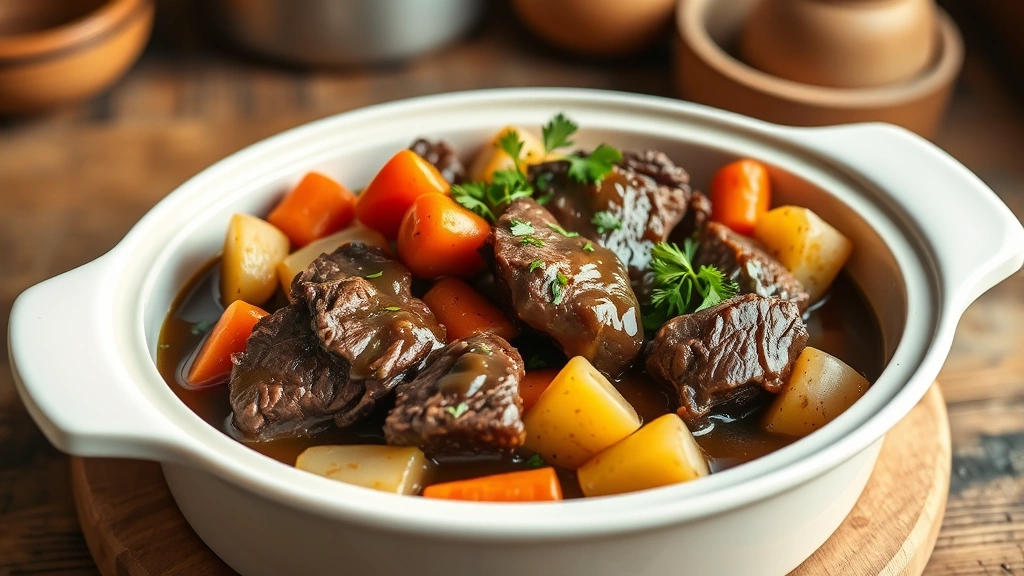
There’s nothing quite like the aroma of a Dutch oven pot roast simmering away in your oven, filling your entire home with warmth and comfort. This classic dish is the ultimate expression of slow-cooked perfection, and honestly, it’s one of those recipes that looks far more impressive than it actually is to make. I absolutely adore pot roast because it’s the kind of meal that brings everyone to the table, and it’s become a staple in our household for Sunday dinners and special occasions.
The beauty of making pot roast in a Dutch oven is that you get incredibly tender, fall-apart meat paired with vegetables that have absorbed all those rich, savory flavors. The Dutch oven creates the perfect environment for braising—it distributes heat evenly and traps steam, which keeps everything moist and delicious. I’ve been making this recipe for years, and I’ve perfected it to the point where it’s become my go-to dinner party dish. People are always amazed at how tender the beef becomes, and they can’t believe how easy it was to make.
What I love most about this recipe is that it’s incredibly forgiving. You’re not working with delicate timing or tricky techniques—just quality ingredients, a hot oven, and time. The long, slow cooking process transforms tough cuts of beef into something absolutely sublime. Whether you’re a seasoned home cook or just starting your culinary journey, this pot roast recipe will become one of your favorites. It’s the kind of dish that makes your kitchen smell like a high-end restaurant, and your family will think you’ve spent hours in the kitchen when really, most of the work is done by your trusty Dutch oven.
I’ve included tips throughout this recipe to help you achieve the best results possible. From selecting the right cut of meat to achieving that perfect crust, these details make all the difference. You can also pair this with other comforting sides like homemade bread or use clarified butter for additional cooking applications. Let me walk you through creating this masterpiece step by step.
Ingredients
- 3 to 4 pound beef chuck roast, tied with kitchen twine
- 2 tablespoons kosher salt
- 1 tablespoon freshly ground black pepper
- 3 tablespoons olive oil
- 1 large yellow onion, cut into quarters
- 4 cloves garlic, smashed
- 3 cups beef broth
- 1 cup red wine (optional but recommended)
- 2 tablespoons tomato paste
- 3 bay leaves
- 4 sprigs fresh thyme
- 4 medium carrots, cut into 2-inch pieces
- 1 pound baby potatoes, halved
- 8 ounces cremini mushrooms, halved
- 2 tablespoons cornstarch mixed with 2 tablespoons cold water (optional, for thickening)
- Fresh parsley for garnish
- 1 teaspoon Worcestershire sauce
Instructions
- Preheat your oven to 325 degrees Fahrenheit. This lower temperature is essential for slow-cooking the roast evenly and ensuring the meat becomes fall-apart tender rather than tough.
- Remove the beef chuck roast from the refrigerator and allow it to sit at room temperature for about 15 minutes. This helps the meat cook more evenly throughout.
- Pat the roast completely dry with paper towels. This step is crucial because a dry surface will develop a beautiful, flavorful crust when seared.
- Season the entire roast generously with kosher salt and freshly ground black pepper on all sides. Don’t be shy—this is where you build the foundation of flavor.
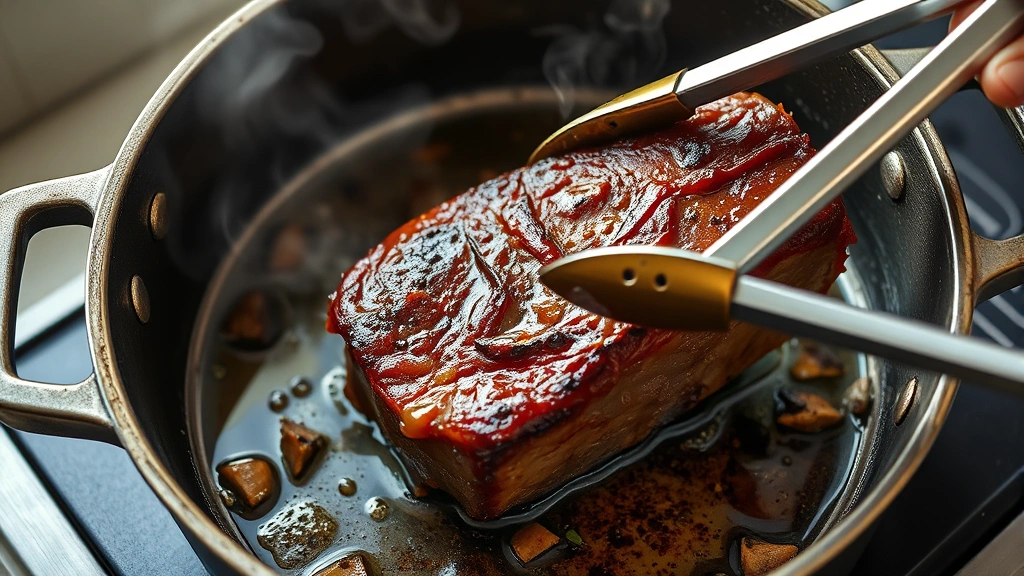
- Heat 3 tablespoons of olive oil in your Dutch oven over medium-high heat until it shimmers and is just beginning to smoke.
- Carefully place the seasoned roast in the hot oil and sear it on all sides for approximately 3-4 minutes per side, until you achieve a deep golden-brown crust. Work in batches if needed, but don’t crowd the pan.
- Remove the seared roast from the Dutch oven and set it aside on a clean plate.
- Add the quartered onion to the same Dutch oven with the remaining oil and drippings, and cook for about 2 minutes until it begins to soften.
- Add the smashed garlic cloves and cook for another minute until fragrant, stirring occasionally.
- Stir in the tomato paste and cook for 1-2 minutes, allowing it to caramelize slightly and deepen in color.
- Pour in the red wine (if using) and scrape the bottom of the Dutch oven with a wooden spoon to release all those flavorful browned bits—this is called deglazing, and it adds incredible depth to your braising liquid.
- Add the beef broth, Worcestershire sauce, bay leaves, and fresh thyme sprigs to the Dutch oven.
- Return the seared roast to the Dutch oven, nestling it among the aromatics. The liquid should come about halfway up the sides of the roast.
- Cover the Dutch oven with its lid and transfer it to the preheated 325-degree oven.
- Braise for 2 hours, then carefully remove the Dutch oven from the oven and add the carrots, potatoes, and mushrooms around the roast.
- Return the covered Dutch oven to the oven for an additional 45 minutes to 1 hour, or until the roast is fork-tender and the vegetables are cooked through.
- Remove the Dutch oven from the oven and transfer the roast to a cutting board. Allow it to rest for 10 minutes before carving.
- While the roast rests, strain the braising liquid through a fine-mesh sieve into a saucepan, reserving the vegetables and discarding the aromatics.
- If you prefer a thicker sauce, bring the strained liquid to a simmer over medium-high heat and whisk in the cornstarch slurry. Cook for 1-2 minutes until thickened to your liking.
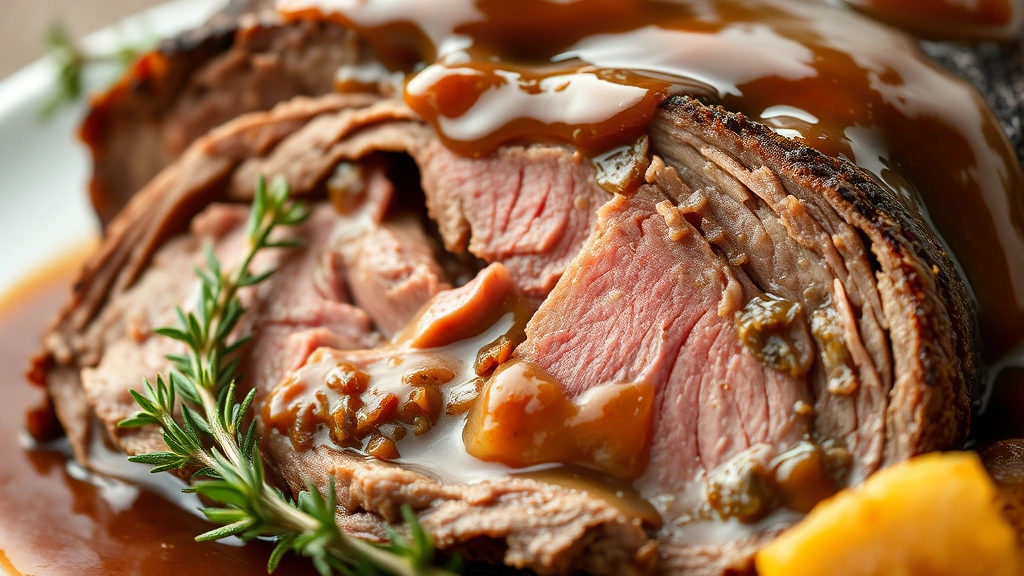
- Slice or shred the roast into serving-size pieces and arrange on a serving platter with the cooked vegetables.
- Pour some of the braising liquid over the roast and vegetables, then garnish generously with fresh parsley before serving.
Pro Tips
The searing step is not just for appearance—it creates a flavorful crust through the Maillard reaction, which adds depth and complexity to the entire dish. Don’t skip this step, and make sure your oil is hot enough before adding the meat.
You can substitute the red wine with additional beef broth if you prefer not to use alcohol. The wine adds acidity and complexity, but the dish will still be delicious without it.
This dish actually tastes better the next day as the flavors meld together. Make it a day ahead and reheat it gently in a 325-degree oven for about 20-30 minutes.
Feel free to customize the vegetables based on your preferences. Parsnips, celery root, and Brussels sprouts all work wonderfully in this recipe.
If your braising liquid seems too thin after cooking, you can reduce it on the stovetop over medium-high heat, or use the cornstarch slurry method mentioned in the instructions.
Don’t skip tying the roast with kitchen twine—it helps the meat maintain its shape and cook more evenly throughout the braising process.
Make sure your Dutch oven has a tight-fitting lid to trap steam and moisture during the long cooking time.
The internal temperature of the roast should reach around 190-195 degrees Fahrenheit for optimal tenderness—at this point, the collagen has converted to gelatin.
For a restaurant-quality presentation, you can strain the braising liquid through cheesecloth and serve it as an elegant sauce on the side.