
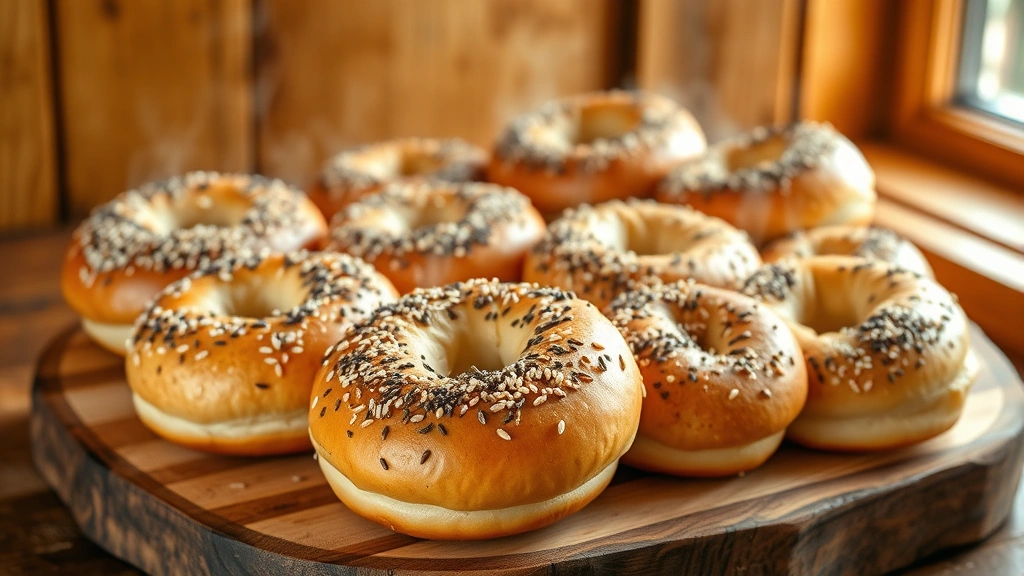
There’s nothing quite like a fresh, warm bagel straight from your own kitchen! This easy bagel recipe is perfectly chewy on the inside with a beautiful golden crust on the outside, and it’s so much simpler than you might think. Whether you’re a seasoned baker or picking up a rolling pin for the first time, you’ll have bakery-quality bagels ready in just a few hours.
I’ve been making bagels at home for years now, and I’m so excited to share my foolproof method with you. The secret is in the technique—boiling the bagels before baking creates that signature chewy texture that makes bagels so irresistible. The dough itself comes together quickly in a stand mixer, and the whole process is incredibly forgiving. Even if your bagels aren’t perfectly round or uniform in size, they’ll still taste absolutely delicious.
What I love most about homemade bagels is that you can customize them however you like. Want everything bagels? Check out our flavor variations guide for inspiration. You can top them with seeds, herbs, or even cinnamon sugar for a sweet version. The possibilities are truly endless!
This recipe makes a dozen beautiful bagels, which is perfect for a weekend baking project. You can enjoy them fresh on day one, and any leftovers freeze beautifully for up to three months. Simply pop them in the toaster and they taste just as wonderful as when they were freshly baked. I often make a double batch and freeze half for busy weekday mornings.
If you’re new to bagel making, don’t be intimidated by the boiling step. It’s actually the easiest part and takes just a minute per bagel. The boiling water is what gives bagels their distinctive chewy interior and shiny exterior. It’s the one thing that separates homemade bagels from regular bread rolls, and it’s so worth the extra step.
For the best results, I recommend using bread flour instead of all-purpose flour. Bread flour has a higher protein content, which creates that ideal chewy texture. However, all-purpose flour works perfectly fine if that’s what you have on hand. You’ll also want a stand mixer with a dough hook attachment to make the mixing process effortless, though you can absolutely knead by hand if you prefer.
The overnight cold fermentation in this recipe is optional but highly recommended. It develops incredible flavor and makes the dough easier to shape. If you’re short on time, you can let the dough rise at room temperature for 2-3 hours instead. Either way, you’ll end up with bagels that taste homemade and delicious.
Pairing these bagels with creamy spreads and toppings takes them to the next level. Try cream cheese and lox, avocado and everything seasoning, or classic butter and jam. You can also check out our favorite bagel topping combinations for more inspiration.
Making bagels at home is truly a game-changer. Once you try homemade bagels, it’s hard to go back to store-bought versions. They’re fresher, more flavorful, and you know exactly what goes into them. Plus, there’s something so satisfying about serving bagels you made with your own two hands. Your family and friends will be thoroughly impressed!
For more baking inspiration, check out our simple recipe guides. And if you want to add a savory element to your bagel breakfast, our shrimp scampi recipe makes an elegant addition to any brunch spread.
For detailed bagel-making techniques and variations, check out Serious Eats’ comprehensive bagel guide. You can also find professional baking tips at Bon Appétit’s bagel recipes. The New York Times also offers their classic bagel recipe if you want to explore different approaches.
Ingredients
- 500g (4 cups) bread flour or all-purpose flour
- 10g (2 teaspoons) salt
- 7g (2¼ teaspoons) instant yeast
- 15ml (1 tablespoon) honey or sugar
- 15ml (1 tablespoon) vegetable oil
- 300ml (1¼ cups) room temperature water
- 15ml (1 tablespoon) baking soda (for boiling water)
- Toppings: sesame seeds, poppy seeds, everything seasoning, coarse salt, or leave plain
Instructions
- In the bowl of a stand mixer fitted with the dough hook attachment, combine flour, salt, and instant yeast. Whisk together to distribute the yeast evenly throughout the flour.
- Add honey, vegetable oil, and room temperature water to the dry ingredients. Mix on low speed for about 2 minutes until all the flour is incorporated and a shaggy dough forms.
- Increase the mixer speed to medium and knead for 8-10 minutes until the dough becomes smooth, elastic, and slightly tacky. The dough should pull away from the sides of the bowl but still be quite firm—bagel dough is much stiffer than regular bread dough.
- Turn the dough out onto a lightly floured work surface. Divide the dough into 12 equal pieces, each weighing approximately 65-70g. You can use a kitchen scale for precision, or simply divide the dough visually.
- Roll each piece of dough into a tight ball by cupping it under your palm and rolling it toward you on the work surface. Apply gentle pressure to create tension on the surface. Let these balls rest for 10 minutes under a clean kitchen towel.
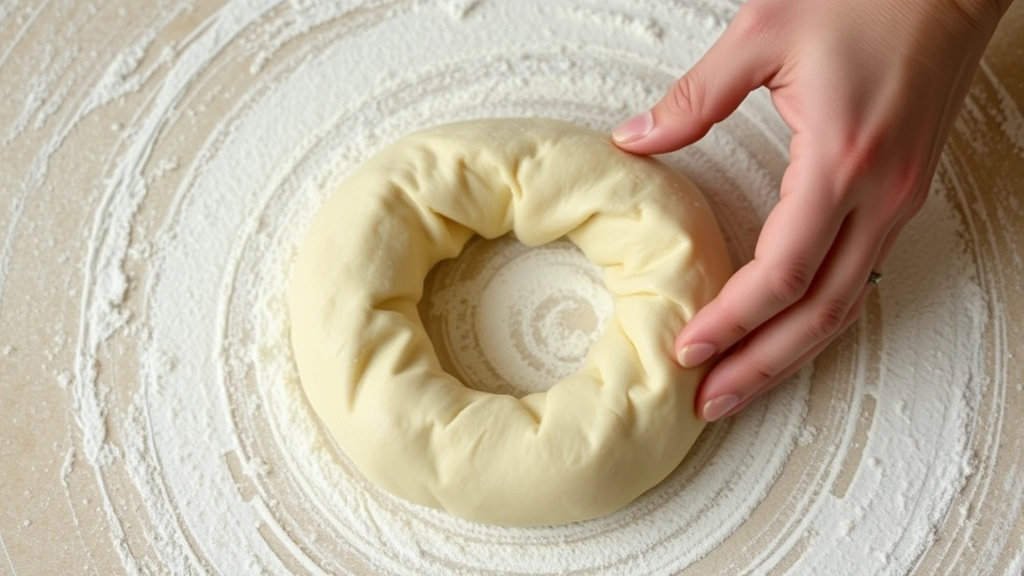
- After the 10-minute rest, take one dough ball and poke your thumb through the center to create a hole. Gently stretch the dough into a ring shape, about 3 inches in diameter. The bagel should be relatively thick and dense—the hole will shrink slightly during boiling and baking.
- Place each shaped bagel on a parchment paper-lined baking sheet. Once all bagels are shaped, cover them with a clean kitchen towel and let them rise at room temperature for 1.5-2 hours until they’re puffy and slightly jiggly. Alternatively, refrigerate overnight for enhanced flavor.
- Preheat your oven to 220°C (425°F). Line another baking sheet with parchment paper and set aside. Fill a large pot with about 3 liters of water and bring it to a boil.
- Add baking soda to the boiling water—it will bubble up slightly. This alkaline environment creates the signature bagel crust and helps them brown beautifully.
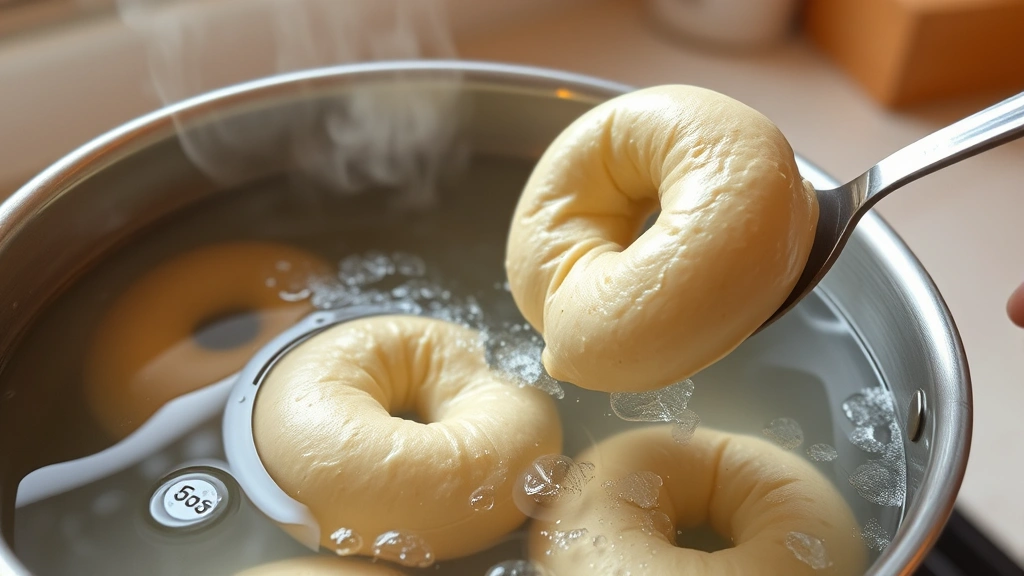
- Working in batches of 2-3 bagels at a time (don’t crowd the pot), gently place each bagel into the boiling water. They should sink initially, then float to the surface within 10-15 seconds.
- Once the bagels float, boil them for 1 minute on the first side. Using a slotted spoon, carefully flip each bagel and boil for another 1 minute on the second side. Total boiling time is 2 minutes per bagel.
- Remove the boiled bagels from the water using a slotted spoon and place them on the prepared parchment-lined baking sheet. Pat the tops dry with a clean kitchen towel to remove excess water.
- If desired, add toppings now while the bagels are still wet. Sprinkle sesame seeds, poppy seeds, everything seasoning, coarse salt, or your preferred toppings onto the tops of the bagels. The moisture helps them stick perfectly.
- Bake the bagels in the preheated oven for 20-25 minutes until they’re deep golden brown on top. The bagels should sound hollow when tapped on the bottom.
- Remove the bagels from the oven and transfer them to a wire cooling rack. Let them cool for at least 15 minutes before slicing—this allows the interior to set properly.
- Once cooled, slice your bagels in half using a sharp serrated knife or a dedicated bagel knife. Serve warm with cream cheese, butter, jam, or your favorite toppings.
Pro Tips
Dough Consistency: Bagel dough should be quite firm and dense—much stiffer than bread dough. If it seems too wet after mixing, add a tablespoon of flour at a time. If it’s too dry, add water one teaspoon at a time. The dough shouldn’t stick to your hands when fully mixed.
Shaping Tips: The key to a good bagel hole is creating tension on the surface of the dough ball first. Roll the balls firmly before poking the hole. When stretching the dough into a ring, work gently but confidently. If the dough springs back, let it rest for 5 minutes and try again.
Fermentation Options: The overnight cold fermentation develops incredible flavor and makes the dough easier to shape. Simply cover the shaped bagels and refrigerate for 8-16 hours. In the morning, remove them from the fridge and let them come to room temperature for 30 minutes before boiling. You can also do a room temperature rise for 1.5-2 hours if you’re short on time.
Boiling Technique: Baking soda is crucial for authentic bagel texture. Never skip this step or substitute with just water. The baking soda creates an alkaline environment that promotes browning and creates that shiny, chewy exterior. Don’t boil the bagels too long or they’ll become too dense. Two minutes total is perfect.
Topping Ideas: Plain bagels are classic and delicious, but try everything seasoning, sesame seeds, poppy seeds, or a mix of the three. For sweet bagels, sprinkle cinnamon and sugar on top before baking. You can also leave bagels plain and add toppings to spreads instead.
Storage and Freezing: Cooled bagels can be stored in an airtight container at room temperature for up to 3 days. For longer storage, wrap individual bagels in plastic wrap and freeze in a freezer bag for up to 3 months. Toast from frozen for best results. You can also slice bagels before freezing for easier toasting.
Troubleshooting: If bagels are too dense, they likely over-fermented or the dough was too dry. If they’re too bread-like, the boiling time was too short or they over-proofed. If the hole closes during baking, it was too small when shaped. If bagels are pale, increase oven temperature slightly or bake longer.
Stand Mixer Alternative: If you don’t have a stand mixer, you can knead by hand for about 12-15 minutes until the dough is smooth and elastic. This is more work but produces equally delicious bagels.
Yeast Verification: Make sure your instant yeast is fresh and active. Expired yeast will result in bagels that don’t rise properly. Store yeast in the refrigerator or freezer to extend shelf life.
Pingback: How to Make the Best Lee’s Famous Recipe Chicken at Home! – Simple Recipe Finder
Pingback: How to make the BEST Korean Noodles Recipe (Quick & Easy!) – Simple Recipe Finder