
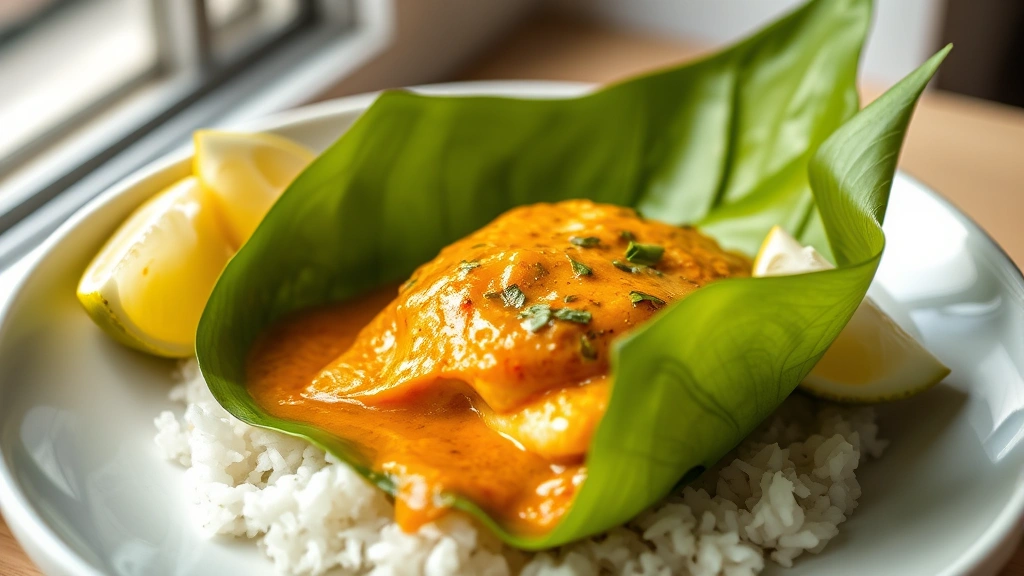
Fish Amok is a stunning Cambodian curry that’s absolutely divine—and easier to make than you might think! This silky, aromatic dish features tender fish wrapped in banana leaves and steamed in a fragrant coconut curry sauce that’s both creamy and herbaceous. It’s the kind of elegant dish that looks like you spent hours in the kitchen, but the truth is, with proper preparation and quality ingredients, you can have this restaurant-worthy meal on your table in under an hour.
What makes Fish Amok so special is its delicate balance of flavors. The curry paste is built on a foundation of lemongrass, galangal, turmeric, and garlic, which create this beautiful golden hue and complex flavor profile. The coconut milk brings richness without heaviness, while the fish stays incredibly moist when steamed in those banana leaves. It’s comfort food that feels fancy, and honestly, that’s what I’m all about in the kitchen!
I absolutely love serving this dish when I want to impress guests. The presentation is just gorgeous—those emerald banana leaf packages are so elegant. Plus, it’s naturally gluten-free and works beautifully for anyone following a paleo or whole30 lifestyle. You can easily customize the heat level and adjust the aromatics to your preference. Some people add a touch of peanut butter for extra richness, while others prefer to keep it pure and herbaceous. I’m sharing my favorite version today, which strikes the perfect balance.
If you’re new to Cambodian cuisine, this is the perfect introduction. It’s approachable, absolutely delicious, and will make you feel like you’ve traveled to Southeast Asia without leaving your dining room. The technique of steaming in banana leaves is something you’ll want to master because it works beautifully with so many proteins and vegetables.
For an authentic experience, serve this with jasmine rice and a simple side salad. I love pairing it with pickled red onions for brightness and acidity. You could also add a chickpea salad on the side for a complete meal. The beauty of this dish is its versatility—it’s light enough for a weeknight dinner yet impressive enough for entertaining.
Before you dive in, let me share a few pro tips: Fresh curry paste makes all the difference here, so don’t skip that step. If you can’t find fresh turmeric and galangal at your local market, check an Asian grocery store or order online. The banana leaves are essential for authentic flavor and presentation, though you can use parchment paper in a pinch. Finally, don’t overcrowd your steamer—give each package some breathing room so the steam circulates properly.
This recipe serves four as a main course, but you can easily double it for a crowd. The individual packages are also perfect for meal prep, and you can assemble them ahead of time and steam them when you’re ready to eat. I often make these for dinner parties because guests are so impressed, and I get to enjoy the compliments while actually having a relatively relaxed evening in the kitchen!
Ingredients
- 4 banana leaves (or parchment paper as substitute)
- 1.5 pounds fresh white fish fillets (halibut, cod, or snapper work beautifully)
- 3 stalks fresh lemongrass, white part only, chopped
- 2 tablespoons fresh galangal, sliced (or 1 tablespoon ground if fresh unavailable)
- 1 tablespoon fresh turmeric root, chopped (or 1 teaspoon ground turmeric)
- 4 cloves garlic, minced
- 3 Thai red chilies (adjust for heat preference)
- 1 tablespoon shrimp paste (optional but recommended)
- 1 can (14 ounces) unsweetened coconut milk
- 2 tablespoons fish sauce
- 1 tablespoon palm sugar or brown sugar
- 1/2 cup fresh cilantro, loosely packed
- 1/4 cup fresh Thai basil leaves
- 2 kaffir lime leaves, thinly sliced
- 1/2 cup long beans or green beans, cut into 1-inch pieces
- 2 tablespoons coconut oil
- Salt and white pepper to taste
- Fresh lime juice (about 1 lime)
- Water as needed for steaming
Instructions
- Begin by preparing your work station. Cut banana leaves into 8×8 inch squares (you’ll need one for each fish portion). If using fresh banana leaves, briefly pass them over a gas flame or dip in hot water to make them pliable and prevent cracking. Pat dry with paper towels and set aside.
- Make the curry paste by combining lemongrass, galangal, turmeric, garlic, Thai chilies, and shrimp paste in a food processor or mortar and pestle.
Process until you achieve a smooth, fragrant paste, scraping down the sides as needed. This should take about 2-3 minutes in a food processor. - Heat coconut oil in a medium saucepan over medium heat. Add your curry paste and cook for 2-3 minutes, stirring constantly, until the raw smell mellows and the paste becomes fragrant and slightly darker in color.
- Pour in half of the coconut milk, stirring well to combine with the curry paste. Let this simmer for 3-4 minutes, allowing the flavors to meld and the coconut milk to reduce slightly.
- Add the remaining coconut milk, fish sauce, palm sugar, and kaffir lime leaves. Stir to combine and let simmer for 2 minutes. Taste and adjust seasonings—add more fish sauce for depth, sugar for balance, or a squeeze of lime juice for brightness.
- Fold in the long beans and fresh cilantro and Thai basil, reserving some herbs for garnish. Cook for 1 minute, then remove from heat and let cool for about 5 minutes. The sauce should be thick enough to coat a spoon.
- Pat your fish fillets completely dry with paper towels. Season both sides generously with salt and white pepper. This step is crucial for even cooking and flavor distribution.
- Lay out a banana leaf square on your work surface with the shiny side down. Place about 1/4 cup of the cooled curry sauce in the center of the leaf.
- Top the sauce with one fish fillet, then spoon another 1/4 cup of curry sauce over the fish. Add a few pieces of long beans and a sprinkle of reserved fresh herbs on top.
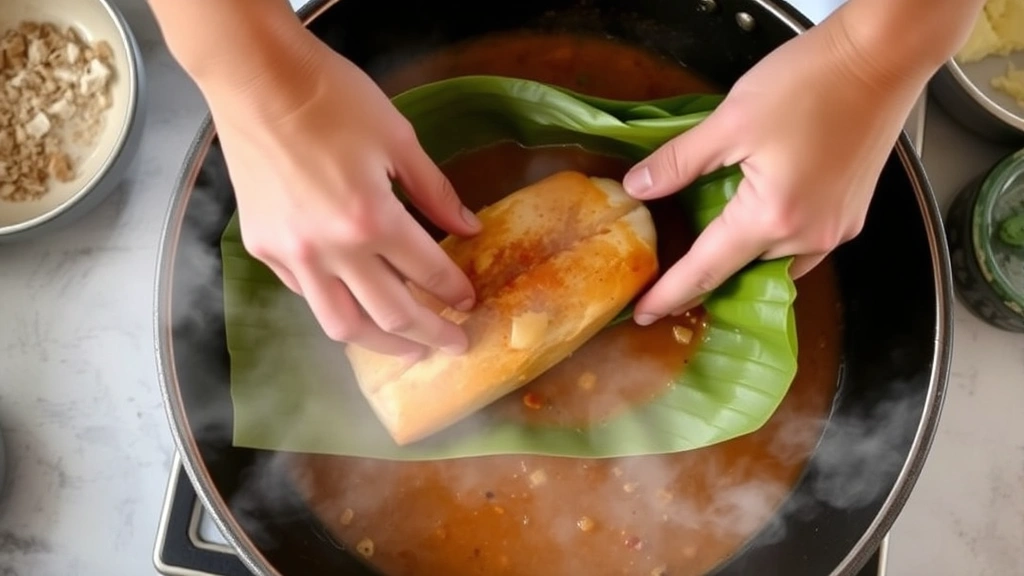
- Fold the banana leaf into a secure package: fold the bottom edge up and over the filling, then fold the left side in, then the right side, and finally the top flap down to create a neat envelope. The seams should overlap slightly. You can secure with a toothpick if needed, though it usually holds on its own.
- Repeat with remaining fish fillets and sauce to create three more packages. Arrange packages seam-side down on a steamer basket or plate that fits in your steamer, leaving a little space between each.
- Fill a large pot with about 2 inches of water and bring to a boil. Place the steamer basket or plate containing the amok packages over the boiling water. Cover with a tight-fitting lid.
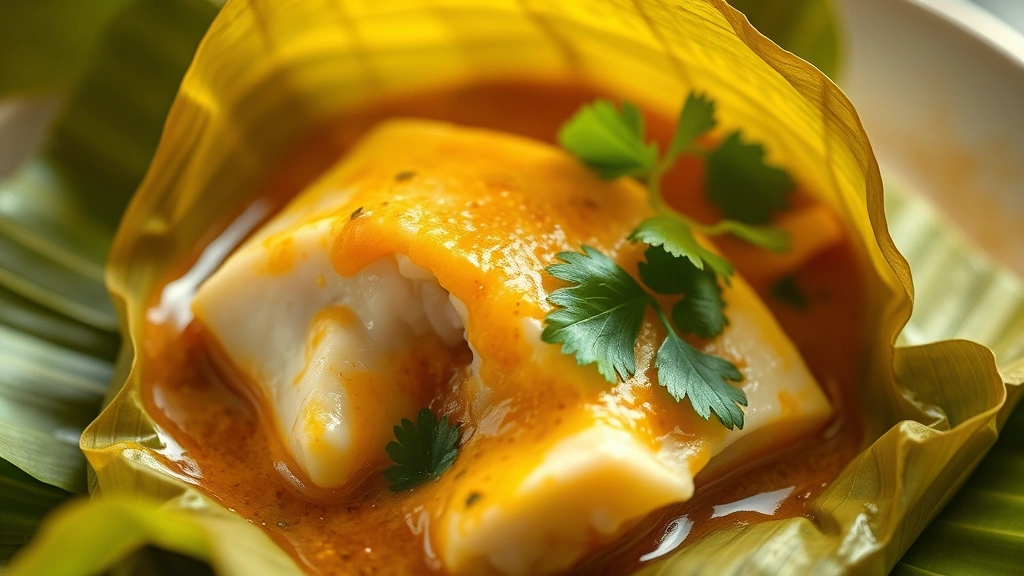
- Steam for 18-20 minutes, until the fish is opaque and flakes easily with a fork when you carefully open one package to check. The banana leaf will have turned a darker green, and you should see steam escaping when you open the packages.
- Carefully remove the packages from the steamer using tongs or a spatula—they’ll be hot! You can serve them in their banana leaf wrapping for presentation, or transfer to plates and serve alongside jasmine rice.
- Garnish each serving with additional fresh cilantro, Thai basil, thinly sliced red chilies for color, and a wedge of fresh lime. Serve immediately while the packages are still warm and fragrant.
Pro Tips
- Fish Selection: Choose firm white fish that won’t fall apart during steaming. Halibut, snapper, and cod are my top choices, but you can also use sea bass or flounder. Aim for fillets that are roughly the same thickness so they cook evenly.
- Curry Paste Storage: Make the curry paste up to 3 days ahead and store in an airtight container in the refrigerator. You can also freeze it for up to 3 months, which is fantastic for meal planning.
- Banana Leaves: Find these in the frozen section of Asian markets or specialty grocery stores. They add authentic flavor and create a beautiful presentation, but parchment paper works as a substitute in a pinch (though you’ll lose some of the subtle flavor).
- Coconut Milk: Use full-fat coconut milk for the richest, most authentic flavor. Don’t use lite versions as the sauce won’t have the same silky texture.
- Customization: Add diced vegetables like bell peppers, mushrooms, or asparagus to the sauce. You can also include shrimp alongside the fish, or make an all-vegetable version using firm tofu or cauliflower steaks.
- Heat Level: The number of Thai chilies determines spiciness. Start with 2 if you’re sensitive to heat, or go up to 4 if you like significant kick. You can also remove the seeds for milder heat.
- Make-Ahead: Assemble the packages up to 4 hours ahead and refrigerate until ready to steam. This is perfect for dinner parties—you can prep everything in advance and just steam when guests arrive.
- Serving Suggestions: Serve with jasmine rice, sticky rice, or cauliflower rice for a lighter option. A simple cucumber salad or the pickled red onions add nice contrast.
- Steamer Setup: If you don’t have a bamboo steamer, use a metal steamer basket, a plate set over chopsticks in a pot, or even an instant pot with the trivet. The key is creating steam circulation around the packages.
- Fresh Herbs: Thai basil and cilantro are non-negotiable—they’re essential to the authentic flavor profile. If you can’t find Thai basil, regular basil works but use a bit less as it’s more assertive.
- Leftover Sauce: Any extra curry sauce keeps refrigerated for up to 5 days and is delicious reheated with other proteins or as a soup base.
- Gluten-Free and Paleo: This dish is naturally compliant with both diets. Just verify your fish sauce brand for paleo approval, as some contain additives.