
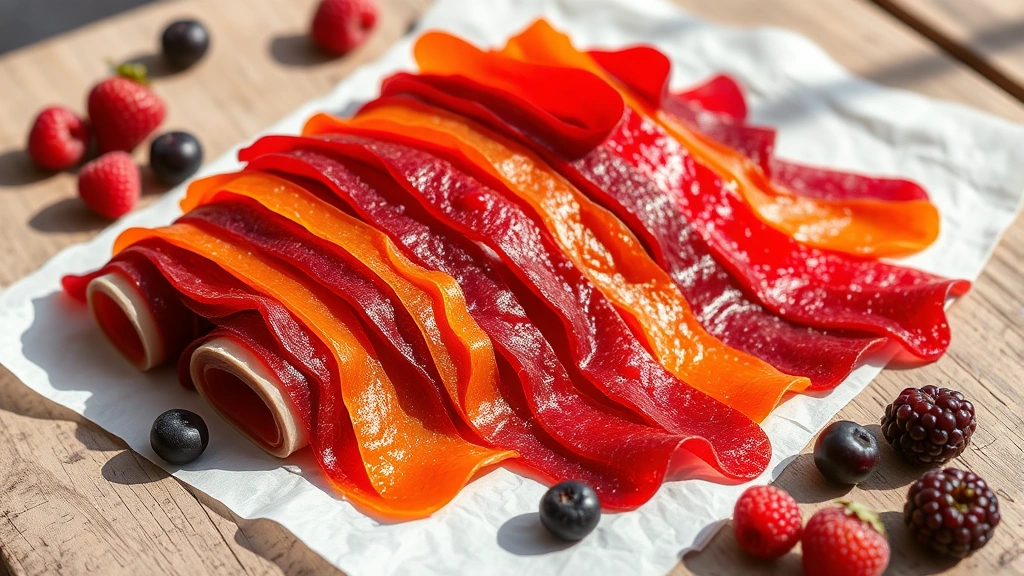
Making homemade fruit leather is one of the easiest and most rewarding ways to preserve fresh fruit while creating a naturally sweet, chewy treat that the whole family will love! This simple fruit leather recipe uses just a few basic ingredients and your trusty dehydrator to transform fresh berries, stone fruits, or tropical fruits into gorgeous, shelf-stable snacks.
I absolutely adore making fruit leather at home because it’s such a versatile way to use up ripe fruit before it goes bad. Whether you have an abundance of strawberries from the farmer’s market, overripe bananas, or a mix of berries from your garden, this recipe works beautifully with virtually any fruit combination you can dream up. The best part? You only need fruit, a touch of sweetener if desired, and a dehydrator—no complicated equipment or special skills required!
Fruit leather has been a beloved snack for generations, and for good reason. It’s naturally gluten-free, vegan-friendly, and packed with the nutritional benefits of real fruit. Unlike store-bought versions that often contain additives and excessive sugar, homemade fruit leather lets you control exactly what goes into your snacks. Plus, the process is practically foolproof, making it perfect for beginner food preservers and seasoned kitchen enthusiasts alike.
The key to the BEST fruit leather is using ripe, flavorful fruit and spreading it evenly on your dehydrator trays. I recommend using a blender or food processor to create a smooth puree, though you can leave it slightly chunky if you prefer more texture. The dehydrator does all the heavy lifting, slowly and gently removing moisture while concentrating all those delicious fruit flavors into every chewy bite.
You’ll love how customizable this recipe is! Try combining different fruits for unique flavor combinations, or add a hint of vanilla, lemon zest, or a pinch of cinnamon for extra depth. For a tropical twist, blend mango with pineapple and a squeeze of lime. The possibilities are truly endless!
Once you master this basic technique, you’ll find yourself making batch after batch of these gorgeous fruit leather strips. They store beautifully in an airtight container for weeks, making them perfect for lunchboxes, hiking trips, or simply enjoying as an afternoon pick-me-up. I promise that once you taste homemade fruit leather, you’ll never go back to the store-bought version. Let’s get started on creating your own batch of fruity perfection!
For more preservation inspiration, check out my pickled red onions recipe and this amazing shishito peppers recipe for other ways to preserve and prepare fresh ingredients. You might also enjoy exploring quick tasty recipes for your weeknight dinners!
For additional dehydrating techniques and inspiration, check out Serious Eats’ food preservation guide, Bon Appétit’s dehydrator recipes, and New York Times Cooking’s preservation section for more amazing ideas!
Ingredients
- 4 cups fresh fruit (berries, stone fruits, tropical fruits, or a combination), rinsed and chopped
- 1-2 tablespoons honey or maple syrup (optional, depending on fruit sweetness)
- 1 tablespoon fresh lemon juice (optional, brightens flavor)
- 1 teaspoon vanilla extract (optional)
- Pinch of sea salt (optional, enhances fruit flavor)
- Additional flavorings like cinnamon, ginger, or mint (optional)
Instructions
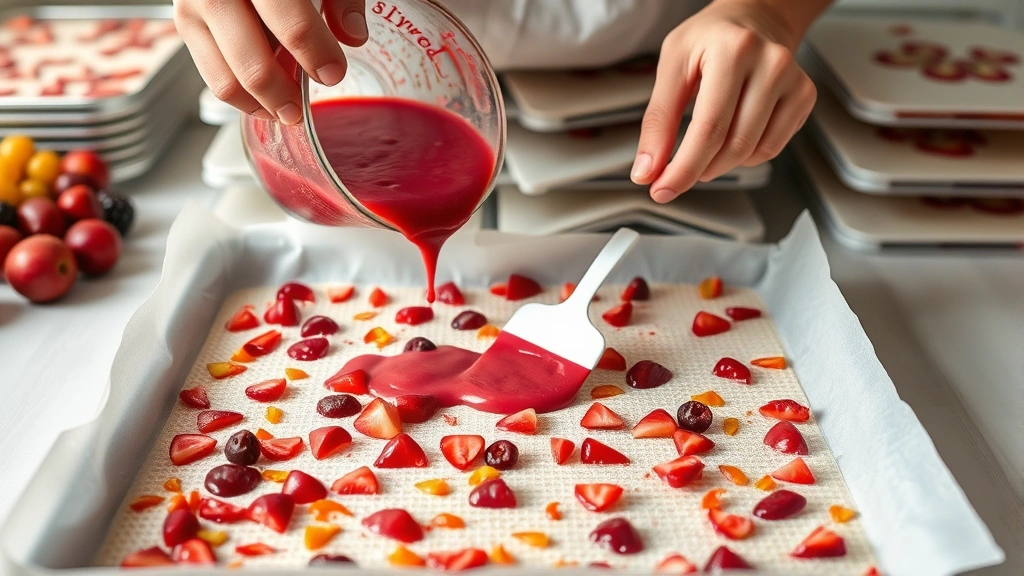
- Prepare your dehydrator by lining the trays with parchment paper or silicone dehydrator sheets. This prevents the fruit leather from sticking and makes removal much easier.
- Rinse and chop your fresh fruit into rough chunks, removing any seeds, pits, or stems. If using berries, you can leave them whole. Cut larger fruits like mangoes, peaches, or apples into 1-2 inch pieces.
- Add your chopped fruit to a high-powered blender or food processor and blend on high speed until you achieve a completely smooth puree with no visible chunks. This usually takes 2-3 minutes depending on your machine.
- Taste your fruit puree and add honey or maple syrup if desired, depending on the natural sweetness of your fruit. Berries and stone fruits are usually sweet enough on their own, but tropical fruits may benefit from a touch of sweetener.
- Add your optional flavorings such as lemon juice, vanilla extract, sea salt, or spices like cinnamon or ginger. Blend again for about 30 seconds to incorporate all flavors evenly throughout the puree.
- Pour the fruit puree onto your prepared dehydrator trays, spreading it into an even layer about ⅛ to ¼ inch thick. Use an offset spatula or the back of a spoon to ensure consistent thickness, as this helps the leather dry evenly.
- Set your dehydrator to 135-145°F (57-63°C) and place the trays inside, making sure none of the trays are blocking airflow vents. The lower temperature preserves more nutrients and natural flavors.
- Allow the fruit leather to dehydrate for 8-12 hours, depending on your specific dehydrator model, the thickness of your spread, and the moisture content of your fruit. Check around the 6-hour mark to monitor progress.
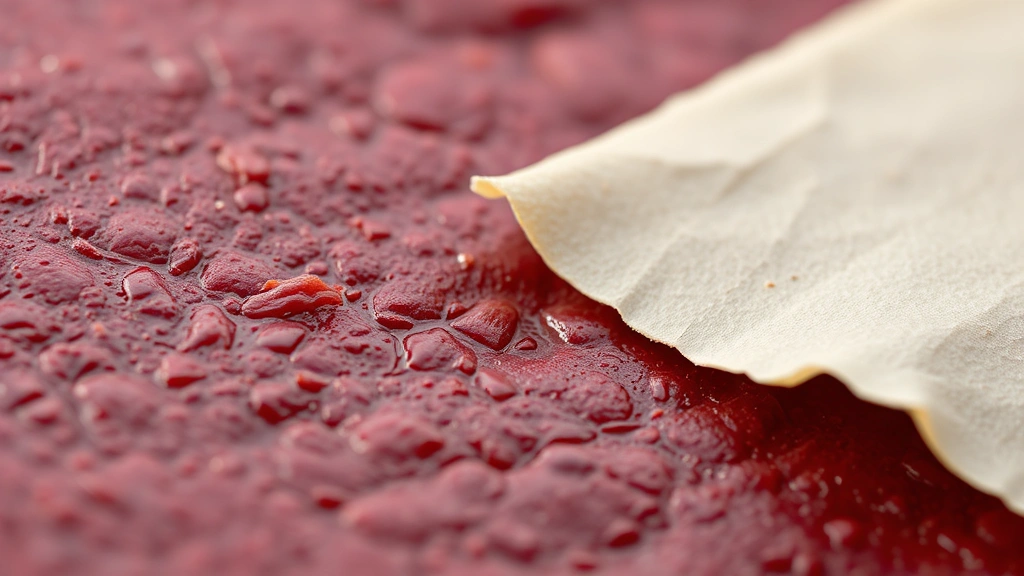
- The fruit leather is ready when it’s completely dry to the touch and no longer sticky, but still slightly pliable. It should bend without cracking or breaking. If it feels wet or moist in any spots, continue dehydrating for another 1-2 hours.
- Remove the dehydrator trays and allow the fruit leather to cool to room temperature on the trays for about 15-20 minutes before handling.
- Gently peel the parchment paper from the back of the fruit leather. If it’s still too warm or sticky, wait another few minutes before attempting removal.
- Using a sharp knife or pizza cutter, cut the dried fruit leather into strips about 1-2 inches wide and 3-4 inches long. You can also cut them into fun shapes using cookie cutters if desired.
- If desired, roll individual strips in parchment paper or plastic wrap to prevent them from sticking together and to make them easier to grab for snacking.
- Store your finished fruit leather in an airtight container at room temperature for up to 4 weeks, or refrigerate for extended storage. For best results, place a small packet of food-grade silica gel or a piece of parchment paper in the container to absorb any excess moisture.
- Enjoy your homemade fruit leather straight from the container, or pack it in lunchboxes, take it on hikes, or gift it to friends and family in adorable jars with pretty labels!
Pro Tips
- FRUIT SELECTION: The best fruit leather comes from using ripe, flavorful fruit. Strawberries, raspberries, blackberries, blueberries, mangoes, peaches, apricots, pineapples, and papaya all work beautifully. You can use a single fruit type or create custom blends—try mango-pineapple, strawberry-raspberry, or peach-blueberry combinations for something special.
- SWEETNESS LEVEL: Most fruits are naturally sweet enough that additional sweetener is unnecessary. However, if you’re using tart fruits like cranberries or Granny Smith apples, a tablespoon of honey or maple syrup helps balance the flavors. Taste your puree before spreading to ensure you’re happy with the sweetness level.
- TEXTURE PREFERENCES: If you prefer chunkier fruit leather with visible fruit bits, blend your fruit for only 1-2 minutes rather than until completely smooth. This creates a more rustic texture while still holding together well.
- DEHYDRATOR TEMPERATURE: Different dehydrators operate at different temperatures. If your model doesn’t go as low as 135°F, use the lowest setting available. Higher temperatures (up to 160°F) work but may result in slightly less nutrient retention and more browning of lighter fruits.
- THICKNESS MATTERS: Spreading your fruit puree at a consistent thickness is crucial for even drying. Too thin and your leather may become brittle; too thick and it may take 15+ hours to fully dry. Aim for about ⅛ to ¼ inch thick for best results.
- PARCHMENT PAPER VS SILICONE SHEETS: Both work great for preventing sticking. Silicone sheets are reusable and eco-friendly, while parchment paper is disposable. Some people prefer the texture silicone sheets create, so try both to see your preference.
- STORAGE SOLUTIONS: Properly stored fruit leather stays fresh for 3-4 weeks at room temperature in an airtight container. For longer storage, refrigerate for up to 2-3 months or freeze for up to 6 months. Remove from freezer and let come to room temperature before opening to prevent condensation.
- FLAVOR COMBINATIONS TO TRY: Strawberry-vanilla, mango-lime-chili, raspberry-lemon, peach-ginger, blueberry-lavender, tropical medley (mango-pineapple-coconut), or classic berry blend (strawberry-raspberry-blueberry).
- GIFT-WORTHY PACKAGING: Your homemade fruit leather makes a thoughtful, personalized gift! Roll strips in parchment, tie with twine, and attach a handwritten label with the flavor and date made. Package in a mason jar or pretty box for a special presentation.
- TROUBLESHOOTING: If your fruit leather is sticky after 12 hours, it may have too much moisture content. Try reducing the initial fruit quantity or spreading thinner next time. If it’s too brittle and cracks easily, you may have dried it too long—reduce dehydration time by 1-2 hours.
- KIDS LOVE IT: This is the perfect snack to make with children! They can help rinse and chop fruit, blend the puree, and spread it on trays. Plus, kids are always more excited to eat something they helped create.