
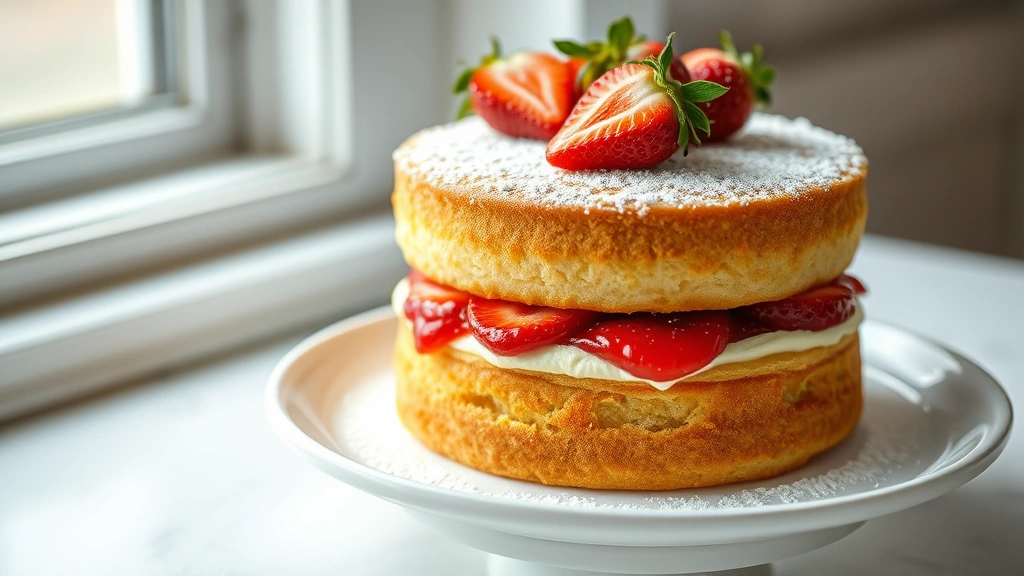
The Great British Bake Off Victoria Sponge is the ultimate classic British cake that has graced the tent countless times! This iconic two-layer sponge cake with jam and cream filling is elegant, delicious, and surprisingly achievable at home. With the right technique and quality ingredients, you’ll create a show-stopping dessert that rivals anything from the competition.
Victoria Sponge cake originated in the Victorian era and was reportedly a favorite of Queen Victoria herself. The beauty of this cake lies in its simplicity—just butter, sugar, eggs, flour, and a touch of vanilla create the perfect tender crumb. The traditional filling of strawberry jam and whipped cream adds a lovely tartness and richness that balances the sweet sponge beautifully.
What makes a GBBO-worthy Victoria Sponge? It’s all about achieving that perfect rise, an even crumb structure, and the ideal ratio of cake to filling. Many bakers struggle with their sponges sinking in the middle or baking unevenly, but I’ll share all my professional tips to help you succeed. The key is using the creaming method properly, not opening the oven door, and baking at the correct temperature.
This recipe has been tested extensively and yields a moist, light sponge that won’t dry out. I’ve included variations for making it dairy-free or adding different fillings, so you can customize it to your preferences. Whether you’re preparing for a baking competition or simply want to impress your family, this Victoria Sponge recipe will become your go-to classic.
For additional baking inspiration, check out our Best Heavy Cream Alfredo Sauce Recipe for dessert accompaniments. You might also enjoy exploring Delicious Heavy Cream Pasta Recipe ideas and Easy Chicken Alfredo Recipe for complete meal planning. For more cake expertise, see our Perfect Creamy Pasta Recipe guide.
Looking for expert baking techniques? Check out Serious Eats Baking Guide for advanced methods, Bon Appétit’s Cake Recipes for inspiration, and New York Times Cooking for classic British desserts. These resources will elevate your baking game significantly.
Ingredients
- 225g (8 oz) unsalted butter, softened to room temperature
- 225g (8 oz) caster sugar
- 4 large eggs, room temperature
- 225g (8 oz) self-raising flour
- 1 teaspoon baking powder
- 1 teaspoon vanilla extract
- 2-3 tablespoons whole milk
- Pinch of salt
- 300ml (10 fl oz) heavy whipping cream
- 2 tablespoons icing sugar
- 1 teaspoon vanilla extract (for filling)
- 3-4 tablespoons strawberry jam
- Fresh strawberries for garnish (optional)
- Extra icing sugar for dusting the top
Instructions
- Preheat your oven to 190°C (375°F/Gas Mark 5). Grease two 20cm (8-inch) round cake tins and line the bottoms with parchment paper. This prevents sticking and ensures even baking.
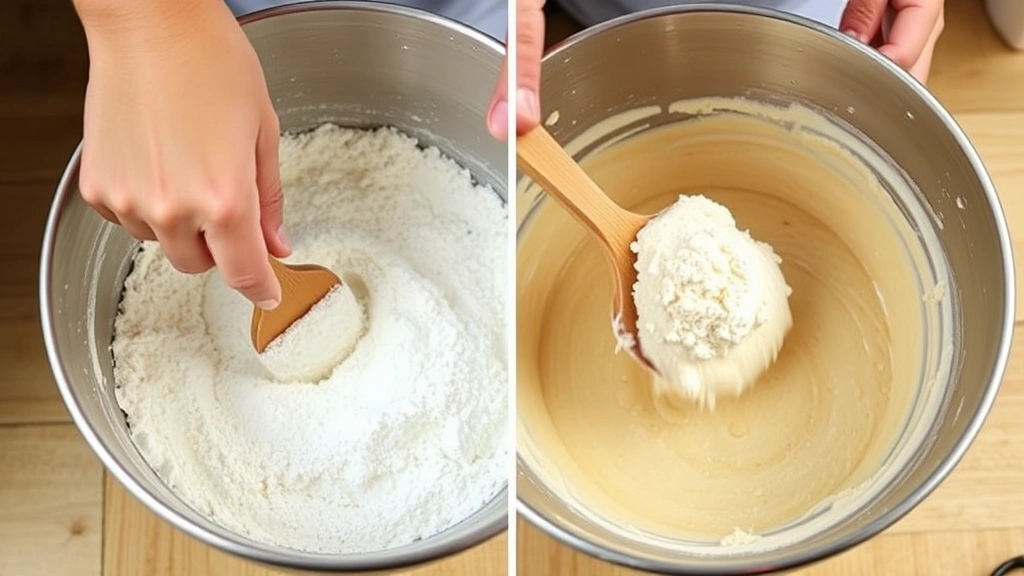
- Sift together the self-raising flour, baking powder, and salt into a bowl. Set aside. Sifting aerates the flour and helps create a lighter crumb.
- In a large mixing bowl, cream together the softened butter and caster sugar using an electric mixer on medium-high speed. Beat for 3-4 minutes until the mixture is pale, fluffy, and resembles breadcrumbs. This creaming process is crucial for incorporating air into the batter.
- Add the room temperature eggs one at a time, beating well after each addition (about 30 seconds per egg). If the mixture looks curdled, add a tablespoon of flour to help emulsify.
- Add the vanilla extract and beat to combine thoroughly.
- Gently fold in the sifted flour mixture using a spatula or wooden spoon until just combined. Be careful not to overmix, as this will develop gluten and result in a dense cake.
- Add the milk one tablespoon at a time, folding gently until the batter reaches a soft, dropping consistency. The batter should fall from a spoon when you gently shake it.
- Divide the batter evenly between the two prepared tins. Smooth the tops gently with the back of a spoon or an offset spatula.
- Tap each tin gently on the counter twice to release any large air bubbles.
- Place both tins on the middle rack of the preheated oven. Bake for 20-25 minutes until the cakes are golden brown and a skewer inserted in the center comes out clean.
- Remove from the oven and let the cakes cool in their tins for 5 minutes. This helps them set slightly before turning out.
- Turn the cakes out onto a wire cooling rack and remove the parchment paper. Let cool completely for at least 30 minutes before filling.
- While the cakes cool, prepare the cream filling. Pour the heavy whipping cream into a chilled bowl and whip with an electric mixer on medium-high speed.
- When soft peaks form, add the icing sugar and vanilla extract. Continue whipping until stiff peaks form. Be careful not to overbeat or you’ll make butter.
- Place one cake layer on a serving plate or cake board. Spread half of the whipped cream onto the first layer.
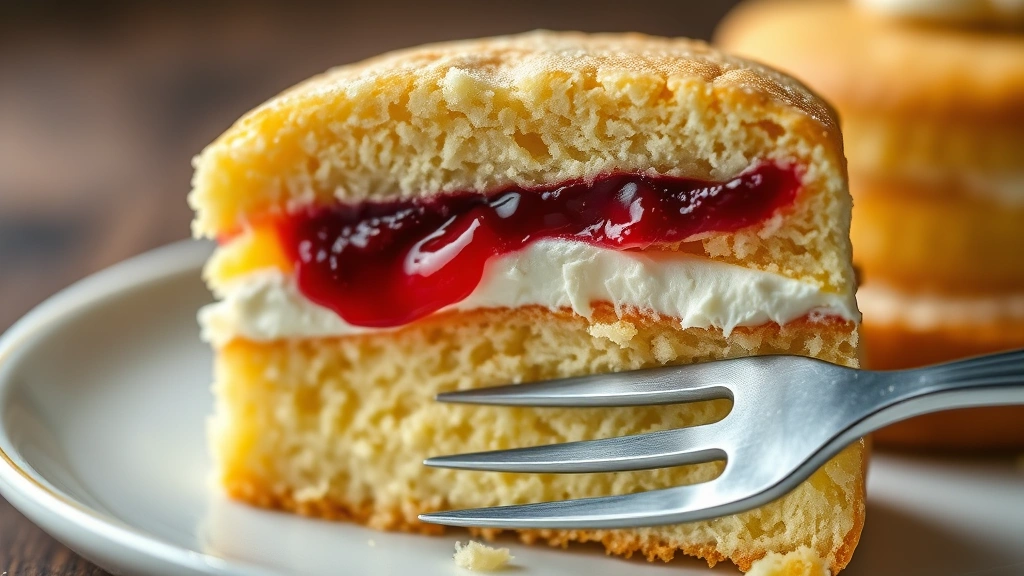
- Add a layer of strawberry jam over the cream, spreading gently to avoid mixing the layers.
- Top with the second cake layer, placing it gently on top of the filling.
- Spread the remaining whipped cream onto the top of the cake, or pipe it decoratively with a piping bag if preferred.
- Add the remaining jam in the center or create a decorative pattern with it.
- Dust the top generously with icing sugar using a fine sieve.
- Garnish with fresh strawberries if desired. Serve immediately or refrigerate until serving time.
Pro Tips
- **Room Temperature Ingredients**: Ensure your eggs and butter are at room temperature before starting. Cold ingredients won’t incorporate properly, resulting in a dense cake.
- **Oven Temperature**: Invest in an oven thermometer to ensure your oven is at the correct temperature. An oven that’s too hot will cause the cake to brown too quickly and sink in the middle. Too cool, and your cake won’t rise properly.
- **Don’t Open the Oven Door**: Resist the urge to peek! Opening the door causes temperature fluctuations that can deflate your cake. Check for doneness only after 20 minutes using a skewer.
- **Creaming Method**: This is non-negotiable. Proper creaming incorporates air and creates the light, fluffy texture that GBBO judges love. Don’t rush this step; give it the full 3-4 minutes.
- **Folding Technique**: When combining the dry ingredients, use a spatula and fold gently from bottom to top, rotating the bowl as you go. Overmixing develops gluten and creates a tough, dense cake.
- **Even Layers**: For perfectly level cakes, use cake levelers or a long serrated knife to trim any doming. This ensures a professional appearance.
- **Make Ahead**: You can bake the sponge layers up to 2 days ahead. Wrap them tightly in plastic wrap and store at room temperature. Assemble on the day of serving for the best texture.
- **Filling Variations**: Try raspberry jam for a deeper flavor, or use homemade lemon curd for a tangy twist. You can also add a layer of fresh berries between the cream and jam.
- **Dairy-Free Version**: Substitute the butter with dairy-free butter and use coconut cream or dairy-free whipping cream. The results are surprisingly good!
- **Serving Temperature**: Victoria Sponge is best served at room temperature, though a light chill (30 minutes in the fridge) helps the cake hold its shape when slicing.
- **Storage**: Keep the assembled cake at room temperature if serving within 2 hours. For longer storage, refrigerate for up to 2 days in an airtight container.
- **Troubleshooting Sunken Middle**: This usually indicates an oven temperature issue or opening the door too early. Check your oven calibration and resist peeking!
- **Dry Cake**: If your cake turns out dry, the issue is likely overbaking or overmixing. Reduce bake time by 2-3 minutes next time and fold the flour in gently.
- **Perfect Texture**: The ideal Victoria Sponge has a tender, moist crumb that’s light but substantial enough to support the filling without squishing.