
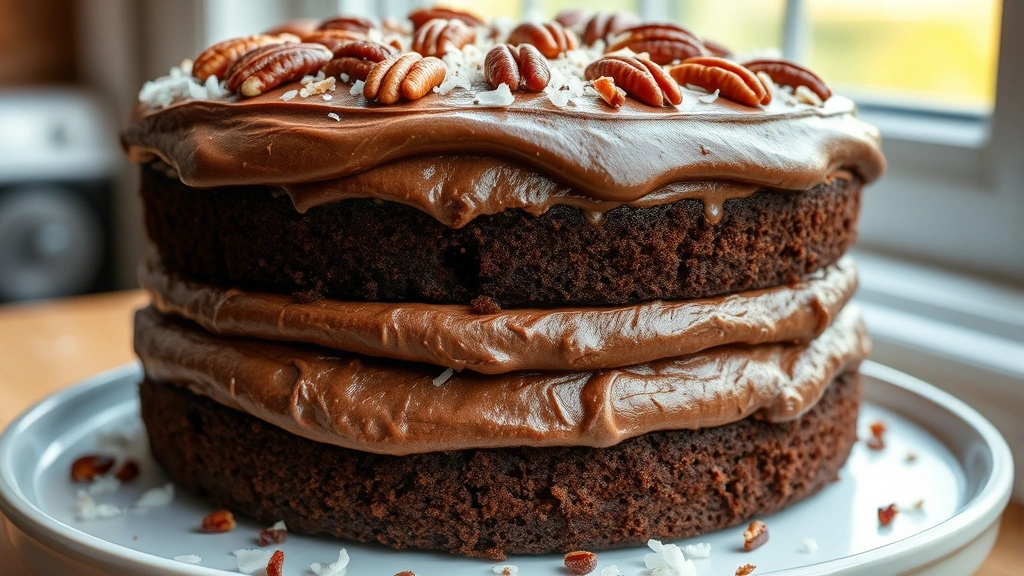
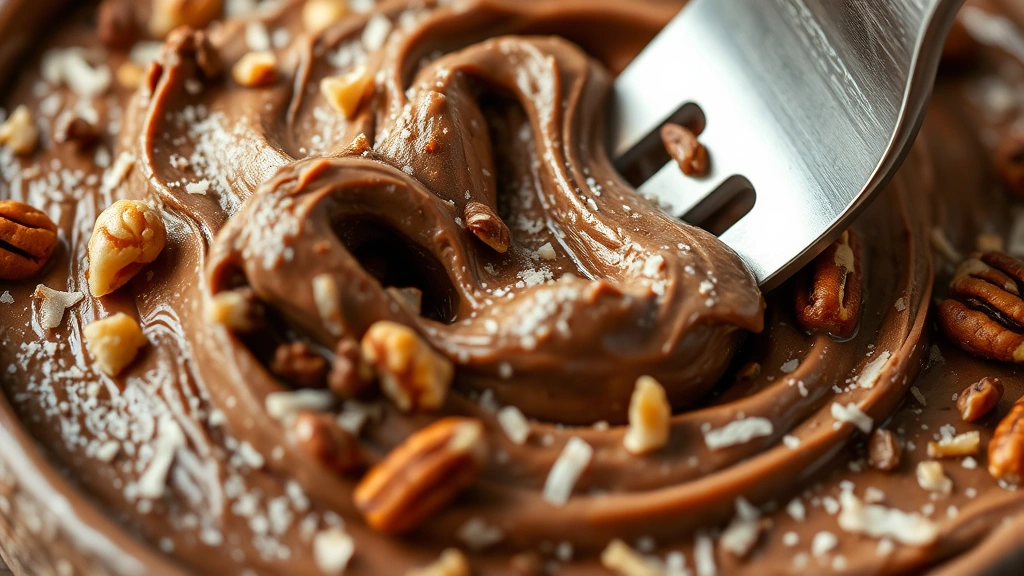
German chocolate frosting is the crowning glory of any celebration cake, and once you master this classic recipe, you’ll understand why it’s been a beloved favorite for generations. This rich, gooey frosting features a heavenly combination of evaporated milk, butter, pecans, and coconut that creates an absolutely irresistible topping. Unlike traditional buttercream frostings, German chocolate frosting has a unique texture that’s both creamy and chunky, making every bite absolutely divine.
What makes this frosting so special is its luxurious texture and the way it caramelizes beautifully as it cools. The beauty of this recipe is that it’s surprisingly simple to make, requiring just a handful of quality ingredients and a bit of patience. Whether you’re baking for a special occasion or simply craving a taste of nostalgia, this German chocolate frosting will transport you straight to dessert heaven.
The key to perfect German chocolate frosting is understanding the cooking process. You’ll want to cook the frosting on the stovetop to achieve that signature thick, spreadable consistency. The evaporated milk is crucial here—it gives the frosting its distinctive richness that regular milk simply cannot replicate. When combined with brown sugar, butter, and egg yolks, it creates a custard-like base that’s absolutely luxurious.
I recommend using high-quality butter and fresh pecans and coconut for the best results. The pecans should be toasted if possible, as this brings out their natural flavors and adds depth to your frosting. Shredded coconut works beautifully, though you can adjust the amount based on your personal preference. Some people love a coconut-forward frosting, while others prefer a more balanced approach.
This frosting is perfect for layering between cake layers or spreading generously over the top and sides of your favorite chocolate cake. It’s also wonderful on cupcakes, brownies, or even as a filling for cookies. The possibilities are truly endless with this versatile frosting.
For best results, make sure all your ingredients are at room temperature before you begin. This ensures even cooking and a smooth, creamy texture. If your frosting seems too thick after cooling, you can gently warm it over low heat and stir in a touch more evaporated milk. If it’s too thin, simply let it cool a bit longer and it will thicken up beautifully.
The flavor profile of German chocolate frosting is absolutely magnificent. It’s sweet but not cloying, with a wonderful nutty depth from the pecans and a subtle tropical note from the coconut. The caramel undertones that develop during cooking add incredible complexity. This is why German chocolate cake has remained such a timeless classic—the frosting is truly the star of the show.
I’ve included detailed instructions below to guide you through every step of the process. Don’t be intimidated by the stovetop cooking—it’s actually quite straightforward once you understand what you’re looking for. The frosting should reach a soft-ball consistency, which means it will be spreadable while still holding its shape beautifully on your cake.
Many bakers make the mistake of overcooking their frosting, which can result in a texture that’s too firm and difficult to spread. Keep a close eye on your mixture and remove it from heat as soon as it reaches the desired consistency. Remember, the frosting will continue to thicken slightly as it cools, so you want to err on the side of slightly softer rather than too thick.
This recipe makes enough frosting to generously frost a two or three-layer cake, or to fill and frost cupcakes for a crowd. If you’re making a particularly tall cake, you may want to double the recipe to ensure you have plenty for all your layers plus a beautiful finish.
For storage, keep your German chocolate frosting in an airtight container at room temperature for up to two days, or in the refrigerator for up to a week. You can also freeze it for up to a month, though you’ll want to bring it back to room temperature and gently stir before using. If frosting seems too stiff after refrigeration, simply let it sit at room temperature for a few minutes to soften slightly.
The beauty of this classic frosting is that it pairs perfectly with so many cake flavors. While traditional German chocolate cake is the obvious choice, this frosting is also wonderful on devil’s food cake, dark chocolate cake, or even vanilla cake for a more unexpected twist. You could also try spreading it on delicious baked goods or using it as a filling for brownies.
I encourage you to make this frosting from scratch rather than using a boxed mix. The difference in flavor and texture is absolutely worth the minimal extra effort. Your guests will taste the quality difference immediately, and you’ll feel proud knowing you created something truly special from scratch.
One final tip: if you’re planning to frost your cake ahead of time, wait until just a few hours before serving to apply the frosting. This ensures the frosting stays fresh and maintains its beautiful texture and appearance. However, the frosting can be made a day or two in advance and stored in the refrigerator until you’re ready to frost your cake.
Explore more delicious frosting and topping options by checking out complementary recipes and discover new ways to elevate your baking. This German chocolate frosting recipe is truly a game-changer that will have everyone asking for your secret. Enjoy creating this timeless classic!
For inspiration and expert techniques, check out Bon Appétit’s frosting techniques and Serious Eats frosting guide for additional baking wisdom. You might also enjoy New York Times Cooking for more classic cake recipes to pair with this frosting.
Ingredients
- 1 cup evaporated milk
- 1 cup granulated sugar
- 1/2 cup unsalted butter
- 3 large egg yolks
- 1 teaspoon vanilla extract
- 2 cups shredded coconut (sweetened or unsweetened, your preference)
- 1 cup chopped pecans (toasted if possible)
- 1/4 teaspoon salt
Instructions
- Gather all your ingredients and have them measured and ready before you begin. This is especially important since the frosting comes together quickly once you start cooking.
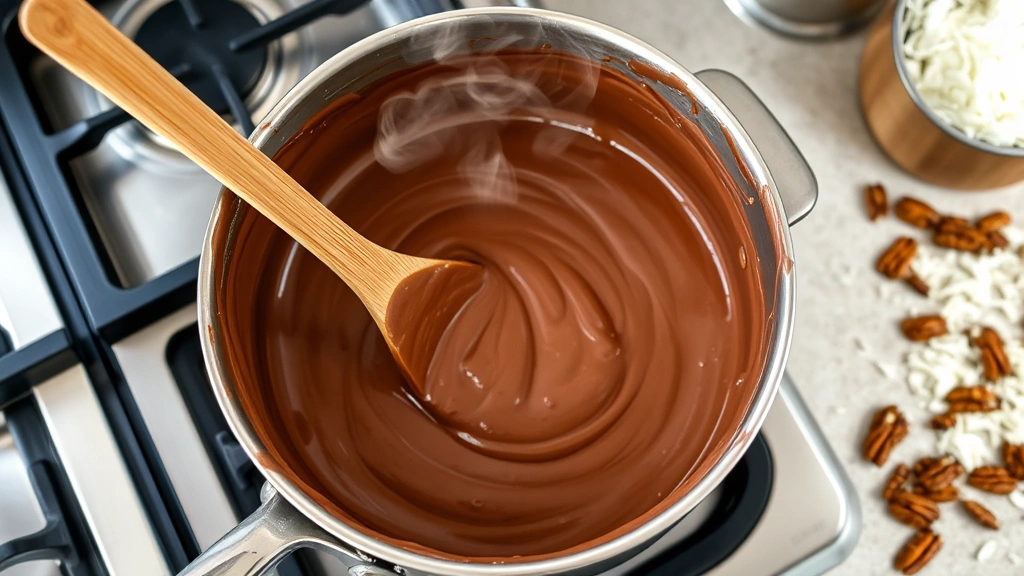
- In a medium saucepan, combine the evaporated milk, granulated sugar, egg yolks, and butter. Whisk the ingredients together until well combined, making sure to break up any lumps from the egg yolks.
- Place the saucepan over medium heat and cook, stirring constantly with a wooden spoon or whisk. This is crucial—constant stirring prevents the eggs from scrambling and ensures even cooking throughout.
- Continue cooking for approximately 10-12 minutes, stirring constantly, until the mixture thickens and reaches a soft-ball consistency (around 235-240°F on a candy thermometer if you have one). The mixture should coat the back of your spoon and leave a trail when you run your finger across it.
- Watch the mixture carefully as it thickens. It will gradually go from a thin liquid to a creamy custard-like consistency. This is the perfect time to remove it from heat—don’t wait until it’s too thick, as it will continue to thicken as it cools.
- Remove the saucepan from heat and immediately stir in the vanilla extract until fully incorporated.
- Add the shredded coconut to the frosting and stir well to distribute evenly throughout the mixture.
- Fold in the chopped pecans gently with a spatula or wooden spoon, being careful not to overmix. You want the nuts distributed throughout but still maintaining some texture.
- Season with salt and stir to combine. The salt will enhance all the flavors and balance the sweetness beautifully.
- Allow the frosting to cool for 5-10 minutes at room temperature, stirring occasionally. This cooling time is important as it allows the frosting to reach the perfect spreading consistency.
- Once the frosting has cooled to room temperature and reached your desired spreading consistency, it’s ready to use. If it seems too thin, let it cool a bit longer. If it’s too thick, gently reheat over low heat while stirring.
- Apply the frosting to your cooled cake layers, filling between layers first, then frosting the top and sides. Work quickly but carefully, as the frosting sets up as it cools.
- Serve your beautifully frosted cake at room temperature for the best flavor and texture. Enjoy!
Pro Tips
Constant Stirring is Essential: Never leave your frosting unattended on the stove. Constant stirring prevents curdling and ensures even cooking. This is what separates homemade frosting from mediocre results.
Cooking Temperature: While a candy thermometer helps, you can also use the soft-ball test. Drop a small amount of frosting into cold water—it should form a soft ball that flattens when pressed.
Coconut Choices: Use sweetened shredded coconut for traditional flavor, or unsweetened if you prefer less sugar. Both work beautifully in this recipe.
Pecan Quality Matters: Fresh, high-quality pecans make a significant difference. Consider toasting them yourself for deeper, richer flavor that elevates the entire frosting.
Storage Instructions: Keep finished frosting in an airtight container at room temperature for 2 days, refrigerated for up to one week, or frozen for up to one month. Bring refrigerated frosting to room temperature before using.
Cooking Time Variation: Cooking time may vary slightly depending on your stove and pan. Watch for the soft-ball consistency rather than relying solely on time.
Do Not Overheat: Overcooked frosting becomes too firm and difficult to spread. Remove from heat as soon as it reaches the proper consistency.
Frosting Thickness: If frosting is too thin after cooling, refrigerate for 15-20 minutes. If too thick, gently warm over low heat while stirring.
Cake Pairing: While perfect on German chocolate cake, this frosting also works wonderfully on devil’s food, dark chocolate, or vanilla cake.
Make-Ahead Tips: Frosting can be made 1-2 days ahead and refrigerated. Bring to room temperature and stir before frosting your cake.
Cupcake Application: This frosting is perfect for piping onto cupcakes using a spatula or piping bag with a large round tip.
Double Batch: For taller cakes or extra frosting coverage, simply double all ingredients and increase cooking time by 2-3 minutes.
Pingback: How to Make the Best Traditional Pasta Fagioli Recipe! – Simple Recipe Finder