
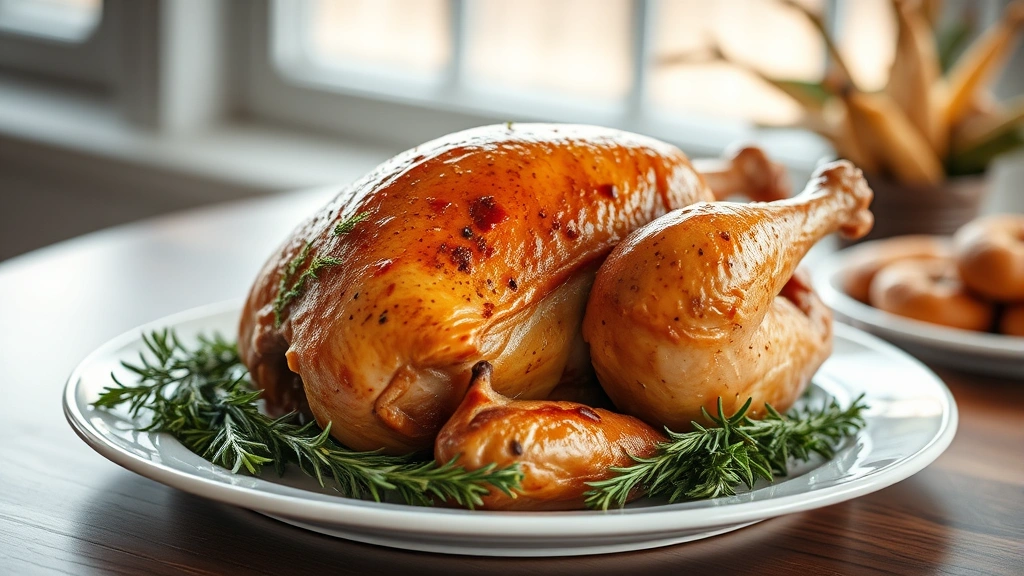
Gordon Ramsay’s turkey recipe is an absolute game-changer for your holiday table, and honestly, it’s not as intimidating as you might think! This legendary chef has perfected the art of roasting turkey with his signature technique that delivers incredibly moist, flavorful meat with perfectly crispy skin. The secret lies in his meticulous attention to detail—from brining the bird to basting it strategically throughout the cooking process.
What makes Gordon’s approach so special is that he treats turkey with the same respect and precision he applies to his Michelin-star dishes. He doesn’t overcomplicate things; instead, he focuses on quality ingredients, proper seasoning, and impeccable timing. His method ensures that your turkey stays juicy on the inside while achieving that gorgeous golden-brown exterior that everyone dreams about.
This recipe has become a holiday staple for home cooks everywhere because it delivers restaurant-quality results in your own kitchen. Whether you’re hosting your first Thanksgiving dinner or you’re a seasoned entertainer looking to elevate your game, Gordon’s turkey recipe will absolutely impress your guests. The beauty of this technique is that it works whether you’re cooking a 12-pound bird or a massive 25-pounder—the principles remain the same.
You’ll need to start your preparation the day before, which might seem like a lot of planning, but trust me, it’s worth every minute. The brining process alone transforms the turkey, making it nearly impossible to end up with dry meat. Plus, the aromatics and seasonings Gordon uses create an incredible depth of flavor that goes way beyond basic salt and pepper.
If you’re looking for complementary side dishes to serve alongside this masterpiece, consider preparing a Best Chickpea Salad Recipe for a fresh, bright contrast, or add some tang with an Easy Pickled Red Onion Recipe. For the traditionalists, you might also appreciate learning how to make Best Heavy Cream Alfredo Sauce Recipe techniques for your gravy. Gordon’s turkey pairs beautifully with classic sides, but these recipes offer interesting alternatives that will make your meal memorable.
The key to mastering Gordon Ramsay’s turkey recipe is understanding the ‘why’ behind each step. He brines because it seasons the meat throughout and helps retain moisture. He seasons under the skin because it flavors the meat directly. He uses aromatics inside the cavity because they infuse flavor from within. Every single step has a purpose, and following them precisely will guarantee success. This isn’t just a recipe; it’s a masterclass in poultry preparation from one of the world’s greatest chefs.
Ingredients
- 1 whole turkey (14-16 pounds), patted dry
- 8 cups water
- 1 cup kosher salt
- 3/4 cup brown sugar
- 2 tablespoons black peppercorns
- 6 bay leaves
- 4 sprigs fresh thyme
- 4 sprigs fresh rosemary
- 1 onion, halved
- 1 head garlic, halved horizontally
- 6 tablespoons unsalted butter, softened
- 3 tablespoons fresh thyme leaves, chopped
- 2 tablespoons fresh rosemary leaves, chopped
- 4 cloves garlic, minced
- Sea salt and freshly ground black pepper
- 2 lemons, halved
- 1 bunch fresh thyme sprigs
- 1 bunch fresh rosemary sprigs
- 2 cups chicken or vegetable stock
- 3 tablespoons balsamic vinegar
- 2 tablespoons honey
- 2 tablespoons olive oil
Instructions
- Begin your preparation the day before cooking. In a large pot, combine 8 cups of water with 1 cup of kosher salt, 3/4 cup brown sugar, 2 tablespoons black peppercorns, 6 bay leaves, 4 sprigs of thyme, 4 sprigs of rosemary, halved onion, and halved head of garlic. Bring to a boil over high heat, stirring occasionally until the salt and sugar are completely dissolved.
- Once the brine reaches a boil, remove it from heat and let it cool completely to room temperature. This step is crucial—you don’t want to cook the turkey with hot liquid. Once cooled, transfer the brine to a large container or use a brining bag.
- Pat your turkey dry with paper towels, removing any excess moisture from both the outside and inside cavity. This helps the brine penetrate more effectively. Carefully place the turkey into the cooled brine, ensuring it’s completely submerged. If using a bag, seal it and place it in the refrigerator. If using a container, cover it and refrigerate.
- Leave the turkey brining in the refrigerator overnight, or for at least 12 hours but no more than 24 hours. The longer brining time ensures maximum flavor penetration and moisture retention throughout the meat.
- The next day, remove the turkey from the brine and rinse it thoroughly under cold running water, inside and out. Pat it completely dry with paper towels—this is essential for achieving crispy skin. Let the turkey sit at room temperature for about 30 minutes before proceeding.
- While the turkey comes to room temperature, prepare the herb butter. In a small bowl, combine 6 tablespoons of softened unsalted butter with 3 tablespoons fresh thyme leaves, 2 tablespoons fresh rosemary leaves, 4 minced garlic cloves, and a generous pinch of sea salt and black pepper. Mix until well combined.
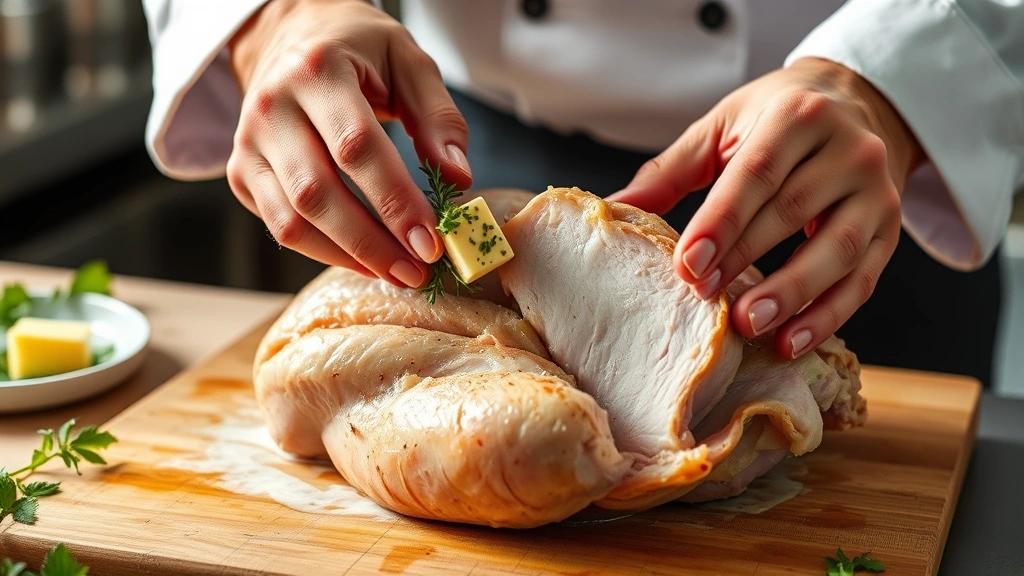
- Carefully lift the skin away from the turkey breast, starting at the neck cavity and working your fingers gently between the skin and meat. Work slowly to avoid tearing the skin. Once you’ve created enough space, spread approximately half of the herb butter directly onto the breast meat under the skin, distributing it as evenly as possible.
- Continue working the herb butter under the skin on the thighs and legs, being careful and methodical. Rub the remaining herb butter all over the outside of the turkey, ensuring every surface is well-coated. Season generously with sea salt and freshly ground black pepper.
- Preheat your oven to 450°F (230°C). Stuff the cavity of the turkey with halved lemons and fresh thyme and rosemary sprigs. Tuck the wing tips under the body of the turkey and tie the legs together with kitchen twine, which helps the turkey cook more evenly.
- Place the turkey breast-side up on a roasting pan. Pour 2 cups of chicken or vegetable stock into the bottom of the pan, which will create steam and keep the turkey moist during roasting.
- Place the turkey in the preheated 450°F oven for 20 minutes. This high initial heat begins the browning process and helps render the fat from the skin. After 20 minutes, reduce the oven temperature to 325°F (160°C).
- In a small bowl, whisk together 3 tablespoons balsamic vinegar, 2 tablespoons honey, and 2 tablespoons olive oil to create a glaze. This will be used for basting.
- Continue roasting at 325°F for approximately 2.5 to 3 hours, depending on the exact weight of your turkey. As a general rule, allow about 13 minutes per pound. Every 30 minutes, baste the turkey generously with the pan juices combined with the glaze mixture, using a basting brush or turkey baster.
- During the last hour of cooking, if the skin is browning too quickly, loosely tent the turkey with aluminum foil. This prevents the exterior from burning while the interior finishes cooking.
- The turkey is done when the internal temperature reaches 165°F (74°C) at the thickest part of the thigh, not touching bone. Use an instant-read meat thermometer to verify doneness. The juices should run clear when you pierce the thigh.
- Once the turkey reaches the correct temperature, remove it from the oven and transfer it carefully to a cutting board. Cover loosely with foil and let it rest for 20 to 25 minutes. This resting period is absolutely crucial—it allows the juices to redistribute throughout the meat, ensuring moist, tender turkey when you carve.
- While the turkey rests, prepare your gravy by straining the pan juices into a saucepan. Skim off excess fat if desired, or leave it for richer gravy. Bring to a gentle simmer over medium heat and adjust seasoning with salt and pepper to taste.
- After the resting period, your Gordon Ramsay turkey is ready to carve and serve. Transfer to a serving platter and garnish with fresh herbs if desired. Serve immediately with your prepared gravy and desired sides.
Pro Tips
o If you don’t have a large enough container for brining, use a large brining bag or even a clean cooler lined with a food-grade bag
o Room temperature turkey cooks more evenly than cold turkey, so always allow at least 30 minutes for the bird to come to room temperature before roasting
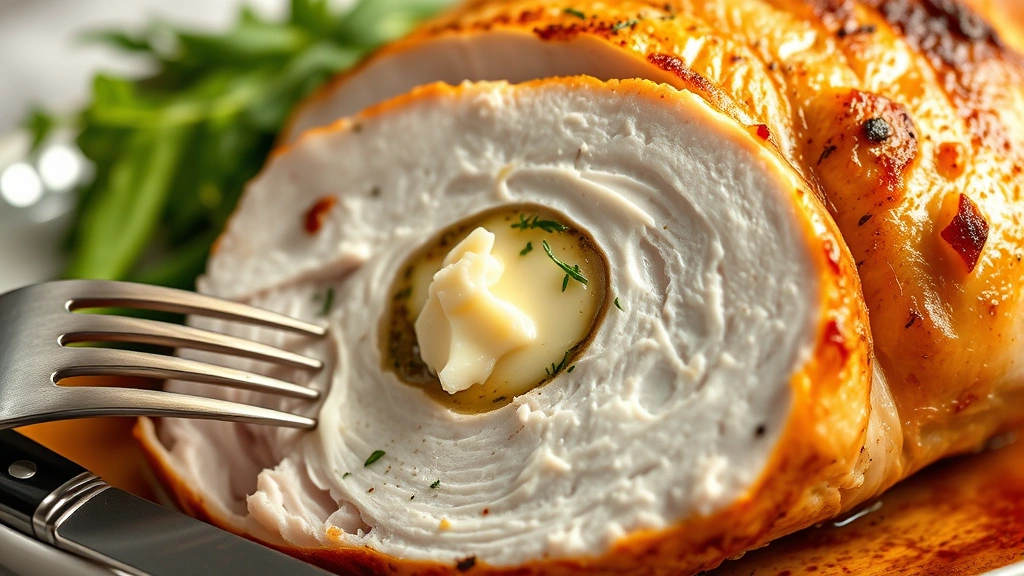
o The herb butter under the skin not only adds flavor but also helps keep the breast meat moist during the cooking process
o Don’t skip the initial 450°F blast—this jump-starts the browning and renders the fat from the skin, creating that gorgeous crispy exterior
o Use an instant-read meat thermometer and check temperature in multiple places: the thickest part of the thigh, the thickest part of the breast, and between the thigh and body
o The resting period is non-negotiable if you want juicy turkey—the meat will continue cooking slightly during this time, which is perfectly normal
o If your turkey is larger than 16 pounds, add approximately 13 minutes per pound to the cooking time at 325°F
o You can prepare the herb butter up to 2 days in advance, which makes the day-of preparation much less stressful
o Save those pan drippings for making an incredible gravy—they’re liquid gold for flavor
o If you have leftover turkey, shred it and use it for sandwiches or salads the next day—it stays incredibly moist thanks to the brining process
o This recipe works beautifully for smaller turkeys (12-14 pounds) as well, just reduce cooking time accordingly