

There’s nothing quite like a silky, savory ham gravy to elevate your holiday table or Sunday dinner. This classic sauce is the ultimate comfort food companion, whether you’re serving it over fluffy biscuits, creamy mashed potatoes, or fresh vegetables. The beauty of ham gravy lies in its simplicity—it comes together in minutes using the flavorful drippings from your ham, creating a luxurious sauce that tastes like you’ve been cooking all day.
What makes this the BEST ham gravy recipe is the perfect balance of rich ham flavor, creamy texture, and subtle seasoning that doesn’t overpower. Many home cooks shy away from making gravy from scratch, thinking it’s complicated or intimidating, but I’m here to tell you that once you master this technique, you’ll never go back to store-bought alternatives. The secret is in understanding the science behind creating a smooth, lump-free gravy with depth of flavor that comes from properly rendered ham drippings.
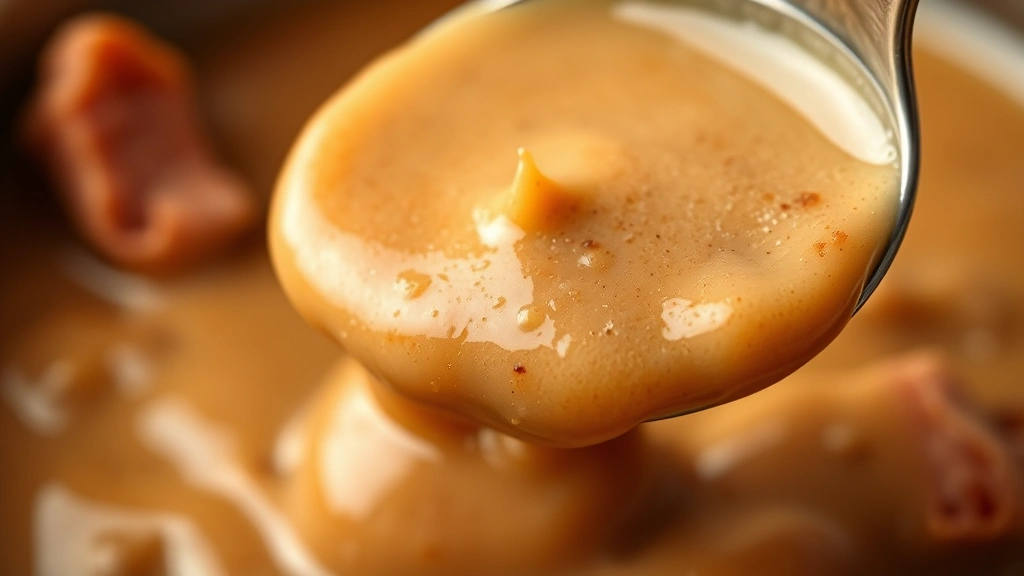
This recipe uses a classic roux-based method, which is the foundation of French cooking and the key to achieving that restaurant-quality consistency. By combining the rendered ham fat with flour, you create a paste that acts as a thickening agent when combined with ham broth or stock. The result is a velvety sauce that coats the back of a spoon beautifully and tastes absolutely divine.
I recommend making this gravy while your ham is still resting after cooking, as the pan will still be warm and the drippings will be at their most flavorful. You can also prepare it ahead of time and reheat it gently before serving, making it perfect for entertaining. This recipe yields about two cups of gravy, which is plenty for a family gathering, but you can easily double it if you’re feeding a crowd.
Try pairing this gravy with our Best Chickpea Salad Recipe for a complete meal, or serve it alongside Quick Tasty Goetta Recipe for breakfast. For an extra pop of flavor and brightness, consider adding Easy Pickled Red Onion as a tangy side. If you want to explore variations, our Perfect Pickled Red Onions Recipe offers wonderful accompaniment options.
For more inspiration on sauce-making techniques, check out Serious Eats’ comprehensive gravy guide, or explore Bon Appétit’s country ham gravy variations. The New York Times also offers excellent insights on working with ham in your kitchen. Once you’ve mastered this recipe, you’ll find yourself making it regularly for all your favorite dishes.
Ingredients
- 3 tablespoons ham drippings or bacon fat
- 3 tablespoons all-purpose flour
- 2 cups ham broth or chicken stock
- 1/2 cup heavy cream or whole milk
- 1/4 teaspoon black pepper
- 1/8 teaspoon cayenne pepper
- 1/4 teaspoon salt (adjust to taste)
- 1/2 teaspoon Dijon mustard
- 1/4 teaspoon garlic powder
- Pinch of nutmeg
- 2 tablespoons fresh parsley, chopped (optional garnish)
Instructions
- After removing your ham from the roasting pan, carefully pour off the pan drippings into a measuring cup or small bowl. Let it sit for a minute so any fat rises to the top. You need 3 tablespoons of the fat; if you don’t have enough, supplement with butter or bacon fat.
- Place the roasting pan (or a medium saucepan if starting fresh) over medium heat on the stovetop. Pour in your 3 tablespoons of ham fat and let it warm until it’s shimmering and fragrant.
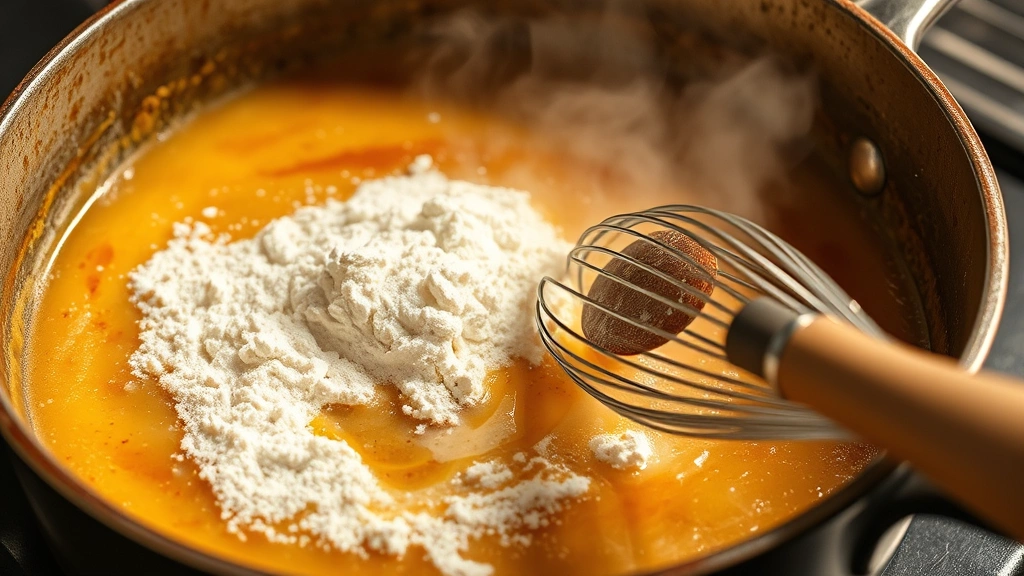
- Sprinkle the all-purpose flour evenly over the hot fat while whisking constantly with a wire whisk. Continue whisking for 2-3 minutes to cook out the raw flour taste and create a smooth paste, or roux. The mixture should be light golden brown and smell nutty.
- Slowly pour in your ham broth or chicken stock while whisking vigorously to prevent lumps from forming. Start with about 1/2 cup of the liquid, whisking until completely smooth, then gradually add the remaining liquid while continuing to whisk.
- Increase the heat to medium-high and bring the gravy to a gentle simmer, whisking frequently. You should see small bubbles breaking the surface. Continue simmering for 3-4 minutes, stirring occasionally, until the gravy reaches your desired thickness.
- Reduce the heat to medium-low and stir in the heavy cream or whole milk, whisking gently to incorporate it fully. The gravy will become silkier and richer.
- Add the Dijon mustard, black pepper, cayenne pepper, salt, garlic powder, and nutmeg. Whisk everything together thoroughly and taste the gravy.
- Adjust the seasonings to your preference—add more salt if needed, more pepper for heat, or more mustard for tanginess. Remember that ham already contains salt, so taste before adding additional salt.
- If your gravy is too thick, thin it with additional broth, stock, or cream, a tablespoon at a time. If it’s too thin, make a slurry by mixing 1 tablespoon of cornstarch with 2 tablespoons of cold water, then whisk it into the simmering gravy and cook for 1 minute until thickened.
- Pour the finished gravy into a gravy boat or serving dish, garnish with fresh chopped parsley if desired, and serve hot alongside your ham, biscuits, potatoes, or vegetables.
Pro Tips
Cream vs Milk: Heavy cream creates a richer, more luxurious gravy, while whole milk makes a lighter version. Half-and-half is an excellent middle ground if you want something between the two. For a dairy-free option, use unsweetened almond milk or vegetable broth, though the flavor profile will be slightly different.
Broth Selection: The quality of your broth directly impacts the final gravy. Homemade ham broth made from the ham bone is ideal, but quality store-bought chicken or vegetable broth works beautifully. Avoid low-sodium broths, as you’ll need the flavor depth.
Lump Prevention: The key to silky smooth gravy is whisking constantly and thoroughly. Always whisk the flour into the fat completely before adding any liquid. If lumps do form, strain the gravy through a fine-mesh sieve into a clean pot.
Fat Content Matters: Don’t skip using the rendered ham fat—it contains incredible flavor that butter or oil cannot replicate. If your ham didn’t render much fat, supplement with good quality butter or bacon fat rather than vegetable oil.
Seasoning Strategy: Taste and adjust seasonings gradually throughout cooking. The gravy will concentrate slightly as it simmers, so what tastes perfect midway through may become over-seasoned by the end. Season in stages rather than all at once.
Thickness Control: Gravy continues to thicken slightly as it cools, so aim for a consistency slightly thinner than your target when serving hot. Room temperature gravy will be noticeably thicker than when freshly made.
Flavor Enhancements: Try adding a splash of sherry, white wine, or apple cider vinegar for depth. A teaspoon of fresh thyme or sage adds wonderful herbaceous notes that complement ham beautifully. Some cooks swear by a tiny splash of hot sauce for a subtle kick.
Doubling the Recipe: This recipe doubles easily if you’re feeding a large crowd. Simply multiply all ingredients by two and increase the simmering time slightly to ensure proper thickening.
Leftover Uses: Leftover ham gravy is wonderful over eggs for breakfast, spooned over biscuits for lunch, or used as a base for creamed ham over toast. It also freezes beautifully for up to three months.