
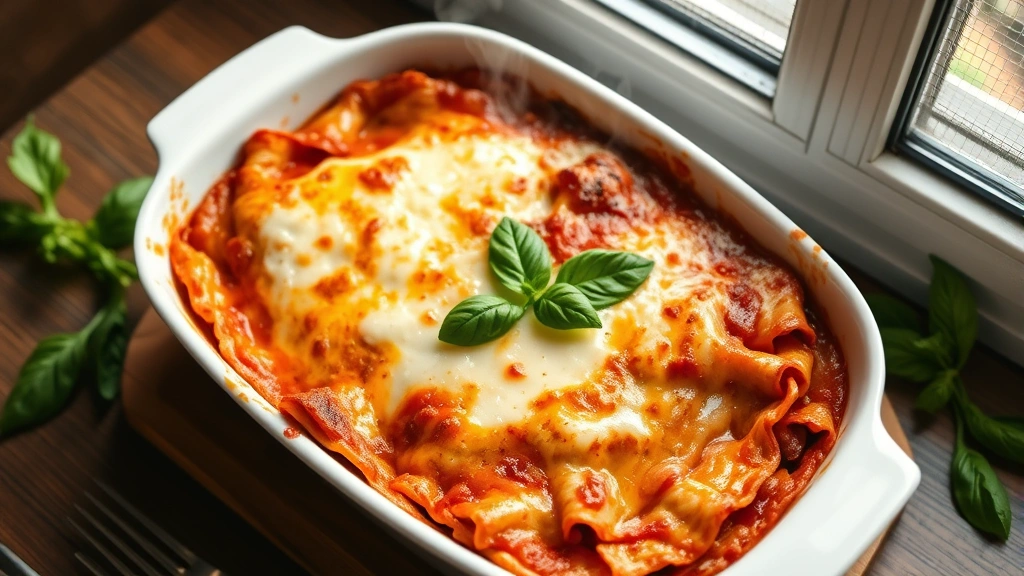
There’s something absolutely magical about a homemade Italian lasagna – the way the layers of silky pasta sheets, rich meat sauce, and creamy béchamel come together in perfect harmony is simply divine. This isn’t just any lasagna; this is the real deal, made the traditional Italian way with techniques passed down through generations of Italian home cooks.
I’ve spent years perfecting this recipe, testing different methods and ingredient combinations to bring you the most authentic, delicious lasagna that will have your family asking for seconds (and thirds!). The secret lies in building layers of flavor – a deeply savory ragù that simmers low and slow, a velvety béchamel sauce, and the perfect balance of cheeses that create that gorgeous golden top.
What makes this lasagna truly special is the patience and care you put into each component. The meat sauce isn’t rushed; it develops complex flavors over time. The béchamel is made from scratch, creating a luxurious creaminess that store-bought versions simply can’t match. And the combination of ricotta, mozzarella, and Parmigiano-Reggiano creates layers of umami that will make this dish absolutely unforgettable.
Whether you’re cooking for a special occasion or just want to impress your loved ones with an authentic Italian meal, this lasagna is the answer. It’s a labor of love, but I promise you, every minute spent making it is worth it. Once you master this recipe, you’ll understand why Italian families have been making lasagna the same way for centuries.
If you love classic Italian comfort food, you might also enjoy our Best Bar Cookies Recipe for a sweet ending to your meal. For more inspiration on building delicious layered dishes, check out Delicious Banana Bread Muffin Recipe for techniques on creating beautiful, structured desserts.
For expert guidance on Italian cooking techniques, I recommend checking out Bon Appétit’s Italian cooking section and Serious Eats’ pasta guide for additional tips and variations. The New York Times Cooking section also features excellent Italian recipes worth exploring.
Ingredients
- 2 tablespoons olive oil
- 1 medium onion, finely diced
- 3 cloves garlic, minced
- 1 pound ground beef
- 1 pound ground pork (or additional beef)
- 1 can (28 ounces) crushed San Marzano tomatoes
- 2 tablespoons tomato paste
- 1/2 cup whole milk
- 1/2 teaspoon sugar
- Salt and freshly ground black pepper to taste
- 4 tablespoons unsalted butter
- 1/4 cup all-purpose flour
- 3 cups whole milk (for béchamel)
- 1/4 teaspoon nutmeg
- 1 pound fresh lasagna noodles (or dried)
- 15 ounces ricotta cheese
- 8 ounces mozzarella cheese, shredded
- 1/2 cup Parmigiano-Reggiano cheese, grated
- 1 large egg
- 2 tablespoons fresh parsley, chopped
- Additional mozzarella for topping (about 1 cup)
- Additional Parmigiano-Reggiano for topping (about 1/4 cup)
Instructions
- Heat 2 tablespoons of olive oil in a large, heavy-bottomed pot over medium heat. Once shimmering, add the finely diced onion and cook for 4-5 minutes, stirring occasionally, until softened and translucent.
- Add the minced garlic to the pot and cook for another minute, stirring constantly, until fragrant. Be careful not to let the garlic burn.
- Increase the heat to medium-high and add the ground beef and ground pork to the pot, breaking it up with a wooden spoon as it cooks. Continue cooking for 8-10 minutes, stirring frequently, until the meat is completely browned and no pink remains.
- Drain any excess fat from the pot if needed, leaving about 2 tablespoons for flavor. Stir in the tomato paste and cook for 2 minutes, stirring constantly, to caramelize the paste slightly.
- Add the crushed San Marzano tomatoes to the pot, followed by the 1/2 cup of whole milk and sugar. Stir well to combine all ingredients.
- Reduce the heat to low and let the ragù simmer gently for 1.5 to 2 hours, stirring occasionally. The sauce should reduce by about one-third and become rich and deeply flavored. Season with salt and pepper to taste.
While the ragù is simmering, prepare the béchamel sauce: Melt 4 tablespoons of butter in a medium saucepan over medium heat.
- Once the butter is melted and foaming, add the flour all at once and whisk constantly for 2-3 minutes. This creates a roux that will thicken your béchamel. The mixture should be smooth and paste-like.
- Gradually add the 3 cups of whole milk to the roux, whisking constantly to prevent lumps from forming. Add the milk slowly at first, about 1/2 cup, whisking until smooth, then continue adding the remaining milk in a steady stream while whisking.
- Continue cooking the béchamel over medium heat, stirring frequently with a wooden spoon, for 8-10 minutes until it thickens enough to coat the back of the spoon. The sauce should be smooth, creamy, and free of lumps.
- Season the béchamel with 1/4 teaspoon of nutmeg, salt, and freshly ground black pepper to taste. Remove from heat and set aside.
- If using dried lasagna noodles, bring a large pot of salted water to a boil and cook the noodles according to package directions until al dente. If using fresh noodles, you can skip this step as they’ll cook in the oven. Drain cooked noodles and lay them flat on parchment paper to prevent sticking.
- In a medium bowl, combine the ricotta cheese, shredded mozzarella, 1/2 cup Parmigiano-Reggiano, egg, and chopped parsley. Mix until well combined and season with a pinch of salt and pepper.
- Preheat your oven to 375°F (190°C). Have a 9×13 inch baking dish ready (or similar size).
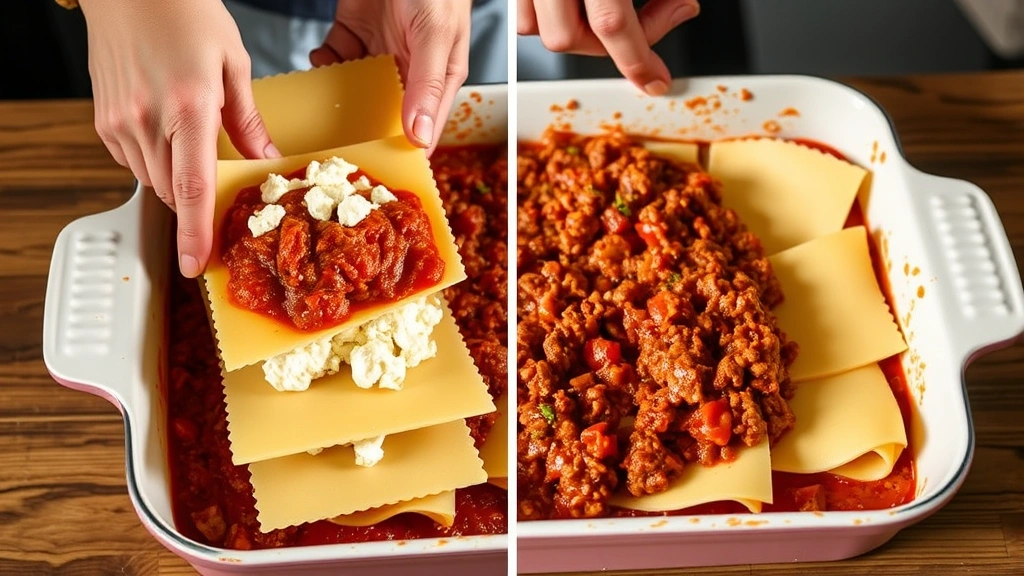
- Spread a thin layer of the meat ragù (about 1 cup) on the bottom of the prepared baking dish. This prevents sticking and creates a flavorful base.
- Layer 3-4 lasagna noodles over the ragù, slightly overlapping them. Break noodles as needed to fit the pan.
- Spread 1/3 of the ricotta mixture evenly over the noodles, followed by 1/3 of the remaining ragù.
- Spread 1/3 of the béchamel sauce over the ragù layer, using an offset spatula to create an even layer.
- Repeat the layering process two more times: noodles, ricotta mixture, ragù, and béchamel. You should have 3 complete layers.
- Top with a final layer of noodles, then the remaining béchamel sauce, spreading it evenly to cover the entire top.
- In a small bowl, combine 1 cup of shredded mozzarella and 1/4 cup of Parmigiano-Reggiano cheese. Sprinkle this mixture evenly over the top of the lasagna.
- Cover the baking dish tightly with aluminum foil and bake for 25 minutes. This traps steam and helps cook the noodles through.
- Remove the foil carefully and bake for an additional 20-25 minutes, until the cheese on top is melted, bubbly, and beginning to turn golden brown in spots.
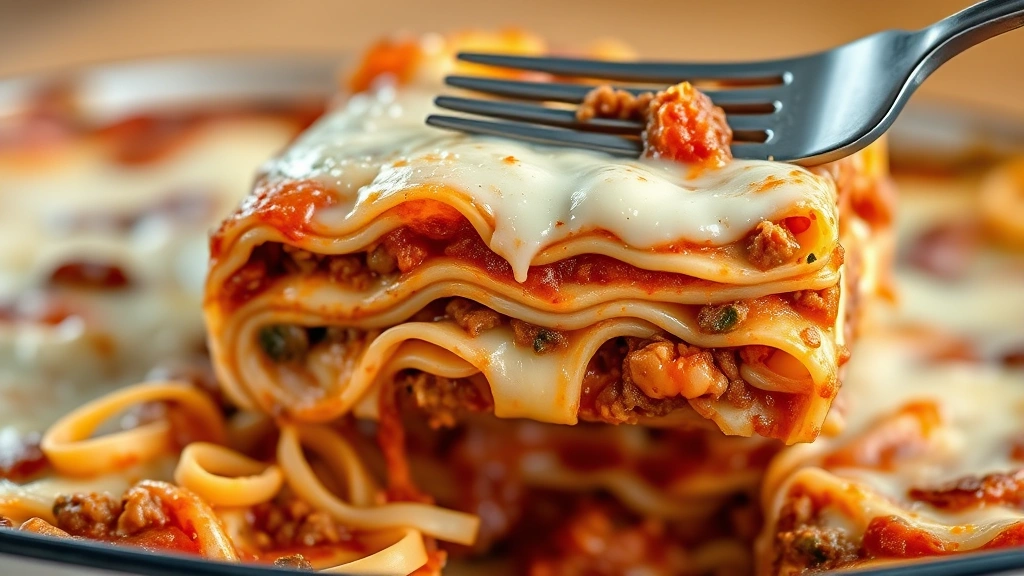
- Remove the lasagna from the oven and let it rest for 10-15 minutes before cutting and serving. This resting period is crucial as it allows the layers to set and makes for cleaner, more beautiful slices.
- Cut into portions and serve hot, garnished with fresh parsley and additional Parmigiano-Reggiano if desired.
Pro Tips
- Use high-quality San Marzano tomatoes if possible – they have fewer seeds and a sweeter flavor than other varieties, making them ideal for authentic Italian cooking
- Don’t rush the meat sauce – the long, slow simmer develops deep, complex flavors that quick cooking simply cannot achieve. This is what separates a good lasagna from a truly exceptional one
- Fresh lasagna noodles create a silkier, more delicate lasagna, but dried noodles work beautifully too and require cooking beforehand
- The béchamel should be smooth and creamy – if lumps form, strain the sauce through a fine-mesh sieve before using
- When layering, ensure each layer is relatively thin and even – this helps the lasagna cook uniformly and creates beautiful, distinct layers when serving
- The resting period after baking is essential – it prevents the lasagna from falling apart when you cut it and allows the flavors to meld together
- Make this dish a day ahead if desired – lasagna actually tastes better the next day as the flavors continue to develop. Simply cover tightly with foil and refrigerate. Bake at 350°F for 45 minutes covered, then 15-20 minutes uncovered until heated through
- Leftover lasagna freezes beautifully for up to 3 months – portion into individual servings before freezing for easy reheating
- For a vegetarian version, replace the meat with sautéed mushrooms, spinach, and zucchini, using the same quantity of vegetables
- Authentic Italian lasagna uses a combination of ground beef and pork for more complex flavor, but all beef works well if you prefer
Pingback: Bordelaise Sauce Recipe: Classic French in 20 Minutes - Simple Recipe Finder
Pingback: Cornish Game Hen Recipes: 5 Best Easy & Elegant Dinners - Simple Recipe Finder