
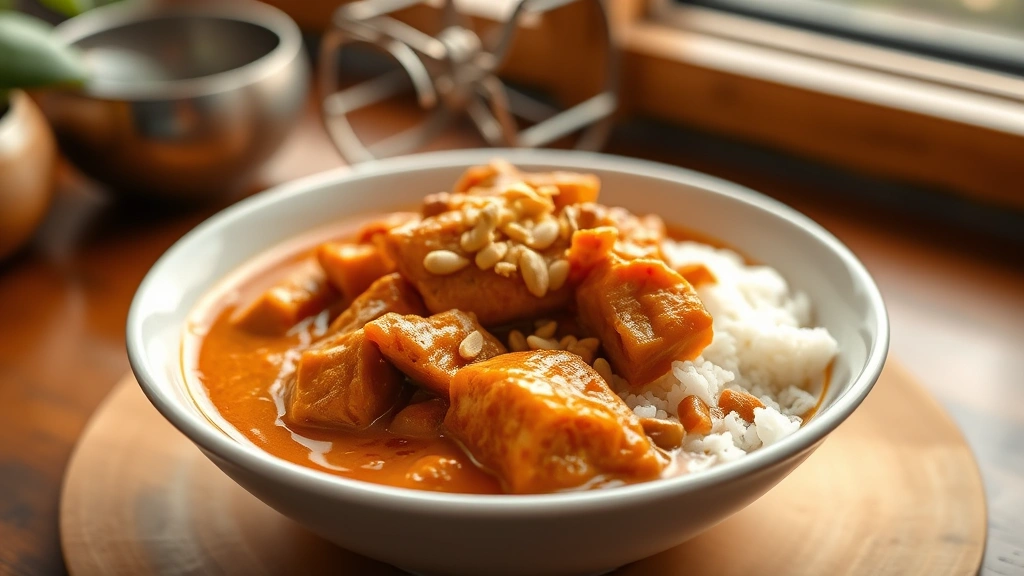
Kare-kare is one of the Philippines’ most beloved dishes, and for good reason! This rich, savory peanut stew combines tender meat, vibrant vegetables, and a luxurious sauce that’s absolutely irresistible. While it might seem intimidating to make at home, I’m here to tell you that this recipe is completely doable—and honestly, homemade kare-kare tastes infinitely better than any restaurant version.
The beauty of kare-kare lies in its complexity of flavors. The peanut-based sauce is creamy and deeply satisfying, with a perfect balance of saltiness and subtle sweetness. The meat becomes fall-apart tender after simmering, and the vegetables add freshness and texture to every bite. What I love most is that this is a comfort food that feels fancy enough for special occasions but is actually quite simple to prepare.
If you’ve never made kare-kare before, don’t worry! I’ll walk you through every step, from preparing your ingredients to achieving that perfect sauce consistency. This is a dish that brings families together, and once you master it, you’ll find yourself making it again and again. It’s perfect for Sunday dinners, special celebrations, or whenever you’re craving something warm, hearty, and absolutely delicious.
The key to the best kare-kare is using quality peanut butter and taking time to develop the flavors properly. I recommend using natural peanut butter without added sugar, as this gives you more control over the dish’s final taste. You’ll also want to invest in good annatto seeds (also called achiote), which give kare-kare its signature golden-red color and subtle earthy flavor.
This recipe serves about 6-8 people, making it perfect for family gatherings or meal prep. It reheats beautifully and actually tastes even better the next day as the flavors meld together. I often make a double batch and freeze half for busy weeknights. Serve it with steamed rice and a side of shrimp paste (bagoong) for an authentic Filipino experience.
For a detailed guide on Philippine cuisine basics, check out Bon Appétit’s kare-kare primer. If you’re interested in learning more about the cooking techniques used here, Serious Eats has an excellent guide to stew-making. And for more Asian comfort food recipes, explore our collection. You might also enjoy New York Times’ Filipino adobo recipe for another classic dish, or check out Bon Appétit’s beef stew for a similar cooking technique.
Ingredients
- 3 pounds beef chuck or brisket, cut into 2-inch cubes
- 3 tablespoons vegetable oil, divided
- 1 large onion, quartered
- 6 cloves garlic, minced
- 2 tablespoons annatto seeds (achiote), soaked in 1/4 cup warm water for 15 minutes
- 1 cup natural peanut butter
- 6 cups beef stock or broth
- 2 tablespoons fish sauce (patis)
- 1 tablespoon sugar
- 1 teaspoon salt, or to taste
- 1/2 teaspoon black pepper
- 3 medium potatoes, peeled and cut into chunks
- 2 large carrots, peeled and cut into chunks
- 1 bunch bok choy or Chinese cabbage, cut into 2-inch pieces
- 2 bundles long beans (sitaw), cut into 3-inch pieces
- 1/2 cup roasted peanuts, crushed (for garnish)
- Shrimp paste (bagoong) for serving
Instructions
- Heat 1 tablespoon of oil in a large, heavy-bottomed pot or Dutch oven over medium-high heat.
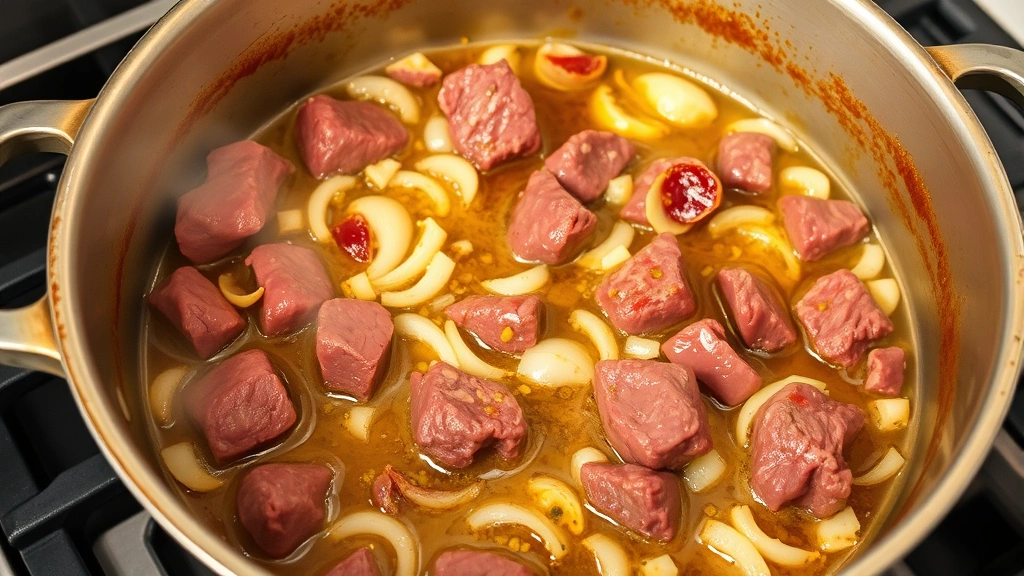
- Working in batches to avoid overcrowding, brown the beef cubes on all sides, about 3-4 minutes per batch, then set aside on a plate.
- Add the remaining 2 tablespoons of oil to the pot and sauté the quartered onion until softened and lightly caramelized, about 5 minutes.
- Add the minced garlic and cook for another minute, stirring constantly until fragrant.
- Pour the annatto-infused water (including the softened seeds) into the pot and stir well, allowing the color to distribute throughout the oil.
- Return the browned beef to the pot along with any accumulated juices.
- In a separate bowl, whisk together the peanut butter with 1 cup of the beef stock until smooth and well-combined.
- Pour the peanut butter mixture into the pot and stir thoroughly to coat all the meat.
- Add the remaining 5 cups of beef stock, fish sauce, sugar, salt, and black pepper.
- Bring the mixture to a boil, then immediately reduce heat to low, cover partially, and simmer for 45 minutes.
- After 45 minutes, add the potatoes and carrots to the pot.
- Continue simmering for another 20 minutes until the potatoes are almost tender.
- Add the long beans and bok choy to the pot.
- Simmer for an additional 10-15 minutes until all vegetables are tender and the meat is completely fall-apart tender.
- Taste the kare-kare and adjust seasoning with additional salt, fish sauce, or sugar as needed.
- If the sauce is too thick, thin it with additional beef stock; if too thin, simmer uncovered for 5-10 minutes to reduce.
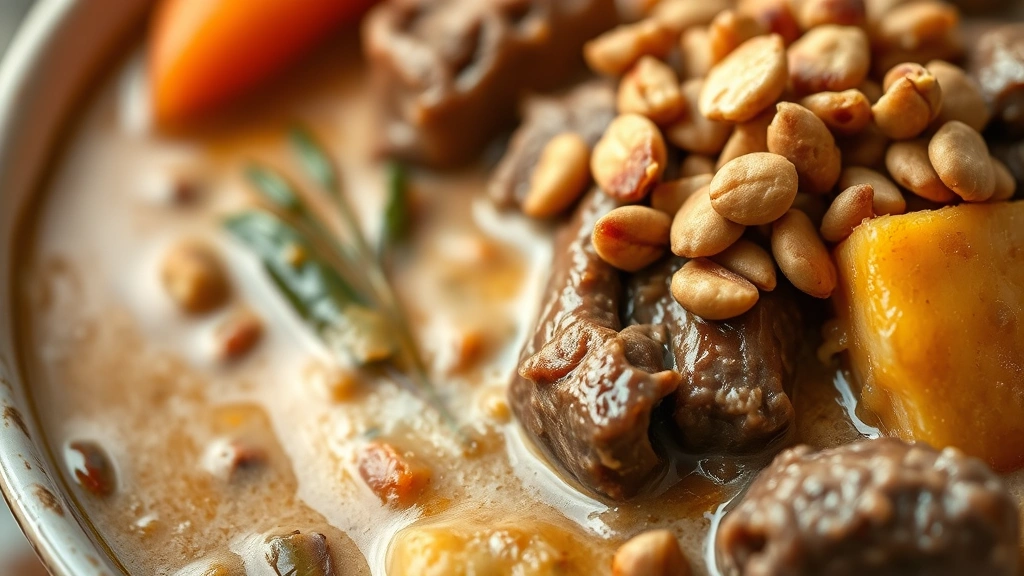
- Transfer to a large serving bowl or individual plates and garnish with crushed roasted peanuts.
- Serve hot with steamed white rice and a small bowl of shrimp paste (bagoong) on the side.
Pro Tips
- **Meat Selection**: While beef is traditional, you can also use pork (pork ribs or shoulder), chicken, or oxtail for different variations. Oxtail creates an especially rich, gelatinous sauce that’s absolutely divine. Adjust cooking time accordingly—chicken will need only 30-40 minutes total simmering.
- **Peanut Butter Quality**: Use natural peanut butter without added sugar or oils. If your peanut butter is very thick, you may need to thin it with a bit of warm stock before whisking. This prevents lumps in the sauce. Creamy works better than chunky for this recipe.
- **Annatto Seeds**: These are essential for authentic flavor and color. If you can’t find them, you can substitute with a combination of turmeric and paprika (1 teaspoon turmeric + 1 tablespoon paprika mixed with water), though the flavor will be slightly different. Never skip this ingredient entirely.
- **Vegetable Variations**: The vegetables listed are traditional, but you can customize based on preference or availability. Eggplant, green beans, cabbage, and squash all work beautifully. Add harder vegetables earlier and softer ones toward the end.
- **Fish Sauce is Non-Negotiable**: This ingredient might seem unusual if you’re unfamiliar with it, but it’s absolutely crucial for authentic Filipino flavor. It adds depth and umami that you simply cannot replicate. Start with the recommended amount and adjust to taste.
- **Make-Ahead Instructions**: Kare-kare actually improves after a day or two as flavors meld together. You can make it up to 3 days ahead and store in the refrigerator. Reheat gently on the stovetop, adding a splash of stock if needed. It also freezes beautifully for up to 3 months.
- **Sauce Consistency**: The sauce should be creamy and coat the back of a spoon but still be pourable. If it breaks or separates, whisk in a tablespoon of cornstarch mixed with cold water and simmer for 2-3 minutes.
- **Serving Suggestions**: Serve with steamed jasmine or white rice. Bagoong (shrimp paste) is the traditional accompaniment—mix a small amount into each bite for authentic flavor. Fresh lime wedges add brightness.
- **Substitutions**: For a lighter version, use chicken breast instead of beef (reduce cooking time to 30-40 minutes). For vegetarian kare-kare, substitute the meat with extra vegetables or tofu, and use vegetable stock instead of beef stock.
- **Troubleshooting**: If the sauce is too thick, thin with warm stock gradually. If too thin after vegetables release their liquid, simmer uncovered. If sauce tastes bland, add more fish sauce gradually. If too salty, add a pinch of sugar to balance.