

Kare-Kare is a beloved Filipino stew that combines tender meat, vegetables, and a rich peanut sauce into one unforgettable dish. This traditional recipe has been passed down through generations, representing the heart of Filipino home cooking and family gatherings. The beauty of Kare-Kare lies in its perfect balance of savory, slightly sweet, and nutty flavors that create a truly comforting meal.
Originally influenced by Spanish and Chinese cuisines, Kare-Kare has evolved into a distinctly Filipino classic. The name itself is derived from the Spanish word “caré,” which refers to curry. However, unlike traditional curries, Kare-Kare features a unique peanut butter base that gives it its signature creamy texture and rich, complex flavor profile. This dish is traditionally served during special occasions, family reunions, and holiday celebrations throughout the Philippines.
Making authentic Kare-Kare at home might seem intimidating, but with the right ingredients and techniques, you’ll create a restaurant-quality dish that rivals any Filipino restaurant. The key to the best Kare-Kare is taking time to develop the flavors properly, using quality ingredients, and not rushing the cooking process. Whether you’re making this for your family or introducing it to friends, this Asian cuisine guide will help you understand the cultural significance of this dish.
The sauce is what makes or breaks Kare-Kare, and homemade peanut sauce is far superior to using store-bought versions. You’ll want to toast your spices, caramelize your meat, and build layers of flavor throughout the cooking process. This peanut sauce recipe collection provides excellent variations you can explore after mastering the traditional version.
What sets the BEST Kare-Kare apart from average versions is the attention to detail and quality of ingredients. Fresh vegetables, tender meat cooked until it falls apart, and a sauce that coats every ingredient perfectly are essential. Many home cooks make the mistake of using thin, watery sauces or overcooking the vegetables until they’re mushy. This recipe ensures you achieve that perfect balance every time.
Serving Kare-Kare is an art in itself. The dish is traditionally accompanied by shrimp paste (bagoong), which adds a pungent, umami-rich element that complements the sweetness of the peanut sauce beautifully. Some people mix it directly into their portion, while others use it as a condiment on the side. This guide to rice and side dishes will help you choose the perfect accompaniments.
For those interested in the nutritional aspects and health benefits, this recipe uses natural peanut butter and can be adapted with healthier oils and reduced sugar. Check out this healthy Asian recipe guide for modifications that don’t compromise on flavor.
Once you master this classic version, you can explore variations like using chicken instead of beef, adding seafood, or creating a vegetarian version. Many Filipino families have their own secret twists on the traditional recipe, passed down through generations. This meat preparation guide offers excellent tips for preparing your protein perfectly.
Whether you’re cooking for two or feeding a crowd, this Kare-Kare recipe scales beautifully and actually tastes better the next day as the flavors continue to meld together. Make it ahead for stress-free entertaining, or prepare it fresh for an impressive weeknight dinner that tastes like it took hours but comes together efficiently with proper planning.
Ingredients
- 3 pounds beef chuck or oxtail, cut into 2-inch cubes
- 1/4 cup vegetable oil
- 1 large onion, quartered
- 6 cloves garlic, minced
- 2 tablespoons annatto seeds (atsuete), soaked in 1/4 cup warm water for 10 minutes
- 2 tablespoons shrimp paste (bagoong alamang)
- 1 cup creamy peanut butter (preferably natural)
- 4 cups beef stock or broth
- 1 cup water
- 2 medium potatoes, peeled and cut into 1-inch cubes
- 2 carrots, peeled and cut into 1-inch pieces
- 1 bundle (8 ounces) long beans, cut into 2-inch pieces
- 1/2 head of bok choy or Chinese cabbage, cut into 2-inch pieces
- 2 tablespoons fish sauce (patis)
- 1 tablespoon sugar
- 1 teaspoon salt, plus more to taste
- 1/2 teaspoon black pepper
- 2 tablespoons toasted ground peanuts for garnish
- Shrimp paste (bagoong) for serving
Instructions
- Heat the vegetable oil in a large heavy-bottomed pot or Dutch oven over medium-high heat. Working in batches to avoid overcrowding, brown the beef cubes on all sides, approximately 3-4 minutes per side. This step is crucial for developing deep, complex flavors through the Maillard reaction. Transfer the browned meat to a plate and set aside.
- In the same pot, add the quartered onion and cook until slightly caramelized, stirring occasionally, about 5-7 minutes. This builds the foundational flavor base of your Kare-Kare.
- Add the minced garlic to the pot and cook for 1-2 minutes until fragrant, being careful not to burn it. Stir constantly to distribute the garlic evenly and prevent burning.
- Return the browned beef to the pot along with any accumulated juices. Stir well to combine with the onions and garlic.
- Pour the annatto-infused water (strain the seeds, reserving the liquid) into the pot, stirring to combine. This gives Kare-Kare its distinctive golden-orange color and subtle earthy flavor.
- In a small bowl, mix the shrimp paste with a few tablespoons of the beef stock to create a smooth paste. Add this mixture to the pot, stirring thoroughly to incorporate. This adds depth and umami complexity to the sauce.
- Add the beef stock and water to the pot, bringing the mixture to a boil. Once boiling, reduce the heat to low, cover partially, and simmer for 45-50 minutes until the beef is tender but not falling apart. Skim any foam or impurities that rise to the surface during the first 10 minutes of cooking.
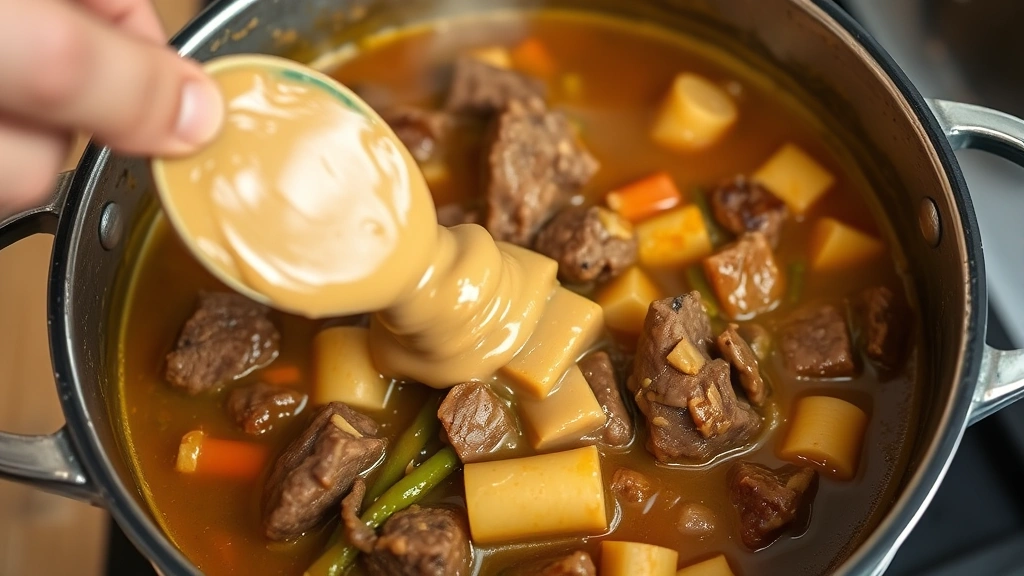
- While the beef is simmering, prepare the peanut butter sauce. In a separate bowl, whisk the creamy peanut butter with 1 cup of warm broth from the pot until smooth and well combined. This prevents lumps from forming when adding to the main pot.
- After the beef has simmered for 45 minutes, slowly stir in the peanut butter mixture, a little at a time, stirring constantly to ensure smooth incorporation and prevent lumps from forming.
- Add the potatoes and carrots to the pot, stirring well to distribute them evenly throughout the sauce. Continue simmering for 15 minutes until the vegetables begin to soften.
- Add the long beans and bok choy to the pot, stirring to submerge them in the sauce. Simmer for an additional 8-10 minutes until all vegetables are tender but still maintain some structural integrity and aren’t mushy.
- Season the Kare-Kare with fish sauce, sugar, salt, and black pepper. Start with the amounts listed and taste, adjusting as needed. The sauce should be rich, slightly sweet, and deeply savory with a hint of spice and umami.
- Simmer for an additional 2-3 minutes after seasoning adjustments to allow the flavors to meld together harmoniously.
- Transfer the Kare-Kare to a large serving platter or individual bowls. Garnish generously with toasted ground peanuts for added texture and visual appeal.
- Serve hot with steamed white rice on the side and shrimp paste (bagoong) on the table for guests to add according to their preferences. The pungent bagoong provides a beautiful contrast to the sweet and savory sauce.
Pro Tips
- **Meat Selection**: Beef chuck provides excellent marbling and becomes incredibly tender when simmered. Oxtail is traditional and adds more gelatinous richness to the sauce, though it requires longer cooking time (up to 2.5 hours). Pork shoulder is also a delicious alternative for a lighter version.
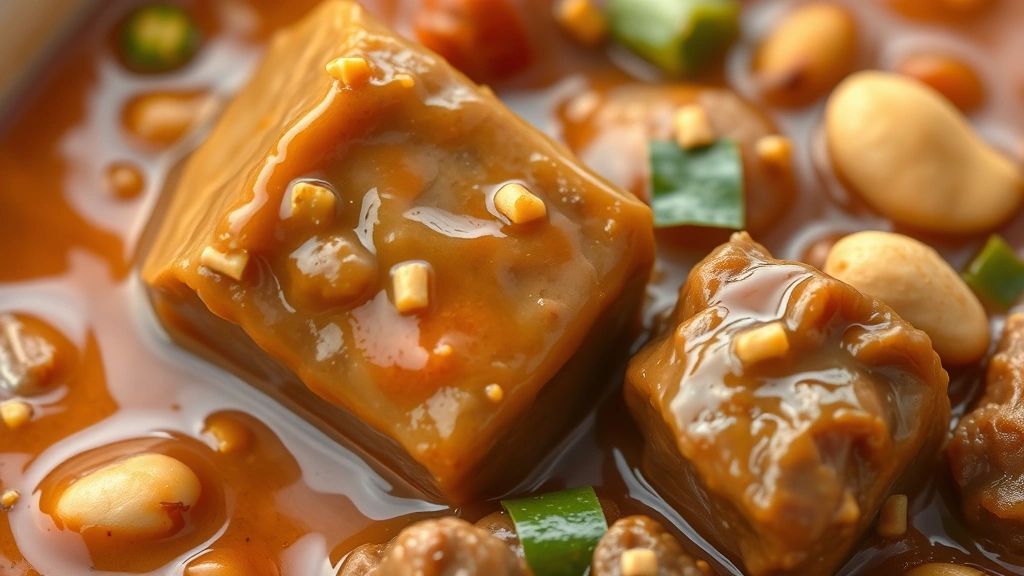
- **Peanut Butter Quality**: Use natural, creamy peanut butter without added sugars or oils if possible. Avoid peanut butter with added sweeteners, which will throw off the flavor balance of the dish. If your peanut butter is very thick, thin it with additional broth before adding.
- **Annatto Seeds**: These provide the characteristic golden color and subtle flavor. If unavailable, substitute with 1/4 teaspoon turmeric mixed with 1/4 teaspoon paprika, though the flavor will be slightly different.
- **Vegetable Variations**: Traditional Kare-Kare uses long beans, potatoes, carrots, and cabbage, but you can add other vegetables like eggplant, green peas, or squash. Add firmer vegetables first and tender ones near the end to prevent overcooking.
- **Sauce Consistency**: The sauce should coat a spoon but still flow gently. If too thick, add more broth or water gradually. If too thin, simmer uncovered for 10-15 minutes to reduce and thicken, or whisk 2 tablespoons cornstarch with 3 tablespoons cold water and stir into the simmering stew.
- **Make-Ahead**: Kare-Kare tastes even better the next day as flavors continue to develop. Reheat gently over low heat, adding additional broth if the sauce has thickened too much during storage.
- **Freezing**: This dish freezes beautifully for up to 3 months. Cool completely before transferring to freezer containers. Thaw overnight in the refrigerator and reheat gently on the stovetop.
- **Shrimp Paste Pairing**: Bagoong is essential for the authentic experience. Its pungent, fermented flavor cuts through the richness of the peanut sauce and adds complexity. Some people stir it directly into their portion, while others eat it on the side.
- **Serving Temperature**: Serve Kare-Kare piping hot for the best flavor experience. The heat helps the flavors bloom and the sauce coats your mouth with its rich, creamy texture.
- **Wine Pairing**: While not traditional, a crisp white wine or light lager beer complements the richness of this dish beautifully.