
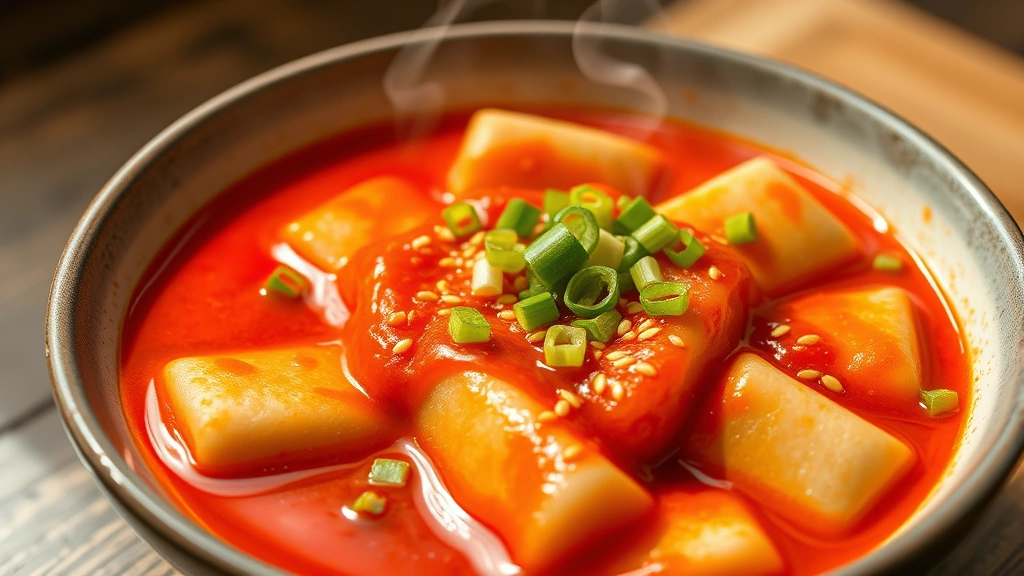
Korean rice cakes, or tteokbokki, are a beloved street food that’s become a global sensation. These chewy, pillowy rounds of goodness are traditionally served in a spicy gochujang sauce, but the beauty of this recipe is its versatility. Whether you’re craving something fiery and bold or prefer a milder, sweeter version, homemade Korean rice cakes deliver that authentic taste right from your kitchen.
The magic of tteokbokki lies in the rice cakes themselves—they’re made from glutinous rice flour and have a unique texture that’s completely different from regular rice. When cooked properly, they become wonderfully chewy with a slight resistance that makes each bite satisfying. The sauce is where the real flavor happens, though. A combination of gochujang (Korean red chili paste), gochugaru (red chili flakes), garlic, and a touch of sweetness creates that perfect balance of heat, umami, and depth that keeps you coming back for more.
What I love most about this recipe is how approachable it is, even for beginners. You don’t need fancy equipment or hard-to-find ingredients anymore—most Asian markets and even mainstream grocery stores now carry rice cakes. The cooking process is straightforward: boil, sauce, and serve. In less than thirty minutes, you can have restaurant-quality tteokbokki on your table.
This recipe serves as a fantastic base that you can customize endlessly. Add pickled red onions for brightness, toss in some vegetables, or even incorporate proteins like chicken or shrimp. The chickpea salad technique of layering flavors applies beautifully here too—each component adds dimension to the final dish.
I’ve tested this recipe dozens of times, tweaking the sauce consistency and spice level until it’s absolutely perfect. The result is a Korean rice cake dish that rivals anything you’d find from a street vendor in Seoul. Serve it as an appetizer, snack, or even a light main course with rice on the side. It’s comfort food at its finest, with that perfect balance of chewy, spicy, and satisfying that makes Korean cuisine so addictive.
Ingredients
- 1 pound fresh Korean rice cakes (tteok), or frozen if fresh unavailable
- 3 tablespoons gochujang (Korean red chili paste)
- 2 tablespoons gochugaru (Korean red chili flakes)
- 3 tablespoons soy sauce
- 2 tablespoons honey or brown sugar
- 1 tablespoon sesame oil
- 6 cloves garlic, minced
- 1 small onion, thinly sliced
- 3 cups water or anchovy stock for deeper flavor
- 2 tablespoons rice vinegar
- 1 teaspoon salt, or to taste
- 1/4 teaspoon black pepper
- 2 green onions, cut into 1-inch pieces
- 2 tablespoons toasted sesame seeds
- 1 teaspoon grated ginger, optional but recommended
- 2-3 whole dried red chilies, optional for extra depth
Instructions
- If using frozen rice cakes, quickly blanch them in boiling water for 2-3 minutes to separate them, then drain and set aside. Fresh rice cakes can be used directly from the package.
- In a small bowl, whisk together gochujang, gochugaru, soy sauce, honey, rice vinegar, and sesame oil until well combined and smooth. This is your sauce base and can be made ahead of time.
- Heat a large skillet or wok over medium-high heat and add 1 tablespoon of oil. Once shimmering, add the sliced onion and sauté for 2-3 minutes until softened and fragrant.
- Add the minced garlic and grated ginger to the pan and cook for another minute, stirring constantly to prevent burning. You should smell the incredible aroma of garlic infusing into the oil.
- Pour the sauce mixture into the pan with the aromatics and stir continuously for 1-2 minutes. The sauce will become slightly deeper in color and more fragrant as it heats through.
- Add the water or anchovy stock to the pan and bring the mixture to a simmer. If using dried red chilies for extra flavor, add them now and remove before serving.
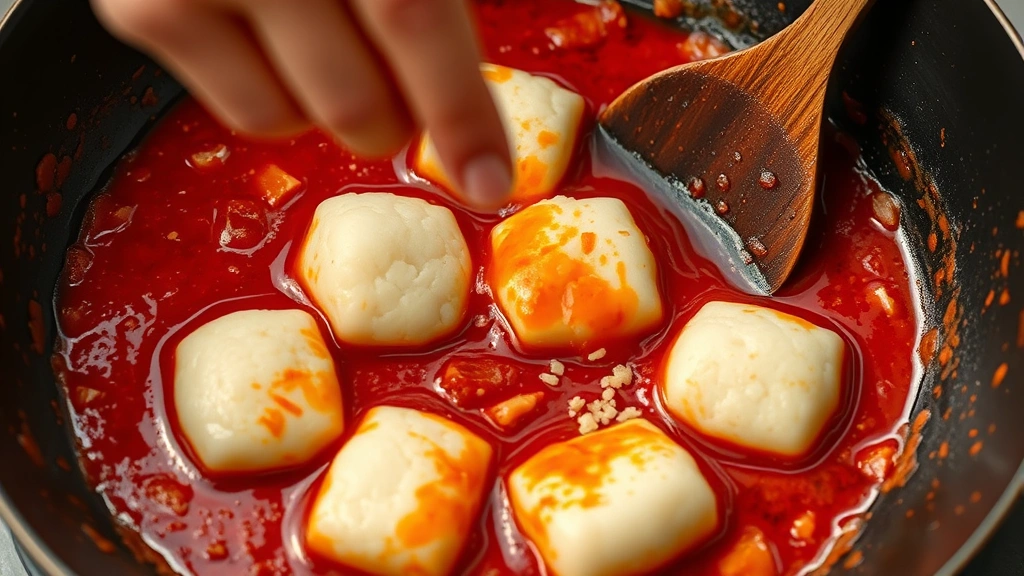
- Carefully add the blanched rice cakes to the simmering sauce, stirring gently to coat each piece evenly. Be gentle here—you want to maintain their shape.
- Simmer for 5-7 minutes, stirring occasionally to prevent sticking. The rice cakes should be tender and chewy, and the sauce should be reduced to a glossy coating that clings to each cake.
- Taste the dish and adjust seasoning as needed. Add more salt for savory depth, more honey for sweetness to balance heat, or more gochujang for intensity.
- Remove from heat and stir in the green onions, reserving some for garnish. Transfer to a serving bowl or platter.
- Garnish generously with toasted sesame seeds and remaining green onions. Serve immediately while warm for the best texture and flavor experience.
Pro Tips
- Rice Cake Selection: Fresh Korean rice cakes have the best texture, but frozen versions work wonderfully too. Avoid canned varieties as they tend to be mushy. Look for them in the refrigerated or frozen section of Asian markets.
- Sauce Consistency: The sauce should coat the rice cakes like a glaze. If it’s too thin after cooking, simmer a bit longer uncovered. If too thick, add water a tablespoon at a time.
- Spice Level Customization: This recipe is moderately spicy. For milder versions, reduce gochujang and gochugaru by half. For more heat, add extra gochugaru or fresh sliced green chilies.
- Make-Ahead Tips: Prepare the sauce base up to two days ahead and store in an airtight container. Blanch rice cakes up to a few hours before and keep them separated on a tray to prevent sticking.
- Protein Additions: Try adding fish cakes (eomuk), beef slices, or boiled eggs. For vegetarian options, add mushrooms, zucchini, or broccoli. Each addition brings new dimensions to the dish.
- Anchovy Stock Benefits: Using anchovy or dashi stock instead of plain water adds umami depth that elevates the entire dish. You can make simple dashi with kombu seaweed and bonito flakes.
- Sesame Oil Quality Matters: Use good-quality toasted sesame oil for the best nutty flavor. Avoid light sesame oil as it lacks the distinctive taste that makes this dish special.
- Serving Suggestions: Serve with steamed rice, fresh vegetables, or as part of a Korean meal spread. Perfect for parties as a shared appetizer.
- Storage: Leftover rice cakes can be refrigerated for up to three days. Reheat gently in a pan with a splash of water to restore the sauce and chewy texture. The flavor actually deepens overnight.