
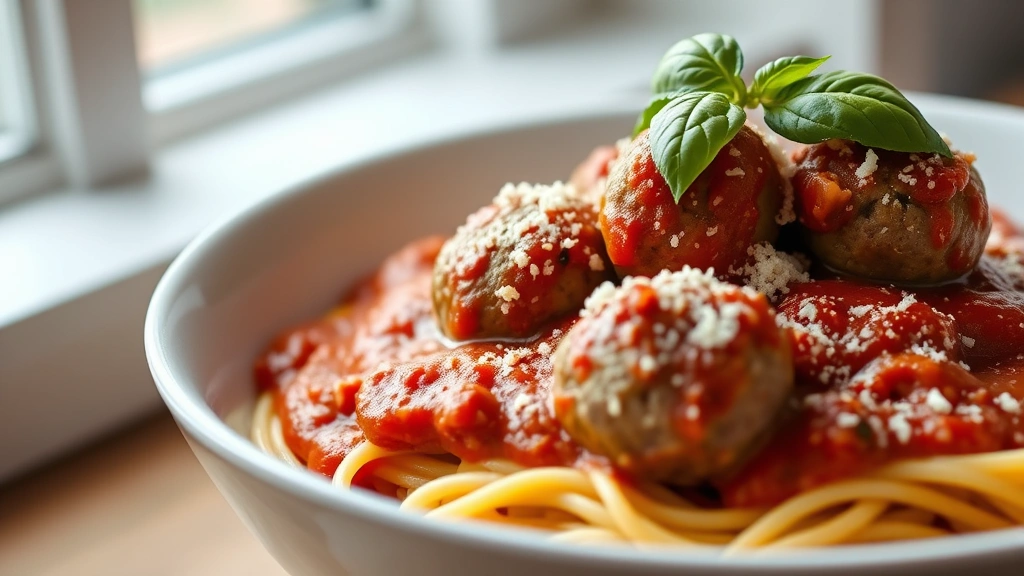
There’s nothing quite like a homemade meatball sauce that’s been simmered to perfection, filling your kitchen with the most incredible aroma. This is the ultimate meatball sauce recipe that will have everyone asking for seconds – it’s rich, deeply flavored, and absolutely foolproof. Whether you’re serving these over creamy pasta, crusty bread, or even as an appetizer, this sauce is pure magic.
I’ve been making this meatball sauce for years, and I’ve perfected it through countless dinner parties and family gatherings. The secret lies in building layers of flavor – starting with a beautiful sauté of aromatics, then adding quality tomato products, and finishing with fresh herbs and a touch of sweetness that balances the acidity perfectly. Unlike quick marinara sauces, this one deserves time to develop its full potential.
What makes this recipe truly special is the combination of crushed tomatoes and tomato paste, which creates an incredibly rich and complex base. The addition of Italian sausage in the sauce itself (not just in the meatballs) adds another dimension of flavor that makes people wonder what your secret ingredient is. Fresh basil stirred in at the end brings brightness that store-bought sauces simply cannot achieve.
I love pairing this with my best heavy cream Alfredo sauce for a stunning surf-and-turf pasta night, or using it alongside heavy cream pasta for those extra special occasions. This sauce also freezes beautifully, so I always make a double batch.
The beauty of this recipe is its versatility. Serve it over spaghetti, penne, rigatoni, or even alongside chicken alfredo for a mixed platter. It’s also perfect for Sunday suppers, meal prep, or those nights when you want to impress without spending all day in the kitchen. Once you make this sauce, you’ll never go back to jarred versions again – I promise!
For additional inspiration on pasta dishes, check out this classic marinara from Bon Appétit, or learn more about pasta sauce techniques from Serious Eats. You might also enjoy exploring Italian Sunday gravy from the New York Times for another perspective on traditional sauce-making.
Ingredients
- 2 tablespoons olive oil
- 1 medium yellow onion, finely diced
- 4 cloves garlic, minced
- ½ pound Italian sausage, casings removed
- 1 can (28 ounces) crushed San Marzano tomatoes
- 1 can (6 ounces) tomato paste
- 1 cup beef or chicken broth
- 2 tablespoons tomato juice or water
- 1 tablespoon sugar (or honey)
- 1 teaspoon dried oregano
- ½ teaspoon dried thyme
- ½ teaspoon red pepper flakes (adjust to taste)
- Salt and freshly ground black pepper to taste
- ½ cup fresh basil, roughly chopped (divided)
- 2 tablespoons butter
- ½ teaspoon balsamic vinegar
- Parmigiano-Reggiano for serving
Instructions
- Heat olive oil in a large, heavy-bottomed pot or Dutch oven over medium heat. Once shimmering, add the diced onion and cook for 3-4 minutes, stirring occasionally, until the onion becomes translucent and fragrant.
- Add the minced garlic to the pot and cook for another 30-45 seconds, stirring constantly, until the raw garlic smell disappears and the garlic is fragrant but not browned.
- Crumble the Italian sausage into the pot, breaking it apart with a wooden spoon as it cooks. Continue cooking for 5-7 minutes until the sausage is no longer pink and has begun to brown slightly. This step is crucial for building deep flavor.
- Stir in the tomato paste and cook for 2 minutes, stirring frequently. This caramelizes the paste and deepens the tomato flavor significantly. You should see the paste darken slightly and stick to the bottom of the pot.
- Pour in the crushed tomatoes with their juices, then add the beef or chicken broth and tomato juice. Stir well, scraping up any browned bits from the bottom of the pot – these are liquid gold for flavor.
- Add the dried oregano, dried thyme, and red pepper flakes. Stir to combine thoroughly. The sauce should be well-blended and have a beautiful, rich color.
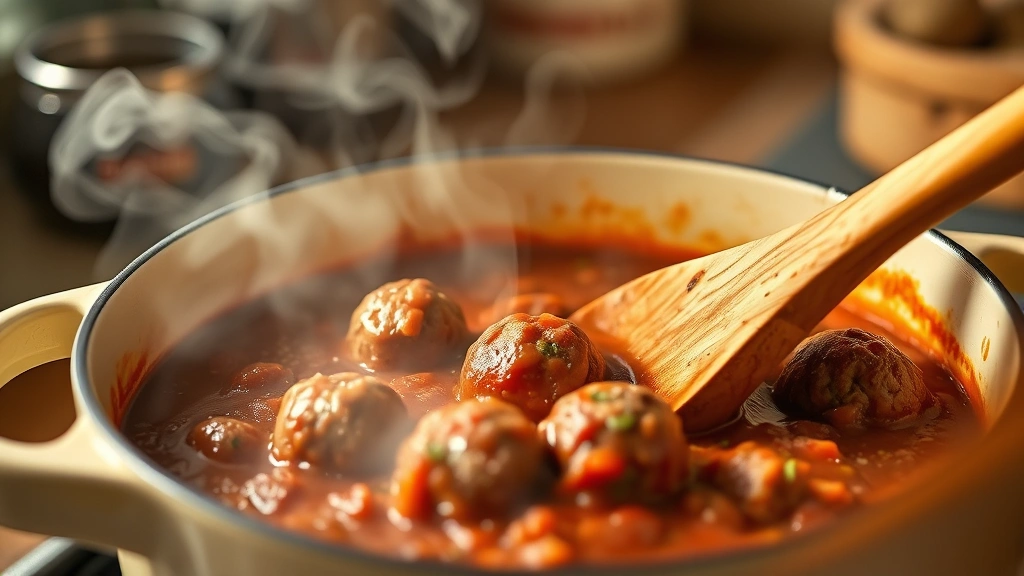
- Bring the sauce to a gentle simmer over medium heat. You should see small, lazy bubbles breaking the surface regularly but not a rolling boil.
- Once simmering, reduce the heat to medium-low and let the sauce simmer uncovered for 25-30 minutes, stirring occasionally. The sauce will reduce slightly and the flavors will meld beautifully.
- Taste the sauce and season generously with salt and freshly ground black pepper. Remember that you’ll be adding meatballs, which often have their own seasoning, so adjust accordingly.
- Add the tablespoon of sugar (or honey) and stir well. This balances the acidity of the tomatoes without making the sauce taste sweet – it simply rounds out the flavors.
- Stir in the balsamic vinegar, which adds another layer of depth and complexity to the sauce. This is a professional chef trick that most home cooks don’t know about.
- Add the butter and stir until it’s completely melted and incorporated. The butter adds richness and helps round out all the flavors into a cohesive sauce.
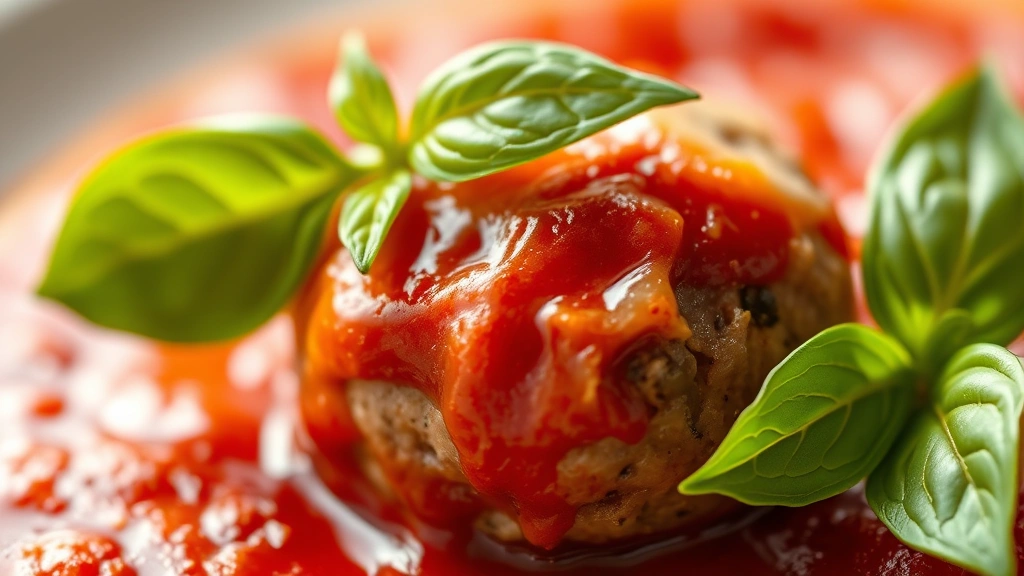
- Gently stir in about ¼ cup of the fresh basil, reserving the remaining basil for garnish. The fresh basil brings brightness to the sauce that dried herbs simply cannot achieve.
- If you’re cooking meatballs separately, you can now add them to the sauce and let them simmer together for 5-10 minutes to meld the flavors. If making meatballs from scratch to add to this sauce, do so now.
- Taste one final time and adjust seasoning as needed. The sauce should be rich, balanced, and deeply flavorful with no harsh edges.
- Serve the meatball sauce over your favorite pasta, garnished with the remaining fresh basil, freshly grated Parmigiano-Reggiano, and a drizzle of good quality olive oil.
Pro Tips
- This sauce is all about patience and flavor-building – don’t rush the cooking process. The longer it simmers (up to 45 minutes), the better it tastes.
- San Marzano tomatoes are worth the investment. They have fewer seeds, lower acidity, and superior flavor compared to regular canned tomatoes. They’re the gold standard for Italian cooking.
- The sugar in this recipe doesn’t make it sweet – it simply neutralizes the acidity of the tomatoes. If you prefer, you can use honey or even a pinch of baking soda instead.
- Fresh basil should always be added at the end of cooking to preserve its delicate flavor. Cooked basil becomes bitter and loses its bright, peppery quality.
- This sauce freezes beautifully for up to 3 months. Let it cool completely, then transfer to freezer-safe containers. Thaw overnight in the refrigerator before reheating.
- For a lighter version, you can substitute the Italian sausage with ground beef or even omit it entirely for a vegetarian sauce. The flavor profile will be different but equally delicious.
- The balsamic vinegar is optional but highly recommended. It adds a subtle sweetness and complexity that elevates the sauce from good to exceptional.
- Serve with fresh, crusty bread for dipping. The sauce is too good not to soak up with bread.
- If the sauce seems too thick after cooking, thin it with pasta water or broth. If it’s too thin, let it simmer a bit longer uncovered.
- Make a double or triple batch on a Sunday and you’ll have homemade sauce ready all week. It tastes even better on day two or three as the flavors continue to develop.
- This sauce pairs beautifully with homemade meatballs, but store-bought frozen meatballs work great too if you’re short on time. Just add them to the simmering sauce for the last 10-15 minutes.