
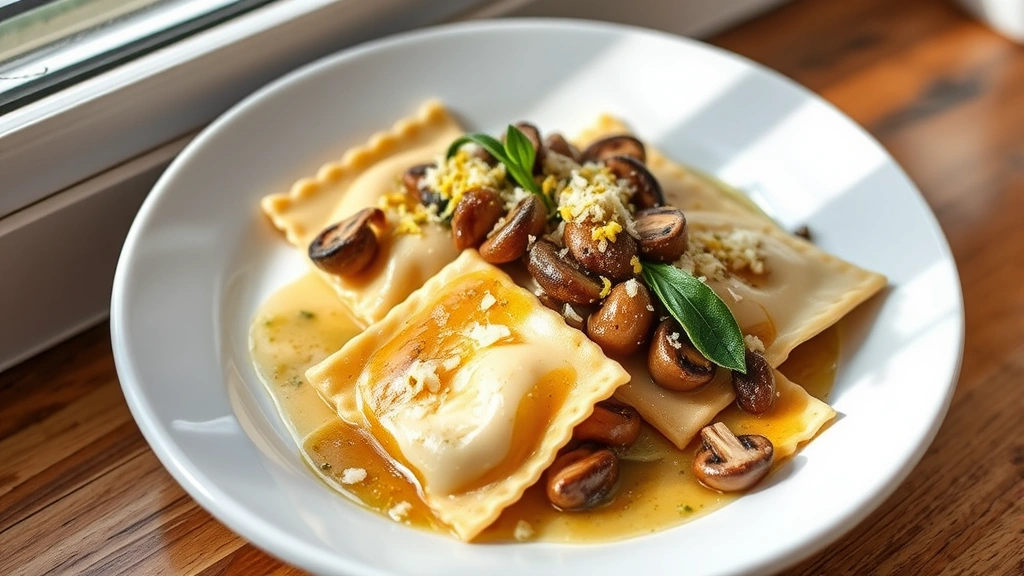
There’s something absolutely magical about homemade mushroom ravioli—the delicate pasta pillows filled with savory, earthy mushroom goodness that practically melts on your tongue. While it might seem intimidating to make ravioli from scratch, I promise you this recipe is surprisingly manageable and so worth the effort. The beauty of homemade ravioli is that you control every single ingredient, creating something far superior to anything you’ll find at the grocery store.
I’ve been making this mushroom ravioli recipe for years, and it’s become a family favorite for special dinners and cozy weeknight meals alike. The key to success is using a combination of mushrooms—cremini, shiitake, and button mushrooms give you the most complex, umami-rich flavor. The filling comes together in minutes, and while the pasta dough requires a bit of patience and practice, the results are absolutely worth it.
What I love most about this recipe is how versatile it is. You can serve it with a simple brown butter sage sauce, a light cream sauce, or even a tomato-based marinara. Pair it with roasted eggplant or baby bok choy for an elegant vegetarian dinner that will impress even your pickiest guests.
The pasta dough is made with just flour and eggs—no fancy equipment needed, though a pasta maker does make life easier. The filling uses finely chopped mushrooms sautéed with shallots, garlic, and fresh thyme until all the moisture has evaporated. This is crucial because wet filling can make your ravioli soggy and cause them to burst during cooking. We finish the filling with ricotta cheese, Parmesan, and a touch of truffle oil for that extra special something.
I recommend making this recipe when you have a bit of time to enjoy the process. Put on your favorite music, pour yourself a glass of wine, and settle in for a therapeutic cooking session. Once you’ve made homemade ravioli once, you’ll find yourself making it again and again. It’s the kind of dish that feels fancy enough for company but approachable enough for a regular Tuesday night.
The ravioli can be assembled ahead of time and frozen on a baking sheet, then cooked directly from frozen—just add a minute or two to the cooking time. This makes it perfect for meal prep or having something special ready to go for last-minute dinner parties. Trust me, your dinner guests will be absolutely blown away when you tell them you made these from scratch.
Ingredients
- 2 cups all-purpose flour, plus more for dusting
- 3 large eggs, room temperature
- 1 tablespoon olive oil
- 1 teaspoon salt
- 1 pound mixed mushrooms (cremini, shiitake, button), finely chopped
- 2 shallots, minced
- 4 cloves garlic, minced
- 2 tablespoons fresh thyme leaves
- 1 cup whole milk ricotta cheese
- ½ cup grated Parmesan cheese
- ¼ cup grated Pecorino Romano cheese
- 1 egg yolk, for sealing ravioli
- 2 tablespoons white truffle oil (or regular olive oil)
- Salt and freshly cracked black pepper to taste
- 3 tablespoons butter, for serving
- 8-10 fresh sage leaves, for serving
- Lemon zest, for garnish
Instructions
- Make the pasta dough by creating a well in the center of the flour on a clean countertop or in a large bowl. Crack the eggs into the well and add the olive oil and salt. Using a fork, beat the eggs gently and begin pulling flour from the inner walls of the well into the eggs, stirring until a shaggy dough forms.
- Once the dough is too stiff to work with a fork, use your hands to bring everything together. Knead the dough for 8-10 minutes until it becomes smooth, elastic, and slightly sticky. If it’s too wet, add a bit more flour; if too dry, add a tiny splash of water. The dough should be soft but not sticky.
- Wrap the dough in plastic wrap and let it rest at room temperature for 30 minutes. This resting period is crucial as it allows the gluten to relax and makes rolling much easier.
- While the dough rests, prepare the mushroom filling. Heat 2 tablespoons of olive oil in a large skillet over medium-high heat. Add the minced shallots and sauté for 2-3 minutes until softened and fragrant.
- Add the minced garlic and fresh thyme leaves, cooking for another 30 seconds until fragrant. Pour in the finely chopped mushrooms and increase heat to medium-high.
- Cook the mushroom mixture for 12-15 minutes, stirring occasionally, until all the liquid has evaporated and the mushrooms are deeply caramelized and golden brown. This step is essential for developing deep flavor and preventing wet ravioli.
- Remove the mushroom mixture from heat and let it cool to room temperature. Once cooled, stir in the ricotta cheese, Parmesan, Pecorino Romano, truffle oil, and a generous pinch of salt and black pepper. Taste and adjust seasonings as needed. Set aside.
- Divide the pasta dough into 4 equal portions. Working with one portion at a time (keeping the others wrapped), flatten the dough slightly and begin rolling it through a pasta maker, starting at the widest setting. If you don’t have a pasta maker, you can roll it out by hand with a rolling pin—just aim for paper-thin sheets.
- Pass the dough through the pasta maker twice on the widest setting, folding it in half between passes to develop elasticity. Then gradually decrease the thickness setting, passing the dough through 2-3 times on each setting until you reach the thinnest setting (usually setting 6 or 7).
- Lay out your thin pasta sheet on a clean, lightly floured surface. Using a round ravioli stamp or a 3-inch round cutter, cut circles from the pasta sheet, spacing them about 2 inches apart.
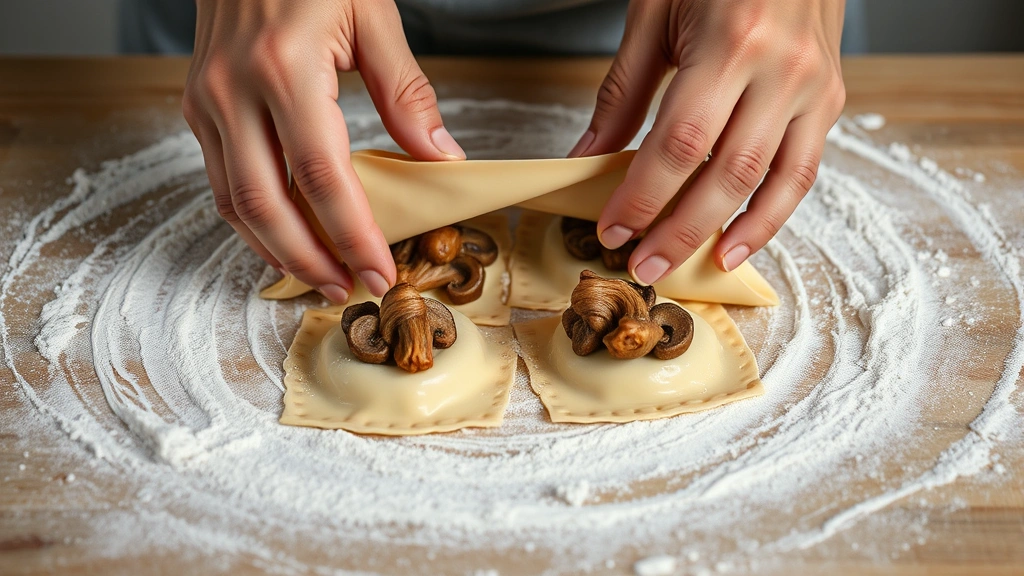
- Place about 1 teaspoon of filling in the center of each pasta circle. Using your finger or a small brush, dab the edges of each circle with the beaten egg yolk—this acts as the glue.
- Fold each circle in half to create a semicircle, pressing firmly around the edges to seal. Then bring the two corners of the semicircle together and press to seal, creating a tortellini-like shape. This is optional—you can also leave them as half-moons if you prefer.
- Place finished ravioli on a parchment-lined baking sheet, making sure they don’t touch. Continue with the remaining dough portions and filling until all ravioli are formed.
- At this point, ravioli can be cooked immediately, refrigerated for up to 2 days, or frozen for up to 3 months. If freezing, freeze on the baking sheet for 2 hours, then transfer to a freezer bag.
- To cook the ravioli, bring a large pot of salted water to a rolling boil. Gently add the ravioli in batches, being careful not to overcrowd the pot.
- Fresh ravioli will float to the surface within 2-3 minutes. Let them cook for another 2 minutes after floating, then remove with a slotted spoon. Frozen ravioli will take 4-5 minutes after floating.
- While the ravioli cook, melt the butter in a small skillet over medium heat. Add the fresh sage leaves and cook for 1-2 minutes until fragrant and slightly crispy.
- Place the cooked ravioli in a serving bowl or on individual plates. Pour the sage brown butter sauce over the top, garnish with grated Parmesan, fresh lemon zest, and a crack of black pepper. Serve immediately while still warm.
Pro Tips
Preparing the mushroom filling: The most important step is cooking out all the moisture from the mushrooms. Mushrooms release a lot of water when cooked, and if you don’t evaporate this liquid, your ravioli will become soggy and burst during cooking. The filling should look quite dry when finished. You can make the filling up to 2 days ahead and refrigerate it.
Rolling the dough: If using a pasta maker, the dough should be smooth and pliable. If it starts to stick, dust lightly with flour. If it tears, you can press the dough back together. Each pasta sheet should be thin enough to see your hand through it—this ensures delicate, tender ravioli.
Sealing the ravioli: The egg wash is crucial for creating an airtight seal. Make sure the edges are completely dry when you brush on the egg, as any moisture will prevent proper sealing. Press firmly around the edges to ensure they’re well-sealed, checking for any air pockets.
Cooking the ravioli: Use a large pot with plenty of salted water—this prevents the ravioli from sticking together. The water should taste like the sea. Frozen ravioli can go directly from freezer to boiling water without thawing. Don’t stir too much once they’re in the water, as this can cause them to burst.
Serving suggestions: While brown butter sage is classic, you can also serve these ravioli with a light cream sauce, marinara, or even pesto. They pair beautifully with coleslaw as a light side. A simple green salad with lemon vinaigrette is also excellent.
Make-ahead tip: Ravioli can be assembled and frozen for up to 3 months. This makes them perfect for weeknight dinners. You don’t need to thaw them—just add about 1-2 minutes to the cooking time. Having homemade ravioli in your freezer means you’re always ready for an elegant dinner.
Storage: Cooked ravioli can be refrigerated for up to 3 days and reheated gently in butter or a light sauce. Uncooked ravioli keep in the refrigerator for up to 2 days but are best cooked fresh if possible.