
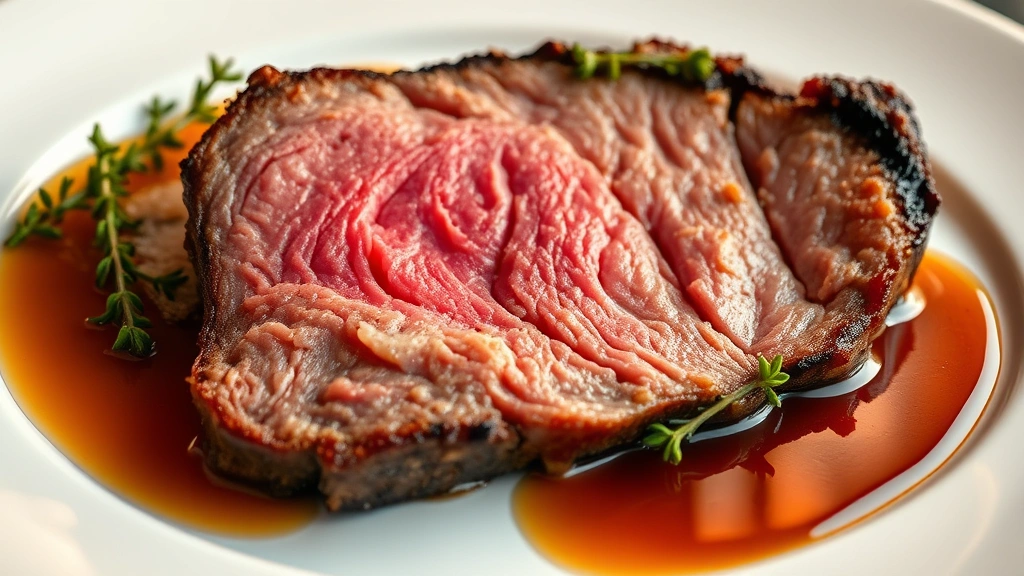
Prime rib is the crown jewel of holiday dinners and special occasions, and when you master this classic preparation with silky au jus, you’re serving restaurant-quality beef at home. This comprehensive guide walks you through selecting the perfect cut, seasoning it properly, and roasting it to a gorgeous medium-rare with a beautiful crust. The key to exceptional prime rib is understanding that it’s a forgiving cut—its marbling and fat content work in your favor, making it nearly impossible to dry out if you follow proper technique. We’ll cover temperature control, resting periods, and the essential au jus that transforms your drippings into liquid gold.
Au jus, French for “with juice,” is simply a pan sauce made from the meat’s drippings combined with beef stock. It’s lighter than gravy, intensely flavored, and the perfect accompaniment to prime rib. Some home cooks skip this step, but they’re missing out on one of the best parts of the meal. The au jus captures all those caramelized bits stuck to the roasting pan—what French chefs call fond—and transforms them into pure umami. This recipe yields a gorgeous, glossy sauce that pools beautifully on the plate beside your sliced rib.
What makes prime rib special is the cut itself. You’re looking for a bone-in rib roast, ideally a 3-bone or 4-bone cut (about 7-9 pounds). The bones conduct heat beautifully and add tremendous flavor to both the meat and your au jus. Ask your butcher to cut the bones away from the meat slightly—this makes carving infinitely easier while still keeping them attached during cooking. The fat cap (that thick layer of fat on top) is your best friend; it bastes the meat as it renders and creates the most incredible crust.
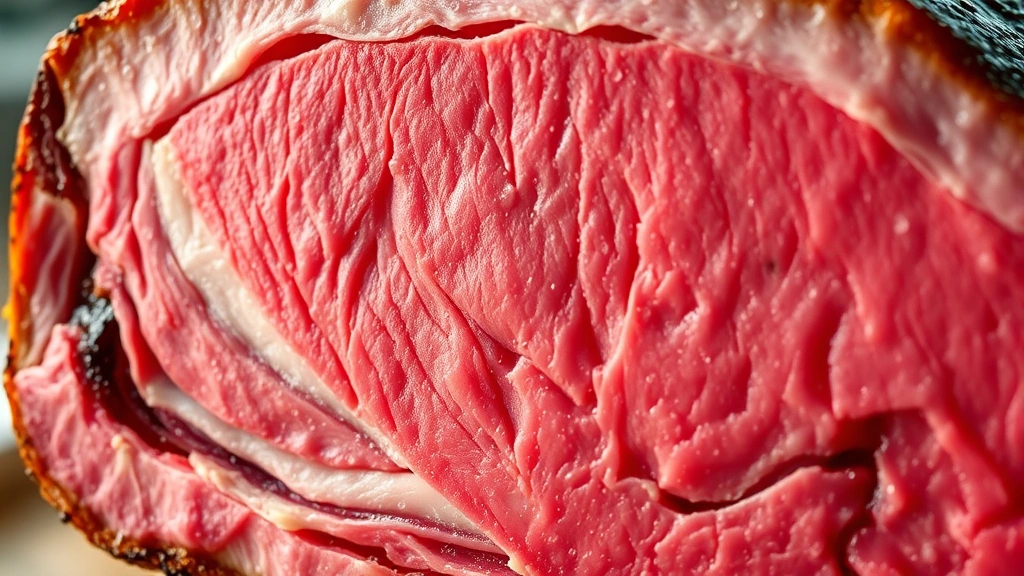
Temperature is everything with prime rib. We’re using a reverse-sear method here, which means starting in a low oven to gently bring the meat to temperature, then finishing with a hot sear for that gorgeous crust. This method is foolproof and eliminates the gray band of overcooked meat you often see between the crust and the rosy interior. A quality meat thermometer is non-negotiable—aim for 130°F internal temperature for medium-rare, which will climb a few degrees during resting.
The resting period cannot be skipped. After roasting, your prime rib needs 15-20 minutes of rest, during which the residual heat continues to cook the exterior while the interior carryover cooking brings temperature up by about 5 degrees. More importantly, resting allows the muscle fibers to relax and reabsorb moisture, ensuring juicy, tender slices. Cut into it too early and all those precious juices spill onto the plate instead of staying in the meat.
Your au jus starts immediately after the roast comes out of the oven. Those caramelized bits in the pan are pure flavor bombs, and we’re going to deglaze the pan with beef stock to dissolve them into a silky sauce. A splash of red wine adds depth, while Worcestershire sauce and fresh thyme round out the flavor profile. Some recipes call for cornstarch slurry to thicken the sauce, but we prefer to let it reduce naturally—this concentrates the flavors and creates a more elegant, less heavy sauce.
This prime rib au jus recipe serves 8-10 people generously and is absolutely showstopping. Whether you’re hosting Thanksgiving, Christmas dinner, or just celebrating a special occasion, this is the recipe that will have your guests talking about your cooking for years to come. The combination of perfectly roasted, juicy prime rib with luxurious au jus is unbeatable.
Ingredients
- One 7-9 pound bone-in prime rib roast (3-4 bones), brought to room temperature for 2 hours
- 3 tablespoons kosher salt
- 2 tablespoons freshly ground black pepper
- 2 tablespoons garlic powder
- 1 tablespoon onion powder
- 2 teaspoons smoked paprika
- 4 sprigs fresh rosemary
- 6 sprigs fresh thyme
- 4 cloves garlic, smashed
- 3 tablespoons unsalted butter, divided
- 2 cups beef stock, preferably homemade or high-quality
- 1 cup dry red wine
- 2 tablespoons balsamic vinegar
- 1 tablespoon Worcestershire sauce
- 2 teaspoons Dijon mustard
- 2 sprigs fresh thyme for au jus
- 1 bay leaf
- Salt and freshly ground black pepper to taste
- 2 tablespoons cornstarch (optional, for thickening)
- 3 tablespoons cold water (optional, if using cornstarch)
Instructions
- Remove prime rib from refrigerator and let sit at room temperature for 2 hours before cooking. This ensures even cooking from edge to center.
- Preheat oven to 250°F. Pat the prime rib completely dry with paper towels—this is crucial for achieving a good crust.
- In a small bowl, combine kosher salt, black pepper, garlic powder, onion powder, and smoked paprika. Mix thoroughly.
- Rub the seasoning mixture all over the prime rib, paying special attention to the cut sides and between the bones. Use about half the mixture on the meat side and half on the fat cap.
- Place the prime rib fat-side up on a roasting rack inside a heavy roasting pan. The rack allows heat to circulate underneath.
- Scatter the rosemary, thyme sprigs, and smashed garlic cloves around the roast in the pan.
- Insert a meat thermometer into the thickest part of the meat, not touching bone. Place roast in preheated 250°F oven.
- Roast slowly for 1 hour 45 minutes to 2 hours, until the internal temperature reaches 120°F. Do not rush this step; slow roasting ensures even cooking.
- When the roast reaches 120°F, remove it from the oven and increase oven temperature to 500°F. Let the roast rest while the oven preheats (about 10 minutes).
- Melt 2 tablespoons of butter and brush it evenly over the fat cap of the prime rib.
- Return roast to the 500°F oven and sear for 12-15 minutes until the fat cap is deeply browned and the internal temperature reaches 130°F (for medium-rare).
- Remove the prime rib from the oven and transfer to a cutting board. Tent loosely with foil and let rest for 15-20 minutes before carving.
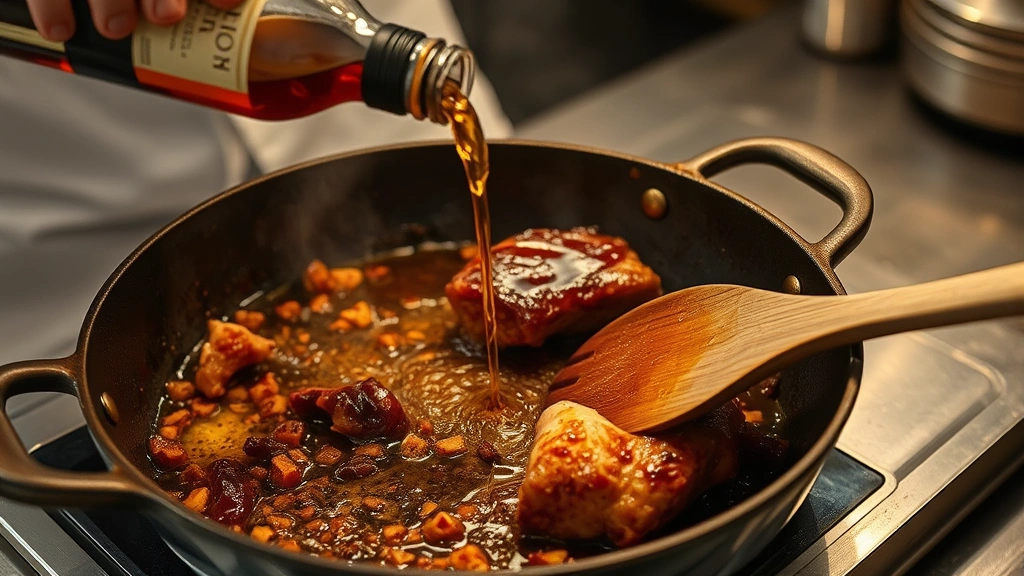
- While the roast rests, place the roasting pan directly over two burners on medium-high heat. Scrape the bottom with a wooden spoon to release all the caramelized bits.
- Once the fond is loosened, add the red wine to deglaze, scraping continuously for 2 minutes until the wine reduces by half.
- Add the beef stock, balsamic vinegar, Worcestershire sauce, Dijon mustard, fresh thyme sprigs, and bay leaf to the pan.
- Bring the mixture to a gentle simmer and cook for 5-8 minutes, allowing flavors to meld and the liquid to reduce slightly.
- If using cornstarch for thickening, whisk it together with cold water to create a slurry. Slowly whisk into the simmering au jus while stirring constantly until the desired consistency is reached (optional).
- Strain the au jus through a fine-mesh sieve into a clean saucepan, pressing gently on the solids to extract flavor.
- Whisk in the remaining 1 tablespoon of butter for a glossy finish. Taste and adjust seasoning with salt and pepper as needed.
- Carve the prime rib by cutting between the bones, then slicing against the grain into ½-inch thick slices.
- Transfer sliced prime rib to a serving platter and pour warm au jus into a gravy boat or small pitcher for serving on the side.
Pro Tips
- Bringing the prime rib to room temperature is absolutely essential. Cold meat will cook unevenly, with overdone edges and a cold center. Set it out 2 hours before cooking.
- The reverse-sear method (low temp first, high temp finish) is the gold standard for prime rib. It prevents the gray band of overcooked meat between the crust and interior that happens with traditional high-heat roasting.
- Invest in a quality instant-read meat thermometer. This is not a step to skip or eyeball. The difference between perfectly cooked prime rib and overdone prime rib is just a few degrees.
- The fat cap is your friend, not something to trim away. As it renders during cooking, it bastes the meat and creates an incredible crust. Aim for a ½-inch to ¾-inch layer.
- Never skip the resting period. This is when carryover cooking occurs (temperature rises 3-5 degrees) and when muscle fibers relax and reabsorb moisture. Cutting into it immediately results in a dry, disappointing roast.
- For the au jus, use quality beef stock. Homemade stock is ideal, but if using store-bought, choose one with visible gelatin content—this indicates quality and will give your sauce better body and mouthfeel.
- The cornstarch thickening is entirely optional. A properly reduced au jus will be silky and coat a spoon without any thickener, and many purists prefer it this way.
- Make-ahead tip: You can prepare the au jus up to 2 days in advance. Store it in an airtight container in the refrigerator and gently reheat before serving.
- Leftovers are incredible for sandwiches. Slice thinly and serve on crusty bread with extra au jus for dipping—essentially a French dip sandwich.
- Bone-in is crucial for flavor, but boneless rib roasts work too (reduce cooking time by 15-20 minutes). Ask your butcher specifically for a roast from the rib section, not the loin.
- For a crowd larger than 10, allow ¾ pound per person and increase cooking time by 10-15 minutes for each additional pound.