
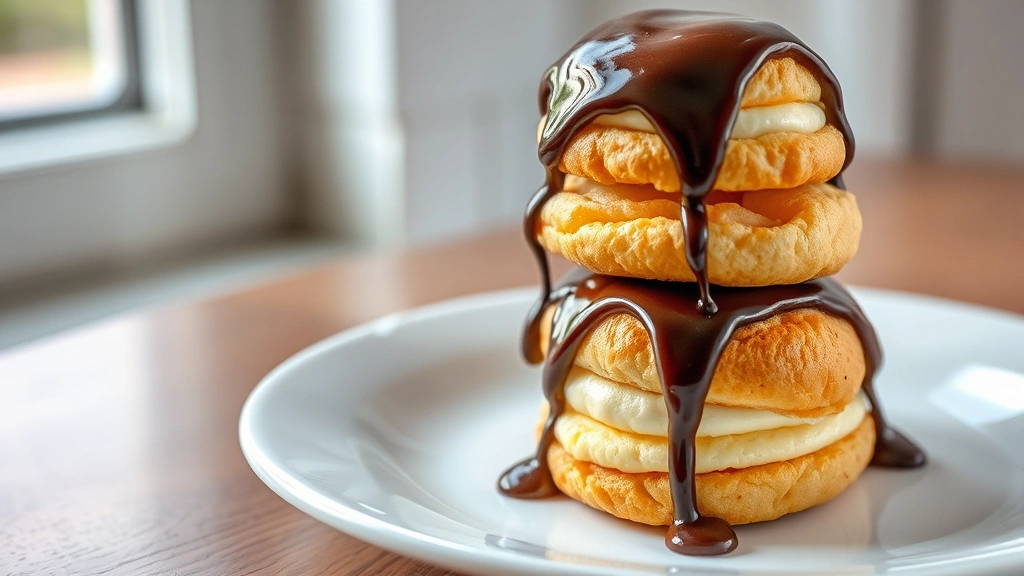
Profiteroles are one of the most elegant yet surprisingly simple desserts you can make at home, and once you master this technique, you’ll be making them for every special occasion. These delicate choux pastry puffs filled with creamy vanilla custard and topped with glossy chocolate sauce are the perfect balance of crispy shells and luscious filling, creating an absolutely show-stopping dessert that looks like it came straight from a French patisserie.
The magic of profiteroles lies in understanding choux pastry, which is one of the five French mother sauces’ pastry cousins. Unlike other dough-based pastries, choux relies on steam to create those beautiful hollow puffs that puff up in the oven like little clouds. The dough itself is incredibly forgiving once you understand the basic technique, and the whole process becomes second nature after your first batch.
What makes this recipe so special is that you can prepare each component ahead of time. Make the choux pastry shells days in advance and store them in an airtight container, prepare the pastry cream filling a day ahead, and drizzle on that silky chocolate sauce just before serving. This means you can impress your guests with minimal stress on the day of your dinner party.
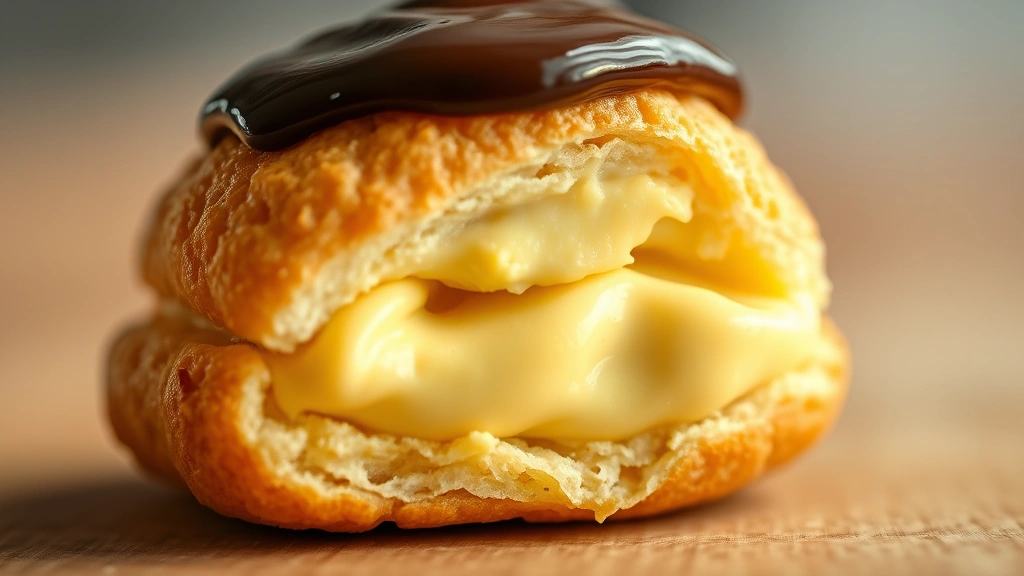
I’ve been making profiteroles for years, and I’ve refined this recipe to ensure perfect results every single time. The key is using the correct oven temperature, not opening the oven door while they bake, and understanding that the filling is just as important as the shells themselves. A truly exceptional profiterole has a delicate choux shell that shatters between your teeth, a smooth and creamy custard filling, and a thin layer of dark chocolate ganache on top.
Whether you’re serving these at an intimate dinner party, a wedding reception, or just because you deserve something special on a Tuesday night, this recipe will become your go-to. You can even customize the filling with different flavor variations from our recipe collection, or explore other classic French desserts in our recipe categories. For additional inspiration on pastry techniques, check out this comprehensive guide to perfecting choux pastry from Bon Appétit, or learn about the science behind profiteroles from Serious Eats. For a master class in chocolate ganache, visit the New York Times cooking section for advanced techniques.
Ingredients
- 1 cup water
- 1/2 cup (115g) unsalted butter
- 1/4 teaspoon salt
- 1 tablespoon granulated sugar
- 1 cup (125g) all-purpose flour
- 4 large eggs, room temperature
- 2 cups heavy cream, cold
- 1/2 cup granulated sugar (for pastry cream)
- 3 tablespoons cornstarch
- 1/4 teaspoon salt (for pastry cream)
- 2 cups whole milk
- 1 vanilla bean, split and scraped (or 1 teaspoon vanilla extract)
- 4 egg yolks
- 2 tablespoons unsalted butter (for pastry cream)
- 6 ounces semi-sweet or dark chocolate, finely chopped
- 1/2 cup heavy cream (for chocolate sauce)
- 2 tablespoons unsalted butter (for chocolate sauce)
- 1 tablespoon light corn syrup
Instructions
- Preheat your oven to 400°F (200°C). Line two large baking sheets with parchment paper.
- In a medium saucepan, combine water, butter, salt, and 1 tablespoon sugar over medium heat, stirring occasionally until the butter is completely melted and the mixture reaches a gentle boil.
- Remove the pan from heat and add the flour all at once, stirring vigorously with a wooden spoon until the mixture comes together into a thick paste that forms a ball and pulls away from the sides of the pan.
- Return the pan to medium-low heat and cook the dough for 1-2 minutes, stirring constantly, to evaporate excess moisture. The dough should look slightly glossy and form a thin film on the bottom of the pan.
- Transfer the dough to a bowl or stand mixer fitted with the paddle attachment and let it cool for 2-3 minutes.
- Add the eggs one at a time, beating well after each addition until the egg is fully incorporated. The dough will look shiny and smooth after each addition. After all eggs are added, the dough should be thick, glossy, and fall slowly from a spoon.
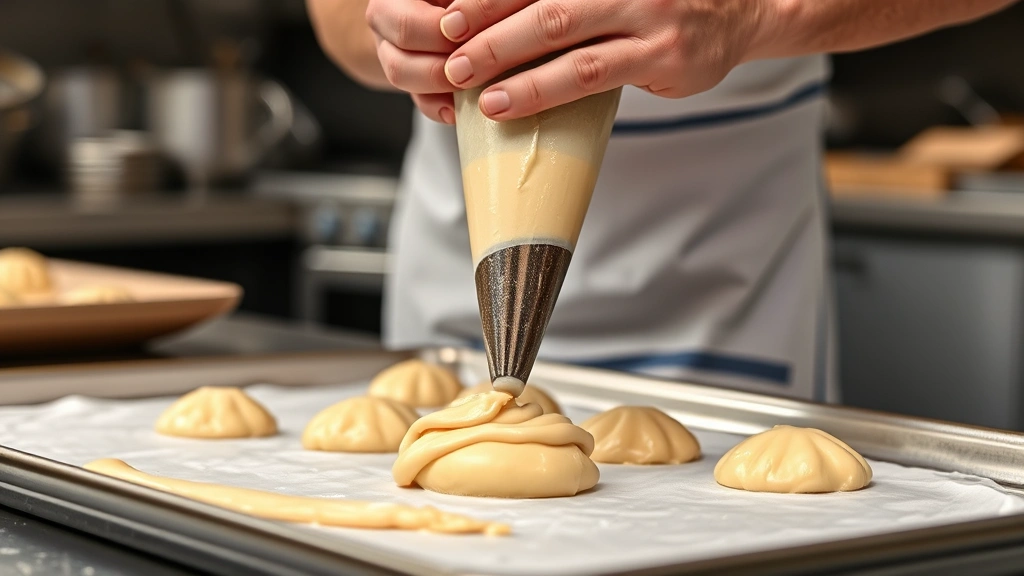
Transfer the choux dough to a piping bag fitted with a 1/2-inch round tip (or use a small spoon to dollop).
- Pipe small mounds of dough onto the prepared baking sheets, spacing them about 1 1/2 inches apart. Each profiterole should be about the size of a walnut.
- Place the baking sheets in the preheated oven and bake for 25-30 minutes until the profiteroles are puffed and golden brown. Do not open the oven door during baking, as this will cause them to collapse.
- Once golden, remove from the oven and let the profiteroles cool completely on the baking sheet. If desired, you can make a small slit in the bottom of each profiterole with a small knife to help steam escape.
- For the pastry cream, whisk together sugar, cornstarch, and salt in a medium saucepan. Gradually whisk in the milk until smooth and there are no lumps.
- Place the saucepan over medium heat and cook, whisking constantly, until the mixture comes to a boil. Continue cooking and whisking for 1-2 minutes until thickened.
- In a separate bowl, whisk together the egg yolks. Remove the milk mixture from heat and temper the yolks by slowly whisking in about 1/2 cup of the hot milk mixture into the yolks while whisking constantly.
- Pour the tempered yolk mixture back into the saucepan, whisking constantly, and return to medium heat. Cook for 1-2 minutes more, stirring constantly, until very thick.
- Remove from heat and immediately strain the pastry cream through a fine mesh sieve into a clean bowl, pressing it through with a spatula to remove any lumps.
- Stir in the vanilla bean seeds (or extract) and the 2 tablespoons butter until melted and incorporated.
- Press plastic wrap directly onto the surface of the pastry cream to prevent a skin from forming, and refrigerate for at least 2 hours or up to 24 hours.
- To assemble the profiteroles, cut each cooled profiterole in half horizontally using a serrated knife or gently split with your fingers.
- Whip the cold heavy cream with 1 tablespoon sugar until soft peaks form, then gently fold it into the chilled pastry cream to lighten it and make it easier to pipe.
- Transfer the lightened pastry cream to a piping bag fitted with a 1/4-inch round tip. Pipe a generous dollop of cream onto the bottom half of each profiterole.
- Top each profiterole with its corresponding top half, pressing gently so the filling creates a small seal.
- For the chocolate sauce, place the chopped chocolate in a heatproof bowl. In a small saucepan, heat the heavy cream and butter together until steaming, then pour over the chocolate and let sit for 1 minute.
- Whisk the chocolate and cream together until smooth and glossy, then stir in the corn syrup for extra shine.
- Just before serving, drizzle each profiterole generously with the warm or room temperature chocolate sauce. Serve immediately for the best texture and temperature contrast.
- Store any leftover assembled profiteroles in an airtight container in the refrigerator for up to 2 hours, though they are best served fresh.
Pro Tips
- Choux pastry is all about achieving the right dough consistency—it should be smooth, glossy, and fall slowly from a spoon. If your dough is too stiff, the profiteroles won’t puff properly; if it’s too loose, they’ll spread into pancakes. Practice makes perfect!
- Room temperature eggs are crucial for making proper choux pastry. Cold eggs won’t incorporate evenly into the dough and can result in lumpy, uneven puffs. Remove eggs from the refrigerator 30 minutes before starting.
- Never open the oven door while profiteroles are baking. The sudden temperature change will cause them to deflate. If you must check on them, open the door very carefully in the last 5 minutes of baking.
- The pastry cream component is what elevates profiteroles from good to exceptional. The combination of pastry cream and whipped cream creates an incredibly light and luxurious filling that melts in your mouth. Some recipes use only pastry cream, but the addition of whipped cream makes them less dense.
- You can make the components days in advance: store baked choux shells in an airtight container at room temperature for up to 3 days, keep pastry cream refrigerated for up to 2 days, and prepare chocolate sauce up to 2 days ahead and reheat gently before serving.
- For flavor variations, try adding espresso powder, Frangelico, Grand Marnier, or fresh lemon zest to the pastry cream. You can also fill profiteroles with whipped cream and fresh berries for a lighter option.
- The chocolate sauce will thicken as it cools. If serving later, you can gently reheat it over a double boiler or microwave it in 10-second intervals, stirring between each, until it reaches the right consistency.
- Professional pastry chefs often dust finished profiteroles with powdered sugar for an elegant presentation, or drizzle them with a thin line of more chocolate sauce using a fork for added visual appeal.
- Mini profiteroles make excellent cocktail party appetizers—simply use a smaller piping tip and reduce baking time slightly. They’re also perfect for an elegant dessert course.