
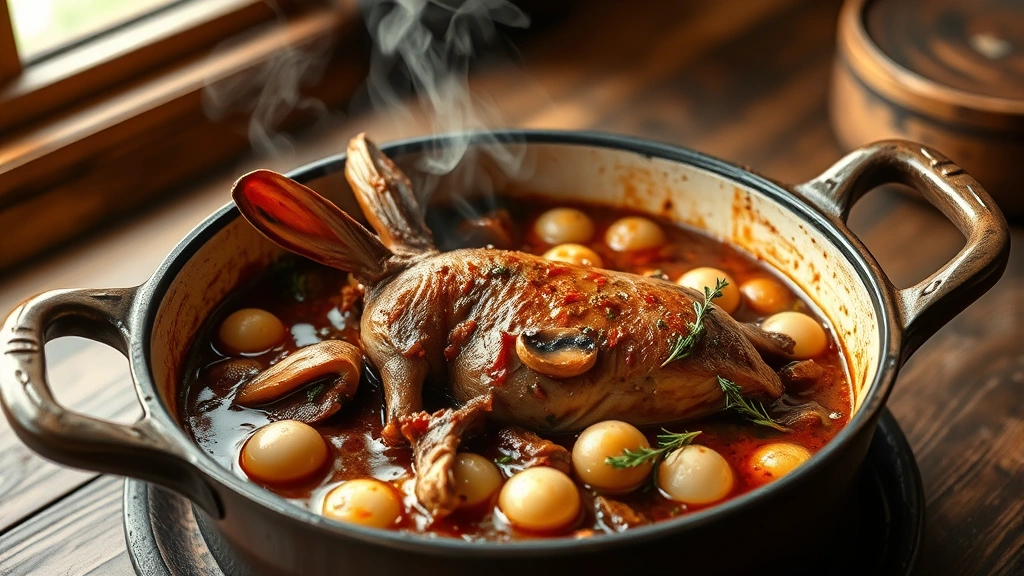
There’s something wonderfully nostalgic and deeply satisfying about a perfectly executed rabbit stew. This classic French-inspired dish, known as Civet de Lapin, brings together tender, delicate rabbit meat with rich red wine, pearl onions, and mushrooms for a truly spectacular meal that feels both rustic and elegant.
Rabbit meat is leaner than chicken and has a subtle, slightly gamey flavor that pairs beautifully with bold seasonings and robust wines. If you’ve never cooked rabbit before, don’t be intimidated—it’s actually quite forgiving and cooks faster than you might expect. The beauty of this stew is that it tastes even better the next day, making it perfect for entertaining or meal prep.
This recipe draws inspiration from traditional French country cooking, where rabbit stew was a staple of home kitchens and fine dining alike. The combination of pearl onions, mushrooms, and bacon creates layers of flavor that develop and deepen as the stew simmers. The red wine adds a sophisticated depth, while a touch of tomato paste and Dijon mustard round out the flavors beautifully. Serve this alongside creamy mashed potatoes or crusty bread to soak up every last drop of the magnificent sauce.
Whether you’re looking to impress dinner guests or simply want to explore new culinary territory, this rabbit stew recipe is sure to become a cherished favorite. The technique you’ll learn here—browning the meat, building a flavorful base, and allowing time for gentle simmering—applies to countless other braises and stews in your cooking repertoire. Check out our Sopapilla Cheesecake Recipe for an equally impressive dessert to follow this stunning main course.
For more inspiration on classic preparations, visit Bon Appétit and Serious Eats for additional game and stew recipes. If you want to understand more about braising techniques, New York Times Cooking offers excellent tutorials. For a lighter dessert option after this rich stew, try our Key Lime Pie Recipe.
Ingredients
- 2 whole rabbits (about 3-4 pounds total), cut into pieces
- 4 ounces bacon, diced
- 3 tablespoons all-purpose flour
- Salt and freshly ground black pepper to taste
- 2 tablespoons Dijon mustard
- 1 tablespoon tomato paste
- 2 cups pearl onions, peeled
- 8 ounces mushrooms, quartered
- 3 cloves garlic, minced
- 2 carrots, cut into 1-inch pieces
- 2 cups dry red wine (preferably a Burgundy or Pinot Noir)
- 2 cups beef or chicken stock
- 1 bay leaf
- 3 fresh thyme sprigs
- 2 tablespoons olive oil
- 2 tablespoons fresh parsley, chopped
- 1 teaspoon red wine vinegar
- Zest of 1 lemon
Instructions
- Begin by preparing your rabbit. Pat the pieces dry with paper towels—this is crucial for achieving a good sear. Season generously with salt and pepper on all sides.
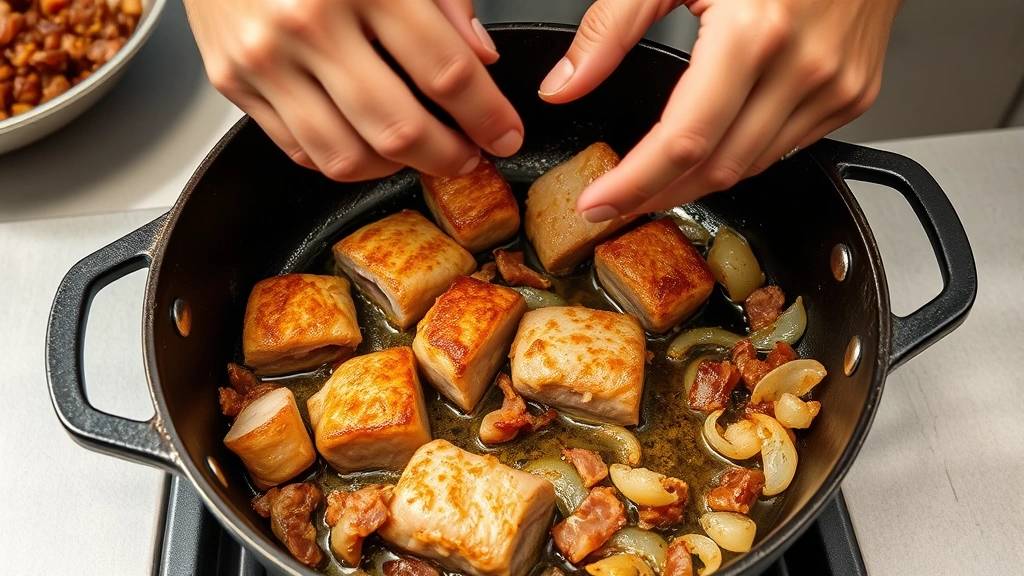
- In a large Dutch oven or heavy-bottomed pot, cook the bacon over medium heat until crispy, about 5-7 minutes. Remove with a slotted spoon and set aside, leaving about 2 tablespoons of bacon fat in the pot.
- Increase the heat to medium-high. Working in batches to avoid overcrowding, brown the rabbit pieces on all sides until deeply golden, about 3-4 minutes per side. Remove each batch to a plate as it finishes.
- Once all rabbit is browned, reduce heat to medium. Add the diced onions and mushrooms to the pot, stirring occasionally until they begin to soften, about 5 minutes.
- Add the minced garlic and cook for 1 minute until fragrant. Stir in the tomato paste and cook for 2 minutes, allowing it to caramelize slightly.
- Sprinkle the flour over the vegetables and stir well to coat everything evenly. Cook for 2-3 minutes, stirring constantly, to eliminate the raw flour taste.
- In a small bowl, whisk together the Dijon mustard with about 2 tablespoons of the red wine to create a smooth paste. Add this to the pot and stir thoroughly.
- Pour in the remaining red wine, scraping the bottom of the pot with a wooden spoon to release all the flavorful browned bits. Add the stock, bay leaf, and thyme sprigs.
- Return the browned rabbit pieces and bacon to the pot. Stir in the pearl onions and carrots. The liquid should come about three-quarters of the way up the rabbit pieces.
- Bring the stew to a gentle simmer, then reduce heat to low. Cover partially and simmer for 1 to 1.5 hours, until the rabbit meat is extremely tender and falls easily from the bone.
- Remove from heat. Taste and adjust seasoning with additional salt and pepper as needed. Stir in the red wine vinegar and lemon zest for brightness.
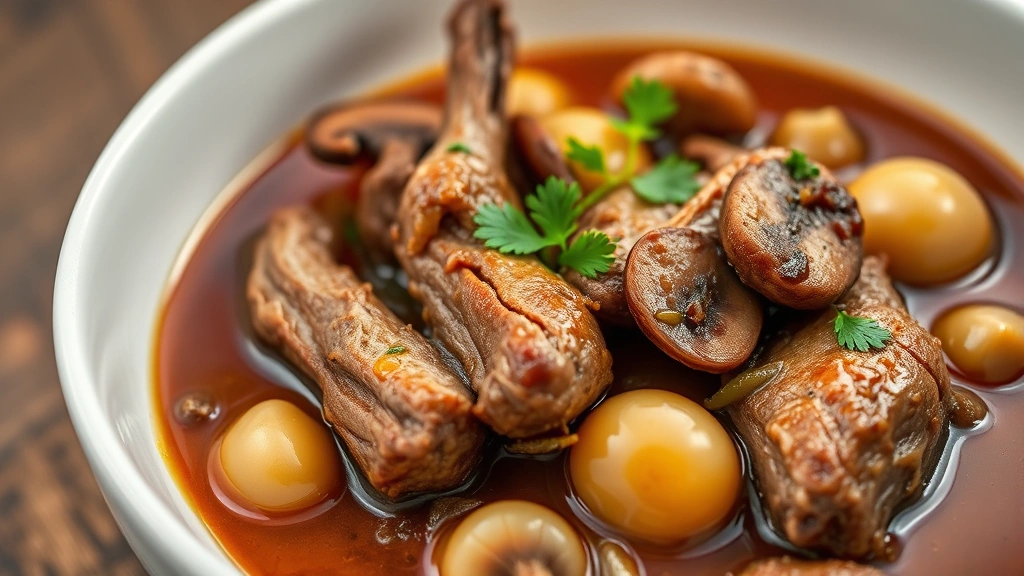
- Serve in shallow bowls garnished with fresh parsley. Accompany with creamy mashed potatoes, egg noodles, or crusty bread to soak up the magnificent sauce.
Pro Tips
Wine selection: Choose a wine you would actually drink. The acidity and tannins of a good Burgundy or Pinot Noir complement rabbit beautifully, but a decent table wine works fine too. Avoid overly oaky wines that might overpower the delicate rabbit meat.
Mushroom variations: While the recipe calls for standard mushrooms, cremini, shiitake, or a mix of wild mushrooms add wonderful depth and earthiness. Dried porcini mushrooms can be rehydrated and added for even more umami complexity.
Make ahead magic: This stew tastes significantly better the next day after flavors have melded. Prepare it up to 2 days ahead and refrigerate, then gently reheat over low heat. You can also freeze for up to 3 months.
Pearl onion hack: To peel pearl onions easily, blanch them in boiling water for 2 minutes, then plunge into ice water. The skins slip off effortlessly.
Flour thickness: If you prefer a thicker sauce, mix 1 tablespoon cornstarch with 2 tablespoons cold water to create a slurry and stir it in during the last 5 minutes of cooking.
Gamey flavor concerns: If you’re nervous about the flavor, marinate the rabbit in red wine with herbs and aromatics for 2-4 hours before cooking. This mellows any strong flavors significantly.
Vegetable customization: Swap pearl onions for shallots, add potatoes for heartiness, or include celery and leeks for additional aromatic depth.
Serving suggestions: This pairs wonderfully with a full-bodied red wine, crusty bread, polenta, or wild rice. A simple green salad on the side cuts through the richness beautifully.