
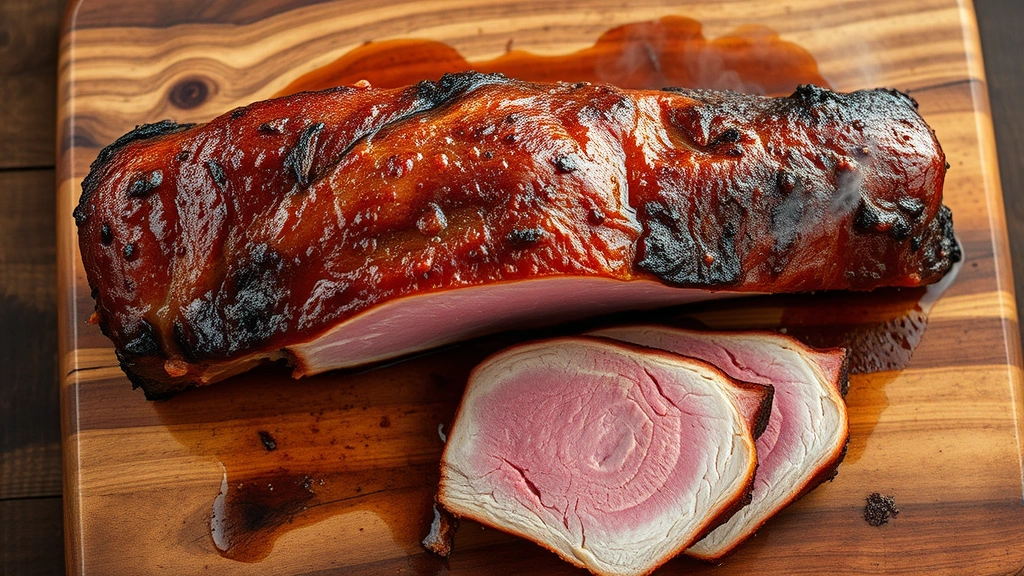
There’s something absolutely magical about smoked pork belly—it’s the perfect marriage of crispy, caramelized exterior and impossibly tender, juicy meat that practically melts on your tongue. This recipe has become my go-to for impressing guests at summer gatherings, and honestly, it’s so straightforward that even if you’re new to smoking, you’ll absolutely nail it on your first try.
I grew up watching my grandfather smoke meats in his backyard, and pork belly was always his secret weapon. He taught me that the key to exceptional smoked pork belly isn’t about complicated techniques or hard-to-find ingredients—it’s about respecting the ingredient, using quality seasoning, and giving it the time it needs to develop that gorgeous smoke ring and tender texture. This recipe honors those lessons while making the process accessible for everyone.
The beauty of smoked pork belly is its versatility. You can serve it sliced as the star of a board with crusty bread and pickled vegetables, dice it into a breakfast hash (pair it with our Best Protein Oatmeal Recipe for a complete morning), or even use it as a base for a gourmet BLT that will absolutely change your life. The smoke flavor is subtle enough that it complements rather than overwhelms, making it a crowd-pleaser even for those who think they don’t love smoky foods.
What makes this recipe truly special is the three-part cooking method: we start with a low-and-slow smoke to infuse that incredible flavor, then we wrap it to push through the stall and speed up the cooking process, and finally we finish it with a quick sear to create that irresistible caramelized crust. The result is restaurant-quality pork belly that tastes like you spent all day tending to it, when really you’ve just been relaxing with a cold drink.
I’ve tested this with various woods, rubs, and techniques, and I’m confident this is the most foolproof method. Whether you’re using a pellet smoker, offset barrel, or kamado-style grill, these principles will work beautifully. The low temperature ensures even cooking, while the generous rub creates a flavorful bark that protects the meat and adds incredible texture.
This smoked pork belly recipe serves 8-10 people as a main course, but honestly, people tend to eat more of it than they expect because it’s just that good. I always make extra because the leftovers are phenomenal for breakfast the next day (seriously, it’s better than bacon on eggs). Once you master this recipe, you’ll find yourself making it regularly for weeknight dinners, weekend entertaining, and special occasions. It’s become such a staple in my kitchen that friends now request it by name. Let’s get started on creating your own smoked pork belly masterpiece!
For more breakfast inspiration, check out our Easy Overnight Oats with Yogurt Recipe and Easy Kodiak Pancakes Recipe.
Ingredients
- 1 whole pork belly slab (8-10 pounds, skin removed or scored)
- 3 tablespoons brown sugar
- 2 tablespoons smoked paprika
- 2 tablespoons kosher salt
- 1 tablespoon black pepper
- 1 tablespoon garlic powder
- 1 tablespoon onion powder
- 1 tablespoon chili powder
- 1 teaspoon cayenne pepper
- 1 teaspoon dry mustard
- ½ teaspoon ground ginger
- 2 tablespoons butter
- Wood for smoking (oak, hickory, or apple)
- Butcher paper for wrapping
- Optional: apple juice for spritzing
Instructions
- Prepare your smoker by cleaning the grates thoroughly. Set it up for indirect heat at 225°F (107°C), using your choice of smoking wood. If using a charcoal smoker, set up a drip pan filled with water beneath the meat to maintain moisture and regulate temperature.
- Pat the pork belly completely dry with paper towels. This is crucial for developing that beautiful bark. If the skin is still on, score it in a crosshatch pattern about ¼-inch deep, cutting through the fat layer but not into the meat.
- In a small bowl, combine the brown sugar, smoked paprika, kosher salt, black pepper, garlic powder, onion powder, chili powder, cayenne pepper, dry mustard, and ground ginger. Mix thoroughly until everything is evenly distributed.
- Generously apply the dry rub all over the pork belly, making sure to work it into the scored skin (if present) and all the crevices. Don’t be shy—this is what creates your flavorful bark. You should use almost all of the rub mixture.
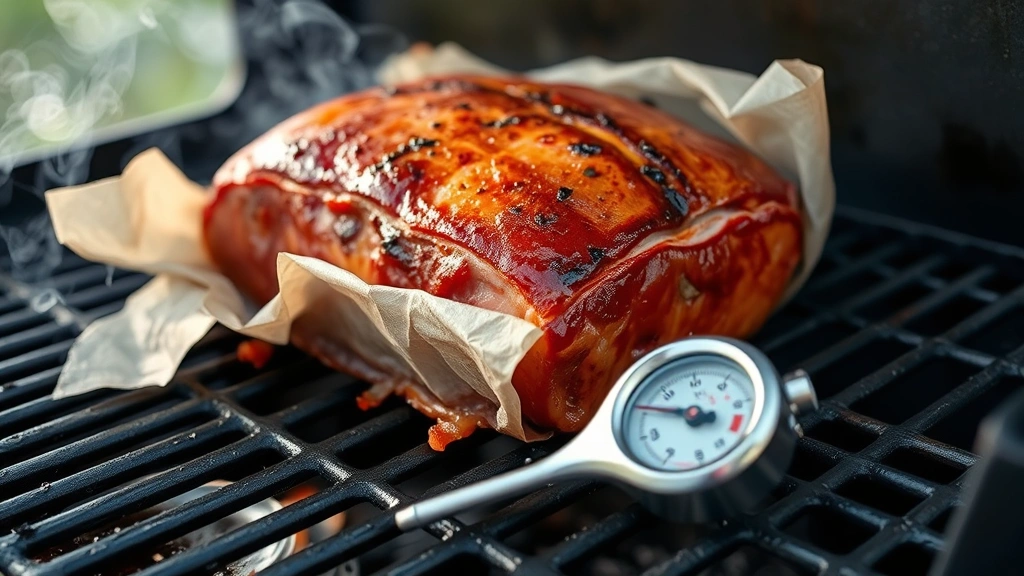
- Place the rubbed pork belly directly on the smoker grates, skin-side up if present, or fat-side up if skin has been removed. Insert a meat thermometer into the thickest part of the meat, making sure it’s not touching bone or fat.
- Smoke undisturbed for approximately 3-4 hours, maintaining a steady temperature of 225°F. During this phase, you’re building smoke flavor and rendering some of the fat. If you’re spritzing, you can do so lightly every 45 minutes with apple juice for added moisture, but this is optional.
- When the pork belly reaches an internal temperature of around 160°F (71°C) and the bark looks set and dark, remove it from the smoker. This should take about 3-4 hours depending on the thickness and your smoker’s performance.
- Tear off a large sheet of butcher paper and place it shiny-side down. Place the pork belly in the center and fold the paper around it, creating a tight package. This wrapping method, often called the Texas Crutch, helps accelerate cooking through the stall phase.
- Return the wrapped pork belly to the smoker and continue cooking for another 1.5-2 hours, or until the internal temperature reaches 195-205°F (90-96°C). The meat should probe tender, similar to how a toothpick slides through soft butter.
- Remove from the smoker and carefully unwrap (watch for escaping steam). Let the pork belly rest for 10-15 minutes on a cutting board. During this rest period, the juices redistribute throughout the meat, ensuring maximum tenderness and juiciness.
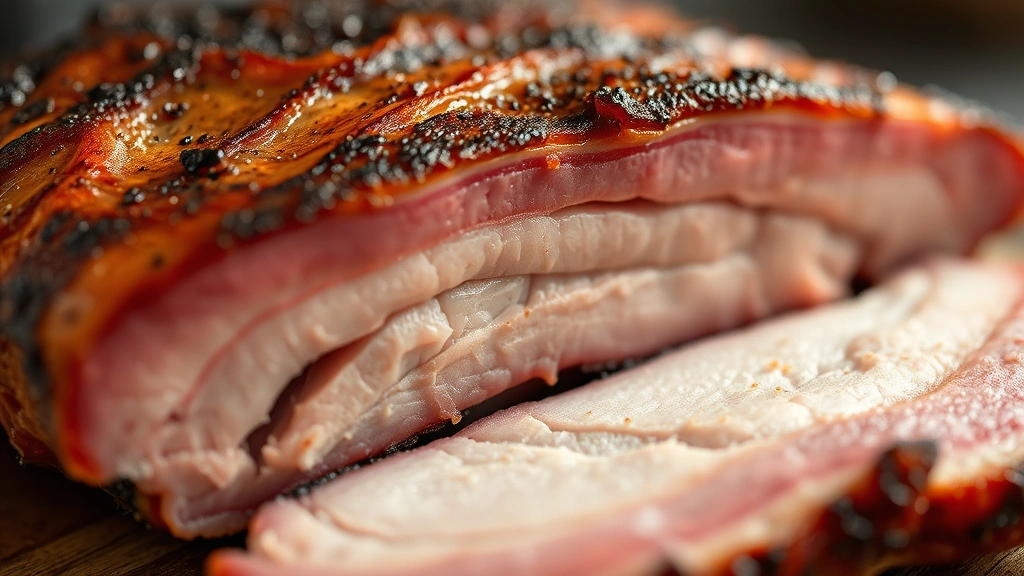
- Once rested, slice the pork belly into ½-inch thick slices against the grain. This thickness is ideal for maintaining the texture while being easy to eat.
- Heat a cast-iron skillet or grill to high heat. Working in batches, sear the sliced pork belly for 1-2 minutes per side until the surface is caramelized and crispy. Add a small pat of butter to the pan to enhance the browning and add richness.
- Transfer the seared slices to a serving platter and serve immediately while still warm. Drizzle any pan juices over the top for extra flavor.
Pro Tips
Wood selection significantly impacts the final flavor profile. Oak provides a strong, classic smoke flavor that’s perfect for pork. Hickory offers a sweeter, more robust smoke that pairs beautifully with the richness of pork belly. Apple wood delivers a milder, slightly sweet smoke that’s gentler if you prefer subtlety. Cherry wood creates a slightly fruity smoke that’s also delicate. Feel free to experiment or mix woods to create your signature flavor.
If your pork belly has skin attached, scoring it properly creates pathways for the rub to penetrate and helps render the fat more evenly. However, if you have your butcher remove the skin, that’s perfectly fine—the fat cap will still render beautifully and create that coveted crispy exterior.
The wrapping step using butcher paper is optional but highly recommended. It accelerates the cooking process by trapping steam and heat around the meat, pushing it through the temperature stall that often occurs around 160-170°F. If you’re in no rush, you can skip this step and continue smoking unwrapped for a more pronounced smoke ring, though it will take longer.
Leftovers are absolutely phenomenal. Slice and refrigerate in an airtight container for up to 5 days, or freeze for up to 3 months. Reheat gently in a low oven (300°F) wrapped in foil to prevent drying. Cold smoked pork belly is also incredible on sandwiches, chopped into breakfast hash, or added to salads.
For spritzing, apple juice adds a touch of sweetness and moisture without affecting the smoke flavor. Some pitmasters swear by it, while others prefer dry smoke. Experiment to find your preference. If you do spritz, use a spray bottle every 45 minutes starting at the 1.5-hour mark.
The rub recipe makes enough for this size pork belly with a little extra. Save any remaining rub in an airtight container for future smoking projects—it works beautifully on brisket, ribs, or chicken.
If your smoker runs hot, monitor the temperature closely during the first hour. Adjust vents or dampers to maintain 225°F consistently. It’s better to cook slightly slower at 225°F than faster at 250°F, as this gives the smoke more time to penetrate the meat.
Slicing against the grain is important for tenderness. The grain runs along the length of the pork belly, so you want your knife perpendicular to these fibers. This breaks them up, making each bite more tender.