

Creating the perfect soft food casserole is all about combining comfort, nutrition, and ease—whether you’re cooking for elderly family members, someone recovering from surgery, or anyone who simply prefers gentler textures. This Ultimate Soft Food Casserole recipe brings together tender vegetables, creamy sauce, and protein in a dish that’s both nourishing and absolutely delicious.
Soft food diets don’t have to be boring or bland. In fact, with the right techniques and ingredients, you can create restaurant-quality meals that happen to be easy on the digestive system. This casserole is a testament to that philosophy—it’s packed with flavor, beautiful to look at, and requires minimal chewing while maintaining maximum satisfaction.
The beauty of this recipe lies in its versatility. You can adapt it based on dietary needs, available ingredients, and personal preferences. Start with our classic creamy chicken casserole as your foundation, then explore variations. The key to success is cooking everything until it’s perfectly tender, then combining it all in a creamy, well-seasoned sauce.
What makes this soft food casserole different from standard versions is the attention to texture. Every component is carefully prepared to ensure it’s easy to eat without being mushy or unappetizing. We’re using a combination of braising techniques and careful timing to achieve that ideal consistency.
For those following medical dietary guidelines, this recipe is naturally easy to modify. You can easily adjust seasoning levels, swap proteins, or adjust vegetable choices based on specific recommendations. Many people find that this casserole becomes a staple in their meal rotation, appreciated by the entire family regardless of dietary restrictions.
One of the best aspects of casserole cooking is that it’s incredibly forgiving and perfect for meal preparation. You can assemble this ahead of time and bake when needed, or make a double batch and freeze portions for later. It reheats beautifully, making it ideal for busy families or anyone managing multiple dietary needs.
If you’re new to cooking soft food recipes, start by reading through our guide on soft food cooking basics to understand the principles. Then follow this recipe step-by-step. You’ll find that soft food cooking is actually quite intuitive once you understand the core techniques.
For more inspiration, check out Serious Eats for their excellent coverage of comfort food cooking, or browse Bon Appétit’s casserole collection for additional ideas. The New York Times cooking section also offers wonderful resources for adapting recipes to different dietary needs.
This recipe serves 6-8 people comfortably, making it perfect for family dinners or meal prep. The total time is minimal since much of the cooking happens hands-off in the oven. Let’s create something truly special together!
Ingredients
- 3 tablespoons butter, plus more for the baking dish
- 1 medium onion, finely diced
- 3 cloves garlic, minced
- 8 ounces mushrooms, finely chopped
- 2 medium carrots, peeled and cut into small, soft pieces
- 1 celery stalk, finely diced
- 3 tablespoons all-purpose flour
- 2 cups low-sodium chicken or vegetable broth
- 1 cup heavy cream or half-and-half
- 1 pound boneless, skinless chicken breasts, cut into bite-sized pieces
- 2 cups cooked pasta (egg noodles or small pasta shapes work best)
- 1 cup frozen peas, thawed
- 1 cup soft spinach or well-cooked greens
- ½ cup grated Parmesan cheese
- ¼ cup fresh parsley, finely chopped
- 1 teaspoon dried thyme
- ½ teaspoon salt, or to taste
- ¼ teaspoon black pepper, or to taste
- ¼ teaspoon garlic powder
- Pinch of nutmeg
- ½ cup panko breadcrumbs (optional, for topping)
- 2 tablespoons melted butter (if using breadcrumb topping)
Instructions
- Preheat your oven to 350°F. Lightly butter a 9×13 inch baking dish and set aside.
- Bring a pot of salted water to boil and cook your pasta until it’s very tender, about 1-2 minutes longer than package directions suggest for soft food. Drain and set aside.
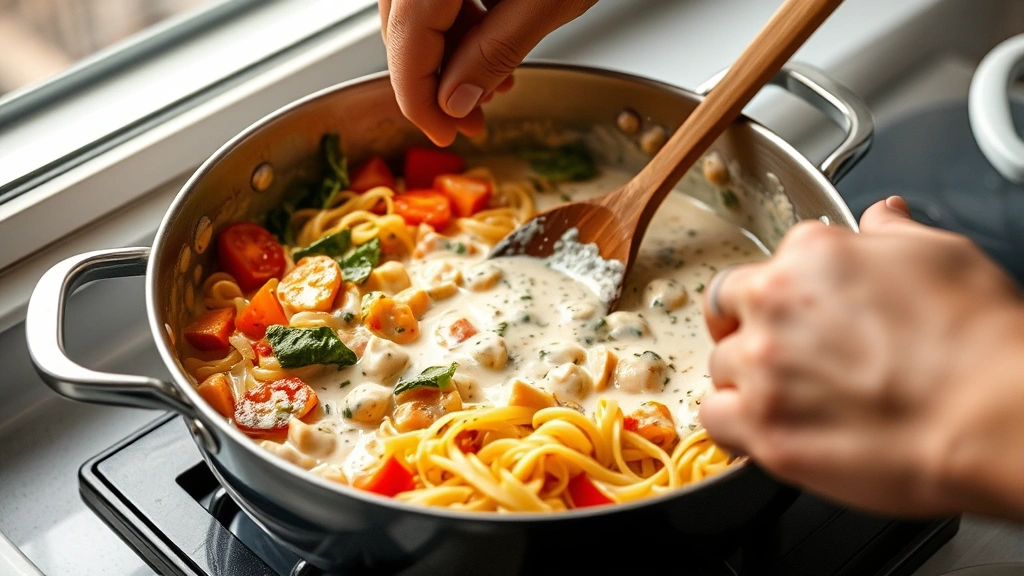
- In a large skillet, melt 3 tablespoons of butter over medium heat. Once foaming, add the diced onion and cook for 3-4 minutes, stirring frequently, until the onion is soft and translucent.
- Add the minced garlic to the skillet and cook for another 30 seconds until fragrant, being careful not to burn it.
- Add the chopped mushrooms and cook for 4-5 minutes, stirring occasionally, until they release their moisture and begin to soften.
- Stir in the diced carrots and celery, cooking for another 3-4 minutes until these vegetables begin to soften.
- Sprinkle the flour over the vegetable mixture and stir constantly for 1-2 minutes, allowing the flour to coat everything and cook slightly.
- Slowly pour in the broth while stirring constantly, ensuring no lumps form. Continue stirring until the mixture begins to thicken, about 2-3 minutes.
- Reduce heat to low and slowly stir in the cream or half-and-half, mixing until smooth and well combined. Season with thyme, salt, pepper, garlic powder, and nutmeg.
- Add the chicken pieces to the sauce and stir well to coat. Simmer gently for 8-10 minutes until the chicken is cooked through and tender.
- Gently fold in the cooked pasta, thawed peas, and cooked spinach. Stir in the Parmesan cheese and fresh parsley, mixing until everything is evenly distributed.
- Pour the entire mixture into your prepared baking dish, spreading it evenly.
- If using the breadcrumb topping, combine the panko breadcrumbs with 2 tablespoons of melted butter and sprinkle evenly over the casserole.
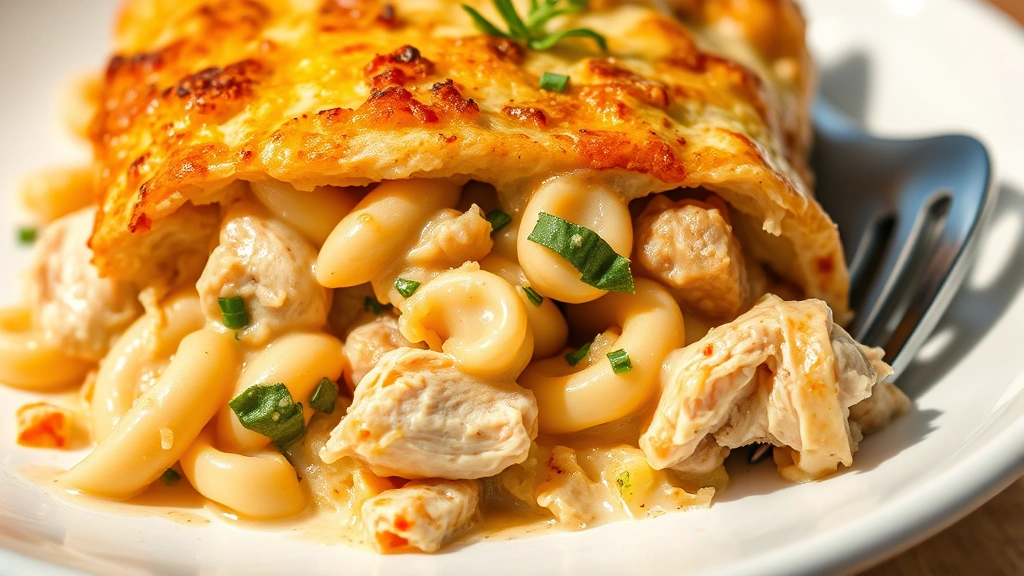
- Bake in the preheated 350°F oven for 25-30 minutes until the casserole is heated through and bubbling around the edges. If you’re using breadcrumbs, bake until they’re golden brown.
- Remove from the oven and let rest for 5 minutes before serving, which helps the casserole set slightly for easier portioning.
- Serve warm, ensuring each portion includes vegetables, protein, and creamy sauce. Spoon gently to maintain the soft texture of all components.
Pro Tips
- **Protein Variations**: While this recipe uses chicken, you can substitute with ground turkey, canned tuna (drained well), or soft tofu for vegetarian options. Ground beef can work too—just ensure it’s cooked until very tender.
- **Vegetable Adjustments**: The beauty of this casserole is its flexibility. You can use zucchini instead of mushrooms, add well-cooked broccoli florets, or substitute different greens. Always cook vegetables until very soft.
- **Texture Modifications**: For those requiring an even softer diet, you can mash some of the cooked vegetables into the sauce before combining with pasta, creating a smoother consistency throughout.
- **Cream Alternatives**: If heavy cream isn’t suitable, use evaporated skim milk, cashew cream, or a mixture of broth and cornstarch to create a thickened sauce.
- **Make-Ahead Instructions**: You can assemble this casserole up to 24 hours in advance. Cover with plastic wrap and refrigerate. Add 10-15 minutes to baking time if cooking from cold.
- **Freezing Guidelines**: This casserole freezes beautifully for up to 3 months. Cool completely, cover tightly with plastic wrap and foil, and label with the date. Thaw overnight in the refrigerator before reheating.
- **Reheating Tips**: Reheat covered in a 325°F oven for 20-25 minutes until warmed through. Add a splash of broth if it seems dry after reheating.
- **Seasoning Considerations**: Taste before serving and adjust seasoning as needed. For low-sodium diets, use low-sodium broth and reduce added salt.
- **Digestive Comfort**: This recipe is naturally gentle on the digestive system due to the soft textures and easily digestible ingredients. However, always follow specific medical dietary guidelines.
- **Serving Suggestions**: Serve with soft bread, dinner rolls, or a simple side salad. Pairs beautifully with herbal tea or mild beverages.
- **Storage**: Store leftovers in an airtight container in the refrigerator for up to 4 days. Portion into individual containers for easy grab-and-go meals.