
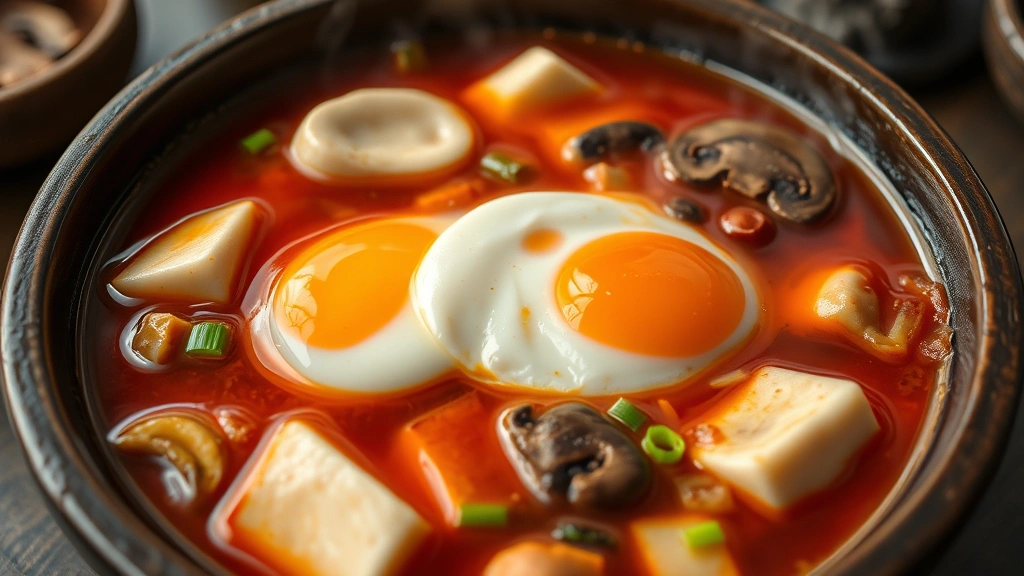
Soondubu jjigae is a beloved Korean comfort food that’s silky, spicy, and absolutely divine—and the best part? It comes together in just 20 minutes! This quick and easy soondubu jjigae recipe features soft tofu in a rich, savory broth infused with gochugaru (Korean red chili flakes), garlic, and anchovy stock, topped with a runny egg yolk and fresh scallions.
I absolutely love making this at home because it tastes just like what you’d get at your favorite Korean restaurant, but without the wait or the hefty bill. The magic of soondubu jjigae lies in its simplicity—you’re working with just a handful of quality ingredients that come together to create something truly spectacular. The silken tofu practically melts on your tongue, while the broth is deeply flavorful with that characteristic Korean umami depth.
What makes this recipe so special is how customizable it is. While the traditional version calls for seafood and meat, you can easily adapt it to suit your preferences. Some people add clams, shrimp, or ground beef, while others prefer keeping it vegetarian. The beauty of this dish is that it’s forgiving and flexible, making it perfect for weeknight dinners when you want something impressive but don’t have hours to spend in the kitchen.
If you’re new to Korean cooking, soondubu jjigae is the perfect gateway dish. It introduces you to essential Korean flavors and techniques without being intimidating. Plus, once you master this recipe, you’ll find yourself making it again and again. It’s the kind of comfort food that warms you from the inside out, especially on chilly evenings or when you’re feeling under the weather.
For the best results, I recommend using fresh Korean ingredients sourced from an Asian market if possible. However, most specialty grocery stores now carry what you need, and many items are available online. The key is using authentic gochugaru and good quality anchovy stock—these two elements are non-negotiable if you want that authentic, restaurant-quality taste.
I love serving soondubu jjigae with steamed rice and simple side dishes like quick pickled vegetables or fresh cucumber slices. The combination is absolutely perfect and makes for a complete, satisfying meal. You can also make a batch of banchan (Korean side dishes) to round out your spread, though honestly, this stew is so delicious on its own that it hardly needs accompaniment.
One pro tip: always have your ingredients prepped and ready before you start cooking, as this dish comes together so quickly that you won’t have time to chop things mid-recipe. Mise en place is your friend here!
For more inspiration on easy, quick recipes, check out this easy chicken alfredo that’s equally impressive. And if you’re looking to expand your stew repertoire, these creamy sauce techniques can inspire fusion versions of classic dishes.
This soondubu jjigae recipe serves 2-3 people as a main course and is ready in just 20 minutes—perfect for busy weeknights, date nights at home, or whenever you’re craving authentic Korean comfort food. Trust me, once you make this, you’ll be hooked!
Ingredients
- 2 cups anchovy and kelp stock (or vegetable broth)
- 1 block (14 oz) silken tofu (soondubu)
- 2 tablespoons gochugaru (Korean red chili flakes)
- 3 cloves garlic, minced
- 1 tablespoon gochujang (Korean red chili paste)
- 1 tablespoon fish sauce
- 1 teaspoon sesame oil
- 1/2 medium onion, thinly sliced
- 3-4 shiitake mushrooms, sliced
- 2 scallions, cut into 2-inch pieces
- 1 egg yolk
- 1/2 teaspoon salt
- 1/4 teaspoon black pepper
- Optional: 4 oz ground beef or 6-8 clams, cleaned
- Optional: 1/2 teaspoon Korean anchovy powder for extra umami
Instructions
- Bring the anchovy and kelp stock to a boil in a medium pot or Korean stone bowl (dolsot) over medium-high heat. If you don’t have anchovy stock, you can use vegetable broth with an extra teaspoon of fish sauce for depth.
- While the stock is heating, combine the minced garlic, gochugaru, gochujang, and fish sauce in a small bowl to create a paste. This paste is the flavor foundation of your jjigae, so don’t skip this step.
- Once the stock is boiling, add the garlic-gochugaru paste and stir well to combine. Let it simmer for 1-2 minutes so the flavors can bloom and infuse into the broth.
- Add the sliced onion and shiitake mushrooms to the broth. If using ground beef, add it now and break it up with a spoon, cooking until no longer pink (about 2 minutes). If using clams, add them now as well.
- Gently pour the broth and vegetables into a small bowl to check the seasoning. Adjust with salt, black pepper, and fish sauce as needed. The broth should be flavorful and slightly spicy, with a rich umami depth.
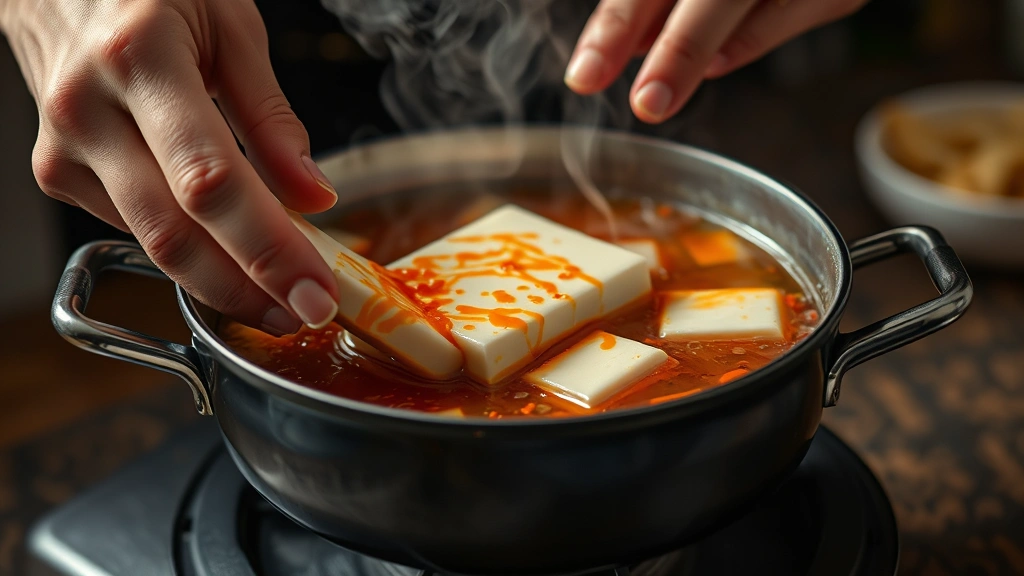
- Return the broth to the pot and bring back to a gentle simmer. Using a spoon, carefully slide the silken tofu block into the broth. Don’t stir too vigorously—the tofu is delicate and will break apart easily.
- Add a drizzle of sesame oil and gently stir to combine with the broth. Let everything simmer together for 2-3 minutes so the tofu can absorb the flavors.
- Scatter the scallions over the top of the jjigae and let them soften for about 30 seconds. The residual heat will cook them perfectly without making them mushy.
- Carefully crack the egg into a small bowl and gently separate the yolk from the white. Create a small well in the tofu and carefully slide the egg yolk into it. The heat from the broth will partially cook it, creating a luxurious, runny center.
- Remove from heat and let rest for 1-2 minutes. The egg yolk should be set enough to hold its shape but still runny inside—this is what makes soondubu jjigae so special.
- Serve immediately in the same pot or bowl you cooked it in (if using dolsot, this keeps it piping hot). Provide a spoon and small bowl of rice on the side, and encourage your guests to break up the tofu and mix it with the broth as they eat.

Pro Tips
- **Silken Tofu Selection**: Make absolutely sure you’re using silken tofu (soondubu), not firm or extra-firm tofu. Silken tofu has a custard-like texture that’s essential for this dish. It will look almost liquid in the package—that’s exactly what you want.
- **Anchovy Stock**: The secret to authentic soondubu jjigae is using proper anchovy and kelp stock. If you can’t find it pre-made, you can make it quickly by simmering dried anchovies and kelp in water for 5-7 minutes, then straining. This step truly elevates the dish from good to restaurant-quality.
- **Gochugaru vs. Gochujang**: These are two different ingredients and not interchangeable. Gochugaru is dried chili flakes (coarser texture), while gochujang is a fermented chili paste (smoother, umami-rich). You need both for authentic flavor—the gochugaru provides texture and heat, while the gochujang adds depth.
- **Heat Level**: If you prefer less spice, reduce the gochugaru to 1 tablespoon and the gochujang to 1/2 tablespoon. If you love heat, feel free to add up to 3 tablespoons of gochugaru. Remember, you can always add more heat, but you can’t take it away.
- **Customization Options**: Add 4 oz of ground beef or pork for a meatier version, or 6-8 clams for a seafood variation. Some people add shrimp, mushrooms, or even kimchi for extra flavor complexity. The beauty of this dish is its versatility.
- **Timing the Egg**: The egg yolk is crucial—it should remain slightly runny for that luxurious texture. If you prefer it more cooked, add it earlier and let it cook longer. Add it very last if you want it barely set.
- **Serving Style**: In Korea, soondubu jjigae is traditionally served family-style with everyone eating from the same communal bowl with their own spoons. However, you can also divide it into individual bowls for a more formal presentation.
- **Make It Vegetarian**: Simply use vegetable broth instead of anchovy stock and omit the fish sauce. Add extra gochugaru and gochujang for depth, and consider adding more mushrooms for umami.
- **Storage**: Leftover jjigae can be stored in an airtight container in the refrigerator for up to 2 days. Reheat gently on the stovetop, though note that the tofu will become firmer. It’s best enjoyed fresh.
- **Pairing**: Serve with steamed white rice, simple side dishes, and kimchi. The meal is complete and satisfying on its own.
- **Pro Tips**: Always have all ingredients prepped before cooking. Use a dolsot (Korean stone bowl) if you have one—it retains heat beautifully and keeps the stew hot longer. Don’t skip the sesame oil at the end; it adds a final layer of flavor that ties everything together perfectly.