
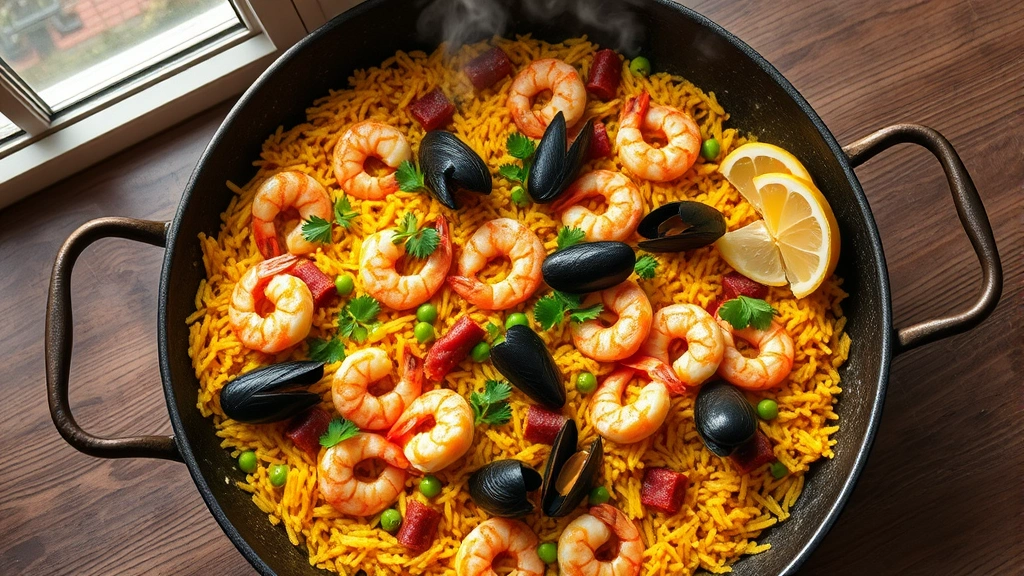
There’s something absolutely magical about authentic Spanish paella—the way the saffron-infused rice gets those gorgeous crispy, caramelized bits on the bottom of the pan, the tender seafood and chorizo nestled throughout, and that intoxicating aroma that fills your entire kitchen. This is the recipe I’ve perfected over years of cooking, and I’m thrilled to share it with you today!
Paella is one of those dishes that seems intimidating at first, but I promise you, once you understand the basic technique, you’ll be making it again and again. The key is having all your ingredients prepped and ready to go before you start cooking—we call this mise en place, and it’s absolutely essential for paella success. I love serving this showstopper dish at dinner parties because it’s so impressive, yet the actual cooking process is quite straightforward.
What makes this paella truly special is the combination of quality ingredients and proper technique. We’re talking about fragrant saffron threads, quality Spanish paprika, fresh seafood, and that perfect short-grain bomba rice that absorbs all those incredible flavors without getting mushy. If you’re new to Spanish cooking, this recipe is the perfect introduction, and you’ll find yourself incorporating these techniques into other Mediterranean-inspired dishes in no time.
The beauty of paella is its versatility. While this version features seafood and chorizo, you can easily customize it based on what you have on hand or your personal preferences. I’ve included tips throughout for variations, but the foundation remains the same. Don’t skip the saffron—yes, it’s pricey, but those precious threads are what give authentic paella its distinctive golden color and floral, slightly earthy flavor that you simply cannot replicate with turmeric.
This recipe serves 6-8 people and makes an excellent centerpiece for entertaining. The one-pan presentation is always a crowd-pleaser, and your guests will be genuinely impressed. Serve it family-style straight from the pan with a crisp Spanish wine and fresh lemon wedges. You’ll want to check out this chickpea salad recipe as a perfect light side dish to complement your paella.
I also recommend having a proper paella pan—ideally 14-15 inches in diameter. While you can technically make paella in a large skillet, the shallow, wide design of a traditional paella pan allows for proper heat distribution and that coveted crispy rice layer called socarrat. If you’re serious about Spanish cooking, investing in a paella pan is worthwhile, but a large, heavy-bottomed skillet works in a pinch.
One more thing before we dive in: don’t stir your paella constantly like you might with risotto. This is where many home cooks go wrong. We want minimal stirring to allow that beautiful crust to develop on the bottom. Trust the process, and you’ll end up with restaurant-quality results every single time.
Ingredients
- 4 cups chicken or seafood stock, kept warm
- 1 teaspoon saffron threads
- 3 tablespoons olive oil
- 8 ounces chorizo, sliced into ¼-inch rounds
- 1 large yellow onion, diced
- 6 cloves garlic, minced
- 2 red bell peppers, diced
- 2 teaspoons Spanish smoked paprika (pimentón)
- 2 cups bomba or short-grain paella rice
- 1 cup dry white wine
- 1 teaspoon kosher salt, plus more to taste
- ½ teaspoon black pepper
- 1 pound large shrimp, peeled and deveined
- 8 ounces mussels, cleaned and debearded
- 1 cup green peas (fresh or frozen)
- ¼ cup fresh parsley, chopped
- 2 lemons, cut into wedges
- Pinch of cayenne pepper (optional)
- 1 tablespoon butter
Instructions
- Begin by steeping your saffron threads in ¼ cup of the warm stock. Set this aside for at least 10 minutes—the saffron will bloom and release its beautiful golden color and distinctive flavor into the liquid. This step is non-negotiable for authentic paella.
- Heat your olive oil in a 14-15 inch paella pan over medium-high heat. Once shimmering, add the sliced chorizo and cook for 3-4 minutes, stirring occasionally, until it releases its oils and the edges begin to crisp. Remove with a slotted spoon and set aside on a paper towel-lined plate.
- In the same pan with the chorizo-infused oil, add your diced onion and cook for 4-5 minutes, stirring occasionally, until it becomes translucent and fragrant. This is your flavor foundation, so don’t rush this step.
- Add the minced garlic and diced red bell peppers to the pan and cook for another 2-3 minutes, stirring frequently, until the peppers just begin to soften and the garlic becomes fragrant. Be careful not to burn the garlic.
- Sprinkle the Spanish smoked paprika over the vegetables and stir constantly for about 30 seconds. This blooms the paprika and releases its deep, complex flavors throughout the oil.
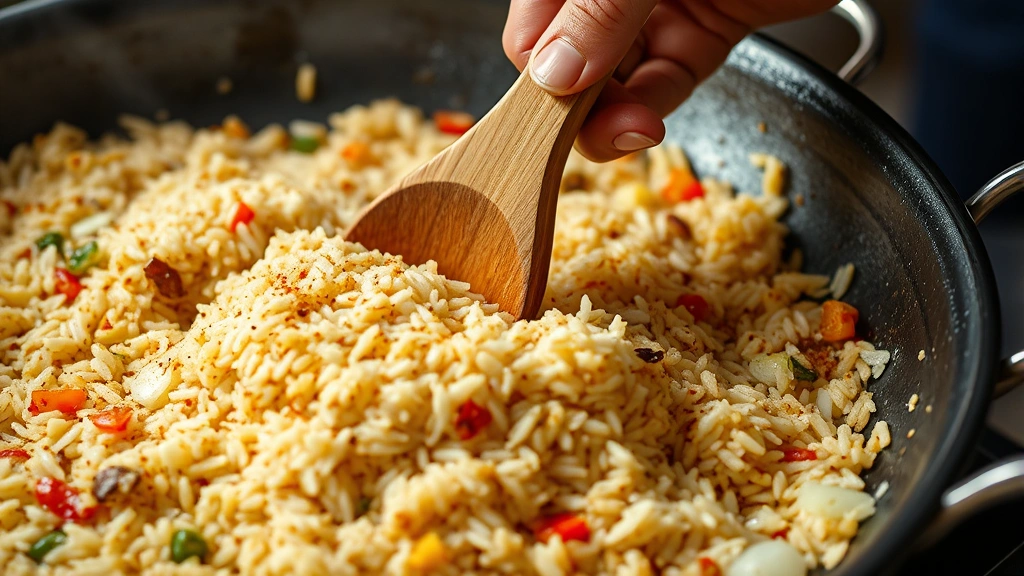
- Add the bomba rice to the pan and stir continuously for 2-3 minutes, coating each grain thoroughly with the oil and toasted spices. You should hear a gentle clicking sound as the rice toasts slightly—this adds wonderful depth to the final dish.
- Pour in the dry white wine and let it bubble away, stirring occasionally, until nearly all the liquid has been absorbed by the rice, about 2-3 minutes. This step adds acidity and complexity to your paella.
- Add the saffron-infused stock to the pan along with the remaining warm stock, the reserved chorizo, salt, and black pepper. Stir once to combine everything evenly, then resist the urge to stir again. Increase heat to high and bring to a boil.
- Once the liquid is boiling, reduce heat to medium and let the paella cook undisturbed for 15-18 minutes. You want the rice to absorb the liquid gradually. Listen for a gentle crackling sound from the bottom of the pan—that’s the socarrat forming, which is exactly what you want.
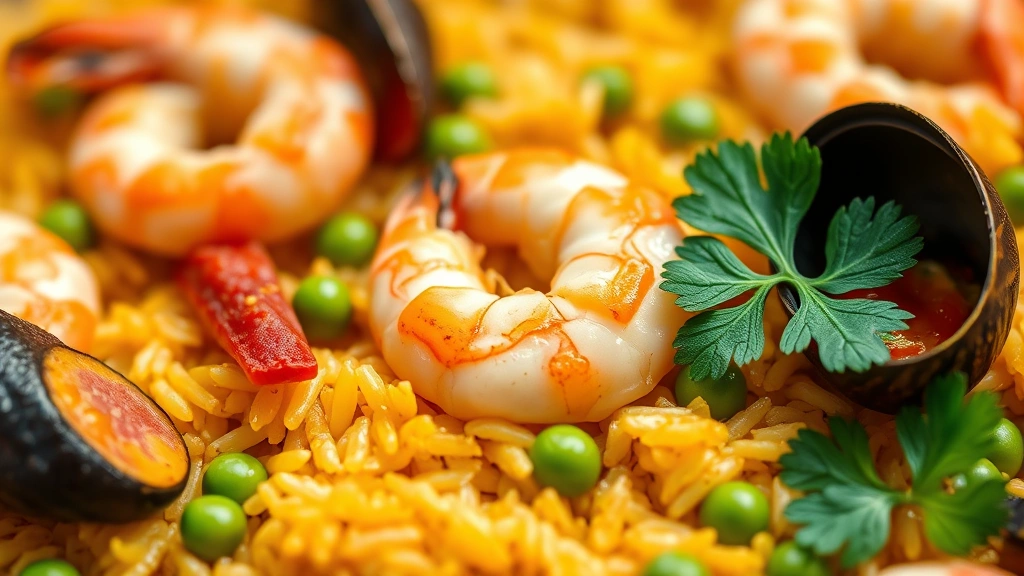
- After 15-18 minutes, the rice should be nearly tender and most of the liquid absorbed. Arrange the shrimp and mussels over the top of the rice, nestling them in gently. Scatter the peas over everything.
- Continue cooking for 5-7 minutes more, until the shrimp are pink and cooked through, the mussels have opened (discard any that don’t open), and the rice is tender. Listen for that continued gentle crackling from the bottom—that’s your socarrat developing beautifully.
- Remove from heat and stir in the butter and fresh parsley. If using, sprinkle a tiny pinch of cayenne pepper over the top for a subtle heat that complements the saffron beautifully.
- Let the paella rest for 3-5 minutes before serving. This allows everything to settle and the flavors to meld together. Serve directly from the pan with fresh lemon wedges on the side.
- Garnish with additional fresh parsley if desired, and serve immediately while still steaming hot. This is truly a dish best enjoyed right from the pan.
Pro Tips
- Saffron is essential for authentic paella—don’t substitute with turmeric, which has a completely different flavor profile. Look for high-quality saffron threads from Spain (Mancha saffron) at specialty markets or online retailers.
- The socarrat (crispy rice layer on the bottom) is a prized element of paella. You’ll hear it crackling and might even smell a slightly toasted aroma—this is perfect and desired. Just make sure it doesn’t burn, which would taste bitter.
- Bomba rice is traditionally used because it absorbs liquid while maintaining its shape and texture. If you can’t find bomba, look for other short-grain Spanish rice varieties, but avoid arborio rice, which is too creamy for paella.
- For a vegetarian version, skip the chorizo and seafood and add more vegetables like artichokes, green beans, and asparagus. Use vegetable stock instead of seafood stock. You can also add chickpeas (similar to this chickpea recipe) for protein.
- Always keep your stock warm in a separate pot. Adding cold stock to hot rice can shock the grains and result in uneven cooking.
- For a chicken and chorizo paella, substitute the seafood with 1.5 pounds of chicken thighs, cut into bite-sized pieces. Add them with the onions and cook until golden before proceeding with the recipe.
- Don’t skip the wine—it adds important acidity and depth. Use a dry white wine you’d actually want to drink, like a Spanish Albariño or a simple Sauvignon Blanc.
- This dish pairs beautifully with Spanish wines like Rioja or Tempranillo. Consider serving with this shishito peppers recipe as an appetizer.
- Make sure your shrimp are patted dry before adding to the paella—excess moisture can prevent proper browning.
- Paella is best served immediately, but leftovers can be refrigerated for up to 3 days. Reheat gently with a splash of stock to restore moisture.
- For entertaining tips and to learn more about Spanish cooking techniques, check out resources from Serious Eats and Bon Appétit.
- The beauty of paella is that it’s endlessly customizable. Feel free to add your favorite vegetables or proteins. Just ensure all ingredients are added at the right time so everything finishes cooking together.