
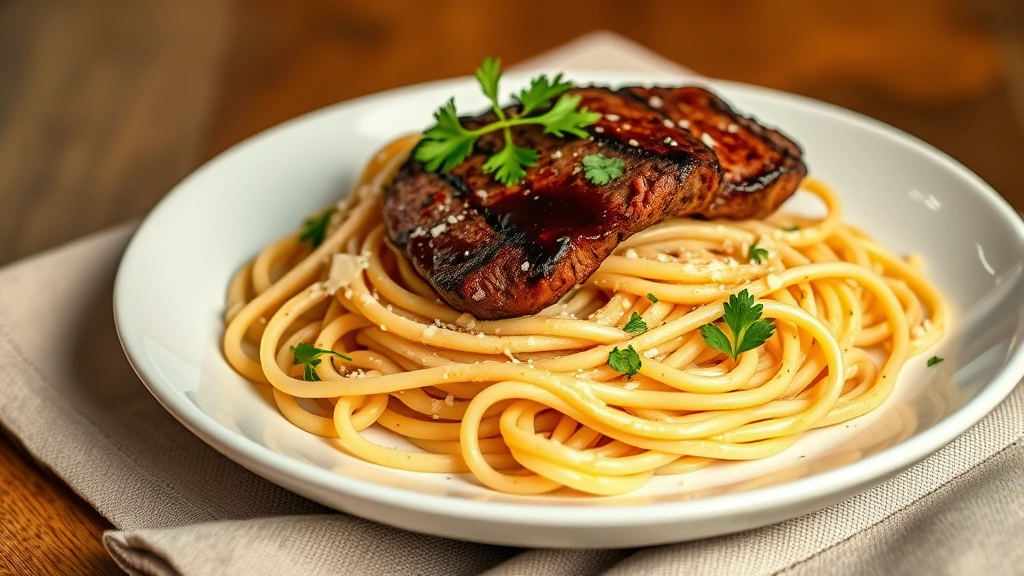
There’s something absolutely magical about combining two of life’s greatest pleasures: tender, juicy steak and perfectly cooked pasta. This steak pasta recipe is the kind of dish that feels fancy enough for date night but comes together so easily on a weeknight. I’m talking restaurant-quality results that’ll have everyone asking for seconds.
This isn’t just any pasta dish—it’s a sophisticated combination of seared beef, a luxurious pan sauce, and al dente noodles that come together in about 30 minutes. The secret to the best steak pasta starts with choosing the right cut of beef. I recommend a ribeye or New York strip for their beautiful marbling and tenderness. When you sear that steak properly in a hot skillet, you’re creating a flavorful crust through the Maillard reaction, which is what gives this dish its restaurant-quality depth.
What makes this recipe truly special is the sauce. Rather than a heavy cream sauce, we’re building flavor directly from the pan drippings, beef stock, and fresh herbs. This approach keeps the dish feeling refined while still being incredibly satisfying. The pasta absorbs all these beautiful flavors, and when you top it with thinly sliced steak, you’ve got a complete protein-packed meal that’s both elegant and comforting.
I love serving this with a simple arugula salad and crusty bread to soak up every last drop of that incredible sauce. It’s the kind of meal that makes your kitchen smell amazing and feels like a special occasion, even when you’re cooking on a random Tuesday. Whether you’re impressing guests or treating yourself to something special, this best steak pasta recipe will become a go-to favorite.
The beauty of this dish is its versatility too. You can make it as simple or as elaborate as you want. Want to add mushrooms? Go for it. Prefer garlic-forward flavors? Absolutely. This steak pasta is forgiving and adaptable, which is why it’s perfect for both beginners and experienced cooks. For more tips on achieving perfect results with beef, check out Serious Eats, which has incredible resources on meat preparation.
One thing I always emphasize when making steak pasta is the importance of letting your steak rest after searing. This isn’t just a suggestion—it’s crucial for keeping those juices locked inside the meat rather than running all over your plate. It’s a small step that makes a huge difference in the final result. Similarly, don’t skip the step of toasting your pasta water with the pan drippings. It might seem small, but this builds flavor in every bite.
I’ve tested this recipe dozens of times, and I’m confident it’s one of the best steak pasta recipes you’ll find. The ratio of steak to pasta to sauce is perfectly balanced, and the cooking times ensure everything comes together at just the right moment. Want to elevate your dinner game even more? Try making this alongside one of my favorite dessert recipes for a complete special meal.
This recipe serves 4 people as a main course, but you can easily double it for a crowd. The ingredients are simple and likely already in your pantry, which means you can make this on any day of the week without a special trip to the store. That’s the mark of a truly great recipe—it’s both impressive and practical.
Ingredients
- 1 pound ribeye or New York strip steak, about 1.5 inches thick
- 1 pound pasta (fettuccine, pappardelle, or your preferred shape)
- 4 tablespoons butter, divided
- 3 cloves garlic, minced
- 1 cup beef broth
- 1/2 cup dry red wine
- 2 tablespoons fresh thyme leaves
- 2 tablespoons fresh parsley, chopped
- 2 tablespoons balsamic vinegar
- Salt and freshly ground black pepper to taste
- 2 tablespoons olive oil
- 1/4 cup grated Parmesan cheese
- Red pepper flakes (optional)
- Fresh rosemary sprigs for garnish
Instructions
- Remove your steak from the refrigerator 20 minutes before cooking to bring it to room temperature. Pat it completely dry with paper towels—this is essential for achieving a beautiful crust. Season generously on both sides with salt and freshly ground black pepper.
- Bring a large pot of salted water to a rolling boil. The water should taste like the sea. This is your pasta cooking water, and its salinity will season your pasta perfectly.
- Heat a cast-iron skillet or heavy-bottomed stainless steel pan over medium-high heat until it’s smoking hot. This usually takes about 2-3 minutes.
- Add the olive oil to the hot pan and immediately place your steak in the center. Resist the urge to move it—let it sear undisturbed for 4-5 minutes to develop that gorgeous golden crust.
- Flip the steak once and continue cooking for another 3-4 minutes for medium-rare. The internal temperature should reach 130-135°F on an instant-read thermometer. Remember, the steak will continue cooking slightly after you remove it from heat.
- Transfer the cooked steak to a cutting board and tent loosely with foil. Let it rest for 5 minutes—this allows the juices to redistribute throughout the meat.
- While the steak rests, add your pasta to the boiling water. Cook according to package directions, but aim for al dente—usually about 1-2 minutes before the package time suggests.
- Return the same skillet to medium heat and add 2 tablespoons of butter. Once melted and foaming, add the minced garlic and cook for about 30 seconds until fragrant, being careful not to burn it.
- Pour in the red wine and use a wooden spoon to scrape up all the flavorful browned bits stuck to the bottom of the pan. This is called deglazing, and these bits contain pure umami flavor.
- Add the beef broth and fresh thyme leaves. Bring to a gentle simmer and let it reduce by about one-third, approximately 4-5 minutes. This concentrates the flavors beautifully.
- Stir in the balsamic vinegar and the remaining 2 tablespoons of butter. Season the sauce with salt and pepper to taste. The butter will create a silky, luxurious sauce.
- Drain your pasta, reserving about 1 cup of pasta water. Add the hot pasta directly to the sauce pan, tossing gently to coat. If the sauce seems too thick, add a splash of reserved pasta water—it should be creamy but not soupy.
- Stir in most of the fresh parsley, reserving some for garnish. Taste and adjust seasonings as needed.
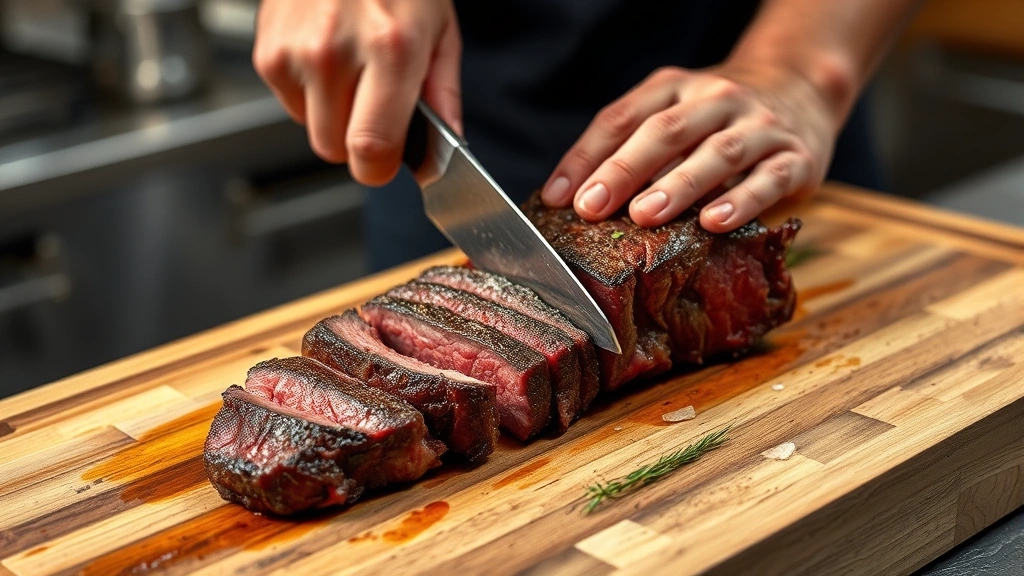
- Slice the rested steak thinly against the grain. This is important because it shortens the muscle fibers, making each bite more tender.
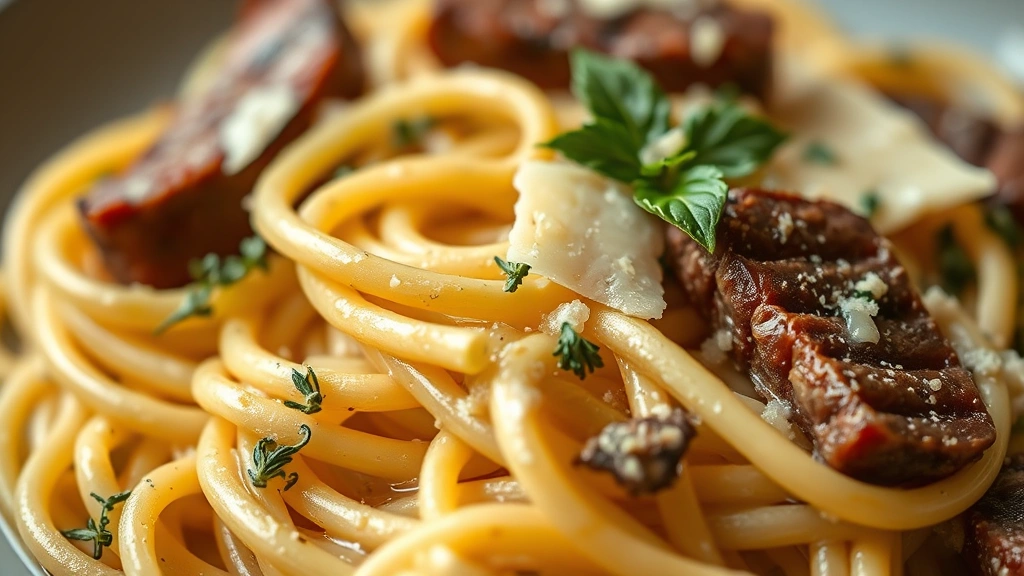
- Divide the pasta among serving bowls and top each with sliced steak. Garnish with remaining parsley, Parmesan cheese, fresh rosemary sprigs, and a pinch of red pepper flakes if desired.
- Serve immediately while everything is hot and the flavors are at their peak.
Pro Tips
Don’t skip the resting step: Resting the steak for 5 minutes after cooking is crucial. It allows the muscle fibers to relax and reabsorb the juices, resulting in more tender, juicy meat.
Pasta water is liquid gold: Save your pasta water before draining. The starch in this water helps create a silky sauce and helps the noodles absorb flavors more effectively.
Temperature matters: Using an instant-read thermometer takes the guesswork out of cooking steak. For medium-rare, aim for 130-135°F internal temperature.
Slice against the grain: Always slice steak against the grain, which means perpendicular to the direction the muscle fibers run. This makes each bite more tender.
Wine recommendations: Use a wine you’d actually drink. The alcohol cooks off, but the flavors remain, so quality matters. A dry red wine like Cabernet Sauvignon or Merlot works beautifully.
Make-ahead tip: You can prepare the steak and measure out your ingredients up to 2 hours in advance, but this dish is best served fresh. The entire cooking process takes less than 40 minutes from start to finish.
Substitutions allowed: If you don’t have fresh thyme, dried thyme works fine—use about one-third of the amount. Fresh sage is also a wonderful alternative herb for this sauce.
Leftover storage: Steak pasta can be refrigerated for up to 3 days in an airtight container. Reheat gently in a skillet over low heat with a splash of water or broth to restore the sauce consistency.
Parmesan quality: Freshly grated Parmesan is far superior to pre-grated varieties, which contain anti-caking agents. Invest in a good block and grate it yourself for the best flavor.
Garlic prevention: Add garlic after the butter foams but before adding the wine. This prevents it from burning while still infusing the sauce with its aromatic qualities.
Pingback: Bourbon Sauce Recipe: Rich & Easy in 10 Minutes - Simple Recipe Finder
Pingback: Boursin Recipes: 10 Easy & Irresistible Dishes to Try - Simple Recipe Finder