

There’s nothing quite like the perfect sweet and sour pork—crispy on the outside, tender on the inside, and coated in that gorgeous glossy sauce that makes you want to lick your plate clean. This isn’t the overly sweet takeout version you might be thinking of; this is restaurant-quality sweet and sour pork that strikes the perfect balance between sweet, sour, and savory flavors. The secret lies in using quality ingredients, properly velveting your pork, and making your sauce from scratch.
I’ve been making this recipe for years, and it’s become my go-to when I’m craving authentic Chinese cuisine at home. The beauty of this dish is that it comes together quickly—perfect for weeknight dinners—yet tastes like you’ve been cooking all day. The pork is incredibly tender, the vegetables stay slightly crisp, and that sauce? It’s pure magic over steamed rice.
The technique of velveting the pork is crucial here. This Chinese cooking method involves coating the meat in cornstarch and egg white, which creates a protective barrier that keeps the pork incredibly moist and tender during cooking. Combined with the crispy exterior from the light frying, you get that perfect textural contrast that makes this dish so addictive.
One thing I love about making sweet and sour pork at home is the control you have over ingredients. You can adjust the sweetness to your preference, use fresh pineapple instead of canned, and skip any artificial additives. I also recommend making a larger batch of sauce—it’s too good not to have extra for dipping or drizzling over your favorite sides.
This recipe serves four people generously and can easily be doubled if you’re feeding a crowd. The prep work takes about fifteen minutes, and the actual cooking happens in just twenty minutes, making it perfect for busy weeknights. Serve it over steamed white rice, brown rice, or even cauliflower rice for a lighter option. You can also pair it with crispy sides for a fun twist.
For the best results, have all your ingredients prepped and ready before you start cooking. This is a dish that comes together quickly once you start, so mise en place is your friend. The pork should be cut into uniform bite-sized pieces so everything cooks evenly. Don’t skip the velveting step—it truly makes a difference in the final texture.
If you’re new to making Asian cuisine at home, this is an excellent recipe to start with. It builds confidence in the kitchen and proves that restaurant-quality dishes are absolutely achievable at home. Check out Serious Eats for more Asian cooking techniques, or the New York Times Cooking section for additional inspiration. You can also find more sauce inspiration with our cilantro lime crema recipe for other dishes.
Ingredients
- 1.5 pounds pork tenderloin or pork shoulder, cut into 1-inch cubes
- 3 tablespoons cornstarch, divided
- 1 egg white
- 1 teaspoon salt
- 1/2 teaspoon white pepper
- Oil for frying (vegetable or peanut oil)
- 1 red bell pepper, cut into 1-inch chunks
- 1 green bell pepper, cut into 1-inch chunks
- 1 yellow onion, cut into 1-inch chunks
- 1 cup fresh pineapple chunks (or canned, drained)
- 3 cloves garlic, minced
- 1 tablespoon fresh ginger, minced
- 1/2 cup pineapple juice or juice from canned pineapple
- 1/4 cup rice vinegar
- 1/4 cup ketchup
- 3 tablespoons soy sauce
- 2 tablespoons brown sugar
- 1 tablespoon honey
- 2 teaspoons sesame oil
- 1/2 teaspoon red pepper flakes (optional)
- 1 tablespoon cornstarch mixed with 2 tablespoons water (slurry)
- 2 green onions, sliced for garnish
- 1 tablespoon sesame seeds for garnish
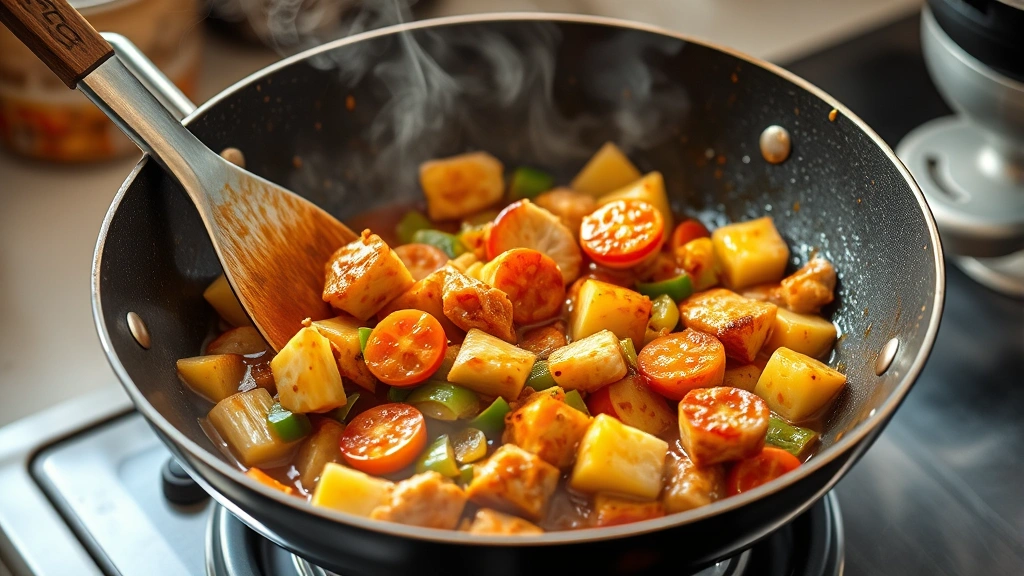
Instructions
- Pat the pork cubes dry with paper towels—this is important for proper velveting and browning.
- In a medium bowl, combine 3 tablespoons cornstarch, egg white, salt, and white pepper, stirring until smooth and well combined.
- Add the pork cubes to the cornstarch mixture and toss gently until every piece is evenly coated. Let sit for 10-15 minutes to allow the coating to set.
- Heat 2 inches of oil in a large wok or deep skillet to 350°F. You can test the temperature with a small piece of pork—it should sizzle immediately but not brown too quickly.
- Working in batches to avoid overcrowding, carefully add the pork to the hot oil and fry for 3-4 minutes, stirring occasionally, until the outside is golden and crispy. The pork doesn’t need to be fully cooked through at this point. Transfer to a paper towel-lined plate.
- Drain all but 2 tablespoons of oil from the wok or skillet.
- Add the minced garlic and ginger to the remaining oil and stir-fry for about 30 seconds until fragrant.
- Add the red bell pepper, green bell pepper, and onion chunks to the wok and stir-fry for 2-3 minutes until they begin to soften but still retain some crunch. Remove and set aside.
- In a small bowl, whisk together the pineapple juice, rice vinegar, ketchup, soy sauce, brown sugar, honey, sesame oil, and red pepper flakes if using.
- Pour the sauce mixture into the wok and bring to a simmer over medium heat, stirring frequently.
- Add the cornstarch slurry (cornstarch mixed with water) to the simmering sauce and stir constantly for 1-2 minutes until the sauce thickens and becomes glossy and translucent.
- Return the cooked pork to the wok and add the stir-fried vegetables and fresh pineapple chunks.
- Toss everything together gently, stirring for 2-3 minutes until the pork is fully cooked through and everything is evenly coated with the sauce.
- Taste and adjust seasoning as needed—add more vinegar for tanginess, more sugar for sweetness, or more soy sauce for depth.
- Transfer to a serving platter and garnish with sliced green onions and sesame seeds.
- Serve immediately over steamed rice, and enjoy your restaurant-quality sweet and sour pork at home!

Pro Tips
- Velveting is a traditional Chinese cooking technique that makes meat incredibly tender. The cornstarch and egg white create a protective coating that prevents moisture loss during cooking. Don’t skip this step—it’s what separates good sweet and sour pork from great sweet and sour pork.
- The oil temperature is crucial for proper velveting. If the oil is too hot, the outside will burn before the inside cooks. If it’s too cool, the pork will absorb oil and become greasy. Use a thermometer for best results.
- Fresh pineapple adds a brighter flavor than canned, but canned works perfectly fine if that’s what you have on hand. If using fresh pineapple, save some juice to use in the sauce for better flavor.
- Don’t overcrowd the pan when frying the pork. Give each batch space to brown properly. Crowding lowers the oil temperature and causes the pork to steam rather than fry.
- Rice vinegar is essential for authentic flavor—regular white vinegar is too harsh. Look for it in the Asian section of your grocery store or at an Asian market.
- The cornstarch slurry thickens the sauce and gives it that beautiful glossy appearance. Whisk it well before adding to prevent lumps. For a thicker sauce, add a bit more slurry; for thinner sauce, add more juice.
- Sesame oil should be added at the end for maximum flavor impact. Heat can diminish its nutty aroma, so add it just before serving.
- Prep all ingredients before you start cooking. This dish comes together quickly, and you won’t have time to chop vegetables once you start frying.
- Leftover sweet and sour pork keeps well in an airtight container in the refrigerator for up to 3 days. Reheat gently in a skillet over medium-low heat, adding a splash of water if the sauce has thickened too much.
- For a lighter version, you can bake the pork instead of frying. Toss the velveted pork with a light coating of cooking spray and bake at 400°F for 12-15 minutes until cooked through, then proceed with the sauce.
- If you prefer less sauce, reduce the liquid ingredients by one-quarter. For more sauce, increase them by one-quarter. This sauce is so good you might want extra for dipping or over rice.