
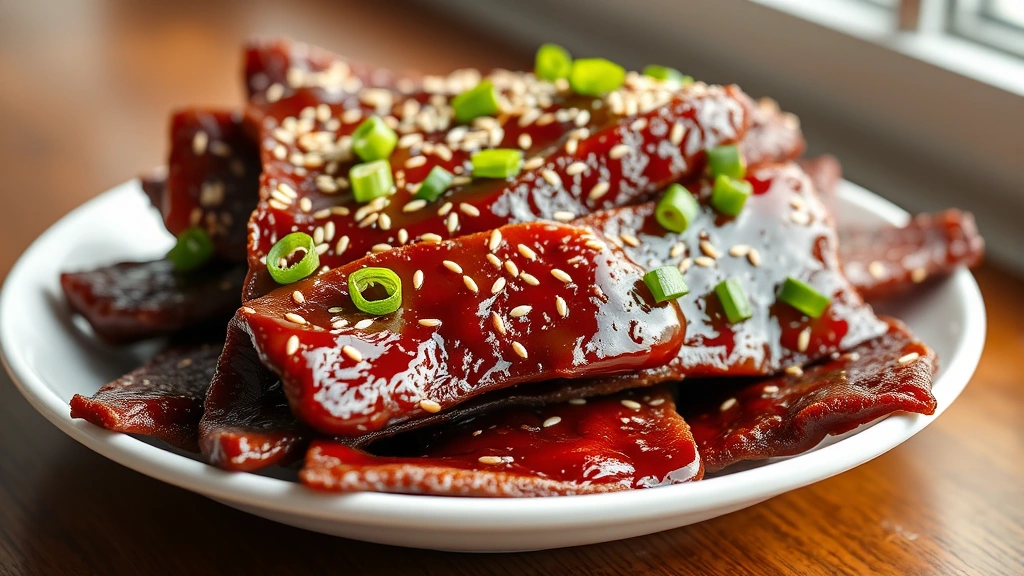
Making homemade teriyaki beef jerky is easier than you think, and the results are absolutely incredible! This recipe combines tender, perfectly seasoned beef with a glossy, slightly sweet and savory teriyaki glaze that will have everyone asking for more. The key to amazing jerky is starting with quality beef, slicing it properly, and using the right balance of flavors in your marinade.
What makes this teriyaki beef jerky recipe so special is the depth of flavor you get from combining traditional teriyaki ingredients with a few secret additions that take it to the next level. Unlike store-bought jerky that can be overly tough or bland, homemade jerky allows you to control every aspect of the process, from the thickness of your slices to the intensity of the teriyaki flavor.
I love making a big batch of this jerky for snacking throughout the week, or for giving as gifts to friends and family. It’s protein-packed, delicious, and so much more affordable than buying premium jerky at specialty stores. Plus, your entire house will smell absolutely amazing while it’s drying.
This recipe works wonderfully in a dehydrator, but I’ll also share instructions for making it in your oven if you don’t have a dehydrator. The perfect snack pairings include cheddar biscuits or even some homemade crackers for a delightful charcuterie board. Whether you’re a jerky enthusiast or trying this for the first time, this easy-to-follow recipe will become your go-to method.
For more information on beef preparation techniques, check out Serious Eats’ meat guides. You can also find additional marinade inspiration at Bon Appétit and New York Times Cooking for advanced techniques.
Ingredients
- 3 pounds beef flank steak or sirloin tip, very thinly sliced against the grain
- 1/2 cup low-sodium soy sauce
- 1/4 cup mirin or honey
- 3 tablespoons brown sugar
- 2 tablespoons rice vinegar
- 4 cloves garlic, minced
- 2 teaspoons fresh ginger, minced
- 1 teaspoon sesame oil
- 1/2 teaspoon red pepper flakes
- 1/4 teaspoon ground black pepper
- 2 tablespoons cornstarch
- 2 tablespoons water
- 1 tablespoon sesame seeds for garnish
- 2 green onions, thinly sliced for garnish
- Optional: 1/2 teaspoon liquid smoke for extra depth
Instructions
- Prepare your beef by placing it in the freezer for about 2-3 hours until it’s firm but not completely frozen. This makes slicing much easier and ensures uniform thickness.
- Using a sharp knife, slice the beef against the grain into 1/8 to 1/4 inch thick strips. The thinner you slice it, the crispier the jerky will be. Pat the strips dry with paper towels.
- In a large mixing bowl, combine soy sauce, mirin, brown sugar, rice vinegar, minced garlic, fresh ginger, sesame oil, red pepper flakes, and black pepper. Whisk until the sugar dissolves completely.
- Add the optional liquid smoke if you want a deeper, smokier flavor profile to your jerky.
- Place your beef strips into the marinade and toss well to ensure every piece is thoroughly coated. Cover the bowl with plastic wrap.
- Refrigerate the marinating beef for at least 4 hours, but preferably overnight for maximum flavor penetration. Stir occasionally if you can, about every 2 hours.
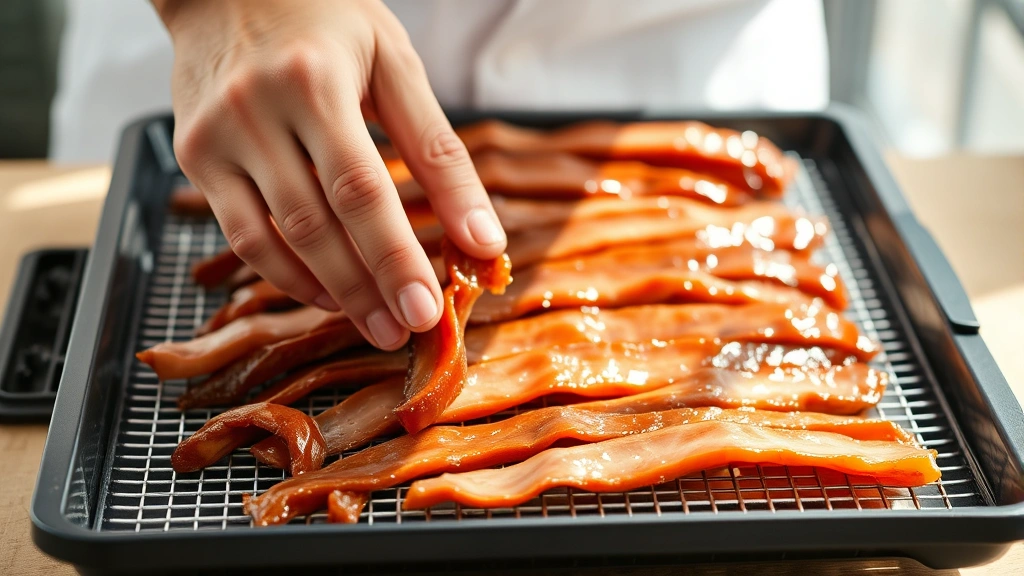
- After marinating, remove the beef strips and arrange them on dehydrator trays lined with parchment paper, making sure they don’t overlap.
- In a small bowl, create a slurry by mixing cornstarch with water until smooth. Lightly brush this mixture onto the beef strips to help create a nice glaze as it dries.
- If using a dehydrator, set it to 160°F and dry for 6-8 hours, checking after 6 hours to see if your preferred texture has been reached.
- If using an oven, preheat to 175°F and arrange beef strips on oven-safe racks or lined baking sheets. Dry for 8-10 hours, cracking the oven door slightly to allow moisture to escape.
- The jerky is done when it bends without breaking completely, or snaps cleanly depending on your texture preference. Remove from heat and allow to cool completely.
- Once cooled, sprinkle sesame seeds and fresh green onion slices over the jerky while it’s still slightly warm for the best flavor.
- Store in an airtight container or resealable bags at room temperature for up to 2 weeks, or refrigerate for longer storage up to one month.
- For a special touch, you can layer your jerky with parchment paper in the storage container to prevent sticking.
Pro Tips
Slicing Technique: Slicing against the grain is crucial for tender jerky. If you slice with the grain, your jerky will be tough and difficult to chew. The grain runs lengthwise along the muscle fibers, so look for the lines and cut perpendicular to them.
Marinating Time: While 4 hours is the minimum, overnight marinating truly makes a difference in flavor intensity. The longer the beef sits in the marinade, the more the flavors penetrate the meat.
Dehydrator vs Oven: A dehydrator gives you more consistent results and better temperature control, but your oven works just fine. The key is maintaining a low, steady temperature to dry the meat without cooking it.
Texture Preferences: If you like chewier jerky, remove it when it still has slight flexibility. For crispier jerky, continue drying until it snaps cleanly when bent. This is purely personal preference.
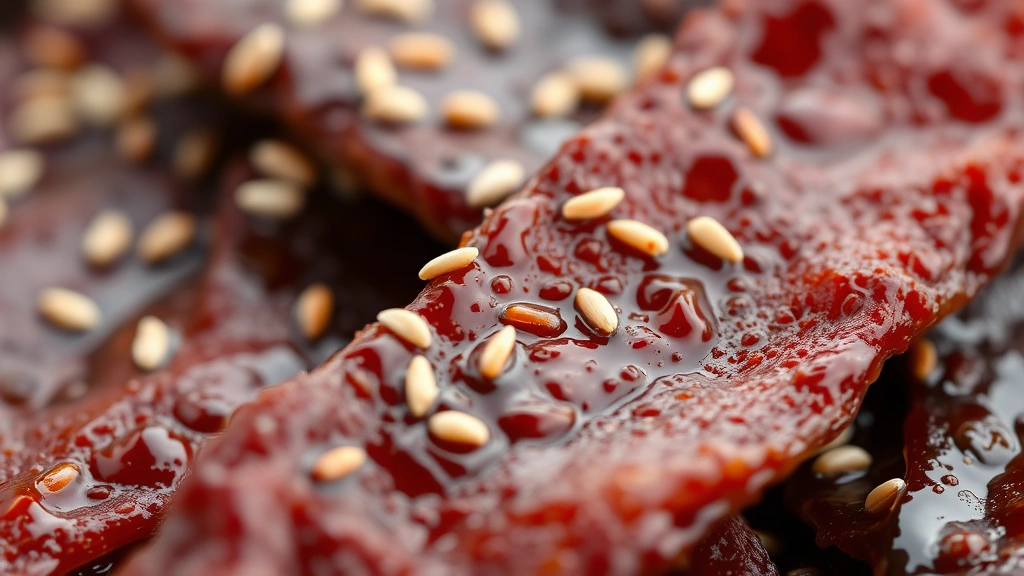
Sesame Seeds and Garnish: Adding sesame seeds and green onions right after drying, while the jerky is still warm, helps them adhere better and maximizes flavor impact.
Storage Tips: Proper storage is essential for longevity. Make sure your jerky is completely cooled before storing to prevent condensation and mold. Store in airtight containers away from direct sunlight and heat.
Customization: Feel free to adjust the spice level by adding more red pepper flakes, or add fresh pineapple juice for a Hawaiian twist. You can also experiment with adding Worcestershire sauce for extra umami depth.
Make-Ahead Options: You can prepare the marinade up to 3 days in advance and store it in the refrigerator. You can also freeze marinated beef strips for up to one month.
Yield and Serving: This recipe makes about 1.5 to 2 pounds of finished jerky, depending on how much moisture the beef loses during drying. One serving is typically 1 ounce or about a small handful of jerky.