
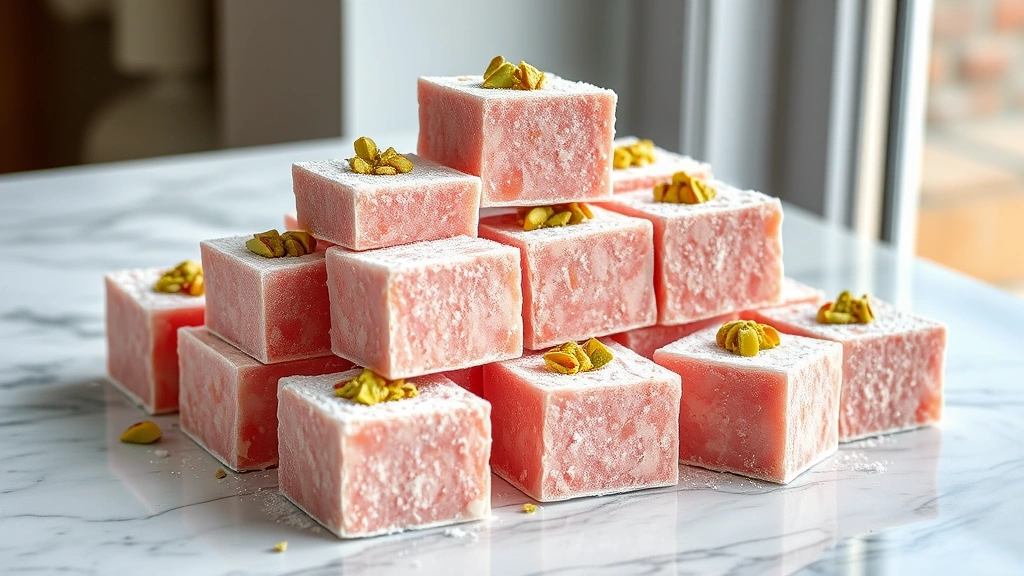
Turkish delight, or lokum, is one of the most elegant and enchanting confections you can make at home. This iconic Middle Eastern treat has captivated palates for centuries with its delicate, jewel-like appearance and silky-smooth texture that melts on your tongue. What makes this recipe truly special is the perfect balance of rosewater, pistachios, and that signature dusting of powdered sugar that makes each bite absolutely divine.
I’ve spent years perfecting this recipe, and I’m thrilled to share my secrets for creating Turkish delight that rivals anything you’d find in the finest confectioneries of Istanbul. The key to success lies in understanding the science behind the gelatin, the importance of proper cornstarch coating, and the patience required to let your creation set perfectly. This isn’t just candy—it’s an edible work of art that transforms simple ingredients into something truly magical.
What I love most about making Turkish delight at home is the therapeutic process of preparing it, combined with the absolute joy on people’s faces when they taste your homemade version. The aroma of rosewater filling your kitchen is simply intoxicating, and the smooth, cloud-like texture is impossible to achieve any other way. Whether you’re making this as a gift for someone special or treating yourself to something luxurious, this recipe will not disappoint.
This traditional recipe has been passed down through generations of Turkish families, and each region has its own special twist. Some add pistachios for crunch, others prefer pomegranate flavoring, and some use a combination of nuts. My version celebrates the classic rose and pistachio combination while ensuring a foolproof process that even novice candy makers can master. The result is a stunning homemade treat that will make you feel like a professional pastry chef.
Making Turkish delight requires attention to detail and a few key tools, but the actual hands-on time is quite minimal. Most of the time is spent waiting for the mixture to set properly, which gives you the perfect excuse to relax and enjoy a cup of Turkish coffee. Once you master this recipe, you’ll find yourself making batch after batch, experimenting with different flavors and fillings. Trust me, your friends and family will be begging you to share your secrets!
I recommend serving your homemade Turkish delight with strong black tea or coffee, perhaps alongside traditional accompaniments for a complete Turkish experience. The versatility of this recipe means you can also enjoy it as an elegant dessert or wrap it beautifully as gifts. For more inspiration on Middle Eastern flavors, check out this simple chickpea recipe that pairs wonderfully with tea service.
If you’re looking to expand your Turkish culinary repertoire, you might also enjoy exploring traditional bean recipes or experimenting with pickled red onions for your mezze platters. For comprehensive guides on Middle Eastern candy-making techniques, I highly recommend checking out resources from Serious Eats, which has excellent information on traditional confectionery methods.
The beauty of this Turkish delight recipe lies not just in the final product, but in the entire experience of creating it. From measuring out your precious rosewater to carefully cutting those perfect squares, every step brings you closer to confectionery mastery. This is the kind of recipe that becomes a cherished tradition in your kitchen, something you’ll make year after year and pass down to the next generation.
Ingredients
- 2 cups granulated sugar
- 1 tablespoon cream of tartar
- 1 cup cornstarch, divided
- ½ cup powdered sugar
- 1½ cups water
- 6 tablespoons gelatin powder (about 3 packets)
- 3 tablespoons rosewater
- ½ teaspoon vanilla extract
- ¼ teaspoon ground cardamom (optional but recommended)
- ¼ cup shelled pistachios, finely chopped
- 2 tablespoons unsalted butter
- Pinch of sea salt
- Red or pink gel food coloring (optional)
- 1 tablespoon lemon juice
Instructions
- Prepare your 8×8 inch baking pan by lining it with parchment paper, leaving some overhang on the sides for easy removal later. This step is crucial for clean edges and easy extraction of your finished Turkish delight.
- Combine ¾ cup of cornstarch and ¼ cup of powdered sugar in a small bowl. Use this mixture to coat the entire interior of your prepared pan, making sure to dust all surfaces evenly. Reserve the remaining cornstarch mixture for later use.
- In a large saucepan, combine 1½ cups of water, 2 cups of granulated sugar, 1 tablespoon of cream of tartar, and a pinch of sea salt. Stir over medium heat until the sugar completely dissolves, which should take about 5-7 minutes.
- In a separate bowl, whisk together 6 tablespoons of gelatin powder with ¼ cup of cold water. Let this bloom for 5 minutes to allow the gelatin to absorb the water and become spongy.
- Once your sugar mixture reaches a gentle boil, reduce heat to low and carefully add the bloomed gelatin mixture to the hot sugar syrup. Stir constantly for about 3-4 minutes until the gelatin is completely dissolved and no lumps remain.
- Continue cooking the mixture over low heat for approximately 40 minutes, stirring frequently to prevent sticking and burning on the bottom. The mixture should become pale and thick, and when you lift the spoon, it should fall in a thick ribbon.
- Remove the pan from heat and stir in 3 tablespoons of rosewater, ½ teaspoon of vanilla extract, ¼ teaspoon of ground cardamom, and 2 tablespoons of softened butter. Stir until everything is fully incorporated and the mixture becomes glossy.
- If desired, add a few drops of red or pink gel food coloring at this point, stirring well to achieve an even color throughout the mixture. Add 1 tablespoon of lemon juice and stir to combine.
- Fold in the ¼ cup of finely chopped pistachios, reserving a few pieces for garnish if desired. Stir gently but thoroughly to distribute the nuts evenly throughout the mixture.
- Carefully pour the warm Turkish delight mixture into your prepared baking pan, smoothing the top with a spatula or the back of a spoon that has been lightly oiled to prevent sticking.
- Allow the mixture to cool to room temperature, which should take about 1 hour. Do not refrigerate at this stage; let it cool naturally on your countertop.
- Once completely cooled, cover the pan loosely with plastic wrap and refrigerate for at least 12-24 hours. This resting period is essential for the Turkish delight to set properly and develop its signature texture.
- After the chilling period, remove the pan from the refrigerator and let it sit at room temperature for about 10 minutes to make cutting easier.
- Using the parchment paper overhang, carefully lift the entire block of Turkish delight out of the pan and place it on a clean cutting board.
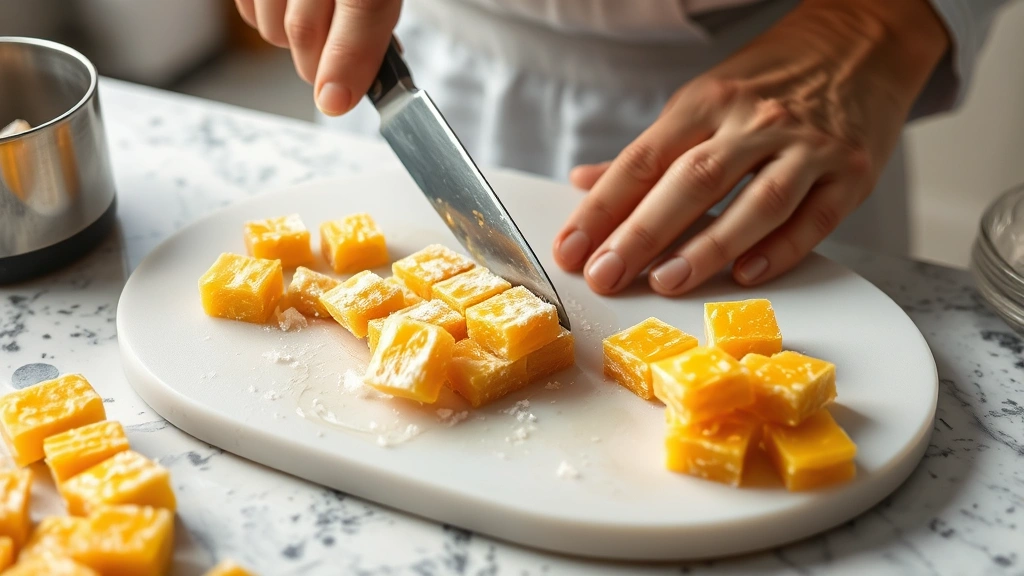
- Using a sharp, oiled knife (oil prevents sticking and tearing), cut the Turkish delight into 1-inch squares. Wipe your knife clean and re-oil it between cuts for the cleanest results.
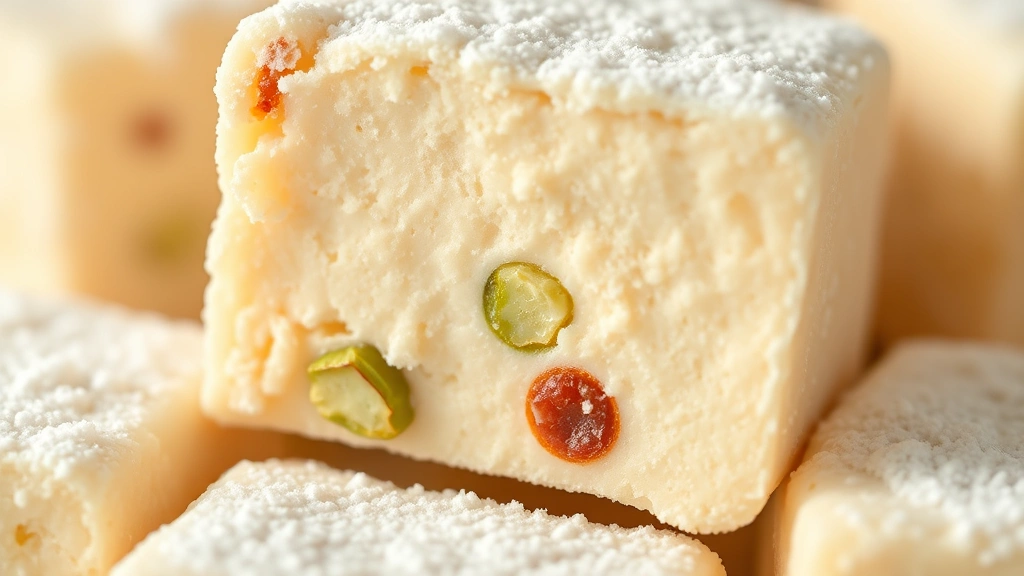
- Combine the remaining cornstarch and powdered sugar mixture in a shallow bowl. Working in batches, toss each piece of Turkish delight in this mixture until completely coated on all sides.
- Arrange the coated pieces on a parchment-lined tray or in a storage container, making sure they don’t stick together. You can separate layers with additional parchment paper if needed.
- Store your finished Turkish delight in an airtight container at room temperature for up to 3 weeks, though it rarely lasts that long! The cornstarch coating will keep the pieces from sticking together and create that authentic texture.
- Serve at room temperature with strong black tea or Turkish coffee for an authentic experience that will transport you straight to Istanbul.
Pro Tips
- The key to perfect Turkish delight is patience—don’t rush the cooking time. The mixture needs those full 40 minutes on low heat to develop the correct consistency and cloud-like texture.
- Rosewater is absolutely non-negotiable for authentic Turkish delight. Don’t substitute it with rose extract or other flavorings; the delicate floral note is what makes this confection special. Find quality rosewater at Middle Eastern markets or online specialty retailers.
- Cream of tartar prevents crystallization and helps create that smooth, silky texture. This ingredient is essential and shouldn’t be omitted, as it fundamentally changes the candy’s structure.
- The cornstarch-powdered sugar coating serves two purposes: it prevents the pieces from sticking together and creates the traditional exterior texture that’s part of Turkish delight’s charm.
- If your mixture seems too thick while cooking, it’s still setting up—don’t add liquid. If it’s too thin after cooking, you may need to add an extra tablespoon of gelatin powder dissolved in water and cooked for a few more minutes.
- For variations, try adding ½ teaspoon of ground pistachios directly into the mixture, or layer different colors by pouring half the mixture, letting it set slightly, then adding the remaining mixture.
- The humidity in your kitchen affects setting time. In very humid conditions, add an extra hour or two to the refrigeration time.
- You can make flavored versions by replacing some of the water with pomegranate juice, or adding ¼ teaspoon of saffron steeped in warm water for a luxurious twist.
- Always use high-quality gelatin for best results. Unflavored gelatin works best; avoid pre-sweetened varieties.
- If you’re gifting these, package them in a pretty box with parchment paper between layers. They make absolutely stunning gifts that look far more expensive than they actually are to make.
- This recipe can be doubled easily in a larger pan. Just increase all ingredients proportionally and extend the cooking time by about 10 minutes.
Pingback: How to make the BEST Korean Chicken Dishes Recipe! – Simple Recipe Finder