
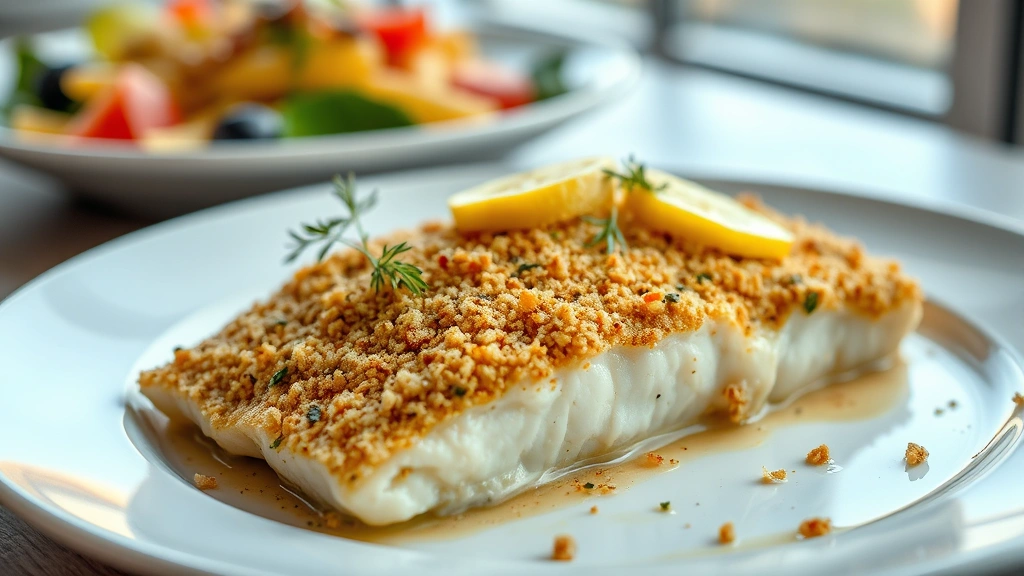
There’s something absolutely divine about perfectly baked halibut—it’s elegant, nutritious, and surprisingly simple to prepare at home. This recipe celebrates the delicate, buttery flavor of halibut with minimal fuss and maximum results. Whether you’re hosting a dinner party or preparing a weeknight meal, this baked halibut recipe delivers restaurant-quality fish that’s moist, flaky, and absolutely delicious.
Halibut is a wonderfully versatile white fish that responds beautifully to gentle baking. The key to perfect baked halibut is understanding that less is often more—you want to let the natural flavors of this premium fish shine through while adding just enough complementary flavors to elevate the dish. We’re talking fresh lemon, aromatic herbs, quality butter, and perhaps some crispy breadcrumbs for texture.
I absolutely love serving baked halibut with pickled red onions for a bright pop of acidity and color, or alongside roasted shishito peppers for a modern twist. The beauty of this recipe is that it’s completely adaptable to whatever vegetables or sides you have on hand. You can pair it with roasted asparagus, steamed green beans, creamy risotto, or a simple arugula salad.
What makes this baked halibut recipe truly special is the technique—we’re going to bake the fish at a moderate temperature to ensure it stays incredibly moist and tender. Too high heat can dry out the delicate flesh, so we’ll be patient and gentle with our cooking method. The result is perfectly cooked halibut with a tender, flaky interior and a beautiful, subtle golden exterior.
If you’re new to cooking fish at home, this recipe is an excellent starting point. Halibut’s mild flavor and firm texture make it forgiving and absolutely foolproof. According to Serious Eats, the Canadian cooking method (measuring the thickest part of the fish and cooking 10 minutes per inch) is one of the most reliable ways to ensure perfectly cooked fish every single time.
One of my favorite things about this recipe is how quickly it comes together. From start to finish, you’re looking at less than 30 minutes, making it perfect for busy weeknights when you still want to eat something special and impressive. The preparation is minimal—just a few minutes of prep work, and then the oven does all the heavy lifting.
I also love that this recipe is naturally gluten-free and pairs beautifully with so many different sides and flavor profiles. You could go Mediterranean with pickled red onions and capers, Asian-inspired with ginger and soy, or classic French with Dijon mustard and tarragon. The halibut is truly your canvas.
For the best results, I recommend purchasing your halibut from a reputable fishmonger who can tell you exactly when the fish was caught. Fresh halibut should smell like the ocean—clean and briny—not fishy or off. If you can’t find fresh halibut, high-quality frozen halibut works beautifully in this recipe; just make sure to thaw it completely before cooking.
This recipe also scales beautifully for entertaining. Whether you’re cooking for two or eight, simply multiply the ingredients accordingly and adjust your baking time slightly if needed. Your guests will be absolutely impressed by how restaurant-quality this homemade baked halibut tastes.
Ingredients
- 2 halibut fillets (6-8 ounces each), about 1-1.5 inches thick
- 3 tablespoons unsalted butter, divided
- 2 cloves garlic, minced
- 1 fresh lemon
- 2 tablespoons fresh parsley, chopped
- 1 tablespoon fresh dill, chopped (or 1 teaspoon dried)
- Salt and freshly ground black pepper to taste
- 1/4 cup panko breadcrumbs (optional, for topping)
- 2 tablespoons grated Parmesan cheese (optional, for topping)
- 1/2 teaspoon paprika
- Cooking spray or additional butter for preparing the baking dish
Instructions
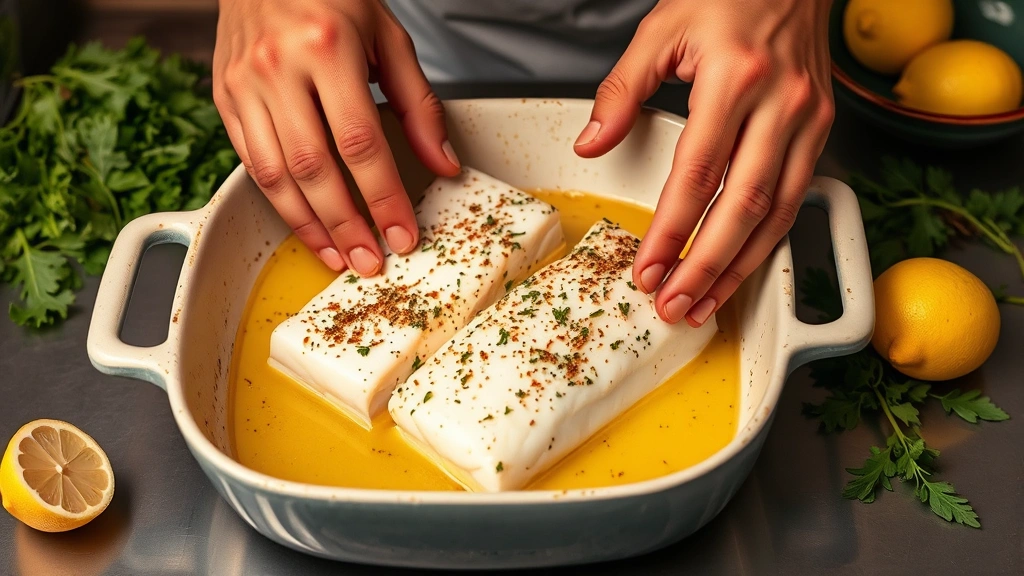
- Preheat your oven to 400°F (200°C). Line a baking dish with parchment paper or lightly butter it to prevent sticking and make cleanup easier.
- Pat the halibut fillets completely dry with paper towels. This step is crucial for achieving a nice exterior and ensuring the fish cooks evenly. Any excess moisture will steam the fish rather than allow it to cook properly.
- Season both sides of the halibut fillets generously with salt and freshly ground black pepper. Be liberal with the seasoning as fish benefits from proper seasoning to enhance its natural flavors.
- Arrange the seasoned halibut fillets in the prepared baking dish, skin-side down if the skin is still on. Leave a little space between the fillets if possible to allow heat to circulate.
- In a small bowl, combine the minced garlic, half of the butter (1.5 tablespoons), fresh parsley, and fresh dill. Stir until well combined. This aromatic butter will infuse the fish with incredible flavor.
- Divide the garlic-herb butter mixture between the two halibut fillets, spreading it evenly over the top of each fillet. Dot with small pieces of the remaining butter (1.5 tablespoons).
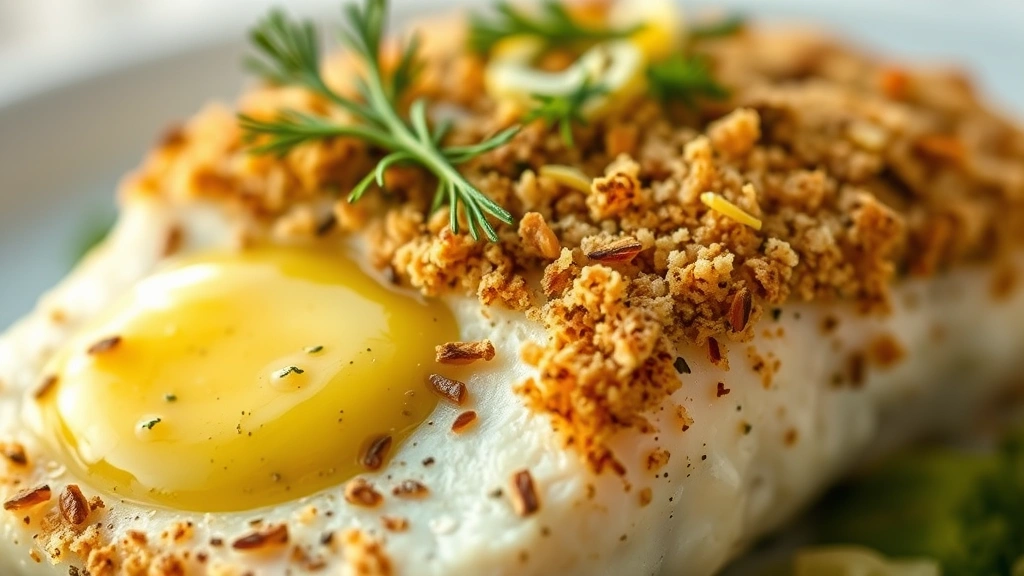
- If you’re using the optional panko topping, combine the panko breadcrumbs, grated Parmesan cheese, and paprika in a small bowl. Sprinkle this mixture over the buttered halibut fillets for added texture and a beautiful golden crust.
- Zest half of the lemon directly over the halibut fillets, then cut the lemon into thin slices. Arrange a few lemon slices on top of each fillet for both flavor and presentation.
- Place the baking dish in the preheated 400°F oven and bake for 15-18 minutes, depending on the thickness of your fillets. The fish is done when it flakes easily with a fork and the flesh is opaque throughout.
- Remove the baked halibut from the oven and let it rest for 2-3 minutes before serving. This brief resting period allows the residual heat to finish cooking the fish gently.
- Serve the baked halibut immediately while still warm, garnished with fresh lemon wedges, additional fresh herbs, and drizzled with any pan juices. Serve alongside your choice of sides such as roasted vegetables, rice, or a fresh salad.
Pro Tips
FILLET THICKNESS: The cooking time in this recipe assumes fillets that are approximately 1 to 1.5 inches thick at the thickest point. For thicker fillets, add 2-3 minutes to the baking time. For thinner fillets, reduce cooking time by a few minutes.
PREPARING HALIBUT: Pat the fillets completely dry before seasoning. Excess moisture prevents proper browning and can result in a steamed rather than baked texture. Paper towels work best for this step.
BUTTER QUALITY: Use real unsalted butter for the best flavor. Unsalted butter allows you to control the salt level in the dish and provides a cleaner, more refined taste than salted varieties.
HERB VARIATIONS: Feel free to customize the herbs based on your preferences. Tarragon, thyme, chives, or basil all pair beautifully with halibut. Fresh herbs are always preferable to dried, but dried herbs work in a pinch—use about one-third the amount.
LEMON IMPORTANCE: Don’t skip the lemon! The acidity brightens the rich flavor of the halibut and adds a wonderful dimension to the dish. Fresh lemon juice and zest make a significant difference in the final result.
OPTIONAL PANKO TOPPING: The breadcrumb topping is entirely optional but adds a wonderful textural contrast to the tender fish. If using, make sure the breadcrumbs are spread in a thin layer so they toast rather than burn.
SIDE DISH PAIRINGS: This baked halibut pairs beautifully with roasted asparagus, steamed green beans, cauliflower rice, wild rice, or a simple green salad. For a more indulgent option, serve with creamy mashed potatoes or risotto.
WINE PAIRING: Serve with a crisp white wine such as Sauvignon Blanc, Pinot Grigio, or Chablis. The acidity in these wines complements the delicate fish perfectly.
MAKE-AHEAD OPTIONS: You can prepare the halibut up to the point of baking several hours ahead. Cover with plastic wrap and refrigerate. Add a few extra minutes to the baking time if cooking from cold.
SCALING THE RECIPE: This recipe easily doubles or triples for entertaining. Simply multiply the ingredients and arrange the fillets in a larger baking dish. The cooking time should remain approximately the same as long as the fillets are arranged in a single layer with some air circulation.
STORAGE: Leftover baked halibut keeps refrigerated for up to two days. Reheat gently in a 325°F oven for 8-10 minutes, covered with foil, to prevent drying out. Alternatively, enjoy leftovers cold in a salad the next day.