
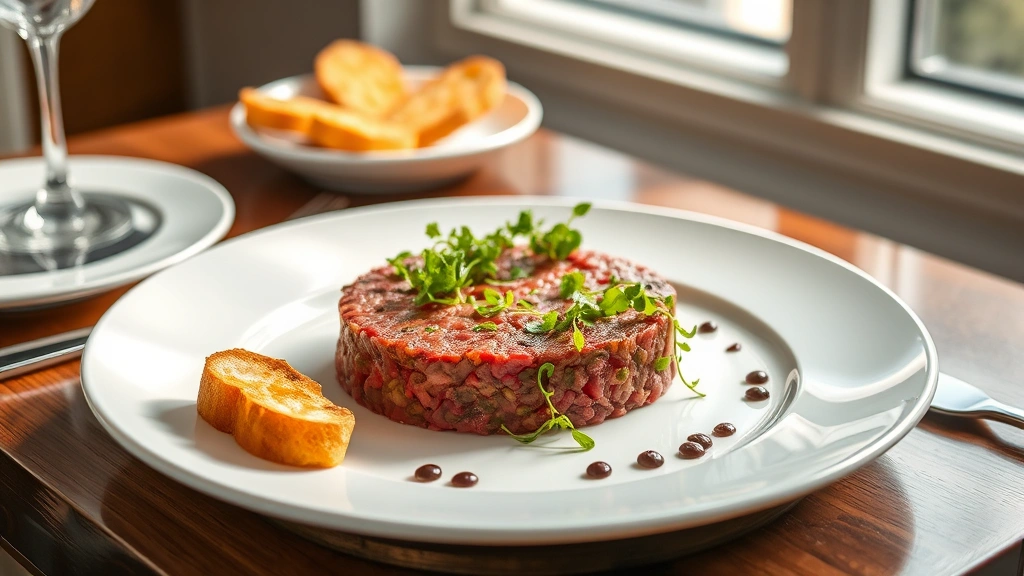
Beef tartare is the epitome of elegance and sophistication—a French classic that celebrates the quality of premium beef in its purest form. This stunning raw beef dish is surprisingly simple to prepare, requiring only the finest ingredients, impeccable food safety practices, and a delicate touch. Perfect for special occasions or when you want to impress discerning dinner guests, beef tartare showcases tender, finely minced beef combined with crisp vegetables, briny capers, and a perfectly balanced seasoning of Dijon mustard, Worcestershire sauce, and fresh herbs.
What makes beef tartare truly special is its luxurious texture and the way it allows the natural beef flavor to shine through without any cooking to mask its quality. This dish demands absolute attention to sourcing—you’ll want to use only the freshest, highest-quality beef from a trusted butcher who can provide beef specifically designated for tartare preparation. The beauty of beef tartare lies in its simplicity; when you’re working with premium ingredients, less is truly more.
This recipe serves as your guide to creating restaurant-quality beef tartare at home, complete with traditional accompaniments and modern presentation tips. Whether you’re serving this as an impressive appetizer or as part of an elegant charcuterie board, this beef tartare recipe will have your guests talking about your culinary prowess long after the meal ends. The key to success is understanding proper food safety, sourcing exceptional beef, and mastering the art of gentle preparation that respects the delicate nature of this raw preparation.
For those new to beef tartare, this recipe includes detailed instructions on how to properly mince and season your beef, along with suggestions for beautiful plating that elevates this classic dish from simple to spectacular. Pair your beef tartare with fresh salad options or enjoy it with crispy toasted bread points. You might also consider serving it alongside charred shishito peppers for a complete appetizer experience that showcases your attention to culinary detail.
Ingredients
- 1 pound (450g) premium beef tenderloin or sirloin, absolutely fresh from a trusted butcher
- 2 tablespoons finely minced shallots
- 1 tablespoon nonpareil capers, finely chopped
- 1 tablespoon fresh flat-leaf parsley, finely minced
- 1 teaspoon fresh tarragon, finely minced
- 2 teaspoons Dijon mustard
- 1 teaspoon Worcestershire sauce
- ½ teaspoon quality red wine vinegar
- ¼ teaspoon freshly ground black pepper, or to taste
- Fine sea salt to taste
- 2-3 anchovy fillets, finely minced (optional but traditional)
- 1 egg yolk (optional, for serving on the side)
- 1 tablespoon high-quality olive oil
- Toasted bread points or crostini for serving
- Fresh lemon wedges for serving
- Microgreens or fresh herbs for garnish
Instructions
- Begin by selecting your beef with absolute care—visit a reputable butcher and request beef specifically designated for tartare preparation. Ask about the source and processing date to ensure maximum freshness. The beef should be bright red in color and smell fresh and clean with no off odors.
- Remove the beef from refrigeration and place it on a clean cutting board that has been sanitized with hot soapy water and dried thoroughly. Pat the beef completely dry with paper towels—moisture is the enemy of proper texture and food safety.
- Using a sharp knife that has been sanitized, carefully trim away any surface discoloration, sinew, or connective tissue from the beef. You want only the most tender, cleanest meat for your tartare.
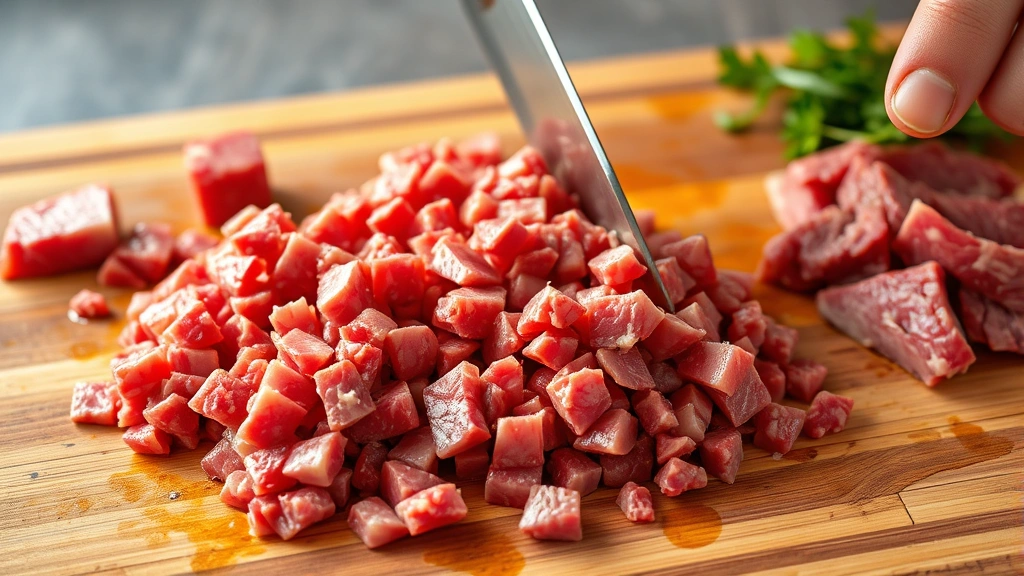
- Cut the beef into small chunks approximately ½-inch in size, working quickly to minimize the time the meat is exposed to air and room temperature. Place the chunks into a chilled bowl as you work.
- Using a very sharp knife or a meat grinder (which should be chilled and sanitized), finely mince the beef pieces into a consistent, uniform texture. Work gently and avoid overworking the meat, which can cause it to become mushy and warm up excessively.
- Transfer the minced beef to a chilled mixing bowl and immediately fold in the minced shallots, distributing them evenly throughout the meat.
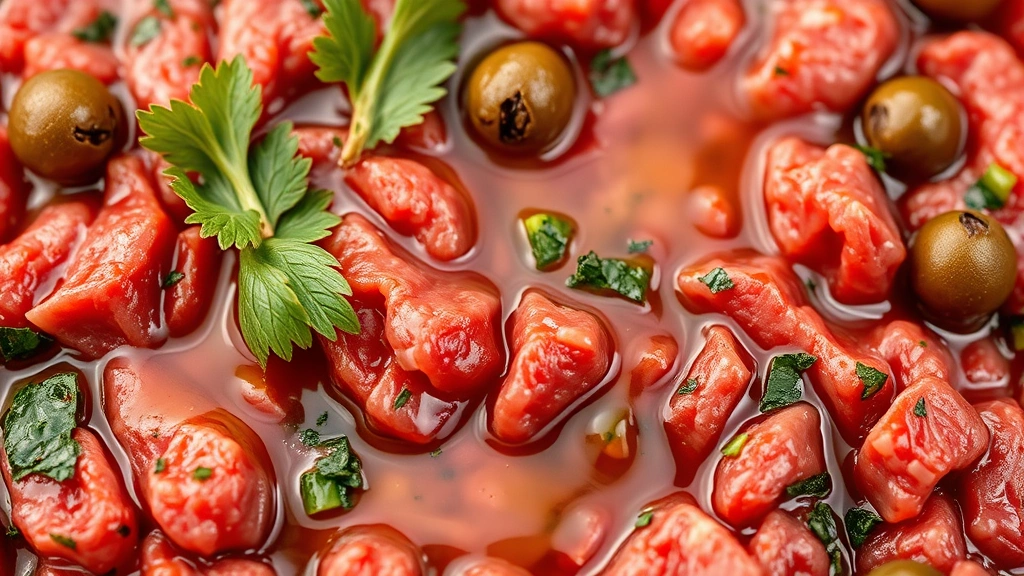
- Add the finely chopped capers to the beef and shallot mixture, folding gently to incorporate without crushing the capers.
- Sprinkle the fresh parsley and tarragon over the mixture, folding gently to distribute the herbs evenly throughout.
- In a small bowl, whisk together the Dijon mustard, Worcestershire sauce, and red wine vinegar until well combined.
- Add the mustard mixture to the beef, folding gently with a rubber spatula until all ingredients are evenly distributed and the mixture is cohesive.
- If using anchovies, fold them into the mixture now, distributing them evenly throughout the beef.
- Season the tartare with fine sea salt and freshly ground black pepper to taste, starting conservatively—you can always add more but cannot remove seasoning once added.
- Drizzle the high-quality olive oil over the tartare and fold gently one final time until everything is well combined and the mixture has a glossy appearance.
- Divide the beef tartare among four chilled plates using a large spoon or tartare mold, creating a small mound in the center of each plate.
- If desired, create a small indent in the top of each tartare mound and carefully place a fresh egg yolk in the center—your guests can mix it in if they choose.
- Arrange toasted bread points around the tartare, positioning them artfully on the plate.
- Garnish with fresh microgreens, additional fresh herbs, and a light sprinkle of fleur de sel.
- Serve immediately on chilled plates with fresh lemon wedges on the side, allowing guests to squeeze lemon juice over their portion to taste.
Pro Tips
FOOD SAFETY CONSIDERATIONS: Beef tartare is a raw preparation and carries inherent food safety risks. Source your beef from a reputable butcher who can guarantee its safety for raw consumption. Ensure all equipment, cutting boards, and utensils are sanitized with hot soapy water and dried thoroughly before use. Keep all ingredients and the finished tartare chilled until service. This dish is not recommended for pregnant women, young children, elderly individuals, or anyone with compromised immune systems.
PREPARATION TECHNIQUE: The key to perfect beef tartare is maintaining the cold temperature throughout preparation and avoiding overworking the meat. Use chilled bowls, knives, and equipment. Work quickly and efficiently. The texture should be slightly chunky with visible pieces of beef—not a paste. If the meat begins to warm or look mushy, stop and return everything to the refrigerator.
FLAVOR BALANCE: Beef tartare relies on a careful balance of flavors. Start with less seasoning and add more to taste—the flavors should complement the beef rather than overpower it. The Dijon mustard provides a subtle tang, the Worcestershire sauce adds umami depth, and the fresh herbs provide brightness. Traditional recipes sometimes include a raw egg yolk served on the side, which guests can mix into their portion for richness.
TRACT VARIATIONS: While this recipe follows the classic French preparation, you can customize your beef tartare by adding finely minced red onion instead of shallots, incorporating fresh chives, or adding a touch of horseradish for heat. Some preparations include finely minced beets for color, though this is more modern. Consider your guests’ preferences when deciding on variations.
PLATING AND PRESENTATION: Beef tartare is as much about presentation as it is about taste. Use chilled plates, arrange ingredients artfully, and consider height and negative space in your plating. A tartare mold creates uniform, elegant presentations. Garnish generously with microgreens and fresh herbs. Create visual interest with the bread points and lemon wedges positioned around the tartare.
SERVING SUGGESTIONS: Beef tartare is traditionally served as an elegant appetizer course. Pair it with crispy toasted bread or crostini. Accompany it with light salads or charred vegetables for a complete appetizer experience. Serve immediately on chilled plates.
MUKE-AHEAD TIPS: While beef tartare is best prepared as close to serving time as possible, you can prepare the seasoning mixture several hours in advance and store it covered in the refrigerator. Keep the minced beef separate until just before service, then combine and plate immediately. Never prepare beef tartare more than a few hours before serving.