
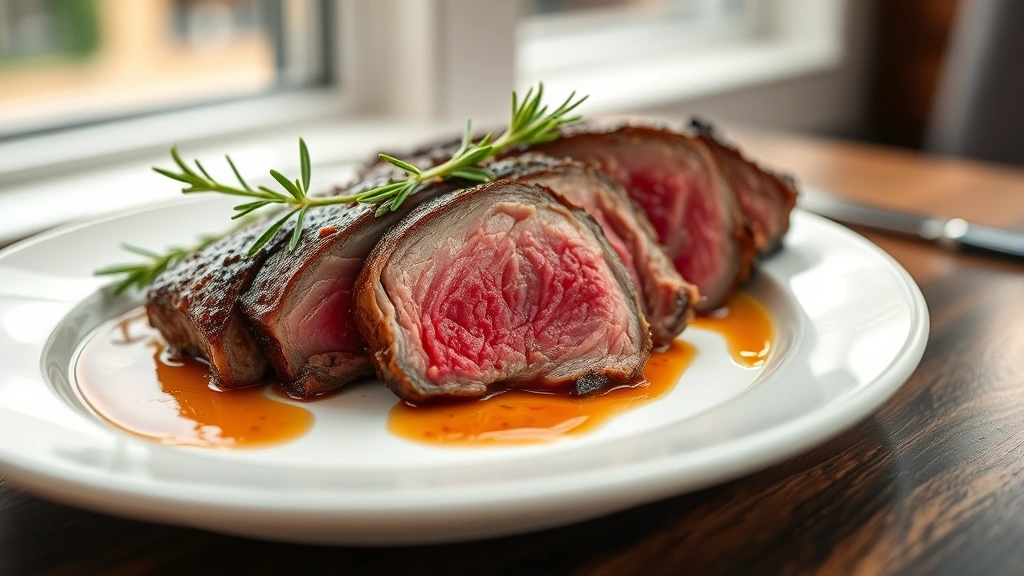
There’s nothing quite like the elegance and sophistication of a perfectly cooked boneless rib roast gracing your dinner table. This show-stopping centerpiece is far easier to prepare than most home cooks realize, and with the right techniques, you’ll achieve restaurant-quality results that will have your guests absolutely swooning. A boneless rib roast is essentially a rib eye roast with the bones removed, making it incredibly convenient for slicing and serving while maintaining all that gorgeous marbling and rich, beefy flavor.
The secret to a perfect boneless rib roast lies in understanding three fundamental principles: proper seasoning, precise temperature control, and adequate resting time. Unlike some cuts that require elaborate marinades or complex preparations, a quality boneless rib roast truly shines when you let the meat speak for itself. You’ll want to start with the best quality beef you can find—look for bright red color and good marbling throughout. The fat is your friend here, as it renders during cooking and keeps the meat incredibly juicy and flavorful.
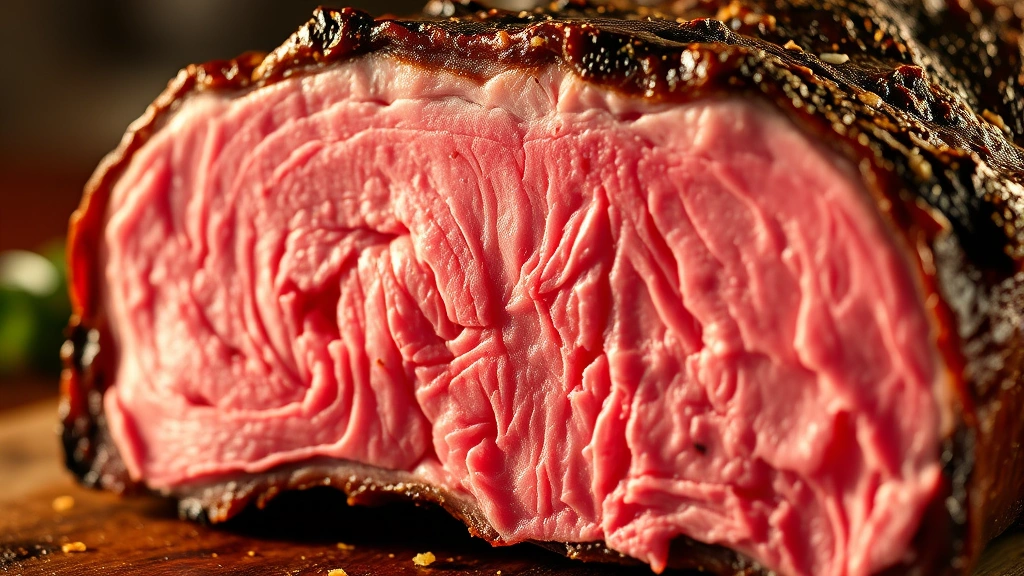
This recipe uses a simple yet elegant approach that starts with bringing your roast to room temperature, seasoning it generously with quality salt and pepper, and then searing it in a screaming hot cast-iron skillet to develop that gorgeous, deeply browned crust that adds so much flavor. From there, it’s finished in a low oven, where gentle, even heat brings the meat to a perfect medium-rare without any gray band around the edges. The result is a roast with a stunning crust and a perfectly pink, juicy interior that’s tender enough to cut with just a fork.
While classic pasta dishes like Bacon Carbonara are wonderful for weeknight dinners, a boneless rib roast is the ultimate choice when you want to impress. Pair it with tangy pickled red onions for brightness, or serve alongside creamed spinach and Yorkshire puddings for a traditional steakhouse experience. For a lighter option, a fresh chickpea salad provides a wonderful contrast to the richness of the meat.
The beauty of this boneless rib roast recipe is its flexibility. Whether you’re cooking for a holiday gathering, a special anniversary dinner, or simply a weekend when you want to feel fancy, this recipe scales beautifully. The timing adjustments are straightforward, and the basic technique remains consistent. I’ve served this roast to countless dinner guests, and it never fails to impress. Even those who claim not to be “meat people” find themselves going back for seconds.
For those interested in exploring other rich, indulgent flavors, you might enjoy creamy pasta dishes or silky Alfredo sauces for contrasting dinner options. But nothing quite compares to the satisfaction of carving into a perfectly cooked boneless rib roast at the table, watching your family and friends’ faces light up as they taste that first, perfectly seasoned, mouthwatering bite.
Ingredients
- 1 boneless rib roast (4-5 pounds)
- 3 tablespoons kosher salt
- 2 tablespoons freshly ground black pepper
- 2 tablespoons fresh rosemary, finely chopped
- 1 tablespoon fresh thyme, finely chopped
- 4 tablespoons unsalted butter, divided
- 6 cloves garlic, smashed
- 1 large yellow onion, quartered
- 2 cups beef broth
- 1/2 cup red wine (optional but recommended)
- 2 tablespoons Dijon mustard
- 2 tablespoons balsamic vinegar
- Olive oil for searing
Instructions
- Remove your boneless rib roast from the refrigerator at least 90 minutes before cooking. This is crucial—a cold roast will cook unevenly, resulting in a gray band around the edges and an overcooked exterior. Let it sit uncovered on a cutting board at room temperature while you preheat your oven to 325 degrees Fahrenheit.
- Pat the roast completely dry with paper towels. Moisture is the enemy of a good crust, so don’t be shy about thoroughly drying the surface, including all the sides and any crevices.
- In a small bowl, combine the kosher salt, freshly ground black pepper, chopped rosemary, and thyme. Mix these together to create your seasoning blend.
- Generously coat all sides of the boneless rib roast with your herb-salt mixture, pressing it gently into the meat so it adheres well. Don’t be timid with the seasoning—this is your opportunity to build incredible flavor.
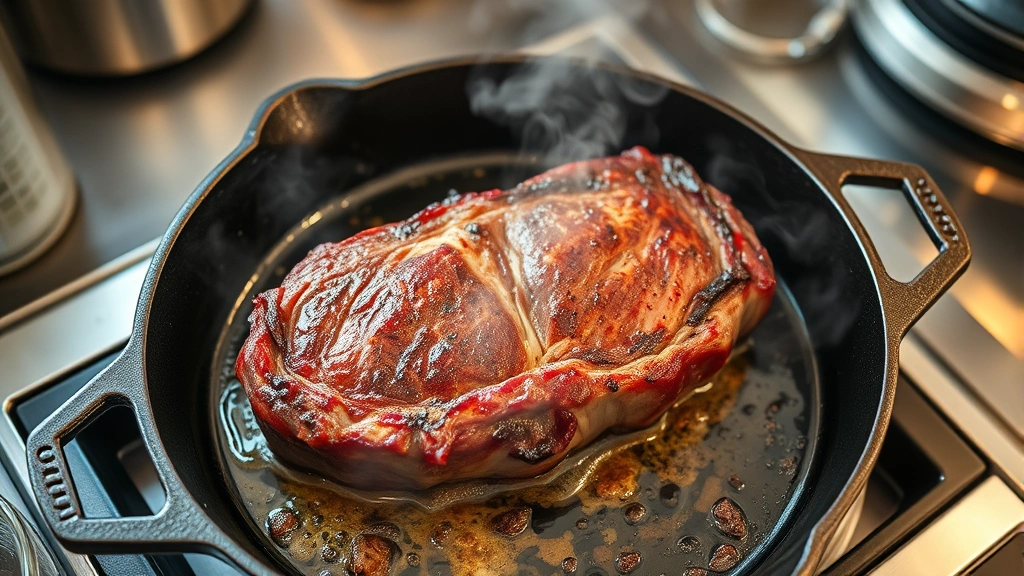
- Place a large cast-iron skillet over high heat and let it get smoking hot, about 3-4 minutes. You want it extremely hot so you get a beautiful, deeply browned crust.
- Drizzle a thin layer of olive oil into the skillet—just enough to coat the bottom lightly. The oil should shimmer and almost immediately begin smoking.
- Carefully place the seasoned roast into the hot skillet. You’ll hear a satisfying sizzle. Do not move it around. Let it sit undisturbed for 3-4 minutes to develop a gorgeous brown crust on that first side.
- Using tongs, flip the roast and sear the opposite side for another 3-4 minutes until it’s equally browned. Then sear the two remaining sides for about 2 minutes each, creating a flavorful crust all over.
- Once all sides are beautifully seared, remove the roast from the skillet and transfer it to a roasting pan. Pour off most of the oil from the skillet, leaving just a thin coating.
- Add 2 tablespoons of butter to the hot skillet along with the smashed garlic cloves and quartered onion. Let these soften and become fragrant, about 2 minutes, scraping up any browned bits stuck to the bottom.
- Pour the beef broth and red wine (if using) into the skillet with the garlic and onions, scraping the bottom to release all those flavorful browned bits. Stir in the Dijon mustard and balsamic vinegar.
- Pour this liquid mixture around the roast in the roasting pan—not over it, as you want to preserve that beautiful crust you’ve worked hard to create.
- Insert a meat thermometer into the center of the roast, making sure it’s not touching bone or fat, as this will give you an inaccurate reading.
- Place the roasting pan into your preheated 325-degree oven. For a 4-5 pound roast, plan on approximately 18-20 minutes per pound for medium-rare, which should take about 1 hour 15 minutes to 1 hour 30 minutes total.
- Every 20-25 minutes, baste the roast with the pan juices using a spoon or basting brush. This keeps the exterior moist and adds incredible flavor.
- Cook until the internal temperature reaches 130-135 degrees Fahrenheit for medium-rare. Remember that the roast will continue cooking as it rests, so remove it from the oven 5 degrees before your target temperature.
- Once your roast reaches the perfect temperature, remove it from the oven and transfer it to a cutting board. This is the most important step: tent it loosely with foil and let it rest for 15-20 minutes before carving.
- While the roast rests, strain the pan juices through a fine-mesh sieve into a saucepan, discarding the solids. Skim off any excess fat from the surface.
- Place the pan with the strained juices over medium heat and simmer for 2-3 minutes. Whisk in the remaining 2 tablespoons of butter, stirring until it’s melted and incorporated, creating a glossy pan sauce.
- After resting, carve the boneless rib roast into quarter-inch thick slices. The meat should be a beautiful pink throughout with no gray band around the edges.
- Arrange the sliced roast on a serving platter and drizzle with the warm pan sauce. Serve immediately while the meat is still hot.
Pro Tips
Resting the roast is not optional—this is when the muscle fibers relax and reabsorb the juices. Cutting into it immediately will result in all those precious juices running onto your cutting board instead of staying in the meat.
The pan sauce is liquid gold and shouldn’t be skipped. It picks up all those browned, flavorful bits from the bottom of the pan and creates a simple but elegant sauce that perfectly complements the roast.
Quality beef matters tremendously with this recipe. Look for USDA Prime grade if possible, and choose a roast with good marbling throughout. The fat is what makes this cut so flavorful and keeps it juicy during cooking.
For a smaller gathering, you can use a 2-3 pound roast and reduce the cooking time to 45 minutes to 1 hour. The technique remains exactly the same.
This roast is absolutely spectacular served with classic steakhouse sides like creamed spinach, roasted fingerling potatoes, or twice-baked potatoes. A simple arugula salad dressed with lemon vinaigrette also provides a wonderful contrast to the richness of the meat.
Leftovers make incredible sandwiches on good bread with horseradish cream, though honestly, this roast rarely lasts long enough to have leftovers. You can store any remaining meat in an airtight container for up to three days.
For special occasions, consider adding fresh herbs like tarragon or oregano to your seasoning blend, or experiment with different mustards in the pan sauce for subtle flavor variations.