
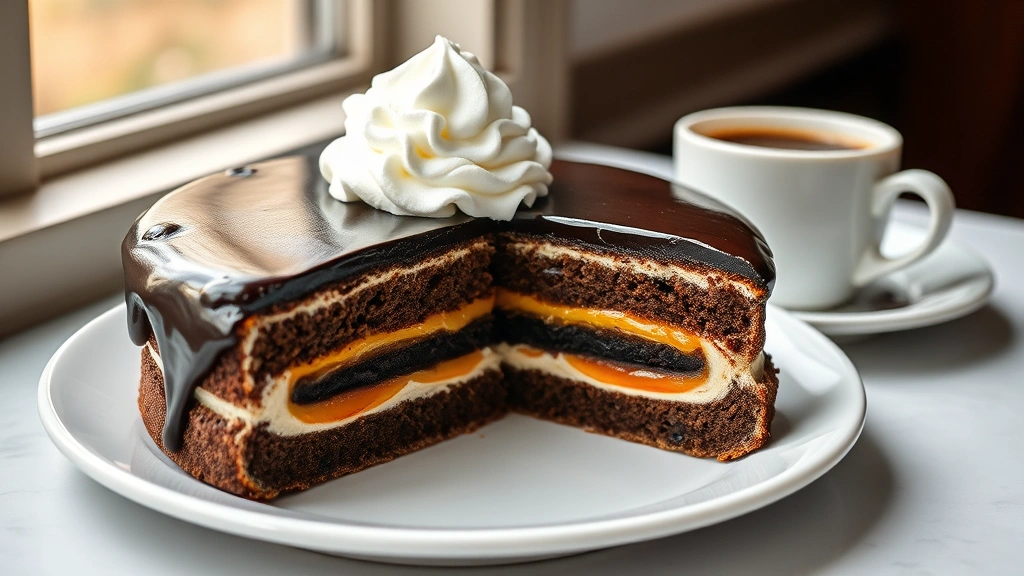
Sachertorte, the legendary Austrian chocolate cake, is a masterpiece of elegance and sophistication that has graced Viennese tables since 1832. This iconic torte features a dense, moist chocolate cake layer filled with tart apricot jam and topped with a glossy chocolate glaze that creates a stunning finish. While it may seem intimidating, making Sachertorte at home is entirely achievable with patience and precision. The key to success lies in understanding the technique of folding egg whites into the chocolate batter to create that signature light yet rich crumb, and in tempering the chocolate for that beautiful, snappy glaze.
The beauty of Sachertorte is in its simplicity and balance—just a few quality ingredients create something truly extraordinary. Unlike many elaborate desserts that rely on multiple components and decorative flourishes, this Austrian treasure lets the pure flavor of chocolate and the subtle tartness of apricot jam speak for themselves. The original recipe from the Hotel Sacher in Vienna remains closely guarded, but through years of refinement, bakers have developed versions that capture that same magic.
What makes this recipe special is the technique. You’ll learn how to properly whip egg whites to stiff peaks, fold them gently into your chocolate base without deflating them, and create a smooth apricot glaze that adheres perfectly to your cake layers. The chocolate glaze requires attention to temperature and technique, but once you master it, you’ll have a coating that sets with a beautiful shine and satisfying snap when you bite into it. This is the kind of cake that impresses dinner guests and becomes a cherished addition to your baking repertoire.
Making Sachertorte is also an exercise in European baking traditions. You’ll gain appreciation for the precision and care that goes into classical pastry-making. This isn’t a cake you rush; it’s one you approach with mindfulness and respect for the craft. Whether you’re preparing it for a special occasion or simply want to challenge yourself in the kitchen, this recipe will guide you through every step, ensuring your Sachertorte rivals those served in Vienna’s finest cafes.
Perfect for special occasions, dinner parties, or when you want to impress someone with your baking skills, Sachertorte is always appropriate. Serve it with a dollop of lightly whipped cream and strong coffee for an authentic Austrian experience. You can also pair it with homemade ganache or explore other chocolate desserts to expand your repertoire. For more insights on chocolate baking, check out this Serious Eats chocolate guide, and learn about Austrian pastries to deepen your cultural baking knowledge. You might also enjoy exploring other torte recipes and this Bon Appétit Sachertorte variation. For chocolate tempering techniques, visit the New York Times chocolate guide.
Ingredients
- 7 oz (200g) dark chocolate (60-70% cacao), chopped
- 6 oz (170g) unsalted butter, room temperature
- 2/3 cup (135g) granulated sugar, divided
- 6 large egg yolks, room temperature
- 1 teaspoon vanilla extract
- 6 large egg whites, room temperature
- 1/4 teaspoon salt
- 2/3 cup (80g) all-purpose flour
- 1 tablespoon unsweetened cocoa powder
- 3/4 cup (240g) apricot jam or apricot preserves
- 2 tablespoons water or apricot brandy
- For the chocolate glaze:
- 6 oz (170g) dark chocolate (60-70% cacao), chopped
- 3 oz (85g) unsalted butter
- 1/4 cup (60ml) heavy cream
- 1 tablespoon light corn syrup
- Whipped cream for serving (optional)
- Powdered sugar for dusting (optional)

Instructions
- Preheat your oven to 350°F (175°C). Prepare a 9-inch (23cm) round cake pan by buttering it thoroughly, then lining the bottom with parchment paper and buttering the parchment as well. Dust with cocoa powder, tapping out excess.
- Melt the chopped dark chocolate in a heatproof bowl set over a pot of gently simmering water (double boiler method), stirring occasionally until completely smooth and no lumps remain. Remove from heat and let cool slightly for 2-3 minutes.
- In a large bowl, cream together the room temperature butter and 1/3 cup (67g) of the sugar using an electric mixer on medium speed, beating for 3-4 minutes until the mixture is light, fluffy, and pale in color.
- Add the egg yolks one at a time to the butter mixture, beating well after each addition until fully incorporated. Pour in the vanilla extract and mix until combined.
- Gently fold the cooled melted chocolate into the butter-egg mixture using a rubber spatula, stirring until no streaks of chocolate remain and the mixture is uniform.
- In a separate, very clean bowl with no traces of fat or oil, whip the egg whites with the salt using an electric mixer on medium-high speed. When soft peaks form (the whites look foamy and peaks curl when the beaters are lifted), gradually add the remaining 1/3 cup (68g) of sugar.
- Continue beating the egg whites until stiff, glossy peaks form and the mixture looks like meringue. This should take 2-3 minutes after adding the sugar. The peaks should stand straight up when the beaters are lifted.
- In a small bowl, whisk together the flour and cocoa powder. Sift this mixture over the chocolate mixture and gently fold together using a rubber spatula until just combined.
- Carefully fold approximately one-third of the whipped egg whites into the chocolate mixture, using broad, sweeping motions and rotating the bowl as you fold. This tempers the chocolate mixture and makes it easier to fold in the remaining whites.
- Gently fold in the remaining two-thirds of the whipped egg whites in two additions, folding until no white streaks remain but being careful not to overmix, which would deflate the batter.
- Pour the batter into the prepared pan, smoothing the top gently with a spatula. Bake for 48-52 minutes, until a toothpick inserted in the center comes out with a few moist crumbs (not wet batter, but not completely dry either).
- Remove the cake from the oven and let it cool in the pan for 10 minutes. Run a thin knife around the edges of the pan, then invert the cake onto a wire cooling rack. Carefully peel away the parchment paper and let the cake cool completely, about 1 hour.
- Once cooled, place the cake on a clean work surface. Using a serrated knife and a gentle sawing motion, carefully slice the cake horizontally into two equal layers.
- In a small saucepan, warm the apricot jam over low heat with 2 tablespoons of water or apricot brandy, stirring until the jam is smooth and spreadable. If the jam is very chunky, press it through a fine-mesh sieve.
- Place the bottom cake layer on your serving plate or cake base. Spread about half of the warm apricot jam evenly over the bottom layer using an offset spatula or the back of a spoon.
- Carefully place the top cake layer over the jam, pressing gently so it sits level. Spread the remaining apricot jam over the top and sides of the cake, creating an even coating that will help the chocolate glaze adhere.
- Prepare the chocolate glaze by placing the chopped dark chocolate in a heatproof bowl. In a small saucepan, combine the butter, heavy cream, and corn syrup, heating over medium heat until the butter melts and the mixture just comes to a gentle simmer.
- Pour the hot cream mixture over the chopped chocolate and let it sit for 30 seconds without stirring. Then, starting from the center, slowly stir in concentric circles until the chocolate is completely melted and the glaze is smooth and glossy.
- Let the glaze cool for 1-2 minutes until it reaches about 90°F (32°C) and is thick enough to coat the back of a spoon but still pourable. If it gets too thick, gently warm it; if too thin, let it cool a bit longer.
- Pour the chocolate glaze over the top of the cake, working quickly but carefully. Use an offset spatula to spread the glaze evenly over the top and sides, allowing it to drip naturally down the sides of the cake.
- Let the glaze set at room temperature for at least 2 hours before serving. The glaze should set to a beautiful, glossy finish with a satisfying snap when you bite into it.
- Before serving, you can dust the top lightly with powdered sugar or pipe ‘Sacher’ across the top with chocolate if desired, though the plain glazed version is equally elegant.
- Slice with a hot, wet knife, wiping the blade clean between cuts for neat slices. Serve at room temperature or slightly warmed with whipped cream and strong coffee.

Pro Tips
- **Make-Ahead Strategy**: You can bake the cake layers 1-2 days ahead of time and store them wrapped in plastic wrap at room temperature, or frozen for up to 1 month. Assemble with jam and glaze the day you plan to serve for the best glaze appearance.
- **Room Temperature Ingredients**: Using room temperature eggs, butter, and cream ensures even mixing and helps create a lighter cake crumb. Take ingredients out of the refrigerator 30-45 minutes before baking.
- **Chocolate Selection**: Choose a high-quality dark chocolate with 60-70% cacao content. Too low and the flavor will be muddy; too high and it becomes bitter. European brands like Lindt, Ghirardelli, or Toblerone work well.
- **Egg White Technique**: The egg whites are crucial to Sachertorte’s texture. Make sure your bowl and beaters are completely free of any yolk or fat, as even a tiny bit will prevent the whites from reaching stiff peaks. Use eggs that are at least 3 days old, as fresher eggs are harder to whip.
- **Folding Method**: When folding egg whites into the chocolate mixture, use a rubber spatula and rotate the bowl as you fold rather than stirring. Fold with broad, sweeping motions from bottom to top to minimize deflation of the whites.
- **Apricot Jam Options**: While apricot jam is traditional, some recipes use apricot preserves or fresh apricot puree. If your jam is very thick, warm it gently to make it spreadable. You can also add a tablespoon of apricot brandy for authentic flavor.
- **Chocolate Glaze Perfection**: The glaze temperature is critical for a smooth finish. If it’s too hot, it will be thin and runny; too cold and it becomes thick and uneven. Aim for about 90°F. Using a kitchen thermometer removes the guesswork.
- **Storing Your Sachertorte**: Once assembled and glazed, store the cake at room temperature in an airtight container for up to 4 days. The cake actually improves after 1-2 days as the flavors meld and the crumb becomes more tender.
- **Serving Suggestions**: Sachertorte is best served with lightly whipped cream and strong coffee or espresso. In Austria, it’s often served with a small glass of apricot brandy on the side.
- **Altitude Adjustments**: If baking at high altitude (above 3,000 feet), reduce the sugar slightly and increase the baking temperature by 15-25°F, as high altitude affects moisture and browning.
- **Troubleshooting Sunken Center**: If your cake sinks in the middle, the oven temperature may have been too high or the cake was overbaked. Use an oven thermometer to verify accuracy.
- **Glazing Technique**: Work quickly when applying the glaze while it’s still warm enough to be pourable but cool enough to set properly. If the glaze begins to set before you’re done, gently reheat it over a double boiler.