

Sourdough croissants are the ultimate expression of French pastry craftsmanship combined with tangy sourdough complexity. This recipe takes patience and precision, but the result is absolutely worth every fold, rest, and careful temperature check. The combination of a living sourdough starter with laminated butter creates croissants with an incredible depth of flavor and a shatteringly crisp exterior that gives way to hundreds of delicate, flaky layers.
What makes sourdough croissants special is how the fermentation process develops rich, complex flavors while the lamination creates that signature texture we all crave. Unlike traditional croissants made with commercial yeast, sourdough versions have a subtle tang and superior keeping quality. The dough develops more slowly, allowing for better gluten development and more nuanced fermentation. This isn’t a quick weeknight project—plan for 3-4 days of preparation—but I promise the payoff is extraordinary.
The key to success is maintaining proper temperatures throughout the process. Butter and dough need to stay cool to prevent the lamination from breaking down, yet the fermentation needs to progress at the right pace. I recommend working in a cool kitchen, using a thermometer, and following the timeline carefully. Once you master this technique, you’ll have a showstopping pastry that tastes infinitely better than anything from a bakery.
For the best results, use active, bubbly sourdough starter that’s been fed 4-6 hours before mixing. Your starter should be at peak activity when you begin. This recipe yields beautiful, restaurant-quality croissants that are perfect for weekend breakfast or a special occasion brunch. Serve them warm with excellent butter and jam, or enjoy plain to fully appreciate the sourdough complexity.
If you’re new to laminated doughs, don’t be intimidated. Take your time with each fold, keep everything cool, and trust the process. These sourdough croissants are more forgiving than you might think, and each batch teaches you something valuable about working with butter and dough.
Ingredients
- 1 cup (240ml) active, bubbly sourdough starter
- ¾ cup (180ml) whole milk, cold
- 2 tablespoons (25g) granulated sugar
- 1½ teaspoons (9g) fine sea salt
- 2 cups (260g) bread flour
- ½ cup (65g) all-purpose flour
- 2 tablespoons (30g) unsalted butter, softened
- 1 pound (454g) European-style unsalted butter, cold, for lamination
- 1 tablespoon (15ml) water, for egg wash
- 1 large egg, for egg wash
- Fleur de sel, for finishing (optional)
Instructions
- In a large bowl, whisk together your active sourdough starter, cold milk, sugar, and salt until well combined. The mixture should be smooth and homogeneous.
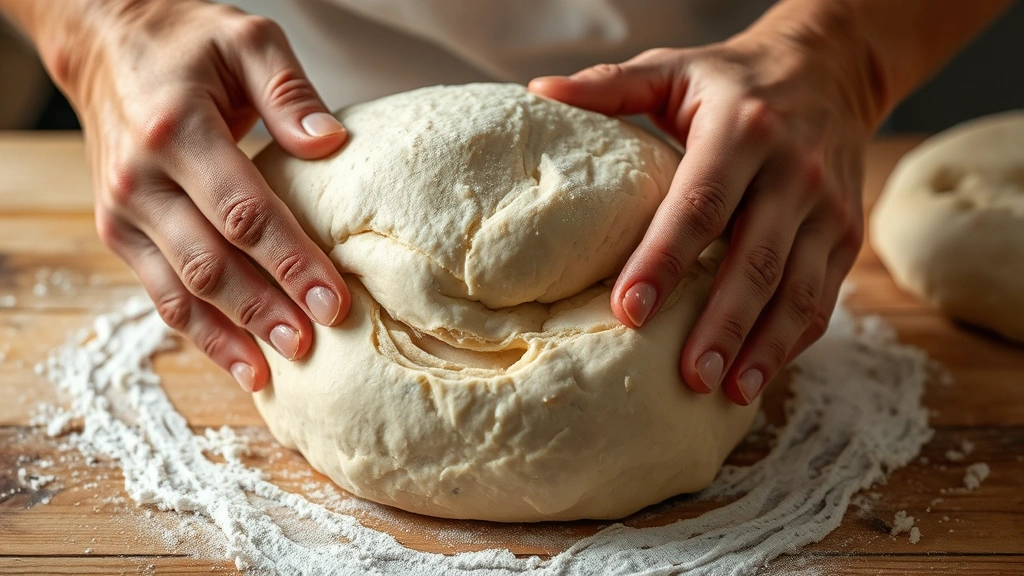
- Add the bread flour and all-purpose flour to the wet ingredients. Mix with a wooden spoon or your hands until a shaggy dough forms with no dry flour remaining. The dough will be slightly sticky and rough—this is correct.
- Cover the bowl with plastic wrap and let rest at room temperature for 30 minutes. This autolyse period allows the flour to fully hydrate and develops gluten.
- After the rest, add the 2 tablespoons of softened butter in 3-4 additions, incorporating each piece fully before adding the next. Mix until the dough is smooth, elastic, and no longer sticky. This should take 8-10 minutes of hand mixing or 5-6 minutes with a stand mixer on medium speed.
- Shape the dough into a ball, place it in a lightly oiled bowl, and cover with plastic wrap. Perform a series of stretch-and-folds over the next 2 hours: every 30 minutes, wet your hand, grab one side of the dough, stretch it up and fold it over the center. Repeat from all four sides. After 4 sets of folds, let the dough rest undisturbed.
- After the bulk fermentation (about 4-6 hours total at 70-72°F), the dough should have increased in volume by 50-75% and feel airy. Pre-shape it gently into a rectangle, then wrap tightly in plastic wrap. Refrigerate for at least 12 hours, preferably overnight. This cold rest makes lamination easier and develops flavor.
- The next day, remove the dough from the refrigerator and let it sit at room temperature for 15-20 minutes to take the chill off slightly—it should be cold but pliable, not rock-hard.
- On a lightly floured surface, gently roll the dough into a 10×14 inch rectangle about ¼ inch thick. Work slowly and carefully, using gentle pressure to avoid deflating the dough.
- Prepare your lamination butter: place the cold pound of butter between two sheets of parchment paper and pound it with a rolling pin until it forms a ⅜-inch thick rectangle that’s roughly 8×12 inches. The butter should be cold but just soft enough to pound without shattering.
- Place the lamination butter in the center of your dough rectangle, leaving a border of about 1-1.5 inches on all sides. Fold the dough borders over the butter like an envelope: fold the top third down, then the bottom third up, then the left side over, then the right side over. Seal the edges gently by pressing with the heel of your hand.
- Roll the butter-encased dough out to an 8×18 inch rectangle, using gentle, even pressure. Work from the center outward to ensure even thickness. If the butter breaks through, patch it with a small piece of cold butter and dust with flour.
- Perform your first fold (book fold or letter fold): fold the bottom third of the dough up, then fold the top third down over it, like folding a letter. You now have three layers. Wrap in parchment and refrigerate for 30 minutes.
- Repeat the roll-and-fold process 5 more times, rotating the dough 90 degrees before each roll to ensure even lamination. Always roll to 8×18 inches and always use the letter fold. After every two folds, refrigerate for 30 minutes. After the final fold (fold #6), refrigerate for at least 1 hour.
- After your final rest, roll the dough out to a ¼-inch thickness on a lightly floured surface. Using a ruler and sharp knife or pastry wheel, trim the edges to create an even rectangle, then cut the dough into triangles: cut lengthwise into three equal strips, then cut each strip diagonally into triangles about 4-5 inches along the base.
- Working with one triangle at a time, place it point-side away from you. Using the heel of your hand, gently stretch the triangle slightly longer. Roll it toward you tightly, starting from the base and rolling toward the point. The point should tuck underneath to create a crescent shape.
- Place each croissant point-side down on parchment-lined baking sheets, spacing them about 3 inches apart. Cover loosely with plastic wrap or a proof box and let proof at 70-72°F for 12-16 hours. They should increase noticeably in volume and feel airy when gently poked.
- When the croissants are nearly ready to bake, preheat your oven to 400°F. Prepare an egg wash by whisking together the egg and 1 tablespoon of water until smooth.
- Gently brush each croissant with egg wash, using light strokes to avoid deflating them. If desired, sprinkle with a tiny pinch of fleur de sel. Let the egg wash dry for 2-3 minutes before baking.
- Bake for 20-25 minutes, rotating the baking sheet halfway through. The croissants should be deeply golden brown and a skewer inserted into the center should come out clean or with just a few moist crumbs.
- Remove from the oven and let cool on the baking sheet for 5 minutes, then transfer to a wire rack. Serve warm or at room temperature. These are best enjoyed within 24 hours but will keep in an airtight container for 2-3 days.

Pro Tips
- **Starter matters**: Use a well-fed, active starter at peak fermentation. If your starter is young or sluggish, the croissants will take longer to ferment and may not develop proper oven spring.
- **Temperature control is crucial**: Sourdough croissants are more sensitive to temperature than traditional croissants. Keep your kitchen between 68-72°F. Warmer temperatures will accelerate fermentation and risk butter bleed-through; cooler temperatures slow everything down but can produce excellent results with more time.
- **Lamination troubleshooting**: If butter breaks through the dough, immediately patch it with a small piece of cold butter and dust with flour. If the dough becomes too warm and sticky during rolling, pop it in the freezer for 10-15 minutes before continuing.
- **Fermentation timing is flexible**: The long overnight fermentation times given are guidelines. Your croissants might be ready faster or slower depending on kitchen temperature and starter vigor. Look for visual cues: they should be visibly puffy and jiggly when poked gently.
- **Shaping technique**: Don’t overwork the dough when shaping into triangles. Keep everything cold and move quickly. Tight rolling creates better lamination and flakier croissants. The point should tuck completely under, creating that classic croissant curve.
- **Proofing observation**: During the final proof, you’ll notice the croissants slowly increasing in volume. They should feel light but still hold their shape when gently poked. They’ll continue rising in the oven for the first 5-10 minutes (oven spring) before the exterior sets.
- **Flavor development**: The longer fermentation times develop exceptional flavor. Unlike 24-hour traditional croissants, sourdough versions benefit from the extended timeline. You’ll notice a subtle tanginess and deeper, more complex flavor.
- **Storage and reheating**: Sourdough croissants actually improve slightly as they cool and the crumb sets. Reheat day-old croissants at 325°F for 8-10 minutes to restore crispness without drying them out. Pair with simple accompaniments like butter, jam, or fresh cheese to let the croissant shine.
- **Common challenges**: Greasy or oily croissants indicate the butter temperature was too warm during lamination. Croissants that don’t rise well suggest insufficient fermentation time or inactive starter. Dense, tough croissants usually mean over-mixing or insufficient lamination folds.
- **Make-ahead options**: You can freeze shaped, unbaked croissants for up to 2 weeks. Proof them directly from frozen (adding 4-6 hours to proof time) or thaw overnight and proof normally. This is perfect for entertaining—prepare them several days ahead and bake fresh in the morning.
Pingback: How to make the Best Buffalo Chicken Pasta Recipe! – Simple Recipe Finder