
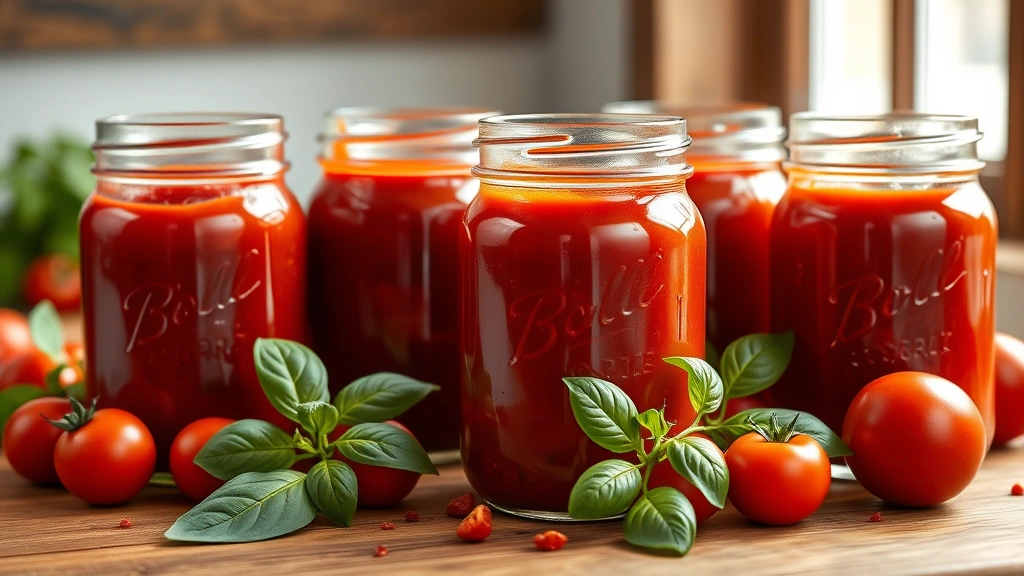
Making your own spaghetti sauce for canning is one of those rewarding kitchen projects that feels fancy but is honestly quite straightforward. There’s something so satisfying about ladling homemade tomato sauce into sterilized jars, watching them seal with that reassuring pop, and then storing them in your pantry for months to come. This recipe creates a rich, deeply flavored sauce that’s perfect for pasta night or as a gift for friends and family.
What makes this canning sauce special is the balance of fresh tomatoes, aromatic vegetables, and just the right blend of herbs and spices. Unlike quick stovetop sauces, this one simmers low and slow, allowing all those flavors to meld together beautifully. The addition of a bit of sugar helps balance the acidity of the tomatoes, while garlic and onions create an incredible depth of flavor that tastes like it’s been simmering all day.
Before you start, make sure you have proper canning equipment and understand safe canning practices. This recipe uses the hot water bath canning method, which is perfect for high-acid foods like tomato sauce. You’ll want to sterilize your jars, have lids and bands ready, and understand the importance of headspace and proper sealing. Similar preservation techniques can be applied to other recipes as well.
The beauty of homemade canned spaghetti sauce is that you control every single ingredient. No mystery additives, no excess sodium, just pure tomato goodness with herbs you’ve chosen yourself. This recipe makes about eight pint jars, which is perfect for a family or for sharing. Once canned properly and stored in a cool, dark place, these jars will keep for up to one year, though they rarely last that long in my house.
For the best results, use fresh, ripe tomatoes if they’re in season, or high-quality canned San Marzano tomatoes if fresh ones aren’t available. The sauce should be vibrant red, glossy, and coat the back of a spoon beautifully. When you open a jar months later and smell that incredible aroma, you’ll know all the effort was absolutely worth it. Check out this guide for other preservation methods to expand your canning repertoire.
This sauce is incredibly versatile once it’s opened. Use it for traditional spaghetti, layer it in lasagna, use it as a pizza sauce, or even as a base for soups and stews. I love keeping jars on hand for those busy weeknights when I need dinner on the table fast. Like meal prepping other items, having homemade sauce ready makes weeknight cooking so much easier.
For more detailed canning information and safety guidelines, visit Serious Eats or Bon Appétit for additional preservation resources. The New York Times Cooking section also has excellent guidance on canning fundamentals. You can also reference other recipe preservation techniques to understand the broader canning process.
Ingredients
- 4 tablespoons olive oil
- 2 large onions, finely diced
- 6 cloves garlic, minced
- 6 pounds fresh tomatoes (about 18-20 medium), or 4 cans (28 oz each) crushed San Marzano tomatoes
- 2 tablespoons tomato paste
- 2 teaspoons salt
- 1 teaspoon black pepper
- 2 tablespoons granulated sugar
- 3 tablespoons fresh basil, chopped (or 1 tablespoon dried)
- 2 tablespoons fresh oregano, chopped (or 1 tablespoon dried)
- 1 tablespoon fresh parsley, chopped (or 1 teaspoon dried)
- 1/2 teaspoon red pepper flakes (optional)
- 1/4 teaspoon fennel seeds (optional, for depth)
- 2 bay leaves
- 1/4 cup balsamic vinegar
- 2 tablespoons butter
Instructions
- Prepare your canning equipment by washing jars, lids, and bands in hot soapy water, then sterilize the jars either in a boiling water bath for 10 minutes or in the oven at 350°F for 20 minutes. Keep them hot until ready to use.
- If using fresh tomatoes, blanch them in boiling water for 1-2 minutes, then transfer to an ice bath and peel away the skins. Core them and roughly chop.
- Heat olive oil in a large, heavy-bottomed pot or Dutch oven over medium heat.
- Add the diced onions and sauté for 5-7 minutes, stirring occasionally, until they become translucent and fragrant.
- Add the minced garlic and cook for another 2 minutes, stirring constantly, until the raw garlic smell disappears.
- Stir in the tomato paste and cook for 2 minutes, allowing it to caramelize slightly in the oil.
- Add your tomatoes (whether fresh or canned) to the pot, stirring well to combine with the onion and garlic mixture.
- Add salt, black pepper, sugar, bay leaves, red pepper flakes if using, and fennel seeds if using. Stir everything together thoroughly.
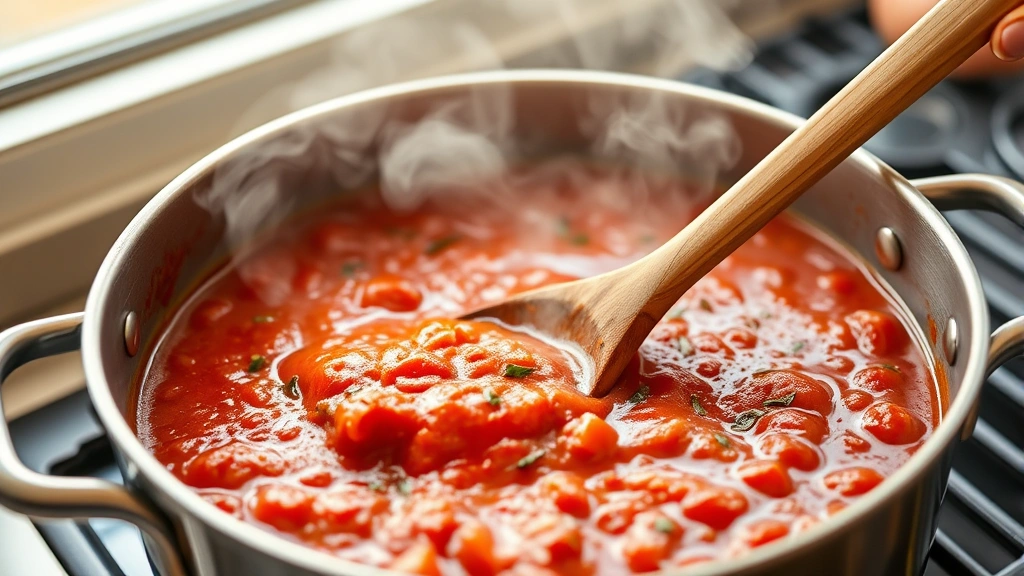
- Bring the mixture to a gentle simmer over medium-high heat, then reduce heat to medium-low so it maintains a slow, steady bubble.
- Let the sauce simmer uncovered for 1.5 to 2 hours, stirring occasionally to prevent sticking and burning on the bottom. The sauce should reduce by about one-third and become thicker and more concentrated.
- After about 1.5 hours of cooking, add the fresh basil, oregano, and parsley (or dried herbs if that’s what you’re using), along with the balsamic vinegar. Taste and adjust seasonings as needed.
- In the final 10 minutes of cooking, stir in the butter, which adds richness and helps bind all the flavors together.
- Remove the sauce from heat and let it cool for about 5 minutes while you prepare your canning setup with the hot water bath.
- Ladle the hot sauce into your hot, sterilized jars, leaving 1/2 inch of headspace at the top.
- Wipe the rims of each jar clean with a damp cloth to remove any drips or residue.
- Place the hot lids on top of each jar and screw on the bands until they’re fingertip tight, not overly tight.
- Place the filled jars into a boiling water bath canner, ensuring they’re covered by at least 1 inch of water.
- Bring the water to a full rolling boil and process the jars for 35 minutes for pint jars.
- Carefully remove the jars from the boiling water bath using a jar lifter and place them on a clean kitchen towel on the counter.
- Allow the jars to cool completely at room temperature, ideally for 12-24 hours. You’ll hear the satisfying pop as each lid seals.
- Once completely cooled, press the center of each lid to confirm it’s sealed (it should not flex or move). Remove the bands and store in a cool, dark place.
Pro Tips
o Never skip the sterilization step for canning. Proper sterilization is crucial for food safety and preventing spoilage. Whether you use a boiling water method or oven method, make sure your jars are truly sterile.
o The cooking time is important for developing flavor and achieving proper consistency. Don’t rush this step by turning up the heat too high, as this can cause the sauce to burn and develop a bitter taste.
o If you prefer a smoother sauce, use an immersion blender at the end of cooking, or run the finished sauce through a food mill. For a chunkier texture, leave it as is.
o Headspace matters in canning. The 1/2 inch space allows for expansion and helps create a proper seal. Too much headspace and the lid may not seal; too little and sauce may bubble out during processing.
o Always use new lids for canning, as reused lids have a lower success rate for sealing. Bands can be reused as long as they’re not rusted or damaged.
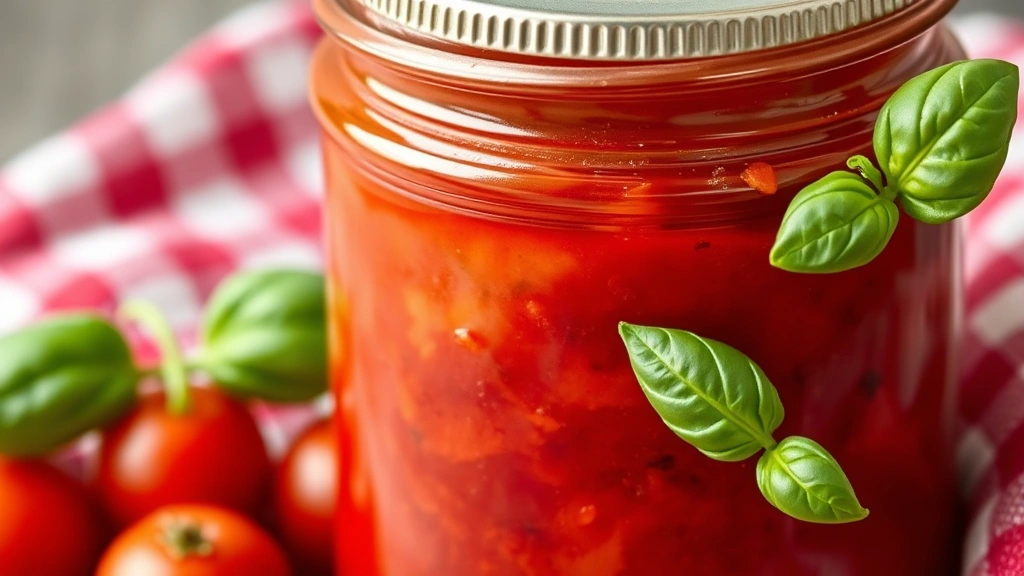
o Store your finished jars in a cool, dark place like a pantry or basement. Exposure to light can degrade the quality and flavor of the sauce over time.
o If a jar doesn’t seal within 24 hours, you can either reprocess it with a new lid or refrigerate it for immediate use. Never store an improperly sealed jar at room temperature.
o Add vegetables like mushrooms, bell peppers, or zucchini for variation, though note that this changes the acidity level and may require adjusted processing times.
o This sauce freezes beautifully if you prefer not to can it. Pour cooled sauce into freezer bags or containers and freeze for up to three months.
o The sauce will thicken slightly as it cools both in the pot and after canning. This is normal and desirable.
Pingback: Amatriciana Sauce Recipe: Authentic Italian in 20 Minutes - Simple Recipe Finder