
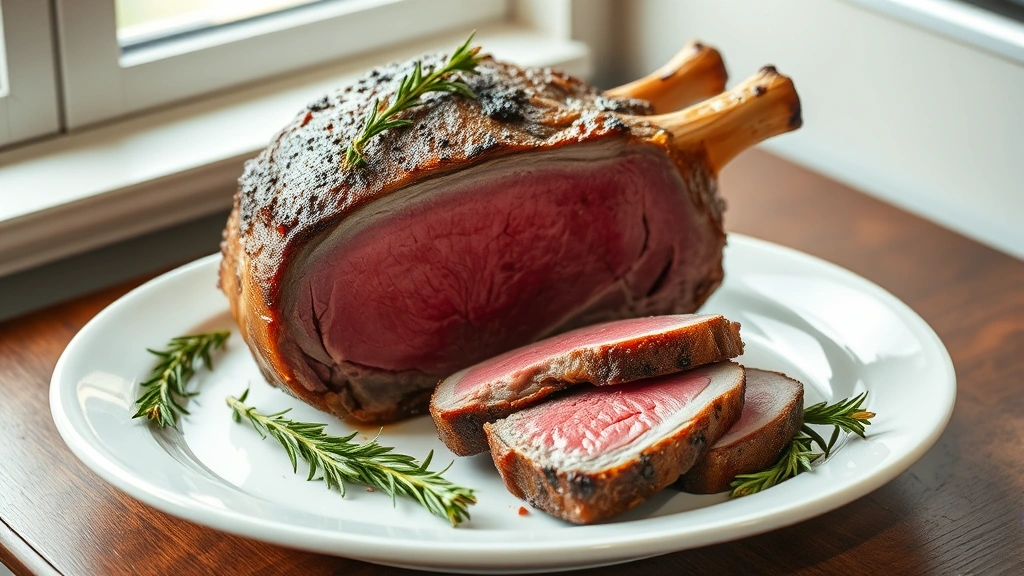
There’s nothing quite like a perfectly cooked standing rib roast to make any dinner feel like a special occasion. This classic cut, also known as prime rib, is an absolute showstopper that looks impressive but is surprisingly simple to prepare. The key to achieving that gorgeous pink center with a beautifully browned crust lies in understanding a few fundamental techniques: proper seasoning, precise temperature control, and patience during the resting period.
This standing rib roast recipe is perfect for holiday gatherings, anniversaries, or whenever you want to impress your guests with restaurant-quality beef. I’ve been perfecting this recipe for years, and I’m thrilled to share my foolproof method with you. The beauty of this dish is that it doesn’t require complicated techniques or hard-to-find ingredients—just quality beef, time, and a reliable meat thermometer.
What makes this standing rib roast truly exceptional is the combination of a slow roasting method with a high-heat sear at the end. This technique ensures an incredibly tender and juicy interior while developing that coveted crust on the exterior. Unlike many other beef recipes, this one rewards patience and low-and-slow cooking. I recommend using a quality meat thermometer to ensure you nail the doneness every single time.
The beauty of serving a standing rib roast is that it’s naturally elegant. The bones create a stunning presentation as they stand upright in your roasting pan, and the aroma that fills your kitchen as it cooks is absolutely divine. Pair this with classic sides like creamed horseradish, Yorkshire puddings, or roasted vegetables, and you have the ultimate celebratory meal.
For best results, I always recommend bringing your beef to room temperature before cooking and seasoning it generously the night before. This allows the salt to penetrate the meat and enhance its natural flavors. Check out this guide on complementary desserts to plan your complete menu. The timing can seem daunting at first, but once you understand the basic formula, you’ll be making this standing rib roast recipe year after year with confidence and ease.
Ingredients
- 1 standing rib roast (4 ribs, about 8-9 pounds)
- 3 tablespoons kosher salt
- 2 tablespoons freshly ground black pepper
- 2 tablespoons garlic powder
- 1 tablespoon onion powder
- 2 tablespoons fresh rosemary, finely chopped
- 1 tablespoon fresh thyme, finely chopped
- 3 tablespoons Dijon mustard
- 4 cloves garlic, minced
- 2 tablespoons olive oil
- 1 cup beef broth
- 1/2 cup red wine (optional but recommended)
- 2 tablespoons unsalted butter
- Fresh herbs for garnish
Instructions
- Remove your standing rib roast from the refrigerator and place it on a cutting board. Pat the surface completely dry with paper towels—this is crucial for achieving a good sear and crust. Make sure every inch is dry.
- In a small bowl, combine kosher salt, black pepper, garlic powder, onion powder, fresh rosemary, and fresh thyme. Mix thoroughly until well combined and evenly distributed.
- Rub the mustard mixture all over the standing rib roast, working it into every crevice and making sure all sides are well coated. This creates a flavorful paste that will help develop the crust.
- Rub the remaining dry seasoning mixture generously over the entire roast, pressing it firmly into the surface. Don’t be shy—you want a thick, even coating. Place the roast on a roasting pan, bone-side down, and cover loosely with plastic wrap.
- Refrigerate the prepared standing rib roast overnight, or for at least 12 hours. This allows the salt to penetrate the meat and enhance its natural flavors significantly.
- Remove the roast from the refrigerator 2-3 hours before cooking to bring it to room temperature. This ensures even cooking throughout the entire roast.
- Preheat your oven to 325°F (163°C). Position the rack in the lower third of the oven to ensure even heat circulation around the roast.
- Place the room-temperature standing rib roast on a roasting pan, bone-side down, with the bones creating a natural rack. The bones will elevate the meat off the pan bottom.
- Combine beef broth and red wine in a measuring cup, then pour this mixture into the bottom of the roasting pan, being careful not to wash off the seasoning on the roast.
- Insert a meat thermometer into the thickest part of the roast, making sure it’s not touching bone or fat. This will be your guide throughout cooking.
- Roast the standing rib roast at 325°F for approximately 13-15 minutes per pound for medium-rare (internal temperature of 130-135°F). For a 8-pound roast, this typically takes about 2 to 2.5 hours.
- After about 1.5 hours of cooking, check the roasting pan. If it’s getting dry, add more beef broth a little at a time. You want just enough liquid to create a flavorful base for gravy.
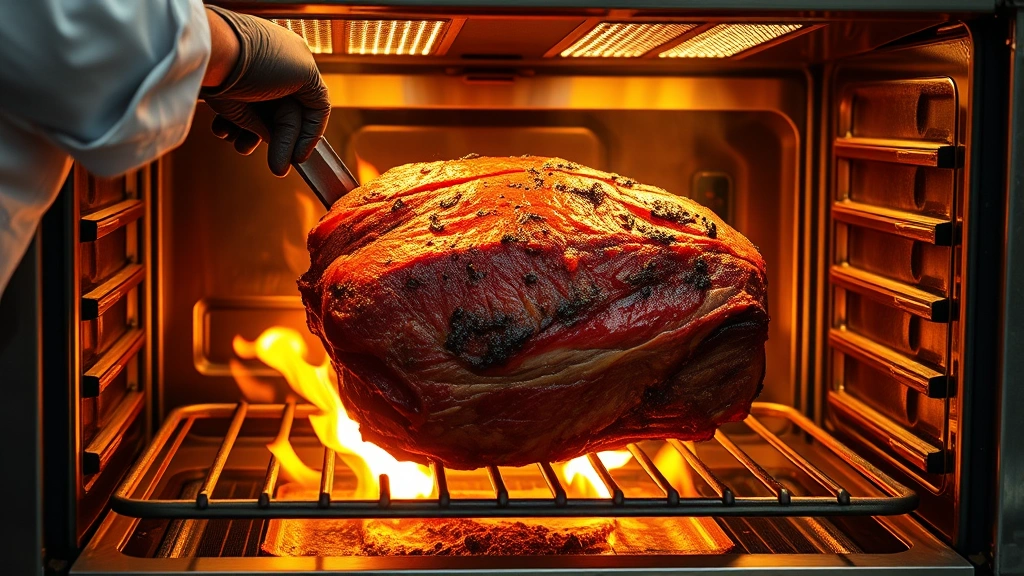
- Continue roasting, checking the meat thermometer frequently. Once the internal temperature reaches 120°F, increase the oven temperature to 500°F (260°C) for a quick sear.
- Roast at the higher temperature for 10-12 minutes until the exterior is deeply browned and the internal temperature reaches 130-135°F for medium-rare. Watch carefully to prevent burning.
- Remove the standing rib roast from the oven and transfer it to a cutting board. Tent it loosely with foil and let it rest for 20-30 minutes. This allows the juices to redistribute throughout the meat.
- While the roast rests, place the roasting pan on the stovetop over medium heat. Whisk in 2 tablespoons of butter and simmer for 2-3 minutes to create a simple pan sauce.
- Strain the pan sauce through a fine-mesh sieve into a gravy boat, discarding solids. Season with additional salt and pepper to taste.
- Remove the foil tent from the standing rib roast and carefully carve the roast by slicing between the ribs. Place the carved meat on a serving platter and garnish with fresh herbs.
- Serve the standing rib roast immediately with the pan sauce on the side, along with your favorite accompaniments such as roasted vegetables or Yorkshire puddings.
Pro Tips
Meat thermometer is essential: Don’t rely on cooking time alone. Every oven is different, and the exact cooking time depends on the shape and size of your roast. Invest in a good meat thermometer and check it frequently during the last 30 minutes of cooking.
The resting period is non-negotiable: After cooking, allowing the roast to rest for 20-30 minutes is absolutely crucial. During this time, the muscle fibers relax and reabsorb the juices, resulting in much more tender and juicy meat. If you skip this step, all those delicious juices will run out onto your cutting board.
Seasoning overnight: While you can season the roast just before cooking, seasoning it overnight (or for at least 12 hours) significantly enhances the flavor. The salt penetrates the meat and begins the curing process, resulting in better seasoning throughout.
Bone-side down positioning: Always place the roast bone-side down. The bones act as an insulator and natural rack, helping the meat cook more evenly while elevating it off the pan bottom.
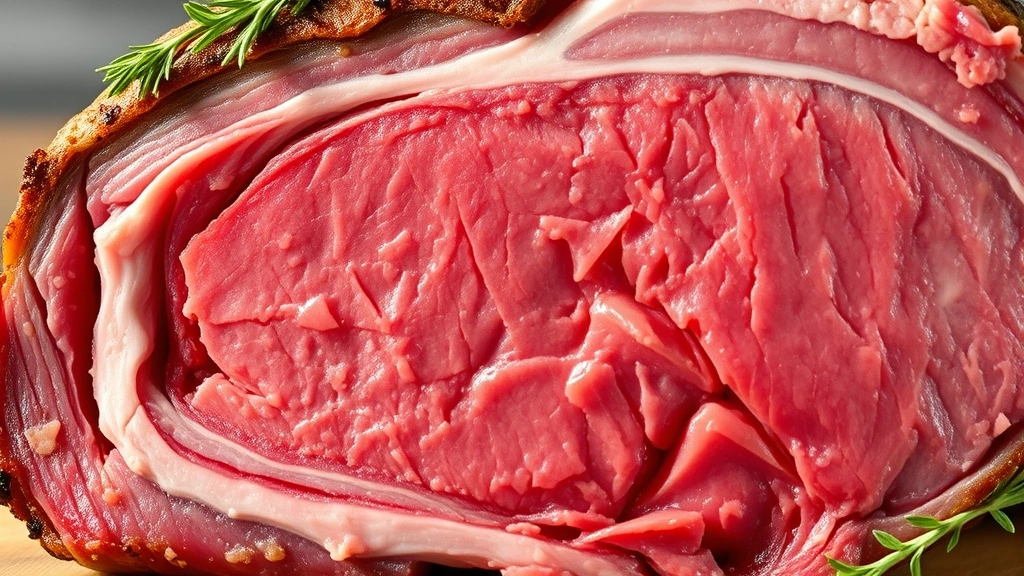
Doneness temperatures: For rare, aim for 120-125°F internal temperature. For medium-rare, aim for 130-135°F. For medium, aim for 135-145°F. Remember that the roast will continue cooking slightly after removal from the oven, so remove it a few degrees before your target temperature.
Pan sauce is simple but elegant: The drippings in your roasting pan are liquid gold. Combine them with a bit of butter and you have an incredible sauce that requires minimal effort but tastes restaurant-quality.
Wine is optional but recommended: The red wine adds depth and complexity to the pan sauce. If you prefer not to use alcohol, simply use additional beef broth.
Carving technique: Use a sharp carving knife and carve by slicing between the ribs. This creates individual portions that look impressive on the plate and are perfect for serving.
Make-ahead option: You can season the roast up to 2 days in advance. Simply cover it loosely and refrigerate. Remove it from the refrigerator 2-3 hours before cooking.