
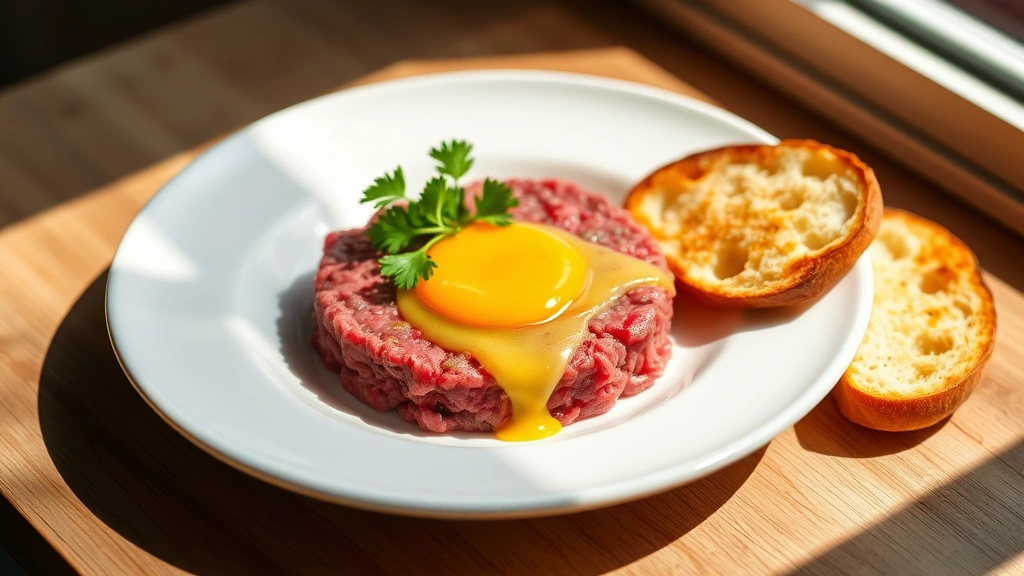
Beef tartare is one of those elegant dishes that looks impossibly fancy but is actually quite simple to master at home. This classic French preparation celebrates the quality of the beef itself, so sourcing the best possible meat is absolutely essential. The beauty of tartare lies in its simplicity—just premium raw beef, carefully minced and combined with a few carefully chosen ingredients that enhance rather than mask its pure, beefy flavor.
When I first made tartare at home, I was intimidated by the raw meat element, but once I understood the importance of proper sourcing and handling, it became one of my favorite dishes to prepare for dinner parties. Your guests will be impressed by how restaurant-quality this tastes, yet it requires minimal cooking skills. The key is using beef that’s been frozen for at least two weeks to eliminate any food safety concerns, sourcing from a trusted butcher who understands tartare preparation, and keeping everything ice-cold throughout the process.
This recipe for tartare is adaptable to your preferences—some prefer more capers and cornichons for tang, while others like extra shallots for bite. I’ve included the classic preparations here, but don’t hesitate to adjust the seasonings to suit your palate. Serve it with crispy toasted bread, alongside other elegant appetizers, or as part of a charcuterie board for an impressive presentation.
One thing I’ve learned is that tartare is best served immediately after preparation, so assemble everything just before your guests arrive. The flavors are brightest and the texture most appealing when it hasn’t been sitting around. This is the kind of dish that makes you feel like a professional chef, but truly anyone can master it with good ingredients and attention to detail. Let me walk you through my foolproof method for creating the perfect tartare every single time.
Ingredients
- 1 pound premium beef tenderloin or sirloin, frozen for at least 2 weeks
- 3 tablespoons extra virgin olive oil
- 1 tablespoon Dijon mustard
- 2 tablespoons fresh lemon juice
- 1 tablespoon red wine vinegar
- 2 shallots, minced very finely
- 2 tablespoons capers, drained and chopped
- 2 tablespoons cornichons (small pickles), minced
- 1 teaspoon anchovy paste (optional but recommended)
- 2 egg yolks (use pasteurized eggs for safety)
- 1/4 cup fresh parsley, finely chopped
- Sea salt and freshly cracked black pepper to taste
- Dash of Worcestershire sauce
- Crispy toasted bread or crostini for serving

Instructions
- Purchase your beef from a trusted butcher who specializes in tartare preparation. Ask specifically for beef suitable for eating raw and confirm it has been frozen for food safety purposes. Ensure the beef has been stored properly and handle it with care.
- Remove the beef from the freezer and let it thaw just slightly—about 15-20 minutes—until you can work with it but it’s still very cold. This texture is ideal for mincing.
- Using a very sharp knife (a chef’s knife works best), carefully mince the beef into small, uniform pieces. Work quickly to keep the meat cold and avoid smearing it. You want distinct pieces, not a paste—tartare should have some texture.
- Place a large mixing bowl in the freezer for 5 minutes to chill it thoroughly. Cold equipment is essential for proper tartare texture.
- Transfer the minced beef to the chilled bowl immediately. Work quickly from this point forward.
- In a small bowl, whisk together the Dijon mustard, lemon juice, red wine vinegar, and anchovy paste until well combined and smooth.
- Drizzle the olive oil into the mustard mixture while whisking gently to create an emulsion, similar to making vinaigrette.
- Pour the dressing over the minced beef and gently fold it together using a rubber spatula, being careful not to overwork the meat.
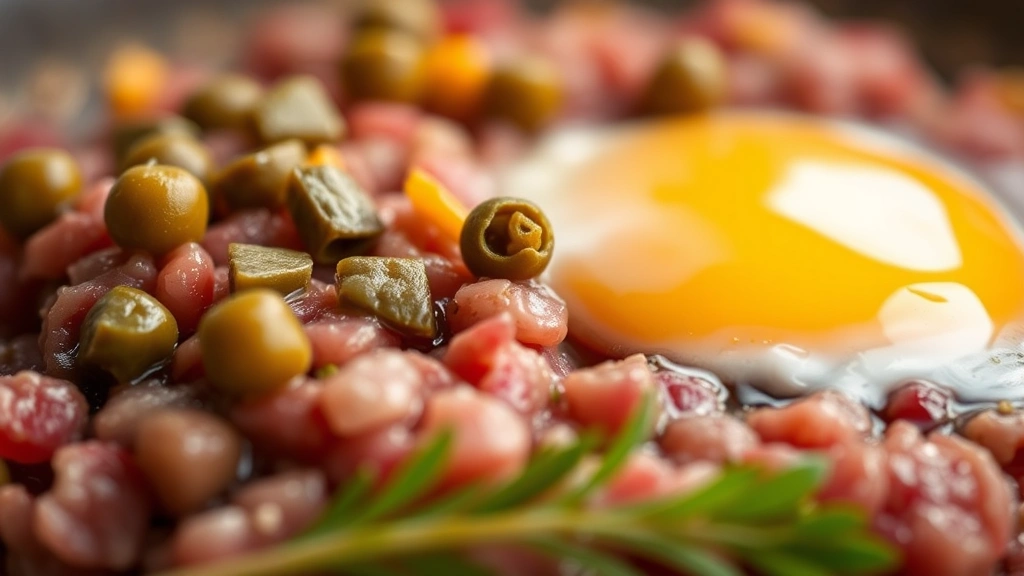
- Add the minced shallots, capers, and cornichons to the beef mixture and fold gently until evenly distributed throughout.
- Stir in the fresh parsley, reserving a small amount for garnish if desired.
- Taste the tartare and season with sea salt and freshly cracked black pepper. Start conservatively—you can always add more, but you cannot remove it.
- Add a small dash of Worcestershire sauce and fold gently. Taste again and adjust seasonings as needed.
- If using raw egg yolks, make two small indentations or wells on top of the tartare mixture and place one egg yolk in each well. This is the traditional presentation—diners mix the yolk into their portion as desired.
- Alternatively, if you prefer to incorporate the yolks into the mixture itself for easier serving, whisk them together first and then fold gently into the tartare.
- Serve immediately on a chilled plate with crispy toasted bread or crostini on the side. Garnish with additional fresh parsley and a light sprinkle of fleur de sel if desired.
Pro Tips
Freezing the beef for a minimum of two weeks is crucial for food safety. This process kills most harmful bacteria while maintaining the meat’s quality. Some tartare enthusiasts prefer beef that’s been frozen for longer—even up to a month—as it becomes slightly easier to work with.
The egg yolk element is traditional and adds richness, but if you’re concerned about raw eggs, use pasteurized eggs from the grocery store. They’re specifically treated to be safe for raw consumption. Alternatively, you can skip the egg yolk entirely and incorporate a teaspoon or two of the yolk into the mixture before serving if you prefer.
Keeping everything cold is non-negotiable. Chill your cutting board, your knife, your mixing bowl, and even your serving plate. This maintains the proper texture and keeps the beef at a safe temperature. Some chefs even chill their utensils in the freezer before use.
The ratio of seasonings can be adjusted to your taste. If you prefer a more herbaceous version, add extra parsley or even some finely minced tarragon. For more tang, increase the capers and cornichons. The beauty of making tartare at home is that you can customize it to your exact preferences.
Cornichons and capers are essential—they provide the proper acidic and briny notes that make tartare special. Don’t skip them or substitute with regular pickles, which are too large and have a different flavor profile.
Anchovies might seem like an odd addition, but the anchovy paste adds a subtle umami depth without making the tartare taste fishy. Use just a teaspoon, and it will enhance all the other flavors beautifully.
Serve tartare within 30 minutes of preparation for the best flavor and texture. The longer it sits, the more the beef releases moisture and the flavors begin to meld in less desirable ways. This is why tartare is best prepared right before serving.
Toasted bread is essential for serving. Look for a good quality baguette and slice it diagonally into quarter-inch pieces before toasting lightly in the oven at 375°F for about 8 minutes until golden and crispy.