
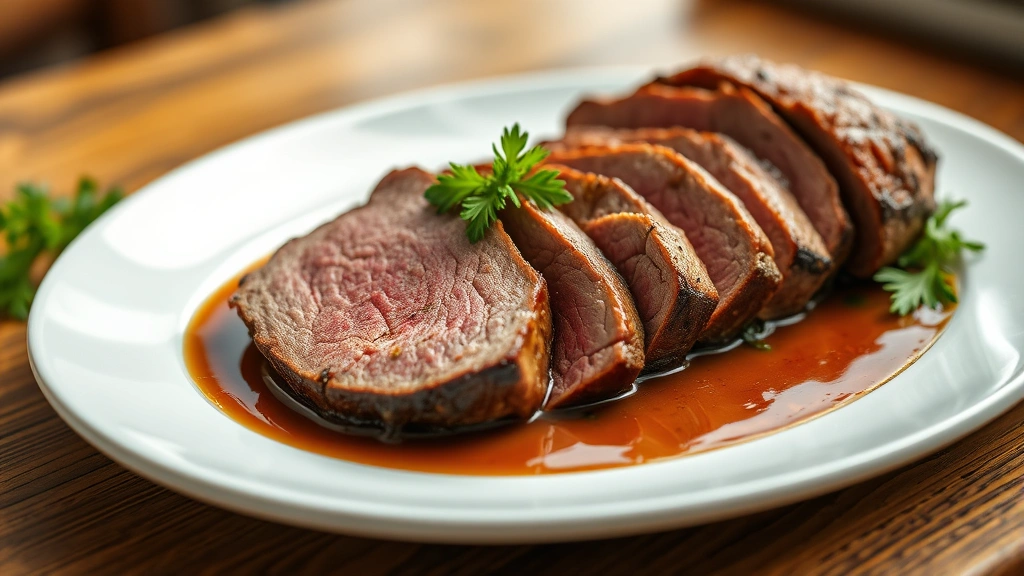
There’s something absolutely magical about a perfectly roasted top round – it’s the kind of dish that makes your kitchen smell like a five-star restaurant and your guests think you’ve been cooking all day. The beauty of a top round roast is that it’s actually quite forgiving once you understand the fundamentals. This lean cut of beef comes from the hindquarters and, when treated with respect and a few key techniques, transforms into something truly spectacular.
The secret to achieving that perfect top round roast lies in three essential elements: proper seasoning, controlled temperature, and adequate resting time. Many home cooks rush through the process or skip crucial steps, which is why their roasts turn out dry or unevenly cooked. But I’m here to walk you through every single step, and I promise you’ll end up with a roast that’s juicy on the inside, beautifully browned on the outside, and absolutely foolproof.
Top round is a leaner cut compared to ribeye or prime rib, which means it requires a slightly different approach. We’re going to use a combination of high-heat searing and low-and-slow roasting to lock in those precious juices while developing that gorgeous crust. The result is a roast that’s restaurant-quality but achievable in your own kitchen. Whether you’re hosting a dinner party or preparing a special Sunday supper, this recipe will absolutely impress.
I also recommend pairing this beautiful roast with complementary sides. Our Deliciously Simple Coleslaw Recipe makes a refreshing contrast to the rich beef, while Best Creamy Grits Recipe provides the ultimate comfort food accompaniment. For dessert, you might want to finish with something elegant like our Best Chocolate Truffles Recipe.
The technique I’m sharing comes from years of testing and refinement, drawing inspiration from Serious Eats methodology and New York Times Cooking precision. What makes this approach special is that it accounts for carryover cooking, ensures even temperature distribution throughout the roast, and maximizes flavor development. You’ll also learn how to create a pan sauce from the drippings that’s absolutely divine – the kind of thing that makes people ask for your recipe.
I’m genuinely excited for you to try this. Once you master the perfect top round roast, you’ll find yourself making it again and again. It’s elegant enough for special occasions but straightforward enough for a regular Thursday night when you want to feel fancy. Let’s create something delicious together.
Ingredients
- One 3-4 pound top round roast, brought to room temperature
- 2 tablespoons kosher salt
- 1 tablespoon freshly ground black pepper
- 2 tablespoons garlic powder
- 1 tablespoon onion powder
- 2 teaspoons smoked paprika
- 2 tablespoons fresh thyme leaves, roughly chopped
- 2 tablespoons fresh rosemary leaves, roughly chopped
- 3 tablespoons olive oil
- 4 tablespoons butter
- 6 cloves garlic, smashed
- 2 cups beef broth
- 1 cup dry red wine
- 2 tablespoons tomato paste
- 1 tablespoon balsamic vinegar
- 2 bay leaves
- Salt and pepper to taste for finishing
Instructions
- Remove your top round roast from the refrigerator at least 45 minutes before cooking. This step is crucial – a cold roast will cook unevenly, so patience is essential here.
- Preheat your oven to 450°F. While the oven heats, pat the roast completely dry using paper towels. Any surface moisture will prevent proper browning, so take your time with this step.
- In a small bowl, combine the kosher salt, black pepper, garlic powder, onion powder, smoked paprika, fresh thyme, and fresh rosemary. Mix thoroughly to distribute the seasonings evenly.
- Rub the seasoning mixture all over the roast, making sure to coat every surface generously. Pay special attention to the ends and any crevices. Let the seasoned roast sit for about 10 minutes to allow the salt to begin penetrating the meat.
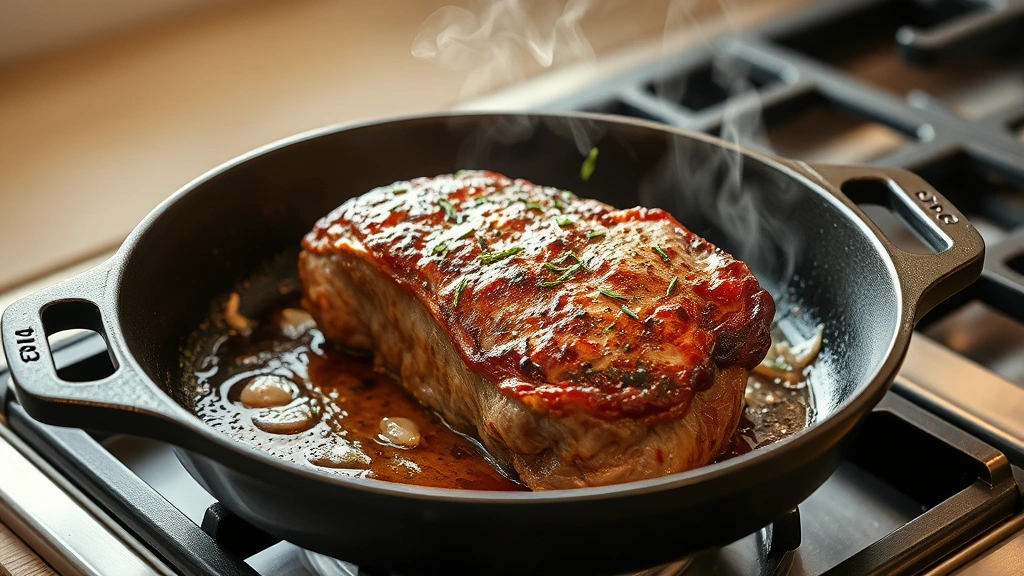
- Place a large cast-iron skillet or heavy-bottomed roasting pan over medium-high heat. Once it’s smoking hot, add the olive oil and let it shimmer.
- Carefully place the roast in the hot skillet and sear for 3-4 minutes on the first side without moving it. This creates a beautiful crust through the Maillard reaction, which develops incredible flavor.
- Using tongs, rotate the roast a quarter turn and sear for another 3-4 minutes. Continue rotating and searing until all sides and ends are deeply browned, approximately 15-18 minutes total.
- Remove the roast from the skillet and set aside on a clean cutting board. The roast will continue to cook, so don’t worry if it seems underdone at this stage.
- Return the skillet to medium heat and add the butter. Once melted and foaming, add the smashed garlic cloves and cook for about 1 minute until fragrant.
- Stir in the tomato paste and cook for 2 minutes, stirring constantly to coat the bottom of the pan and deglaze any browned bits.
- Pour in the red wine and use a wooden spoon to scrape up all the flavorful browned bits from the bottom of the skillet. Let the wine reduce by half, approximately 3-4 minutes.
- Add the beef broth and balsamic vinegar, stirring well to combine. Place the bay leaves in the liquid.
- Return the seared roast to the skillet, nestling it into the liquid. The liquid should come about halfway up the sides of the roast.
- Transfer the entire skillet to the preheated 450°F oven. Roast for 15 minutes at this high temperature to finish the browning process.
- Reduce the oven temperature to 325°F and continue roasting for approximately 45 minutes to 1 hour. For medium-rare, you’re aiming for an internal temperature of 130-135°F in the thickest part.
- Check the temperature with an instant-read thermometer inserted into the center of the roast without touching bone. Remember that the temperature will rise 5-10 degrees during resting.
- Once the roast reaches 130°F, remove it from the oven and transfer it to a warm cutting board. Do not skip the resting period – this is when the carryover cooking finishes and the juices redistribute throughout the meat.
- Tent the roast loosely with foil and let it rest for at least 15-20 minutes. This resting period is absolutely non-negotiable for a tender, juicy roast.
- While the roast rests, strain the pan sauce through a fine-mesh strainer into a saucepan, pressing on the solids to extract all the flavorful liquid. Discard the solids and bay leaves.
- Skim any excess fat from the surface of the sauce using a fat separator or by carefully tilting the pan and using a spoon.
- Place the sauce over medium heat and simmer for 5 minutes to concentrate the flavors. Taste and adjust seasoning with additional salt and pepper as needed.
- After resting, slice the roast against the grain into half-inch thick slices. This ensures maximum tenderness and a pleasing presentation.
- Arrange the sliced roast on a serving platter and drizzle generously with the warm pan sauce. Serve immediately with additional sauce on the side.

Pro Tips
Don’t skip the searing step: This is where the magic happens. The high-heat searing creates a flavorful crust through the Maillard reaction. This isn’t just about looks – it’s about developing deep, complex flavors that make the entire dish memorable.
Invest in a quality meat thermometer: This is the single best tool for guaranteeing a perfectly cooked roast every single time. Don’t rely on timing alone, as oven temperatures vary and roast sizes differ. An instant-read thermometer removes all the guesswork.
Resting is non-negotiable: After all that cooking, the roast needs time to rest. During this period, carryover cooking continues, the temperature rises slightly, and most importantly, the juices redistribute throughout the meat. Cutting into the roast immediately releases all those precious juices onto the cutting board instead of keeping them in the meat.
The pan sauce is essential: Don’t drain off those flavorful drippings. That browned, crusty bottom of the pan (called fond) contains concentrated beef flavor. Deglazing with wine and using that liquid as the base for your sauce elevates the entire dish from good to restaurant-quality.
Choose high-quality beef: Your top round should be well-marbled for a lean cut, with a bright red color and white fat. Don’t choose a roast that’s been sitting under fluorescent lights or that has any greyish tones.
Use fresh herbs when possible: While dried herbs work in a pinch, fresh thyme and rosemary contribute a brightness and complexity that truly elevates this dish. Fresh herbs make a noticeable difference, especially in a relatively simple recipe like this one.
Leftovers are incredibly versatile: Slice any remaining roast thinly and use it for sandwiches the next day, or shred it for beef tacos or salads. The pan sauce freezes beautifully for up to three months.
Temperature guide for doneness: Rare is 125°F, medium-rare is 130-135°F, medium is 135-145°F, and medium-well is 145-155°F. Most people prefer medium-rare for a top round roast, as it maintains tenderness while ensuring the meat is cooked through.