
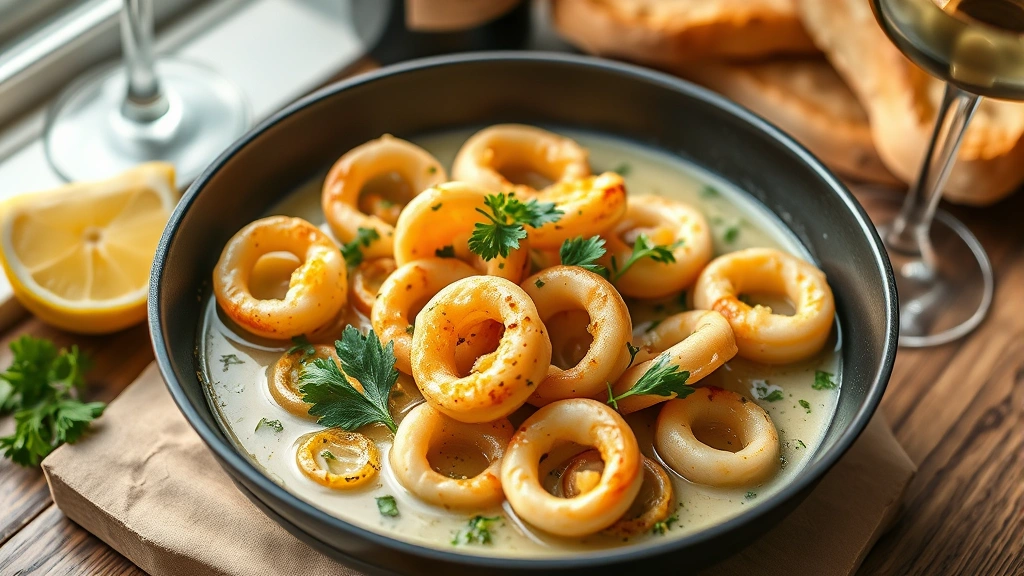
There’s something absolutely magical about perfectly cooked calamari – tender, delicate, and bursting with subtle oceanic flavor. This classic Mediterranean dish has been a staple in coastal kitchens for generations, and once you master the technique, you’ll find yourself making it again and again for dinner parties and weeknight meals alike.
The secret to exceptional calamari lies in understanding that this ingredient requires either very quick cooking or low-and-slow braising – there’s no in-between. When you sear calamari over high heat for just 90 seconds to 2 minutes per side, the exterior develops a beautiful golden crust while the interior stays impossibly tender. Alternatively, you can braise it gently in tomato sauce for 45 minutes to an hour, allowing the connective tissues to break down into silky strands.
I’m sharing my favorite preparation today – pan-seared calamari with a garlicky white wine sauce, fresh lemon, and a hint of red pepper flakes. It’s the kind of dish that makes you feel like you’re dining at a charming Italian trattoria, yet it comes together in your own kitchen in under 30 minutes. The beauty of this recipe is its versatility; you can serve it over pasta for a more substantial meal, alongside crusty bread for sauce-soaking, or as part of a seafood platter with other ocean treasures.
What I love most about cooking calamari is how it responds to bold flavors. The mild taste of the squid acts as a perfect canvas for garlic, white wine, fresh herbs, and bright citrus. This recipe celebrates those classic Mediterranean flavors while keeping the preparation straightforward enough for weeknight cooking. Whether you’re a seafood enthusiast or someone looking to expand your culinary horizons, this calamari dish will impress.
Before we dive into the recipe, let me share a few pro tips that will ensure your success. First, purchase fresh or quality frozen calamari from a reputable fishmonger – this makes all the difference. Second, pat your calamari completely dry before cooking; any excess moisture will prevent proper browning and create steam instead of that gorgeous sear. Third, don’t overcrowd your pan; work in batches if necessary. Finally, resist the urge to move the calamari around too much in the pan – let it develop that beautiful golden crust undisturbed.
This dish pairs beautifully with a crisp white wine like Pinot Grigio or Sauvignon Blanc, and a simple green salad rounds out the meal perfectly. You can also check out this comprehensive guide to cooking seafood for additional techniques and inspiration. For more Mediterranean flavor inspiration, explore Italian cooking essentials and fresh herb applications.
The cooking technique we’re using today is called the high-heat sear method, which is perfect for tender squid. If you prefer a more rustic approach, you might also consider braising methods for a completely different texture and flavor profile. I’ve included some notes on variations at the end of the recipe to help you customize this dish to your preferences.
For more detailed information on selecting and preparing seafood, I recommend checking out this excellent resource on serious preparation techniques, as well as this garlic and white wine pairing guide. The New York Times also has excellent calamari preparation notes that complement this approach beautifully.
Now, let’s get cooking! This recipe serves four as a main course, or six as an appetizer. The entire process, from prep to plating, takes about 25 minutes, making it perfect for both casual dinners and more formal entertaining.
Ingredients
- 2 pounds fresh or frozen calamari (squid), cleaned and cut into rings and tentacles
- 6 tablespoons extra virgin olive oil, divided
- 8 cloves garlic, thinly sliced
- 1 cup dry white wine (Pinot Grigio or Sauvignon Blanc)
- ½ cup fresh lemon juice (about 3 lemons)
- ¼ teaspoon red pepper flakes, or to taste
- ½ teaspoon sea salt, plus more to taste
- ¼ teaspoon freshly ground black pepper
- 3 tablespoons unsalted butter
- ½ cup fresh Italian parsley, finely chopped
- 2 tablespoons fresh basil, torn (optional)
- Zest of 1 lemon for garnish
- Crusty bread for serving
- Lemon wedges for serving
Instructions
- Pat the calamari completely dry using paper towels. This step is crucial for achieving a proper sear and preventing the calamari from steaming. Work in sections, ensuring every piece is thoroughly dried.
- Season the dried calamari generously with sea salt and freshly ground black pepper on all sides. Set aside on a clean plate.
- Heat a large stainless steel or cast iron skillet over high heat for 2-3 minutes until it’s very hot. You should feel significant heat radiating from the pan when you hold your hand 6 inches above it.
- Add 3 tablespoons of the olive oil to the hot pan and let it heat for 30 seconds until it’s shimmering and just beginning to smoke slightly.
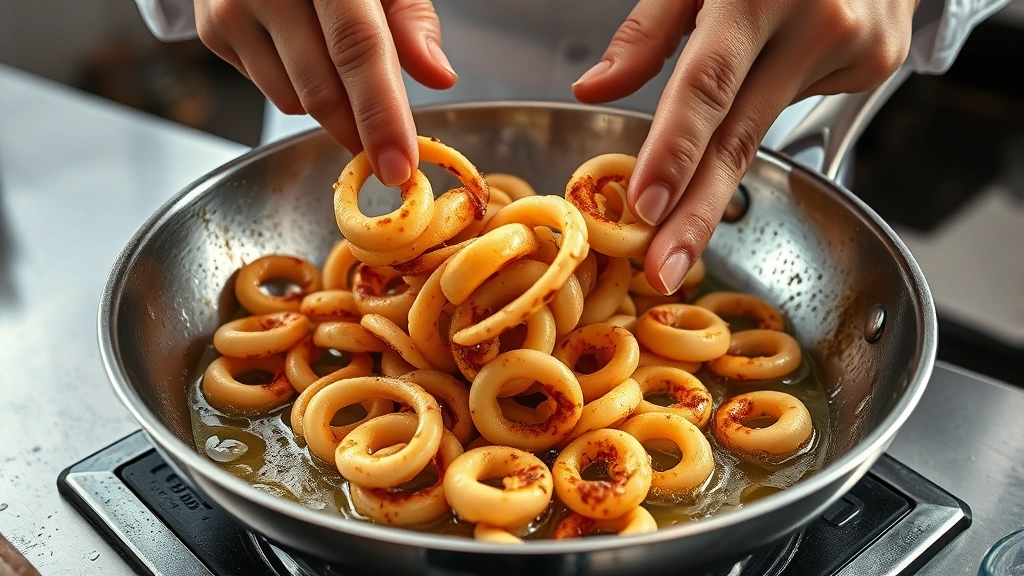
- Working in two batches to avoid overcrowding, carefully add the calamari to the hot pan in a single layer. Do not move it around – let it sit undisturbed for 90 seconds to 2 minutes.
- Flip each piece of calamari carefully and cook for another 90 seconds on the second side until it develops a light golden color. The calamari should feel slightly firm but still tender when pressed. Transfer the first batch to a clean plate and repeat with the remaining calamari, using another tablespoon of olive oil.
- Reduce the heat to medium and add the remaining 2 tablespoons of olive oil to the pan. Add the thinly sliced garlic and sauté for about 1 minute, stirring frequently, until it becomes fragrant and just begins to turn golden. Be careful not to burn the garlic, as this will make it bitter.
- Pour in the dry white wine, scraping the bottom of the pan with a wooden spoon to release all the flavorful browned bits (called the fond). Let the wine simmer for 2-3 minutes to reduce slightly and allow the alcohol to cook off.
- Add the fresh lemon juice and red pepper flakes to the pan, stirring to combine. Taste and adjust the seasoning with additional salt and pepper as needed.
- Return the cooked calamari to the pan along with any juices that have accumulated on the plate. Stir gently to coat all pieces with the sauce.
- Remove the pan from the heat and stir in the cold butter, a piece at a time, until it’s fully incorporated and the sauce becomes glossy and rich. This technique, called mounting with butter, creates a silky, restaurant-quality sauce.
- Fold in the fresh Italian parsley and basil, if using, reserving some parsley for garnish. Gently toss to combine, being careful not to break apart the calamari.
- Transfer the calamari and sauce to a serving platter or individual bowls. Garnish generously with fresh lemon zest and reserved parsley. Serve immediately with crusty bread for soaking up the delicious sauce and lemon wedges for additional brightness.

Pro Tips
- **Selecting Your Calamari**: Fresh calamari is ideal, but high-quality frozen squid works beautifully as well. Look for pieces that are uniform in size so they cook evenly. Avoid any calamari with an ammonia smell, as this indicates age and poor storage. Most fishmongers will clean the calamari for you, but if you need to clean it yourself, remove the head, tentacles, and internal organs, then rinse thoroughly under cold water.
- **The Importance of Drying**: Moisture is the enemy of a proper sear. I cannot stress this enough – use paper towels and take your time. Some chefs even place the dried calamari in the refrigerator for 10 minutes before cooking to ensure all surface moisture evaporates completely.
- **Pan Selection**: Use a stainless steel or cast iron skillet rather than non-stick for this recipe. Non-stick pans don’t get hot enough to develop that beautiful golden crust that makes pan-seared calamari so special.
- **The High-Heat Method**: Calamari requires either very high heat for a short time or low heat for a long time. The high-heat method used here keeps the interior tender while creating a flavorful exterior. If you prefer a different texture, you can braise the calamari in tomato sauce at 325°F for 45 minutes to an hour.
- **Wine Selection**: The white wine you choose will flavor the dish, so select something you’d enjoy drinking. Pinot Grigio offers bright acidity, while Sauvignon Blanc provides herbaceous notes. Avoid heavily oaked wines or anything too sweet.
- **Butter Mounting**: This final step of whisking cold butter into the sauce is optional but highly recommended. It creates a luxurious, silky sauce that clings to every piece of calamari. Use cold butter cut into small cubes for best results.
- **Serving Suggestions**: Serve over fresh pasta like linguine or spaghetti, alongside crusty bread, with a simple green salad, or as part of a seafood platter. This dish also works wonderfully as an appetizer served on crostini or with toothpicks.
- **Make-Ahead Note**: You can clean and prepare the calamari several hours in advance. Store it in an airtight container in the refrigerator until ready to cook. The sauce can be made up to the point of adding the calamari and reheated gently before adding the cooked squid.
- **Flavor Variations**: Add sun-dried tomatoes, roasted red peppers, or capers for additional complexity. Fresh oregano or thyme can replace or complement the basil. A splash of fish stock instead of some of the wine adds deeper umami flavors.
- **Spice Level**: Adjust the red pepper flakes to your preference. Start with ¼ teaspoon and add more if you prefer more heat. You can always add more spice, but you can’t remove it.
- **Storage**: Leftover calamari can be refrigerated in an airtight container for up to 2 days. Reheat gently in a low oven or over low heat to prevent toughening. The flavor actually deepens slightly when the dish sits for a day, making it excellent for meal prep.